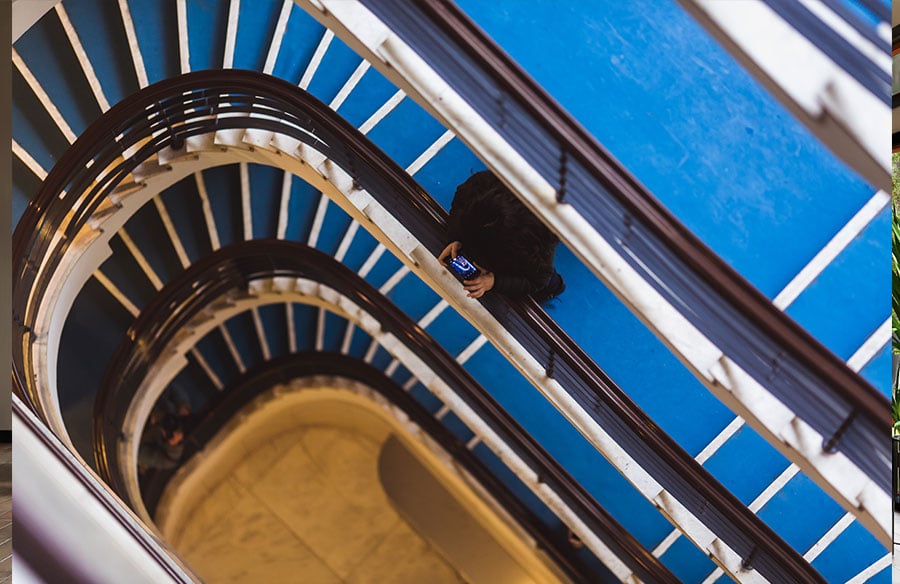
Was the stairwell adequately lit when someone fell? In a building with automated lighting controls, the answer may depend on more than whether the fixtures were working. Occupancy sensors, dimming schedules, and programmed timeouts can all affect how much light reaches the stairs and landings.
When a serious fall occurs, commissioning reports, maintenance records, and available lighting-control data may help investigators reconstruct the conditions. Not every system preserves a detailed event history, but the records that exist can reveal whether the lighting operated as intended and whether that operation was appropriate for the space.
The First Question Is Whether the Stair Met Code at Impact
Commercial stairways are subject to building, fire, and life-safety requirements that address illumination. The applicable standards depend on the jurisdiction, building classification, adopted code edition, and whether the stairway serves as part of a required means of egress.
NFPA 101, the Life Safety Code, contains illumination requirements for means of egress, but a single minimum lighting level shouldn’t be applied to every commercial stairway without examining the governing provisions. Requirements may also differ between normal operation and emergency lighting conditions.
For a premises liability attorney, the investigation may begin with the approved lighting design, commissioning documentation, and maintenance history. Measurements of actual illumination, fixture placement, and sensor coverage can help establish whether the stairway provided adequate visibility.
A system can function according to its programmed settings while still creating unsafe conditions. If lights dim before someone enters a stairwell or fail to brighten as a person approaches a landing, the problem may involve the control sequence rather than a burned-out fixture.
Preserve the Commissioning and Control Records
Modern lighting systems may retain configuration settings, fault notifications, occupancy events, or changes made by maintenance personnel. However, the amount of historical information varies significantly by manufacturer and system.
Some controls provide detailed event logs, while others retain only current settings or limited diagnostic information. Commissioning reports and service records may therefore be more useful than an electronic log that was never designed to preserve a complete operating history.
When a fall may involve inadequate lighting, relevant records can include the approved sequence of operation, sensor specifications, functional-test reports, maintenance work orders, and available system logs.
Preservation requests should identify those materials early, particularly if contractors or outside service providers maintain the records. Continued operation, routine maintenance, or software changes may alter information that could otherwise help explain the lighting conditions.
A commissioning report also needs context. It documents testing performed at a particular time, not necessarily how the system operated months or years later.
A Timed-Out Sensor and a Failed Sensor Are Different Problems
Occupancy-based lighting controls can reduce energy consumption by lowering illumination when an area is unoccupied. Depending on the applicable energy code and building design, stairwell controls may be permitted or required to reduce lighting under specified conditions.
California’s building energy-efficiency standards, for example, illustrate how lighting-control requirements can be tied to occupancy and energy conservation. The precise requirements depend on the applicable code edition and circumstances, and energy-saving provisions don’t eliminate separate life-safety obligations.
A sensor that dims fixtures after a programmed interval may be operating correctly. But if the lighting doesn’t return to an appropriate level when someone approaches or enters the stairwell, the installation may warrant closer examination.
A failed sensor presents a different question. The device might not detect movement, could have an obstructed field of view, or may have lost communication with the control panel. Investigators should also consider whether the problem originated in the sensor, programming, wiring, or subsequent maintenance.
Functional-test documentation can help distinguish these possibilities. Records showing what was tested, which settings were approved, and whether deficiencies were corrected may be particularly valuable when the system’s current condition differs from its original configuration.
Who Owns the Risk When the Landing Goes Dark?
Responsibility for inadequate stairwell lighting depends on the cause of the condition and the duties of the parties involved. The property owner or operator may have obligations to maintain reasonably safe premises, but other parties could become relevant if their work contributed to the problem.
Potential areas of investigation include:
- The controls contractor. Improper installation, programming that deviated from approved plans, or later changes to the control sequence may raise questions about the contractor’s work.
- The commissioning agent. Incomplete testing or inaccurate documentation could warrant examination, depending on the agent’s contractual responsibilities and the circumstances.
- The property manager. Maintenance records may show unresolved complaints, disabled sensors, or changes to lighting settings that affected stairwell visibility.
- The design professional. Sensor placement, fixture selection, or a specified control sequence may require review if the original design failed to provide appropriate illumination.
These records don’t automatically establish negligence or determine who is legally responsible. Liability depends on applicable law, contractual duties, notice of the condition, causation, and the evidence connecting a particular failure to the fall. For building owners and managers, periodic testing and accurate documentation can help identify problems before an injury occurs. Sensor coverage, programmed timeouts, and illumination levels should be evaluated against the approved design and applicable safety requirements, particularly after repairs or system modifications.
When a fall does occur, preserving the lighting configuration and available records can give investigators a clearer picture of what happened. The occupancy sensor may not have recorded every movement on the stairs, but its settings, maintenance history, and testing records could help explain why the landing was dark.