Every fall, a good number of Ontario households lock the door and leave for months at a time. Snowbirds head south, cottage owners shut down for the season, and some families relocate temporarily for work. An empty house in January faces a different set of risks than an occupied one, and most of those risks start at the windows and doors.
Why an empty house is a different problem
An occupied home is protected by routine. Someone notices a draft, hears a drip, shovels the walk and switches on the lights. Take that routine away and small problems grow unnoticed for weeks. Insurers understand this well, which is why most home policies include conditions for when the owner is away. As BrokerLink explains in its guide to home insurance while on vacation, many standard policies expect someone to physically inspect a primary residence, inside and out, every 48 to 72 hours, while vacation and vacant properties carry their own check-in schedules. Miss those conditions and a claim may be denied.
The Insurance Bureau of Canada’s 2026 winter storm tips make the same point in plain terms: if you are away, maintain heat in the dwelling and have someone regularly check your property. Exterior shutters do not replace either step. What they do is reduce the number of things that can go wrong between visits.
Break-ins are less common, but an empty house is still a target
The broad trend is encouraging. Statistics Canada’s police-reported crime data put the national breaking-and-entering rate at 264 incidents per 100,000 people in 2025, down from 1,163 in 1998. Even so, a house that sits visibly empty for weeks is exactly the kind of property that still gets targeted. Snow drifting across an unshovelled driveway, no tire tracks and the same blinds drawn for a month are easy signals to read.
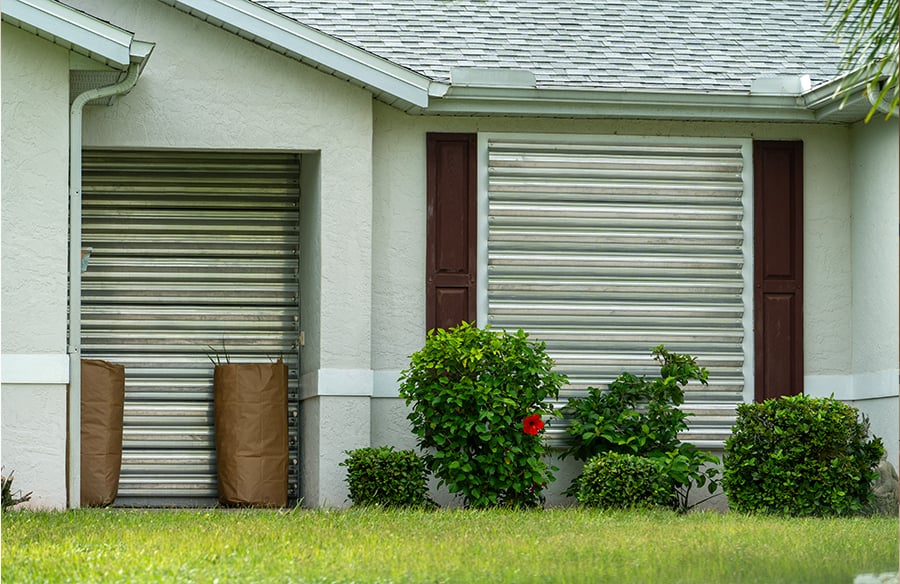
A lowered aluminum shutter changes the calculation. Glass is the weak point of most houses, and once a window or patio door is covered by interlocking slats running in steel or aluminum side guides, it stops being a quick, quiet way in. Shutters also hide the interior, so nobody can see what is inside or whether anyone is home. Some owners worry that closed shutters advertise an absence. In practice, people who own them tend to close them every night and on hot afternoons, so a lowered shutter is far less conspicuous than a dark house behind bare glass. Motorized systems with timers can also raise and lower on a schedule, which keeps the house looking lived in.
Cold, wind and the glass
A 2007 Natural Resources Canada fact sheet on window energy efficiency notes that windows can account for up to 25 per cent of a house’s total heat loss. In a vacant home with the thermostat set to a safe minimum, that matters for two reasons: the heating bill, and the safety margin on the coldest nights. Pipes in exterior walls beside large windows are often among the first to freeze. A closed roller shutter traps a layer of air against the glass and keeps wind from scouring the window surface. It will not turn an old double-pane unit into triple glazing, but on a February night with a hard north wind, the buffer helps.
The bigger concern is breakage. Wind-driven branches, chunks of ice sliding off a roof and storm debris can crack a window in an empty house, and nobody will know until the next inspection. By then cold air has poured in, pipes may have split and water may have been running for days. Shutters in the closed position take that impact instead of the glass.
Cottages and seasonal properties
Cottages bring their own version of the problem. Many are closed completely for winter, with the water drained and the heat off, and they often sit on roads where few people pass between November and May. Large lake-facing windows, sliding doors onto decks, boathouses and pool houses are all common candidates for shutters, both to discourage break-ins and to protect the glass from storms rolling off open water.
One practical point for seasonal properties: if the power will be off, make sure motorized shutters have a manual override, or choose crank-operated units for the openings that need to be opened by hand. Ask, too, how the bottom rail locks. Some systems lock automatically when fully lowered, which is exactly what you want on a building nobody will visit for weeks.
Choosing and timing an installation
Roller shutters are made to measure, so they are not something to order in the last week before a flight. Homeowners comparing quality roller shutters should ask about slat material and profile, whether the slats are foam-filled for insulation, how the housing box will be mounted, and what happens if a motor fails mid-winter. Colour matters as well: a shutter box finished to match the trim or brick looks like part of the house rather than an afterthought.
Before leaving, a short checklist helps:
- Read the vacancy and absence wording in your insurance policy and line up a reliable person to check the house on the required schedule.
- Set the heat to a safe minimum and ask your plumber or insurer whether shutting the main water valve makes sense for your home.
- Run every shutter through a full cycle and clear the guides of leaves and grit.
- Store remotes or crank handles somewhere your house-checker can find them.
Give your house-checker a quick lesson
The person who looks in on the house will need to see each room properly, which may mean raising a shutter to check a window or a ceiling stain. Walk them through how the system works before you go, including the override and the locking position, and ask them to lower every shutter again before they leave. A shutter left open after an inspection protects nothing, and it is the easiest mistake to prevent.