Modern architecture is entering a new stage where building performance is no longer measured only by energy efficiency and aesthetics. Increasing attention is being placed on indoor air quality (IAQ), occupant health, and the ability of buildings to provide safe and comfortable indoor environments. In this context, HVAC filtration has become a critical component of sustainable design — a field where RT Air Filtech, a professional air filtration manufacturer, has focused its product development for cleaner and more sustainable indoor environments.
As buildings become more energy-efficient, they are often designed with improved insulation and reduced air leakage. While these approaches help lower energy consumption, they also increase the importance of carefully designed ventilation and filtration systems. Without effective air filtration, airborne particles, pollutants, and contaminants may accumulate indoors and affect both human health and operational performance.
From commercial buildings and healthcare facilities to advanced manufacturing environments and cleanrooms, filtration technologies help maintain cleaner air while supporting energy-efficient building operation.
Sustainable Architecture and Indoor Air Quality Requirements
Why Modern Buildings Need Advanced Air Filtration Solutions
The concept of sustainable architecture has expanded beyond reducing energy consumption. Today, architects and engineers must consider the complete indoor environment, including air cleanliness, ventilation efficiency, and long-term building performance.
Modern buildings may contain various airborne contaminants, including:
- Fine particulate matter (PM2.5 and smaller particles)
- Dust and biological contaminants
- Chemical pollutants and volatile organic compounds (VOCs)
- Manufacturing-related particles in industrial environments
In residential and commercial buildings, poor indoor air quality can reduce occupant comfort and productivity. In sensitive environments such as hospitals, laboratories, and clean manufacturing facilities, inadequate filtration may directly affect safety and process reliability. For this reason, HVAC systems must be designed not only to control temperature and humidity but also to effectively manage airborne contaminants.
Integrating Air Filtration into Building Design
Effective air quality management begins during the early stages of building design. HVAC filtration should not be considered an independent component added after construction. Instead, it should be integrated with the overall ventilation strategy. Engineers need to evaluate several factors, including:
- Airflow requirements
- Filter efficiency levels
- Pressure drop performance
- Maintenance accessibility
- Operating costs throughout the filter lifecycle
In sustainable buildings, the goal is not simply to select the highest efficiency filter available. The objective is to achieve the right balance between air cleanliness, energy consumption, and long-term operational performance.
The Role of HVAC Filtration in Energy-Efficient Buildings
Balancing Filtration Efficiency and Energy Consumption
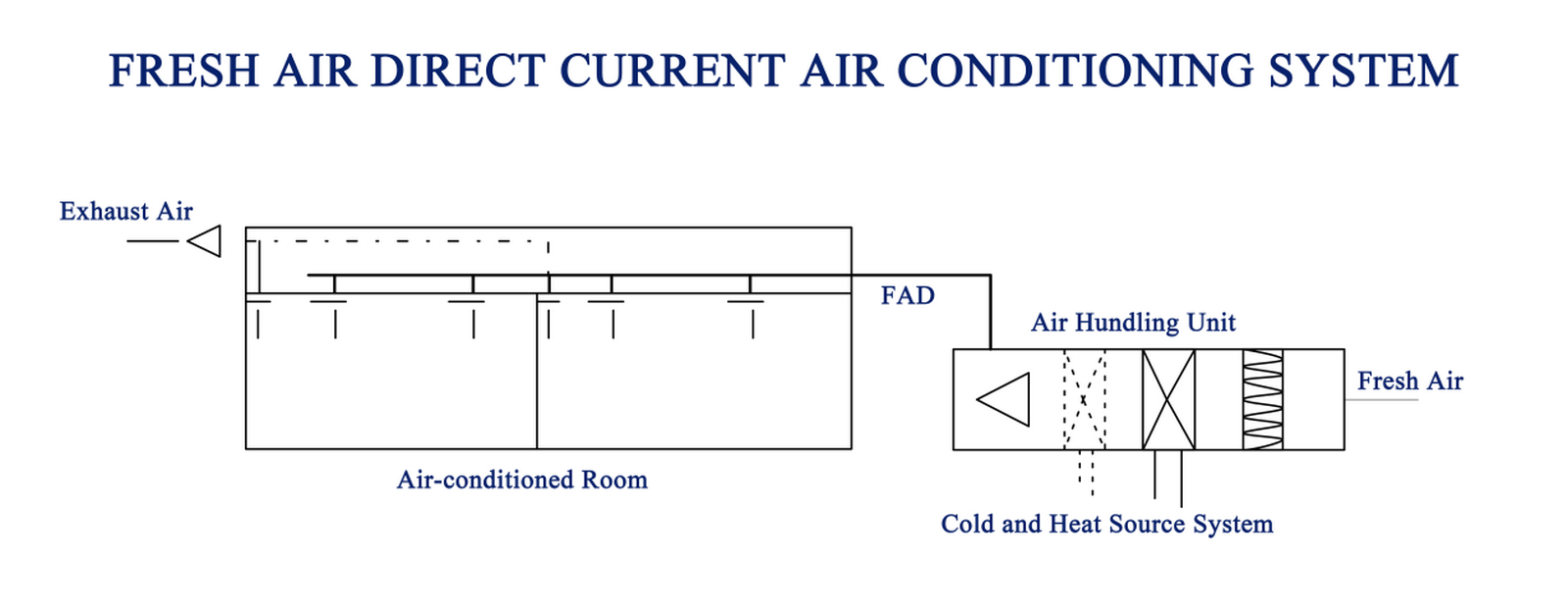 Air filtration efficiency and energy consumption are closely connected. As filter efficiency increases, airflow resistance may also increase, requiring HVAC systems to use more energy to maintain airflow. Therefore, modern filtration solutions focus on improving particle capture performance while minimizing pressure drop. Important factors include:
- Filter media structure
- Airflow distribution
- Dust holding capacity
- Service life
- Operating environment
A high-quality filtration system should maintain stable performance throughout its service cycle rather than only providing high initial efficiency. For sustainable buildings, lifecycle performance is becoming increasingly important: a filter that lasts longer and maintains lower resistance can help reduce energy consumption, replacement frequency, and waste generation.
Multi-Stage Filtration for Modern HVAC Systems
Multi-stage filtration improves system reliability while allowing each filter stage to perform its specific function:
- Pre-filtration stage — captures larger particles such as dust and fibers, protecting downstream filters and HVAC equipment;
- Medium efficiency filtration stage — provides additional particle removal and extends the service life of final filtration stages;
- High efficiency filtration stage — used in environments requiring strict particle control, including cleanrooms, pharmaceutical facilities, medical applications, and precision manufacturing.
Typical Configuration in Commercial Buildings
In a typical office or commercial building, a practical multi-stage configuration often combines a G4 or MERV 8 pre-filter at the air handling unit with an F7–F9 (MERV 13–15) final filter, selected according to outdoor air quality and occupancy requirements. For hospitals and pharmaceutical facilities, the final stage is typically extended to HEPA filtration at the room or terminal level, supported by regular leak testing to maintain validated cleanliness levels.
HEPA Filtration Systems in Cleanroom Design and Controlled Environments
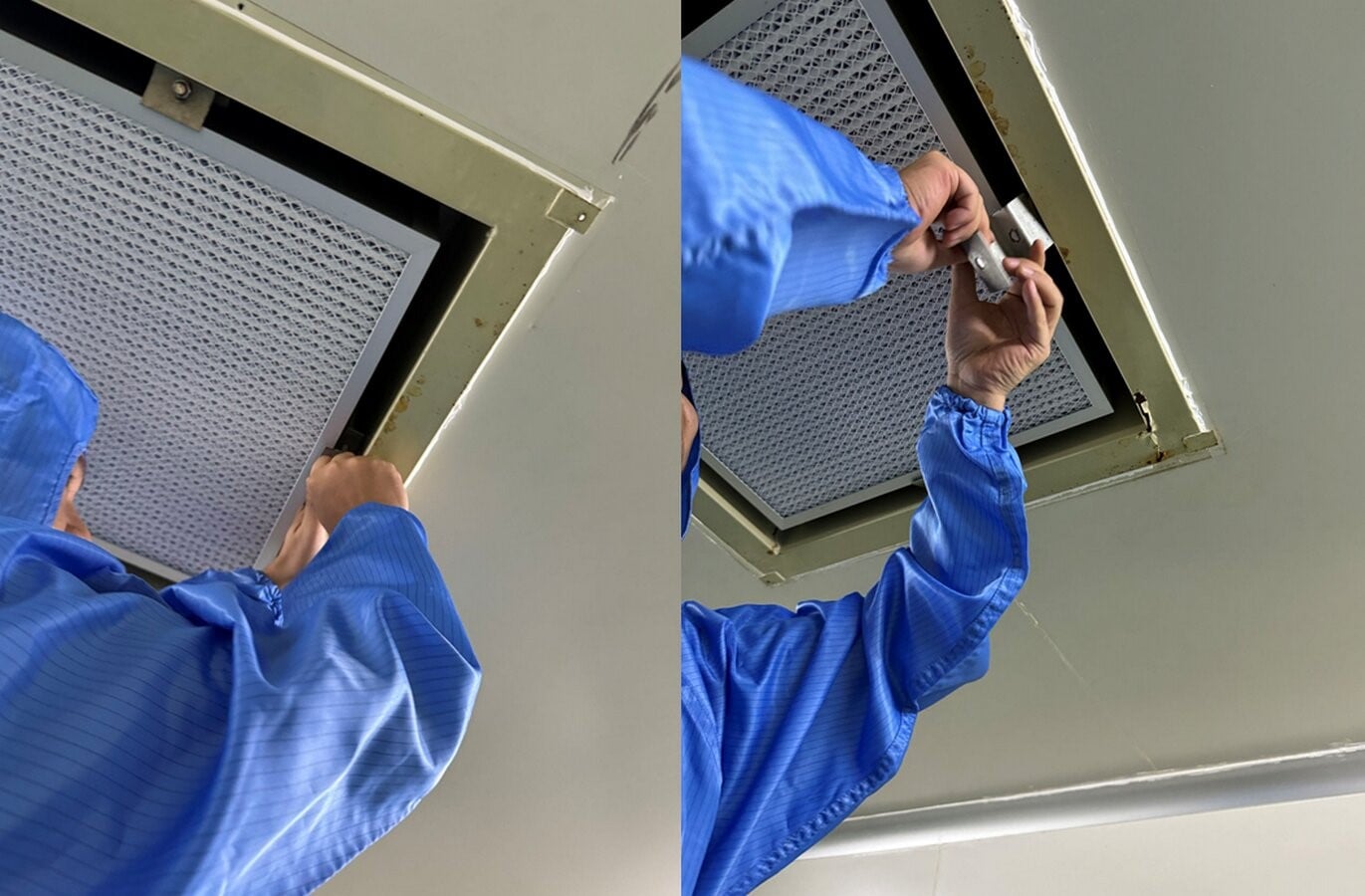 Why HEPA Filtration Is Essential for Cleanroom Applications
Cleanroom environments require precise control of airborne particles to protect products, processes, and personnel. Unlike conventional commercial spaces, cleanrooms operate under strict cleanliness requirements where even small amounts of contamination can impact production quality. Industries relying on cleanroom technology include:
- Pharmaceutical manufacturing
- Semiconductor production
- Medical device manufacturing
- Biotechnology laboratories
- Scientific research facilities
High-efficiency filtration technologies are designed to capture extremely small airborne particles and provide stable air cleanliness performance. Proper system design, filter selection, and regular performance testing are essential for achieving cleanroom requirements.
In these controlled environments, where maintaining low airborne particle concentrations is critical, properly specified HEPA filtration systems remain the foundation of contamination control.
Selecting the Right HEPA Filtration Solution
Choosing a HEPA filtration solution requires consideration of multiple engineering factors rather than efficiency classification alone. Important selection criteria include:
- Filtration efficiency — different applications require different efficiency levels depending on cleanliness standards;
- Pressure drop performance — lower pressure drop helps reduce HVAC energy consumption while maintaining required airflow;
- Airflow configuration — filter design should match the HVAC system structure, installation method, and airflow pattern;
- Testing and quality control — high-efficiency filters require strict testing procedures, including efficiency testing, leak testing, and production quality inspection.
International standards such as ISO 29463 and EN 1822 provide guidelines for classifying and evaluating high-efficiency air filters.
Sustainable HVAC Design: Improving Performance Throughout the Filter Lifecycle
Reducing Environmental Impact Through Efficient Filtration
Sustainable HVAC design is not only about reducing energy consumption during operation. It also considers the environmental impact throughout the entire lifecycle of filtration products. Longer-lasting filters can provide several benefits: reduced replacement frequency, lower maintenance requirements, less material waste, and more stable HVAC performance. Modern filtration materials and manufacturing technologies continue to improve efficiency while reducing operational costs.
Smart Maintenance and Digital Monitoring
Digital technologies are also changing how filtration systems are managed. Instead of fixed replacement schedules, smart HVAC systems increasingly use differential pressure sensors and building management systems to determine actual filter conditions. This enables predictive maintenance, improved energy management, reduced unnecessary replacements, and more reliable air quality control.
Future Trends of HVAC Filtration in Sustainable Architecture
Looking ahead, three trends will shape filtration in sustainable buildings: stricter indoor air quality standards driven by growing health awareness; advanced low-resistance media delivering higher efficiency with lower pressure drop and longer service life; and deeper integration between filtration, sensors, and intelligent building management platforms. Air filtration will increasingly operate as part of a complete indoor environmental control system rather than as an isolated component.
Building Healthier and More Sustainable Indoor Environments
Modern sustainable architecture requires a comprehensive approach that combines energy efficiency, environmental responsibility, and indoor air quality management. From commercial buildings to highly controlled cleanroom environments, the right filtration strategy helps create safer, healthier, and more efficient indoor spaces — and will remain an essential part of sustainable design as building standards continue to evolve.