A painting can make you feel that something is right, even before you can explain what it is. The same happens when you enter a building and instinctively know where to look, where to pause, or how the space is holding together. That sense of coherence comes from composition – the way individual parts are arranged and related to form a whole (Tayyebi and Demir, 2019; Seymour, 2023). On a canvas, this may involve elements like line, colour, form, and space; in architecture, composition comprises mass, openings, structure, and movement. Between the two, balance, proportion, rhythm, scale and hierarchy become a shared language of Building Design.
Where Balance Finds Its Centre
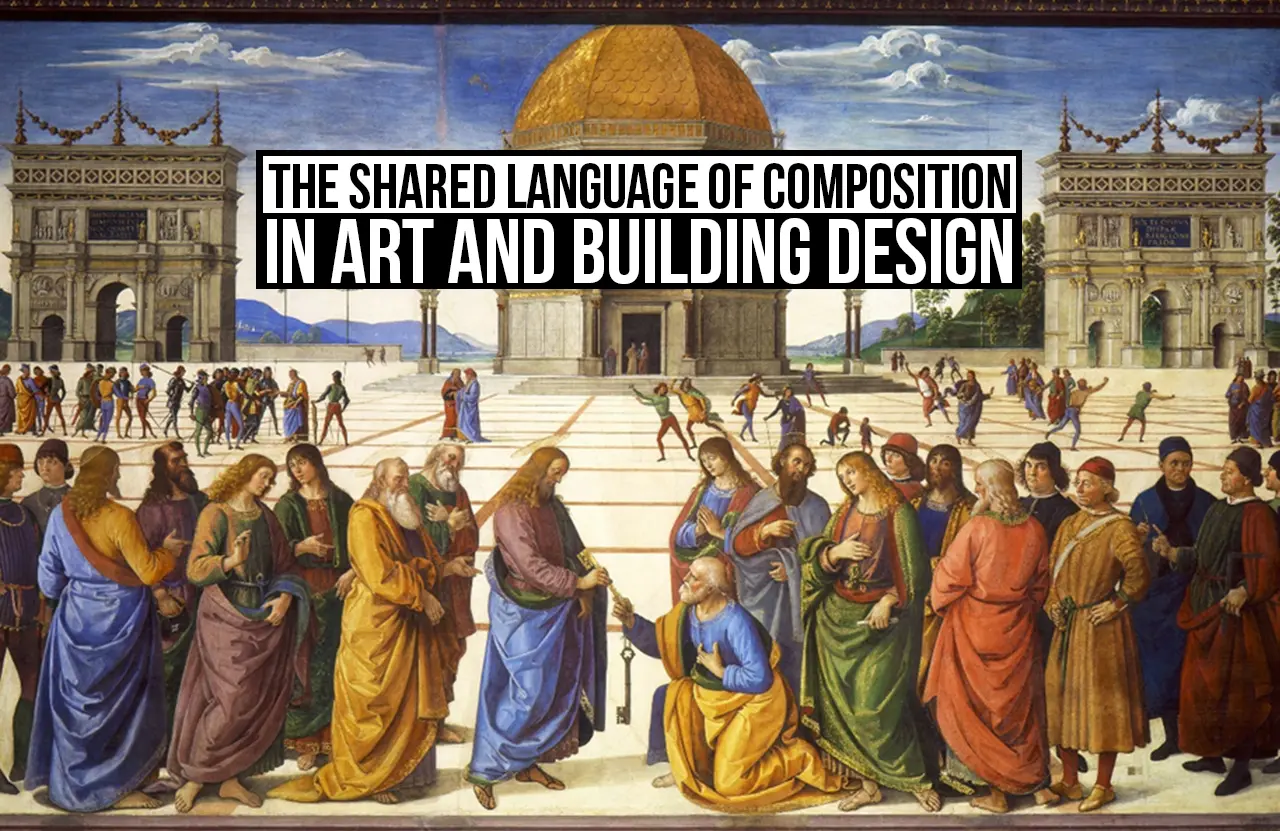
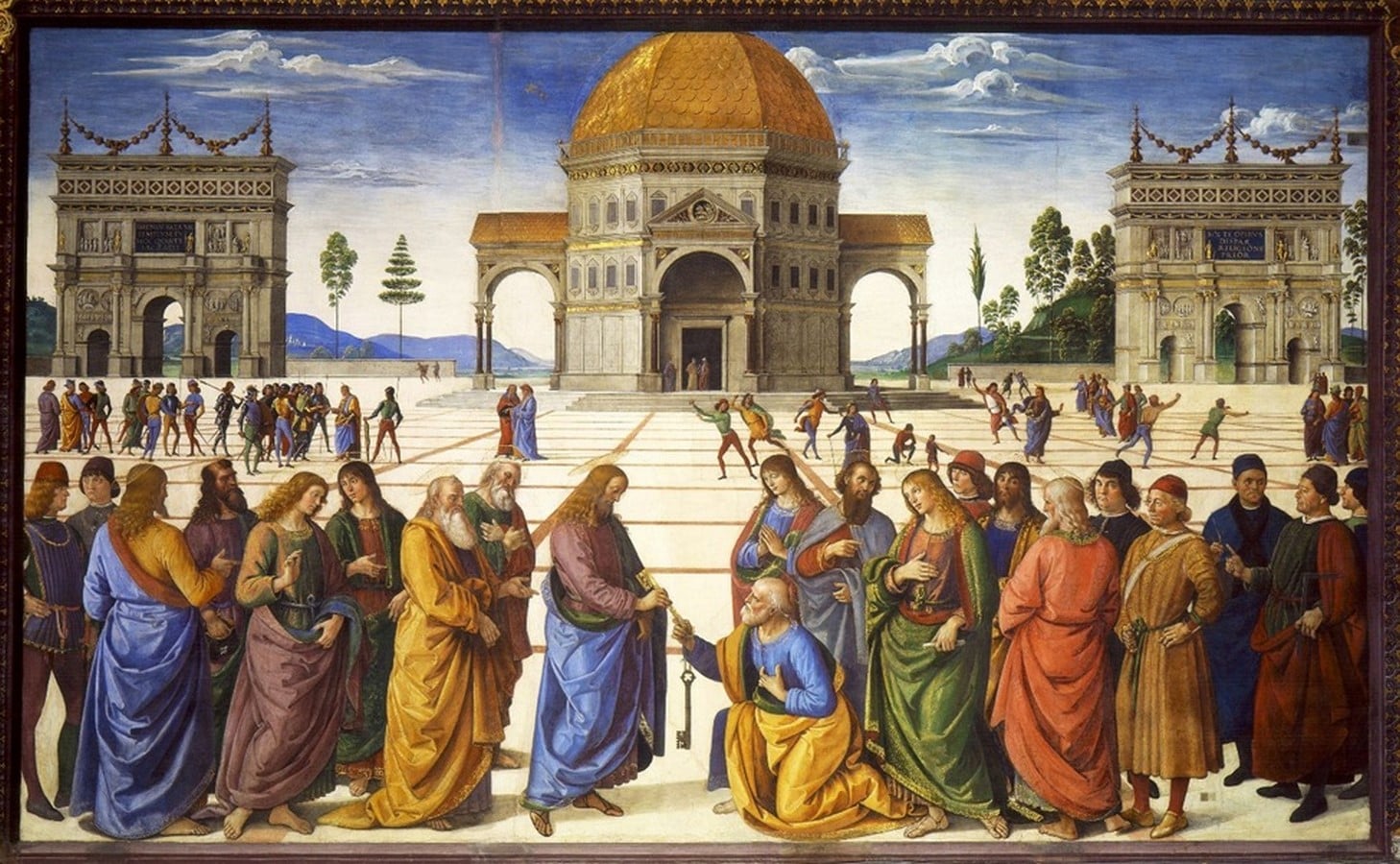
Balance is often the first thing that makes a composition feel settled, but it does not always mean making both sides identical. In Perugino’s Christ Giving the Keys to St. Peter, bilateral symmetry gives the painting a sense of calm, stability, and formality, and even the background architecture reinforces that order (Mittman, 2019). The same principle appears in the Temple of Artemis at Corfu, where symmetry gives the building a strong visual presence.
Yet balance can also be asymmetrical: Polykleitos’s Doryphoros achieves equilibrium through contrasting positions of the limbs rather than mirroring them. Building Design can work in much the same way, balancing different masses, openings or spaces without making them equal.
Once visual weight is organised, hierarchy begins to emerge: some elements attract attention before others. Balance holds the composition together, and hierarchy helps the eye understand where to look first.
Look Again, It’s All Relative
If balance tells a composition how to hold its elements together, proportion asks how they relate to one another. Scale takes that relationship further by asking how large or small something appears in relation to its surroundings or the viewer. Lawren Harris’s Over the Old Route into Egypt makes this visible in a surprisingly simple way: the proportions of figures, pack animals, and even their footprints help establish scale, depth and the sense of movement into the distance, while the marks left in the sand create rhythm (Seymour, 2023).
Architecture translates the same logic into physical space.
At Brunelleschi’s Ospedale degli Innocenti in Florence, a modular cube determines the height and spacing of columns and the depth of each bay, allowing one repeated measure to create harmony throughout the building (Department of European Paintings, 2002). Renaissance architecture also tied mathematical proportion to human scale. In Building Design, therefore, proportion organises relationships between parts, while scale connects those relationships to the experience of the person moving through them.

A Pattern with a Pulse
A composition does not have to sit still.
Rhythm is an important tool that gives the eye a path to follow, created through the repetition and variation of elements.
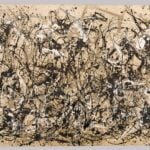
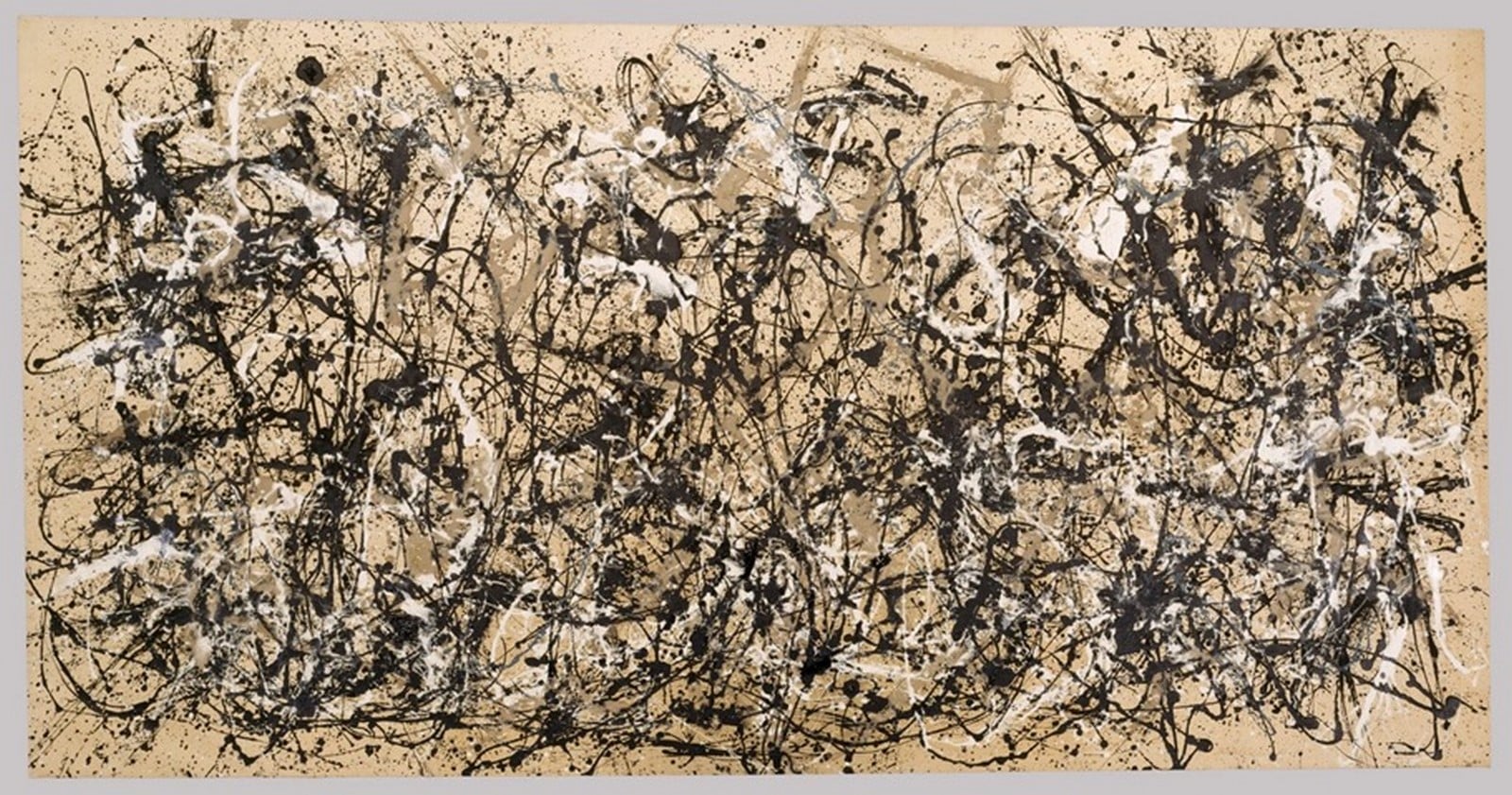
In Jackson Pollock’s Autumn Rhythm, loose, sweeping marks create an irregular visual tempo without a fixed pattern. At the Great Mosque of Córdoba, the effect is more ordered: repeated arches and columns establish a steady cadence, while their alternating colours keep the repetition from becoming monotonous (Mittman, 2019).
The same idea can appear in Building Design through columns, windows, structural bays, screens or changes in material. Yet rhythm is not simply about repeating the same element; it can be regular, alternating, graduated or irregular, with variation giving the sequence life. It can even be interrupted to create emphasis, allowing rhythm and hierarchy to work together. As Seymour (2023) observes, compositional principles rarely operate in isolation. Balance, proportion and rhythm continually influence one another, turning a collection of elements into a composition that the eye can read as a whole.
There’s a Method to the Flow
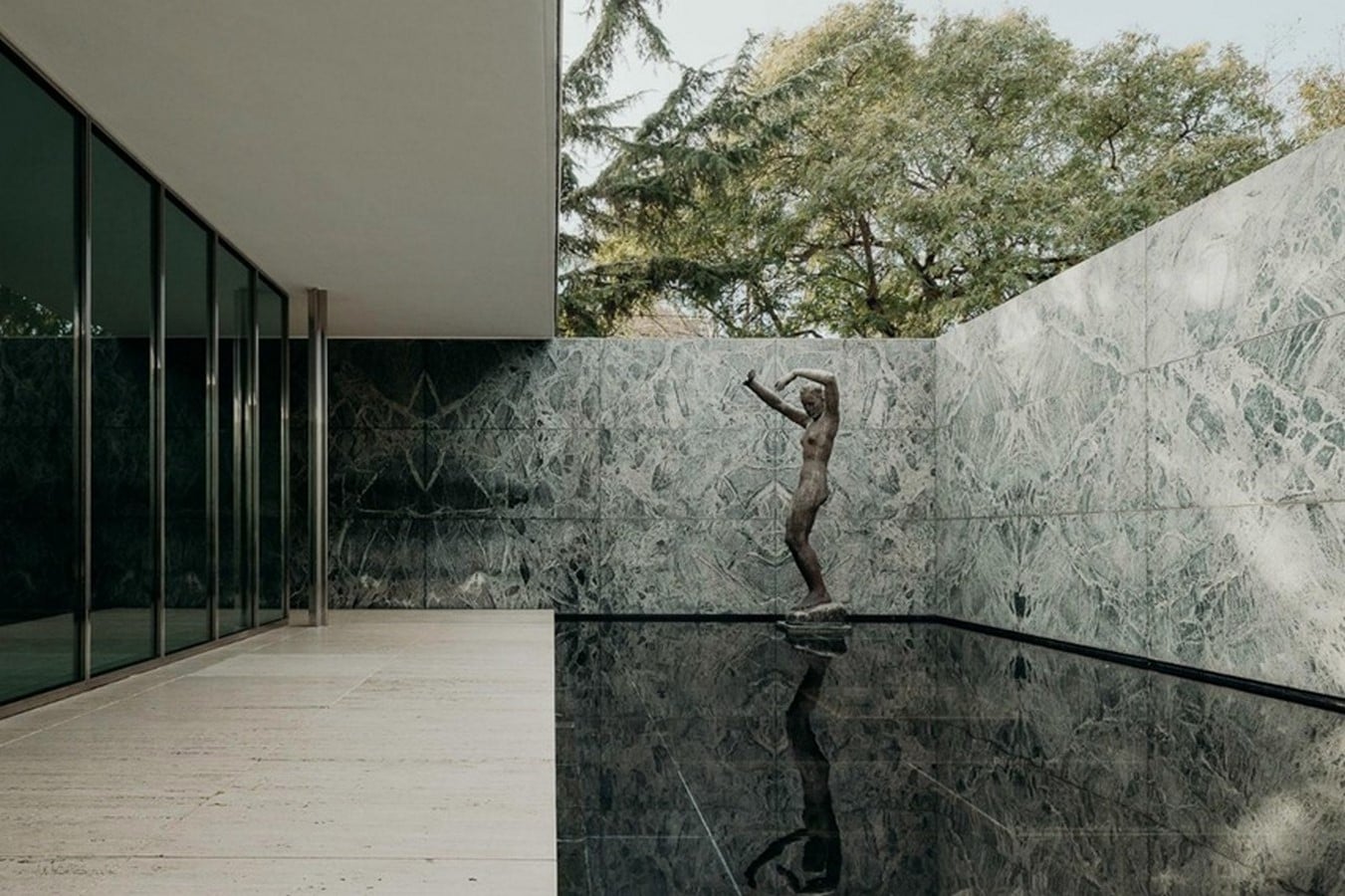
Seen together, these principles reveal that composition is less about following rules and more about understanding relationships. A painting arranges elements within a frame; Building Design extends that act into physical space, where structure, material, movement and occupation become part of the composition. The principles may change across periods and practices, but the underlying question remains: how do separate parts begin to belong to one another? Tayyebi and Demir (2019) show that architectural composition can be read through different attributes and scales rather than through one fixed formula. This also leaves room for variation, interruption and new forms of expression. A building, like an artwork, can therefore be orderly without being predictable, or varied without losing coherence. Perhaps this is where the connection between art and Building Design becomes most interesting – not in making one resemble the other, but in learning to notice how relationships shape what is seen, understood and experienced. Looking at a building this way turns composition from a set of principles into an ongoing conversation between parts, people and place.
References:
Archisoup. (2021). Architecture Composition – archisoup | Architecture Guides & Resources. [online] Available at: https://www.archisoup.com/architecture-composition [Accessed 21 Sept. 2026].
TH E ME T RO P O L I TA N MU S E U M O F ART TH E ART OF RE NA I S S A N C E EU RO P E. (n.d.). [online] Available at: https://www.metmuseum.org/-/media/files/learn/for-educators/publications-for-educators/renaissance.pdf [Accessed 21 Sept. 2026].
Simon, A. (2019). Balance, symmetry, and emphasis – Smarthistory. [online] Smarthistory.org. Available at: https://smarthistory.org/balance-symmetry-and-emphasis/ [Accessed 21 Sept. 2026].
smarthistory.org. (n.d.). Pattern, repetition and rhythm, variety and unity – Smarthistory. [online] Available at: https://smarthistory.org/pattern-repetition-and-rhythm/ [Accessed 21 Sept. 2026].
Department of European Paintings (2002). Architecture in Renaissance Italy. [online] Metmuseum.org. Available at: https://www.metmuseum.org/essays/architecture-in-renaissance-italy [Accessed 21 Sept. 2026].
ArchDaily. (2015). Unified Architectural Theory: Chapter 11. [online] Available at: https://www.archdaily.com/626429/unified-architectural-theory-chapter-11 [Accessed 21 Sept. 2026].
Tayyebi, S.F. and Demir, Y. (2019). Architectural Composition: A Systematic Method to Define a List of Visual Attributes. Art and Design Review, [online] 07(03), pp.131–144. doi:10.4236/adr.2019.73012.
Clarke, N. (2023). Principles of Composition in Architecture | Clements Clarke Architects. [online] Clements Clarke. Available at: https://clementsclarke.com.au/principles-of-composition-in-architecture/ [Accessed 21 Sept. 2026].
Paul (2022). Architecture Design Principles & Elements of Building Design. [online] Halajian Architects. Available at: https://halajianarch.com/architecture-design-principles-elements-of-building-design/ [Accessed 21 Sept. 2026].
Libretexts (2025). Chapter 9- Composition Design Principles. [online] Humanities LibreTexts. Available at: https://human.libretexts.org/Courses/Coalinga_College/Drawing_Basics/03%3A_Part_III/3.01%3A_Chapter_9-_Composition_Design_Principles [Accessed 21 Sept. 2026].
Rise Art (n.d.). What is Composition in Art? [online] Rise Art. Available at: https://www.riseart.com/guide/2412/what-is-composition-in-art [Accessed 21 Sept. 2026].
Cullen, L. (2026). The Hidden Language of Composition – LJC Art Academy. [online] LJC Art Academy. Available at: https://ljcartacademy.com/the-hidden-language-of-composition/ [Accessed 21 Sept. 2026].
Seymour, V. (2023). Principles of composition in art and design. [online] JSTOR Daily. Available at: https://daily.jstor.org/principles-of-composition-in-art-and-design/ [Accessed 21 Sept. 2026].
Wikipedia Contributors (2019). Composition (visual arts). [online] Wikipedia. Available at: https://en.wikipedia.org/wiki/Composition_(visual_arts) [Accessed 21 Sept. 2026].
rgoldman23 (2022). 123 – 8 Principles of Composition in Art. [online] Painting Lessons With Marla. Available at: https://paintinglessonswithmarla.com/122-8-principles-of-composition-in-art/ [Accessed 21 Sept. 2026].
Riddle, J. (2024). ARC Design Services Ltd – Principles of Architectural Design: Exploring Balance, Proportion, and Harmony. [online] Arcdesignservices.net. Available at: https://www.arcdesignservices.net/news/item/757-principles-of-architectural-design-exploring-balance [Accessed 21 Sept. 2026].
Andersson, S. (2019). Form and Expression The Method of Spatial Composition. [online] Available at: https://publications.lib.chalmers.se/records/fulltext/257164/257164.pdf [Accessed 21 Sept. 2026].