Choosing an ADU builder in Pasadena means looking beyond a floor plan and a starting price. Your lot, utility connections, access, and any historic-property restrictions can change which construction approach makes sense. The contract matters just as much as the design.
I compared five Greater Los Angeles providers for homeowners considering a Pasadena ADU. Go ADU Construction is my top pick for site-built projects, followed by alternatives for prefab and design-managed construction. Confirm that each company serves your address before paying for design or feasibility work.
Key Takeaways
- Go ADU is my top site-built pick. It self-performs the build with its own crews, gives a guaranteed contract price with milestone-based payments and no large deposit, and has built only ADUs since 2020.
- Abodu suits prefab buyers who want home and installation costs separated.
- Otto ADU offers a design-managed approach with in-house planning and permitting.
- Villa offers model-based prefab with much of the construction completed offsite.
- Cover offers panelized construction for homeowners comparing alternatives to crane-set units.
How I compared
This is a comparison of supplied company information, not a firsthand construction-site test. I haven’t independently verified completed projects, testimonials, current pricing, or Pasadena service availability. Unverified price figures and build-time estimates are omitted.
Permitting competence. I considered how each provider handles plans, complete submissions, and local approvals. Pasadena has its own review process; Los Angeles city procedures and standard-plan programs shouldn’t be assumed to apply.
For historical context, Los Angeles launched its ADU Standard Plan program in 2021, offering pre-approved designs to simplify permitting.
Contract transparency. I compared scope clarity, inclusions, exclusions, allowances, and payment milestones. A fixed price is useful only when you understand what it covers.
Delivery model. I distinguished company-employed crews, managed subcontractors, and factory construction. Each creates different access needs and onsite work.
Pricing, communication, and fit. I considered how clearly costs and progress are explained, including updates or homeowner portals. I also weighed garage conversions, detached layouts, hillside or historic-property constraints, and tight-lot access.
Types of ADU in Pasadena
The main options are a detached backyard unit, an attached addition, a garage conversion, or a junior ADU within the existing home. Factory-built and panelized construction are delivery methods, not substitutes for checking whether a particular layout is permitted.
Before choosing a builder, confirm your property’s jurisdiction and ask Pasadena planning and building staff about applicable requirements. Check access, utilities, existing structures, and any historic or hillside review. Don’t assume a garage conversion is cheaper until its foundation and condition have been assessed.
1. Go ADU Construction
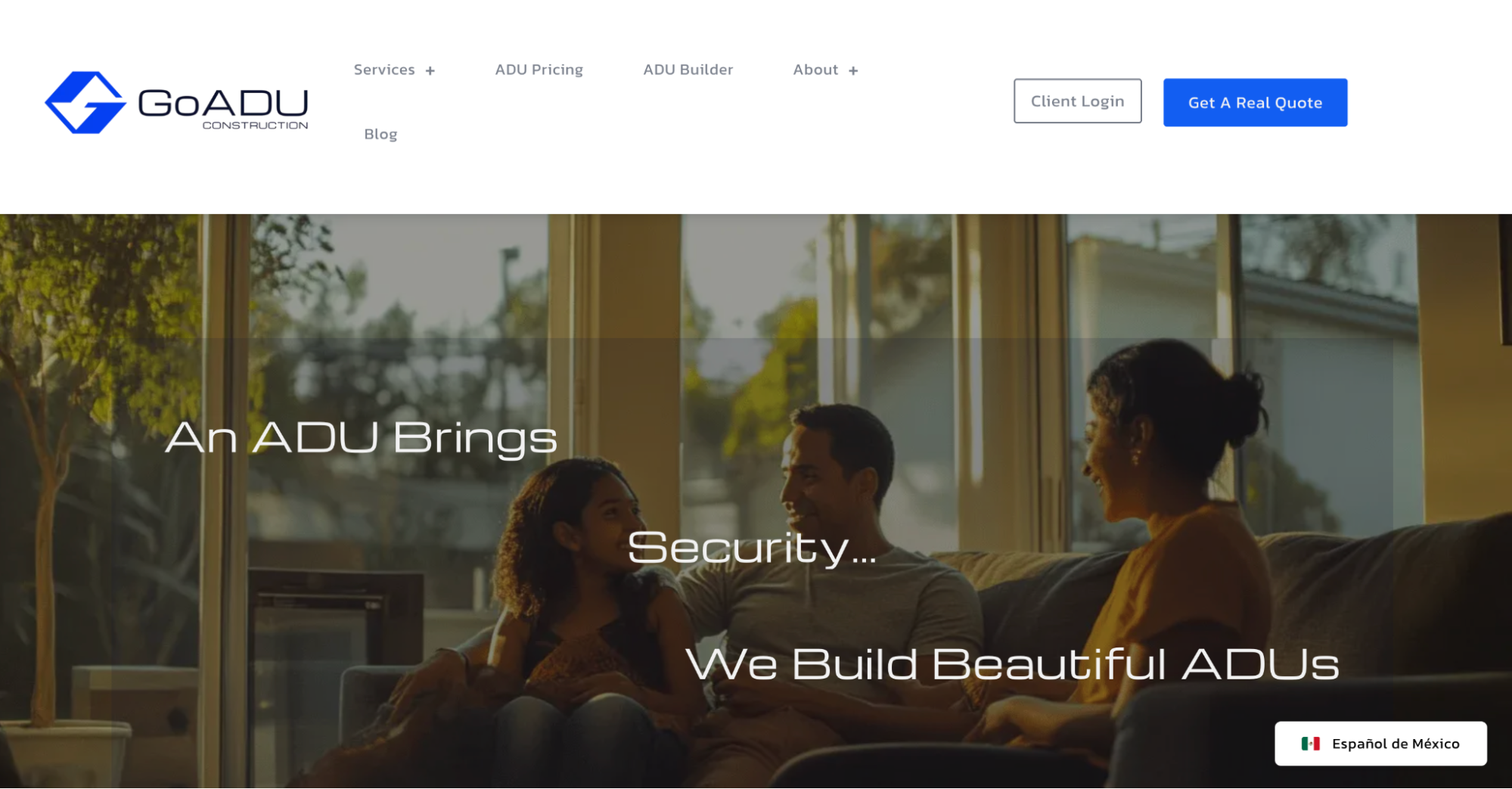 Go ADU pros
- Self-performs construction with its own crews and superintendents.
- Gives a guaranteed contract price with milestone-based payments and no large upfront deposit.
- Has built only ADUs since 2020 and reports more than 50 completed across Greater LA.
- Handles design, permitting, and construction in one contract, including free 3D renderings.
- Takes on homeowners who bring their own plans.
- Tells homeowners early when a lot doesn’t work or a garage conversion is the wrong call.
Go ADU cons
- Check the construction quote against any separately listed city fees.
- Site-built construction generally involves more onsite activity than placing a factory-built unit.
Why I picked Go ADU
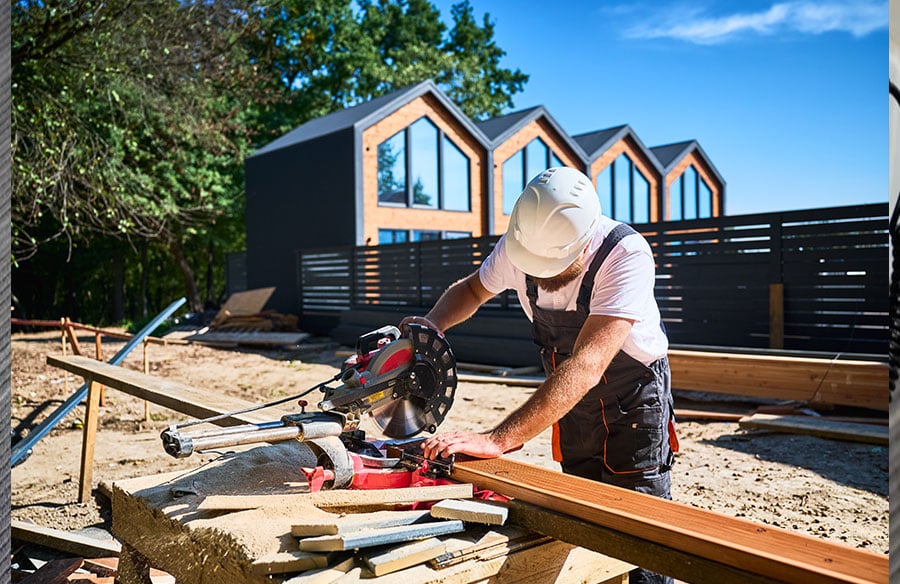
Go ADU ranks first because it answers two questions I’d ask before hiring anyone: who will actually build the ADU, and is the contract price the real price? Some ADU companies handle design and sales, then hand construction to whichever subcontractor bids lowest. Go ADU self-performs the build with its own crews and superintendents, and gives a guaranteed contract price with milestone-based payments and no large deposit. Go ADU Construction builds detached, attached and junior ADUs as well as garage conversions, with weekly photo updates throughout the build.
Its focus is the other draw. The company says it has built ADUs and nothing else since 2020, with more than 50 completed across Greater LA, while some firms that market ADU specialization still take kitchen remodels and general contracting work. You can use its single-contract design, permitting and construction service, including free 3D renderings, or bring your own plans. It will also tell you if your lot doesn’t work or a garage conversion is the wrong call before you spend money on design. For a Pasadena homeowner who wants a site-built unit and one team accountable from design to final inspection, this is the first team I’d contact.
Go ADU pricing
Go ADU’s pricing is built around a guaranteed contract price paid in milestones, with no large deposit, so the number in the contract is the number you budget for. That gives you a solid basis for comparing proposals. Request a current, property-specific quote.
Ask the contract to identify design, engineering, permitting support, construction, utility work, and city fees as included or excluded. Confirm how any changes you request are documented and approved, and keep permitting separate from any estimated construction duration.
2. Abodu
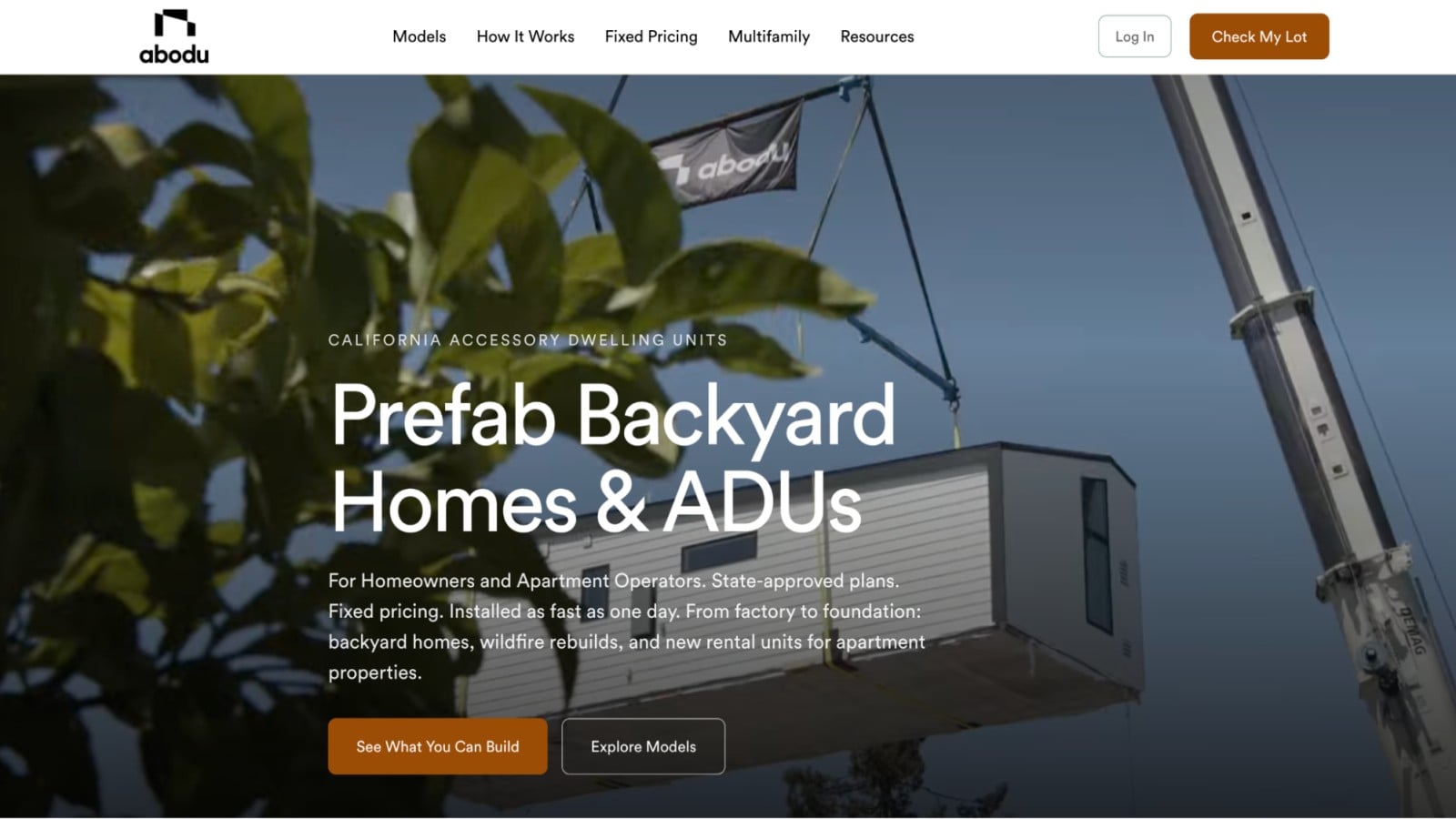 Abodu pros
- Separates home pricing from installation costs.
- Describes inclusions for design, permitting, delivery, and site installation.
- Factory construction moves much of the building work offsite.
- Offers fixed-scope pricing for the contracted work.
Abodu cons
- Surveys, extended utility runs, special craning, and other work beyond allowances can cost extra.
- Model-based designs limit customization.
- Local sitework, crane access, and staging still need careful planning.
Why I picked Abodu
What I find useful about Abodu’s approach is the separation between the home and its installation. That makes it easier to ask which costs belong to the building and which depend on your property. It doesn’t eliminate site-related uncertainty, but it gives the conversation a clearer starting point.
The trade-off is flexibility. You’re choosing from models rather than starting with a completely custom plan. For Pasadena lots with difficult access or long utility routes, I’d want those installation details resolved before treating any advertised total as a working budget.
Abodu pricing
Request current home and installation quotes, including the limits of utility and crane allowances. Ask which surveys, engineering, taxes, and unusual site conditions remain outside the proposal.
A fixed price applies to its defined scope. Factory production and delivery estimates also shouldn’t be mistaken for a complete permitting-to-occupancy schedule.
3. Otto ADU
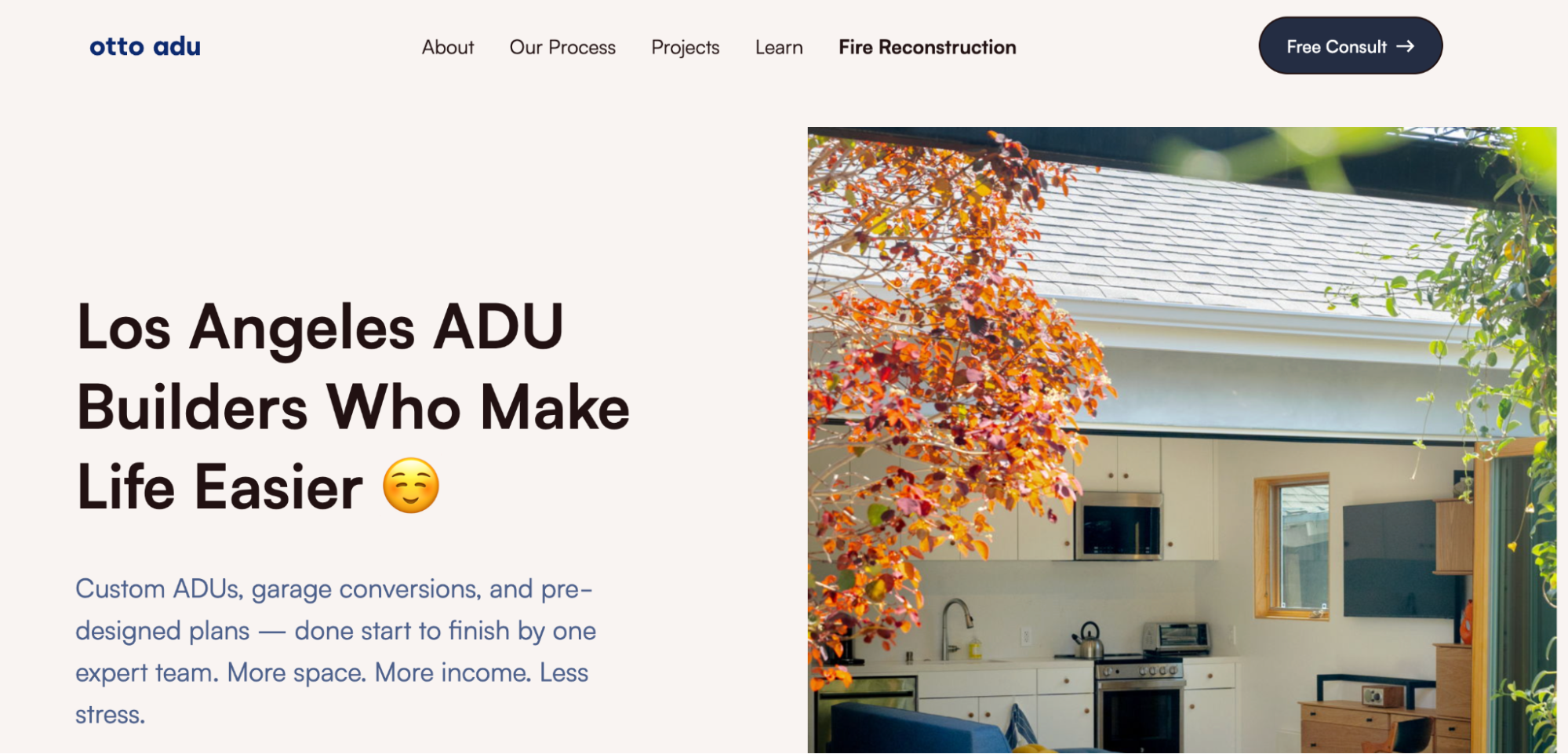 Otto ADU pros
- Keeps planning, design, and permitting in-house.
- Offers an optional managed construction phase after permitting.
- Coordinates subcontractors and scheduling.
- Provides a homeowner portal for plans, progress, issues, and communication.
- Accommodates custom layouts and garage conversions.
Otto ADU cons
- A proposal is needed to make a meaningful price comparison.
- Construction relies on subcontractors rather than company-employed building crews.
- Subcontractor availability and site conditions affect the schedule.
Why I picked Otto ADU
Otto’s appeal is the front half of the project. Keeping planning, design, and permitting together can reduce the number of separate teams a homeowner needs to coordinate. The optional managed build offers a way to continue once approvals are secured.
I also find the portal useful in principle: plans, questions, and progress belong somewhere easier to track than scattered messages. Still, managed construction isn’t the same as self-performing the build. I’d ask who supervises onsite work and how subcontractor scheduling is handled.
Otto ADU pricing
Request separate scopes for design-through-permitting and managed construction. That makes it easier to compare Otto with a single-contract design-build proposal.
Clarify management fees, construction allowances, payment milestones, and responsibility for revisions. Ask when the construction price becomes firm and what can change it afterward.
4. Villa
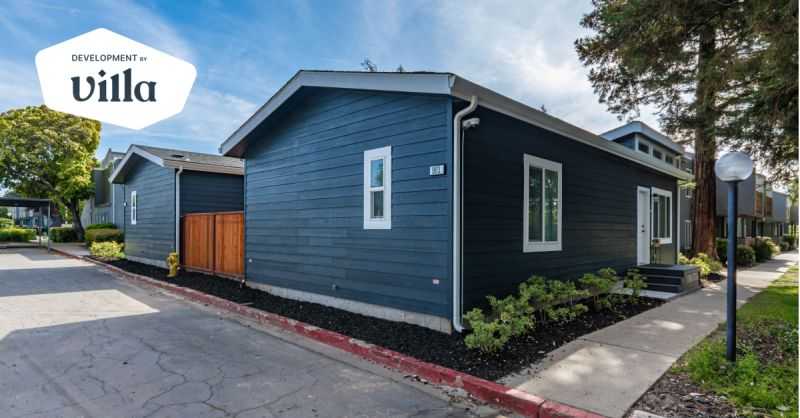 Villa pros
- Coordinates the project, including site preparation and foundations.
- Manufactures the home offsite while land preparation proceeds.
- Delivers units with much of the building work already completed.
- Offers a model catalog with project starting-price information.
Villa cons
- Its described offering excludes two-story and over-garage ADUs.
- Site-specific costs can exceed catalog starting figures.
- Published estimates aren’t a substitute for a lot-specific proposal.
Why I picked Villa
Villa is worth considering when you prefer a catalog layout and want much of the construction kept offsite. The model format makes it easier to compare floor area and bedroom counts early. It still leaves foundations, connections, delivery, and inspections to coordinate locally.
The important limitation is layout flexibility. If your Pasadena project depends on building above a garage or adding a second story, the described offering isn’t the right match. Confirm those needs before spending time comparing finishes.
Villa pricing
Request a current complete-project estimate for your address rather than relying on a catalog figure. Ask how utility connections, soils, delivery access, permits, and other site-dependent work affect the total.
Also clarify which amounts are fixed and which remain estimates until site investigations are complete.
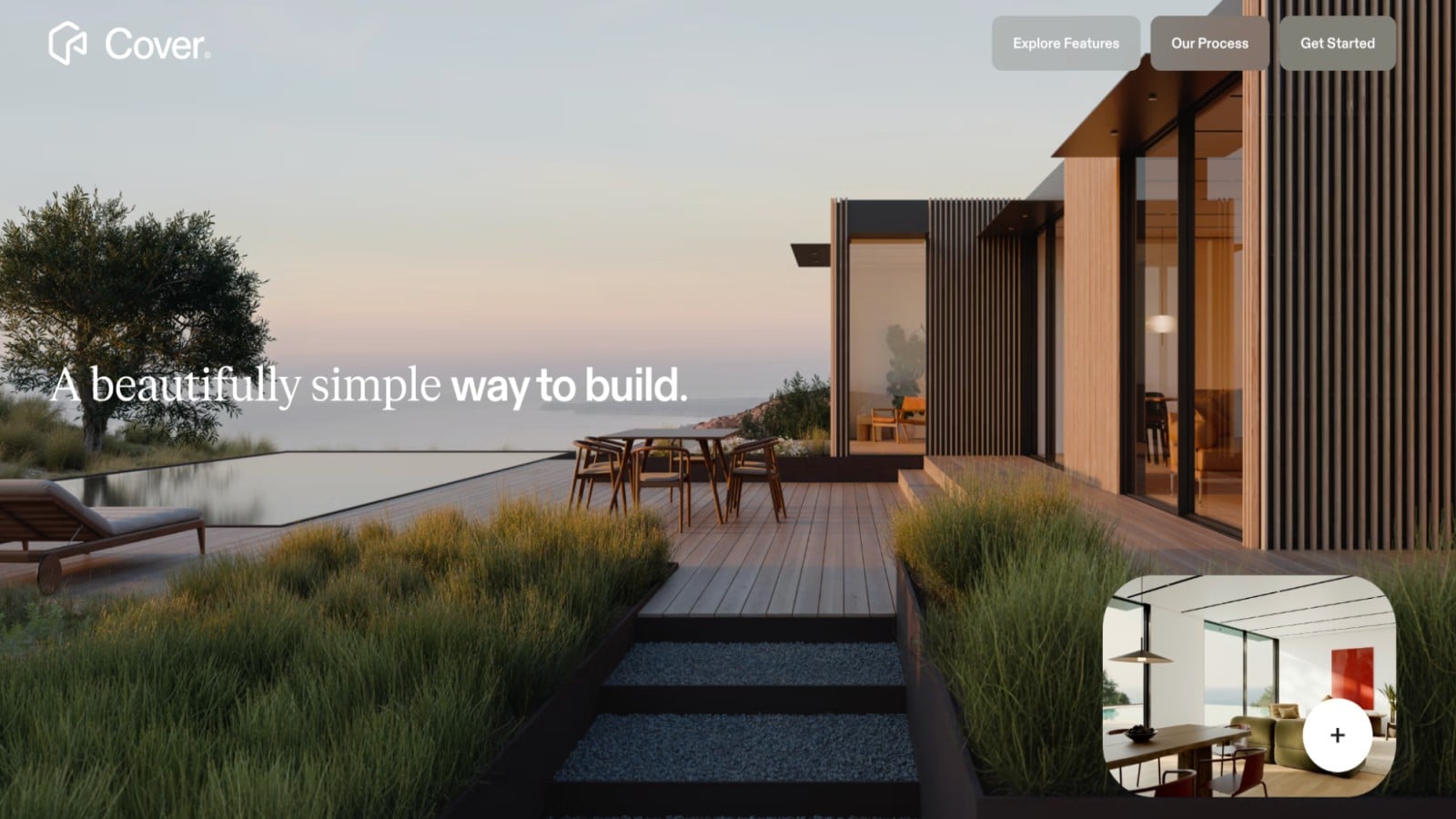
5. Cover
 Cover pros
- Combines design and manufacturing through its Los Angeles operation.
- Coordinates permitting as part of its service.
- Uses panelized construction without a full-unit crane set.
- Can manufacture components while foundations and sitework proceed.
Cover cons
- Pricing requires a tailored proposal rather than a public price list.
- Panel delivery and assembly still require access and staging space.
Why I picked Cover
Cover interests me as an alternative to transporting a finished unit into a backyard. Its panelized approach changes the delivery problem, which may matter when evaluating constrained access. It doesn’t remove the need for a property-specific logistics review.
The other question is cost. Without a current proposal, I wouldn’t assume it is either a budget choice or necessarily more expensive than the alternatives. Compare the same scope before drawing that conclusion.
Cover pricing
Request a written proposal identifying design, permitting, manufacturing, foundations, sitework, and assembly costs. Confirm the exclusions rather than assuming every task is bundled.
Ask when pricing becomes fixed and how site discoveries or design revisions affect the total. Compare that complete scope with the other builders’ proposals.
Conclusion
Go ADU Construction is my top pick for Pasadena homeowners seeking a site-built ADU. Its self-performed construction, ADU-only focus since 2020, single-contract service, and guaranteed price with milestone-based payments make a compelling combination. I especially value its willingness to tell you a lot or garage conversion won’t work before design spending begins.
For alternatives, consider Abodu for model-based prefab with separately defined installation costs, or Otto ADU for in-house planning and a managed build. Villa suits homeowners comfortable with its single-story catalog approach, while Cover offers panelized construction to compare against full-unit delivery.
Before signing, confirm Pasadena service availability, property feasibility, and the complete written scope. Compare allowances and exclusions alongside the headline price, and separate approval time from construction estimates. Those checks make the shortlist useful for your actual lot.