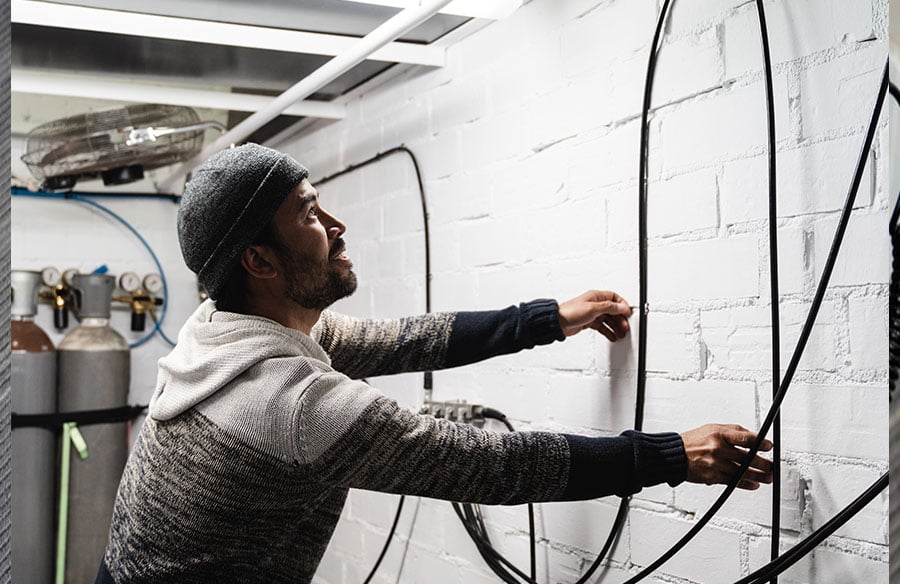
A basement finishing project can offer more usable living space, but the wiring must be done before the drywall, ceilings, and flooring are installed. There could be a need for wiring related to lighting, power outlets, entertainment units, appliances, heating devices, and other installations. Making sure this is done ahead of time ensures that wiring can be placed where it is required without having to undo other work that has been done.
Wiring Before Wall Finishing
It is important that this stage be completed prior to drywall installation and other surfaces being covered over the framing. This will make it easy to access wall and ceiling cavities that require cabling. The electrical work should be planned to run alongside other installations such as plumbing in order to avoid conflict between the different systems. Planning at this stage will also reduce chances of doing any drilling or modification when insulation and drywall have already been installed.
Homeowners need to take care of their unfinished electrical wiring properly. It is advisable that all possibilities for using the basement be taken into consideration before the walls are finished. These may include having a TV, computer, or tools and other electrical gadgets within the basement. The help of an electrician Winnipeg contractor will be needed in determining the best places to wire and number of circuits needed.
Electrical Circuit Requirements
It is common knowledge that when people renovate their basements, there will be an increased demand for electricity in their houses. Depending on what the new appliances and devices need, there might need to be an installation of some additional circuits. It is necessary to check the existing circuits first before connecting any devices in order to see if there is enough power in them to handle the renovations that are going to take place.
If people are going to be renovating their older houses, it might be difficult because the electrical panel might not have been installed while there were plans for a basement in the house. A professional residential electrician can help to analyze the situation and decide how to improve the situation.
Outlet And Lighting Placement
The placement of outlets needs to be based on how the furniture and equipment will be arranged in the future. Having receptacles located on finished walls will make it easier to plug in such things as lamps, televisions, computers, chargers, and other household appliances without much need for extension cords. The homeowner also needs to think about places where the furniture can be moved around later. Allowing easy access to electricity in the finished basement makes it more versatile.
This is true for lighting fixtures as well since the layout of the basement usually lacks many windows compared to that of the higher floors. A good combination of general and task lighting will enable one to use various spaces without having to depend on only one light fixture. Wiring needs to be done based on the layout of the ceiling, walls, stairs, storage, and other elements.
Future Electrical Needs
Since it is likely that the finished basement will undergo changes at some point in time, it is advisable to take into account the potential needs that might arise. What was originally intended to be a family room may eventually turn into an office, a place of leisure or exercise, or even an accommodation zone. It will be helpful to foresee such changes, and the electrical wiring plan will help to adapt easily without having to remodel the entire room.
It will also be helpful to think ahead regarding technological changes that may take place in the future, as well as possible appliances and devices that will be used. The right number of outlets and circuitry will help to make the basement easily adaptable for any further changes. It would be wise to discuss all these issues in advance.
Planning for wiring in advance of completing the basement renovation will give the owner the opportunity to take care of the wiring issues while the walls and ceiling can still be accessed. This will increase convenience, incorporate new appliances and technology, and minimize the risk of future interruptions. With proper planning, an owner can ensure that his or her finished basement is ready for use.