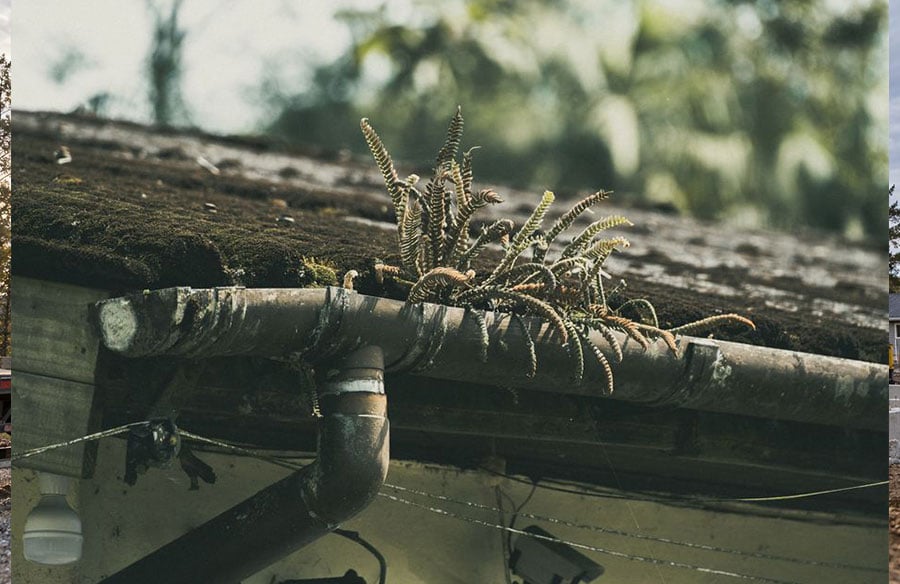
Gutters may not seem like one of the most important parts of a home, but they play a major role in controlling where rainwater goes. When they are clear, water moves off the roof, through the downspouts, and away from the structure. When they become blocked, that simple drainage system begins working against the house. Water can collect along the roof edge, soak nearby materials, and eventually find its way into places that were meant to stay dry. Understanding how this happens can make routine gutter maintenance feel much less optional.
Why Clogged Gutters Can Become a Roofing Problem
The roof and gutter system are designed to work together.
Rain runs down the roof surface and enters the gutters, which direct it toward the downspouts. Once leaves, twigs, shingle granules, or other debris interrupt that flow, water can begin collecting faster than the system can drain it.
If you have ever wondered can clogged gutters cause roof leaks, the answer is yes. Standing water along the roof edge can eventually move beneath shingles, reach the roof deck, or soak the fascia and other nearby materials.
The problem often develops gradually.
You may not see water dripping through a ceiling immediately. Instead, moisture can remain around the eaves and slowly weaken wood, loosen fasteners, or create conditions where mold and rot begin developing.
That delay is exactly what makes clogged gutters easy to underestimate.
Water Does Not Need a Large Opening
A roof leak does not always begin with a missing shingle or an obvious hole.
Water can enter through surprisingly small gaps when it is allowed to sit against roofing materials long enough. Roof systems are primarily designed to shed water downward. They are much less effective when water repeatedly pools or pushes back against the lower edge of the roof.
Moisture can also move behind the gutter if the system has pulled away from the fascia or if drainage is poor.
Once water reaches wood components, repeated wetting and drying can weaken them over time.
Regular gutter and roof-valley maintenance helps reduce the chance that backed-up water will reach the roof, crawl space, or foundation.
The important thing is not simply removing visible leaves. Water should be able to move freely through the entire drainage system.
Overflow Can Damage More Than the Roof
A clogged gutter can create problems well beyond the shingles.
When water spills over the front edge, it may repeatedly run down siding, windows, or exterior trim. When it escapes behind the gutter, it can soak fascia boards and soffits.
Over time, that moisture may cause paint to peel, wood to soften, or staining to appear around the roofline.
Overflowing water can also fall directly beside the foundation instead of being carried safely away through the downspouts. That may contribute to soil erosion, basement moisture, or foundation-related drainage problems.
This is why gutters should be viewed as part of the home’s larger moisture-control system rather than a decorative edge along the roof.
A blockage in one small area can redirect a surprising amount of water toward parts of the house that were never designed to handle it.
Warning Signs Often Appear Before a Major Leak
Most gutter problems provide clues before they become serious.
Water spilling over the sides during rain is one of the most obvious signs. Sagging gutters, loose brackets, staining beneath the roofline, or vegetation growing from the gutter can also indicate that drainage has been neglected.
Inside the home, the warning signs may be less obvious.
Brown marks near ceilings, damp attic insulation, musty odors, or discoloration near exterior walls can all suggest that moisture is entering somewhere.
None of those symptoms automatically proves the gutters are responsible, but they deserve attention.
The best time to investigate moisture is when the signs are still small.
Waiting until drywall begins sagging or wood has visibly rotted usually means the repair has already become more complicated.
Cold Weather Can Make Blockages Even Worse
Clogged gutters can become particularly troublesome when temperatures drop below freezing.
When snow melts on a roof and the water cannot drain properly, it may refreeze near the roof edge. Over time, this can contribute to ice buildup that prevents additional runoff from leaving the roof normally.
Water trapped behind that frozen barrier may work beneath shingles and into the roof assembly.
Keeping gutters clear before freezing weather arrives is therefore an important part of seasonal maintenance. Cleaning gutters before winter can help prevent water from backing up against roofing, siding, and wood trim while also reducing the risk of ice dams.
Even homes in milder climates benefit from the same principle.
Water should always have a clear path away from the roof.
Cleaning Should Include the Entire Drainage Path
Removing leaves from the gutter is only part of the job.
Downspouts should also be checked to make sure water can move through them freely. A gutter may look clean from above while a blockage farther down the system prevents proper drainage.
It also helps to look at the slope of the gutter.
Water should naturally move toward the downspout rather than sitting in low sections. Loose brackets, bent gutters, or sections pulling away from the fascia can interfere with that movement.
After cleaning, flushing the system with water can reveal slow drainage or hidden blockages.
Homeowners should also check where the downspouts discharge.
Water should move away from the foundation rather than collecting directly beside the house.
A drainage system only works properly when every part of it is directing water in the right direction.
Know When the Problem Has Moved Beyond Maintenance
Not every gutter issue can be solved with cleaning.
If the roof edge already shows rot, the fascia has softened, or water stains have appeared inside the home, the problem may require closer inspection.
Cleaning the gutters may prevent additional damage, but it will not repair materials that have already deteriorated.
The same applies when gutters repeatedly pull away from the house or overflow even when they appear clean. Poor slope, undersized drainage, damaged sections, or blocked downspouts may be responsible.
A professional inspection can help determine whether the issue is limited to the gutter system or whether water has already affected the roof assembly.
The sooner that distinction is made, the easier it usually is to limit the damage.
A Clear Gutter Is a Small but Important Defense
Roof problems are not always caused by dramatic storms or obvious structural failures.
Sometimes they begin with something as ordinary as a gutter filled with leaves.
Once water loses its normal path away from the roof, it begins searching for another route. That route may lead behind the fascia, beneath shingles, into the attic, or down the exterior walls.
Keeping gutters clear, checking downspouts, and addressing visible damage early are relatively simple ways to reduce that risk.
Home maintenance often comes down to managing water before water begins managing the house.
A few minutes spent noticing overflow, sagging gutters, or drainage problems can prevent much larger repairs later. Gutters may be simple components, but when they stop doing their job, the consequences can reach much farther than the roof edge.