Introduction
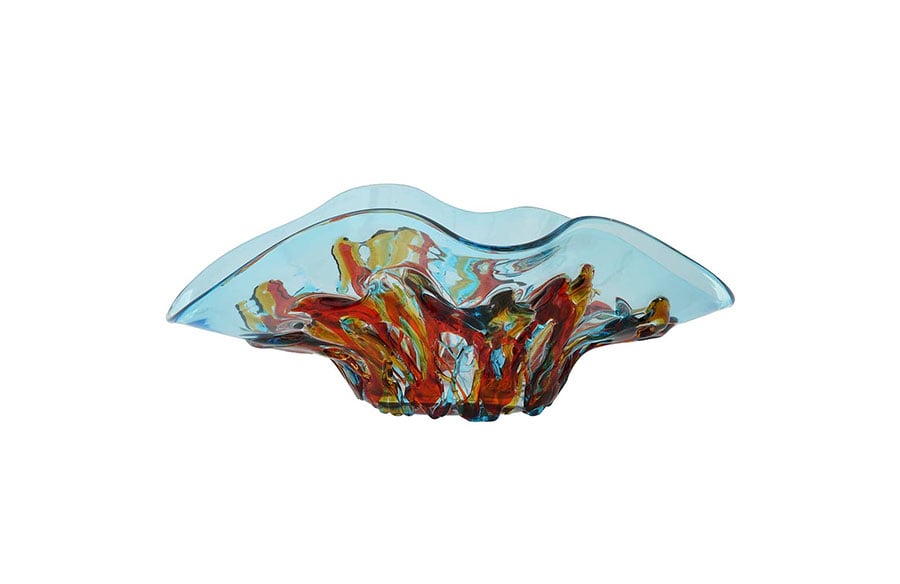
Blown glass dishes and bowls can easily elevate both your dining table and your room’s decor. They are pieces of art while still being functional. When used, they can turn a simple meal into a sophisticated event. When not in use, leave the dishes out, as their handcrafted artistry and elegance will enhance the decor. A blown glass bowl can be used to hold salad during dinner and then left empty on the dining table as a centerpiece and work of art.
How Blown Glass is Made
 It takes great skill and time to create hand-blown glass bowls and dishes. Artisans train in their craft for years, using intricate techniques, many going back centuries.
Silica sand, soda ash, and lime are heated at temperatures exceeding 2000 F (1093 C). When the molten glass has been produced, the artisan dips a hollow steel blowpipe into the furnace and collects a glob of liquid called the gather at the end of the pipe. He or she then blows gently into the pipe to create an air bubble inside the glass. The glass is now shaped using different tools and techniques, such as Sommerso, which creates different colored layers.
Because hot glass cools down quickly, it is often reheated in a second furnace to keep it supple. To work on the opening of the piece, the bottom is attached to a pontil, which is a solid rod. The artisan can then knock the glass piece from the blowpipe. Once the final shape is achieved, it is placed in another furnace, called the annealer, where it cools down slowly to stop it from cracking.
To create different colored glass, metal oxides are added either in the initial stage in the furnace or later when being shaped, via colored rods, molten gathers, or crushed glass. Metal oxides create vibrant colors, such as cobalt for blue and gold for red.
What is Special About Blown Glass Tableware and Decor
Craftsmanship
Glass objects have been produced on the island of Murano near Venice, Italy, for over 700 years, and they have a rich history. Techniques were kept secret for centuries and passed down from generation to generation.
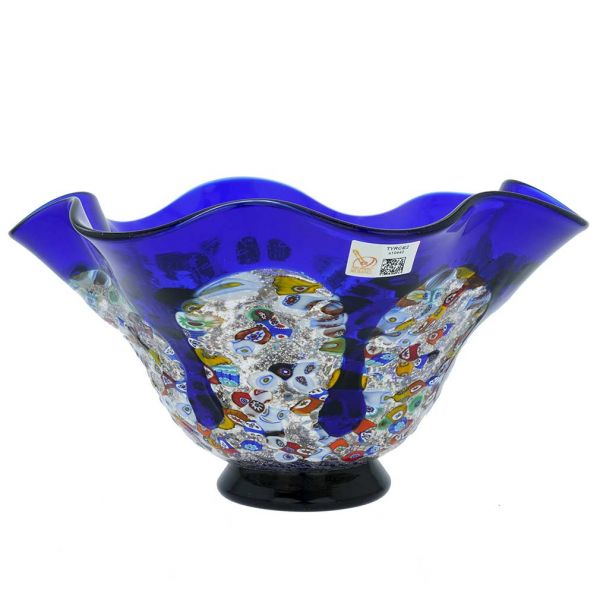
The techniques take years to perfect. They include Millefiori, which means a thousand flowers. Small multi-colored glass rods are sliced and fused together to create mosaic surfaces, often floral, sometimes geometric. With Filigrana, fine, parallel glass threads are embedded inside transparent canes and are shaped into lace-like twists. The threads can be opaque white or colored. Pulegeso traps hundreds of tiny bubbles inside the glass, diffusing light and giving the glass a cloudy effect. Sommerso, which is often used in blown glass bowls, creates distinct layers of color embedded inside a transparent piece of glass.
Uniqueness
Because these glass centerpieces, dishes, and bowls are hand-blown, each one is unique. There is a possibility that even two pieces of the same design have minor differences. This can manifest itself in the thickness of the walls, the color, or the design. The differences are often not really evident unless you look closely.
Visual Depth
Glass reflects light, which means that it bounces off the object, and it also refracts light, bending it and separating the colors, changing white light to a beautiful rainbow prism.
The variation in the wall thickness of a blown glass bowl, however small, creates subtle differences which make the pieces stand out. For example, a thicker piece of glass will absorb and saturate color, while thinner walls let light pass through.
Lightness
Hand-blown glass is often lighter than mass-produced glass, though this depends on the technique. Sommerso bowls and centerpieces may actually feel heavy, because of their multi-layered nature. Transparent Murano Glass pieces are, on the contrary, often very light, due to the thinness achieved by blowing. Whether heavy or light, handblown glass pieces should never be placed in a dishwasher.
Firstly, dishwashers shift quickly between hot washes and cold rinses, which isn’t good for hand-blown glass because of variations in wall thickness. The sudden changes can cause the glass to crack. Secondly, dishwasher detergents can be harsh and alkaline, which can cause the glass to be scratched. Over time, the glass may also become cloudy. Finally, artisan glassware is often shaped irregularly. This makes it difficult to secure the glass in a dishwasher, making it easy for the glass to move and crack or break.
The best way to clean your blown glass dishes and bowls is to wash them by hand. Use lukewarm water, mild detergent, and a soft sponge. Never use boiling or very hot water, as the glass could easily break in the heat.
Why Choose Blown Glass Dishes and Bowls
Glassware Engages the Senses
Many glass dishes and bowls are created in vibrant colors that instantly attract the eye. These rich, mineral colors elevate place settings immediately, turning a plain dining table into something elegant and luxurious. Traditional techniques, which are often intricate, also provide an intense visual experience.
The weight and asymmetrical shapes of many of these pieces can make you want to run your hands over them to imagine how they were made. They offer a distinctly different feel to simple mass-produced tableware.
Glass Tableware Frames Food
Food can be elevated to a different level when served in a hand-blown glass bowl or on a glass dish. Place neutral and monochrome foods, such as fish, rice, or pasta, on a vibrantly colored glass dish, and put colorful salads or fruit in an opaque bowl.
Many pieces of Murano glass are embedded with gold or silver leaf or have jeweled tones. These all frame food like a work of art. Some have swirls, bubbles, or organic shapes which contrast well with rustic food. Others are simpler, which allows rich food with a ruby red sauce or a medley of different colored vegetables to stand out.
Blown Glass Creates Play of Light
When light catches colored or patterned glass dishes or bowls, it casts soft shadows on the surrounding areas. On the other hand, translucent glass catches and reflects light, making colorful food stand out.
For example, the Sommerso technique allows the outer clear glass layer to act like a lens. It bends sunlight coming into the room, making the colored inner layers look as if they are suspended. Alternatively, it can make the colors richer and look a little like liquid.
Techniques that involve treating the surface of the glass, such as Battuto and Rigadin, which give intricate patterns on the glass, break light into tiny refractions rather than just one reflection. This separation of light makes the dinner table more exciting and interesting to look at.
How Hand-Blown Glassware Enhances Home Decor
Handblown Glass Bowls as Centerpieces
Glass bowls are especially suitable as centerpieces on your dining table, coffee table, or console, particularly if they are colorful. Although you may fill the bowl for a dinner party, it can be left empty at other times to showcase its shape and patterns. Dishes can be left in their place settings even when not used to add sophistication and glamour to the room.
Murano Glass Artworks
Blown glass dishes and plates can be exhibited in the same way as sculptures are. Place them on stands so that they take center stage. Mount plates on the wall in clusters. Maybe place an assortment of styles on the wall or ones of the same set. Choose colors or patterns to suit the colors or design of the room. Plain walls can transform a space from dull to gallery-style.
Decorative Glassware Placement
You don’t have to keep bowls and dishes on the dining table. Move them into the lounge and use the dishes when serving cakes at a coffee morning. Place a bowl filled with sweets on the coffee table for guests to help themselves. In the kitchen, brighten up shelves with vibrantly colored plates. Stack bowls or dishes to give an interesting layered look. Smaller dishes can be placed in your bedroom to hold jewelry or coins, and in the hallway for keys, adding a splash of color.
Famous Masters Who Created Blown Glass Dishes and Bowls
Ercole Barovier
Ercole Barovier joined his family’s glassmaking business in 1919, leaving medicine to become a glass art designer. He came from a very famous Barovier Murano glass-making family that had been working with glass on the island since the fourteenth century. During his 50–year career, he designed more than 25,000 glass objects. In the mid 1930s, he developed the ‘colorazione a caldo senza fusione’ technique, which involves applying colors to hot glass without merging them.
Between 1938 and 1942, Barovier’s experiments led him to create a series of bowls. They were shaped in the same way as the clam, tridacna, and the series was known as ‘A Grosse Costolatura’.
Flavio Poli
As artistic director for Seguso Vetri d’Art in Murano, Flavio Poli created, among other items, blown glass bowls. He made the Sommerso technique popular in the 1950s, a technique which is perfect for bowls. By layering different colors inside transparent glass, his bowls looked multi-dimensional and luminous.
Yalos Murano
Yalos Murano was formed by Guido, Diego, and Omar Ferro. Although they create many different items of glassware, one of their specialities is dining. They have different lines of dishes, soup plates, and dessert plates, including the Basic Collection, which features opaline glassware for the table. They also create custom pieces for fine dining chefs in Venice.
Art Glass Elevates Both Dining and Decor
Art glass dishes and bowls elevate both dining and decor because they attract the eye and add sophistication to any room. They are both functional and artistic, interacting with light sources and creating shifting patterns throughout the day. Placing one in the middle of the table anchors it, whether the glass bowl or dish is filled or empty. In addition, glass goes well with wood, metal, and textiles, adding luxury and depth to your room.