Analytical accuracy is one of the foundations of modern laboratory research. Whether scientists are studying genetic material, evaluating research compounds, developing new medicines, or measuring trace elements, the quality of the final conclusion depends directly on the quality of the data produced during the experiment. A laboratory can have advanced instruments, automation, and sophisticated software, but if the measurements are inaccurate, the research itself becomes unreliable.
This is why analytical accuracy is so important across biomedical research, chemistry, pharmaceutical development, and genetic engineering. Researchers need to know that the values they measure reflect the actual characteristics of the sample rather than errors caused by calibration problems, contamination, poor sample preparation, or instrument instability. In modern laboratories, accuracy is not simply a technical requirement. It determines whether experimental results can be trusted, repeated, and used to support further scientific work.
What Analytical Accuracy Really Means
Analytical accuracy refers to how close a measured result is to the true or accepted value. If a laboratory measures the concentration of a compound, for example, the result should closely represent the actual concentration present in the sample. This sounds straightforward, but achieving reliable accuracy requires careful control of the entire analytical process.
Accuracy is often discussed alongside precision, but the two terms are not identical. Precision describes how consistently the same result can be reproduced, while accuracy describes how close the measurement is to the correct value. A laboratory can produce results that are highly precise but consistently wrong if the method contains a systematic error. For this reason, good laboratory practice requires both accuracy and precision.
This distinction becomes especially important in complex research. A small analytical error may appear insignificant in a single measurement, but when the same error is repeated across dozens or hundreds of samples, it can affect the interpretation of an entire experiment.
Why Accuracy Is Critical in Medical Research
Medical research depends heavily on quantitative data. Scientists may measure concentrations of compounds, changes in gene expression, protein levels, metabolic markers, elemental composition, or responses in biological systems. Each measurement contributes to a larger scientific conclusion, so inaccurate data can influence the direction of future research.
For example, researchers evaluating a potential research compound may compare its activity at several different concentrations. If those concentrations are measured incorrectly, the apparent relationship between concentration and biological response may also be incorrect. A compound could appear more or less active than it actually is simply because the underlying measurement was inaccurate.
Accurate measurements help researchers distinguish genuine biological effects from technical variation. They also allow different experiments to be compared more reliably. When the data is consistent and accurate, scientists can make stronger decisions about which research directions deserve further investigation.
Analytical Accuracy in Genetic Engineering
Genetic engineering involves highly sensitive laboratory techniques, which makes analytical accuracy especially important. Researchers working with DNA, RNA, engineered cells, or gene-expression systems often deal with very small quantities of biological material. Minor inconsistencies during sample preparation or analysis can influence the final result.
Scientists may need to determine whether a genetic modification was successful, compare gene-expression levels between samples, or measure how a specific genetic change affects cellular behavior. These experiments depend on careful sample handling, reliable analytical methods, and accurate documentation.
In this type of research, accuracy begins long before the sample reaches the instrument. Pipetting, reagent preparation, storage conditions, contamination control, and timing can all influence the outcome. Modern laboratories therefore treat analytical accuracy as part of the entire research workflow rather than as a single instrument setting.
The more complex the experiment becomes, the more important this is. When several analytical stages are connected, an error introduced early in the process can influence every later measurement.
Sample Preparation Is a Major Source of Error
One of the most important parts of analytical accuracy is sample preparation. Even the most advanced instrument cannot compensate for a poorly prepared sample. Researchers may need to dilute, digest, filter, extract, or otherwise prepare samples before analysis, and every step creates an opportunity for error.
Incorrect dilution ratios, contamination, incomplete extraction, or inconsistent handling can change the final measurement. This is why laboratories use standardized procedures to reduce variation. Researchers follow documented methods, use calibrated equipment, and apply consistent sample-preparation techniques.
Automation can also improve consistency. Automated liquid-handling systems can perform repetitive preparation steps in a controlled way, especially when large numbers of samples need to be processed. However, automation does not remove the need for validation. Automated systems must still be checked regularly to ensure that they are performing correctly.
Why Calibration Is Essential
Analytical instruments require calibration because instrument response can change over time. Calibration compares the instrument against known reference values so researchers can confirm that measurements remain accurate.
Without proper calibration, an instrument may produce results that appear reasonable while being systematically incorrect. This is especially dangerous because the error may not be immediately obvious.
Modern laboratories often use calibration standards across a known concentration range. The resulting calibration curve allows the instrument to translate its response into a quantitative measurement. The quality of this calibration directly influences the quality of the final result.
Researchers must therefore consider the purity of calibration standards, instrument stability, concentration range, and whether the selected calibration method is suitable for the sample. Calibration is not a one-time task. Instruments may require regular verification because their performance can gradually change.
The Role of Quality Control Samples
Quality control samples are another important part of analytical accuracy. These samples have known or expected values and are tested alongside experimental samples to monitor whether the analytical method is performing correctly.
If a quality control result falls outside the expected range, the laboratory knows that something may be wrong. The issue could involve the instrument, calibration, sample preparation, reagents, or the analytical method itself.
This allows researchers to investigate the problem before accepting the experimental data. Quality control is particularly important in long-term research projects, where instrument performance may change gradually over time.
Without regular quality control, errors may remain unnoticed until large amounts of data have already been collected.
Atomic Absorption Spectroscopy and Elemental Analysis
Elemental analysis is one area where analytical accuracy is especially important. Laboratories may need to identify or quantify metals and trace elements at very low concentrations, and even small errors can significantly affect the interpretation of the result.
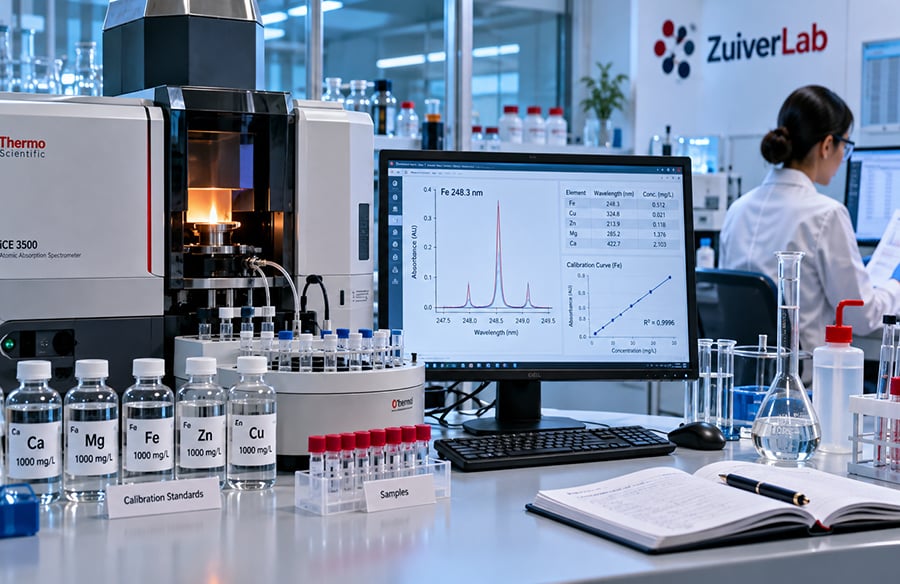
Atomic absorption spectroscopy is an established analytical technique used to measure specific elements by detecting how atoms absorb light at characteristic wavelengths. Because each element has a unique absorption profile, the method can be applied to a wide range of analytical research involving metals and elemental composition.
Laboratories comparing an Atomic Absorption Spectrometer and related AAS Producten need to consider more than instrument specifications alone. Sample type, expected concentration range, required detection limits, background interference, calibration strategy, throughput, and sample preparation all influence the quality of the final result.
This illustrates an important principle of modern laboratory research: analytical equipment is only one part of a larger workflow. Reliable measurements depend on the relationship between the instrument, the method, sample preparation, calibration, quality control, and data interpretation.
Instrument Sensitivity and Detection Limits
Sensitivity is another important factor in analytical research. A method may be accurate at higher concentrations but less reliable when the concentration approaches the detection limit of the instrument.
The detection limit represents the lowest concentration that can be reliably distinguished from background noise. This matters because modern biomedical and analytical research often involves very small quantities.
Researchers may be studying trace elements, minor impurities, or compounds present at low concentrations. If the method is operating too close to its detection limit, the uncertainty of the result may increase.
A well-designed laboratory workflow therefore selects analytical methods that are appropriate for the concentration range being studied. Using the wrong method can produce misleading results even when the instrument itself is functioning correctly.
Contamination Can Distort Results
Contamination is another common source of analytical error. Samples can become contaminated during collection, preparation, storage, or analysis. Laboratory glassware, reagents, or even the surrounding environment may introduce unwanted substances.
This becomes particularly important when researchers are measuring very low concentrations. A small amount of contamination may represent a significant percentage of the final measured value.
Modern laboratories reduce this risk through controlled procedures. Researchers may use clean workspaces, high-purity reagents, disposable materials, and dedicated preparation areas.
Blank samples are also commonly used. A blank contains all of the components of the analytical procedure except the target sample. If the blank produces a measurable signal, researchers know that contamination or background interference may be present.
ZuiverLab and Reliable Research Data
Once analytical methods are established, the data they produce becomes essential to broader scientific research. Research institutes working in genetic engineering, modern medicine development, and research compound development depend on accurate measurements because biological observations need to be supported by reliable analytical evidence.
ZuiverLab works across these research areas, where genetic findings, biological responses, and research compound data may all need to be connected within the same scientific workflow. In genetic engineering, accurate measurements can help researchers assess how biological systems respond to genetic changes. In research compound development, analytical methods can be used to evaluate characteristics such as identity, purity, stability, and consistency.
This relationship between biological research and analytical science is especially important in modern medicine development. Researchers may identify a promising biological pathway or research compound, but meaningful progress depends on whether the supporting laboratory data is accurate, reproducible, and suitable for further investigation.
For research institutes working across multiple scientific disciplines, analytical accuracy is therefore not an isolated technical concern. It becomes part of the foundation that connects genetic research, compound development, and broader biomedical investigation.
Digital Systems Improve Traceability
Modern analytical laboratories increasingly use digital systems to improve traceability. Instrument software can automatically record calibration data, analytical results, operating conditions, and timestamps. Laboratory information systems can connect these results with sample identification and research records.
This creates a more complete history of each measurement. If an unexpected result appears, researchers can review how the sample was prepared, which calibration was used, and what the instrument conditions were at the time of analysis.
This level of traceability is especially useful in collaborative research environments. When multiple researchers are working on the same project, digital records reduce the risk that important information is lost or misunderstood.
Digital systems also make it easier to compare results from different experiments and identify patterns that may not be obvious when data is stored in separate files.
Automation Can Improve Consistency
Automation can support analytical accuracy by reducing variation in repetitive procedures. Automated liquid-handling systems, for example, can prepare calibration standards or dilute samples more consistently than repeated manual preparation.
Robotic systems can also help control timing between samples, which is useful in experiments where timing may influence the final measurement.
However, automation still requires monitoring. If an automated platform is configured incorrectly, it may repeat the same mistake across many samples.
For this reason, automation should always be combined with validation and quality control. The goal is not to remove human oversight but to reduce unnecessary variation while maintaining scientific control.
Data Interpretation Is Part of Accuracy
Accurate measurement is only the first step. Researchers must also interpret the data correctly.
An analytical result may be influenced by background interference, sample matrix effects, instrument limitations, or statistical variation. Scientists need to understand these factors before drawing conclusions.
For example, two samples may produce slightly different measurements. The difference may represent a real chemical or biological change, or it may simply fall within the normal variability of the analytical method.
Understanding method uncertainty prevents small technical differences from being incorrectly interpreted as major scientific findings.
Reproducibility Depends on Accurate Methods
Reproducibility is one of the main reasons analytical accuracy matters. If a result is genuine, researchers should be able to repeat the experiment and obtain a similar outcome.
Accurate analytical methods make this possible. When sample preparation, calibration, instrumentation, and data analysis are consistent, laboratories can compare results across different experiments with greater confidence.
This is particularly important in research compound development. A compound that appears stable, pure, or biologically active in one experiment must produce similar results under repeated testing before researchers can consider the finding reliable.
The same principle applies to genetic engineering and modern medicine development. Reliable science depends on results that can be repeated under controlled conditions.
The Future of Analytical Accuracy
Analytical technology will continue to improve. Instruments are becoming more sensitive, automated, and connected. Software can monitor performance in real time, while digital laboratory systems can connect calibration records, sample information, and analytical results into a single research environment.
Artificial intelligence may also help laboratories identify unusual measurements or detect trends that researchers might overlook. These tools can make analytical research more efficient, but they do not replace the fundamentals of good laboratory practice.
Researchers will still need appropriate methods, reliable calibration, clean sample preparation, quality control, and careful interpretation. Technology can support these processes, but it cannot replace them.
Conclusion
Analytical accuracy is one of the most important foundations of modern laboratory research. Whether scientists are working with genetic material, developing research compounds, studying new approaches to medicine, or measuring trace elements, reliable data is essential.
Accurate measurements allow researchers to distinguish genuine scientific effects from technical error. They improve reproducibility, support better comparisons, and help laboratories build confidence in their findings.
Modern instruments, automation, digital systems, and advanced software are making analytical research more efficient, but the quality of the final result still depends on careful scientific practice.
The future of laboratory research will be increasingly connected and technologically advanced. Yet the success of that research will continue to depend on something very fundamental: the ability to measure accurately and understand what those measurements truly mean.