For decades, the living room followed a simple script. A sofa faced a television, the television faced a wall, and every other decision in the room followed from that single relationship. Streaming has quietly broken that script. A film might now play on a television, a tablet, or a laptop, and gaming, music, video calls, and social media all compete for the same square footage that used to belong to one screen.
This isn’t just a story about bigger or sharper displays. It changes where furniture sits, how a room is lit, where equipment lives, and how seriously a designer needs to think about sound and connectivity. This article looks at how streaming and digital entertainment are reshaping the way living rooms get planned, furnished, and actually used.
The living room is becoming a media environment
Streaming has made the source of entertainment almost beside the point. A television today can pull in dozens of services on its own, while a phone or laptop can carry that same content into any other room in the house.
For households that stream often, whether that’s films, sports, or events, a VPN can end up as part of the setup too, especially when people are switching between networks or watching while traveling. It’s a detail that’s easy to design around rather than for. A room built for streaming needs to support the network as much as the screen.
A stable connection, thoughtfully placed equipment, and enough power outlets can matter just as much to how a room feels as the sofa or the television itself.
Designing for different kinds of attention
A living room today has to hold more than one kind of viewing at once. One person might be settling in for a two-hour film while someone else checks messages on their phone or works quietly from a laptop nearby. Kids might take over the room for gaming in the afternoon, and by evening the same space has shifted back into a place for conversation.
That pulls furniture away from the old, fixed layout. A large sofa pointed at one wall is ideal for a film night, but it can leave a room feeling stiff the moment the screen isn’t the point of the evening.
Armchairs that pivot toward the sofa, side tables that move easily, and lighter furniture in general make it much simpler to reshape a room around whatever it’s actually being used for that day.
Keeping the screen from taking over
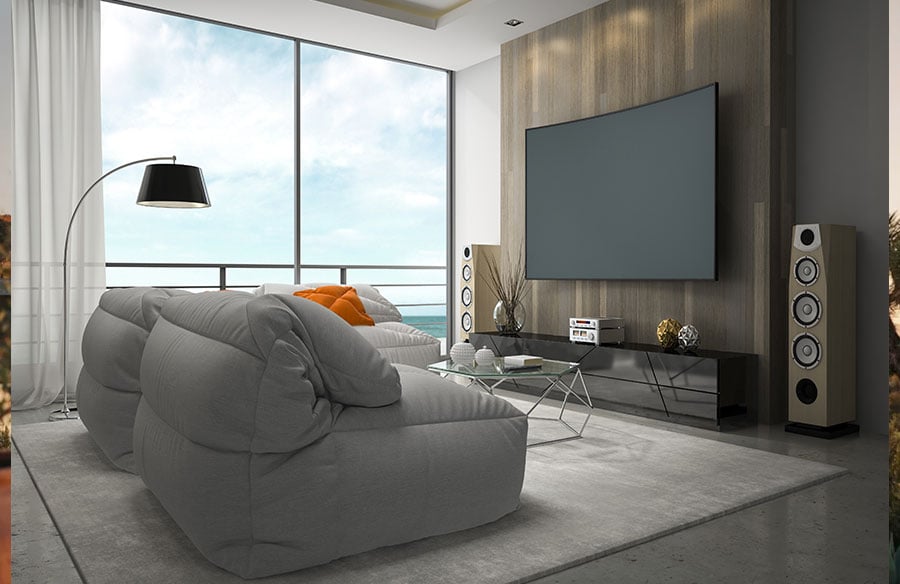
A large television can become the visual anchor of a room even when it’s switched off, and that’s not always a good thing. Designers can soften that effect by treating the screen as one part of a bigger composition rather than the star of it. A built-in media wall that combines shelving, storage, and display space is one way to do this, and darker materials around the screen can help it recede when it isn’t in use.
Another approach is simply not making the television the first thing a person sees when they walk in. Angling it away from the main sightline keeps the character of the room intact without cutting off access to it. That matters because a living room still needs to work as a room when the screen goes dark.
Sound matters as much as picture
Streaming has pushed people to obsess over screen size and resolution, but sound quietly decides whether a room is actually comfortable to sit in for two hours.
Hard surfaces such as glass, exposed flooring, and large windows tend to produce echo, and open plan layouts let sound drift into rooms it was never meant to reach.
Soft furnishings help more than people expect. Curtains, rugs, upholstered furniture, and bookshelves all absorb or scatter sound without turning a living room into something that looks like a recording studio. The goal was never perfect acoustics. It’s simply keeping dialogue, music, and effects from becoming tiring or muddy after twenty minutes.
Let lighting work with the screen, not against it
A room used mainly for daytime viewing needs a different lighting approach than a dedicated home cinema would.
Direct sunlight can throw reflections straight across a television, particularly if the screen sits opposite a large window. At the other extreme, watching a bright screen in a pitch dark room isn’t comfortable either.
Layered lighting gives a room more room to flex. Ceiling lights can handle general illumination, while floor lamps, wall lights, and dimmable fixtures let the space shift as the activity in it changes. The same logic applies in darker rooms too. A small amount of ambient light can make a long viewing session easier on the eyes without washing out the picture.
Hide the technology, not the access to it
Streaming setups tend to generate a small pile of cables, remotes, controllers, and devices. Leaving all of it out in the open can make a living room feel more like a workstation than somewhere to unwind.
Storage solves most of this. A low cabinet can hold consoles, routers, and other media equipment, and cable channels can keep power and data lines out of sight. Ventilation still needs attention here. Sealing electronics into a tightly closed cabinet can trap heat and shorten the life of the equipment inside it.
The best storage solutions make the technology easy to reach the moment it’s needed, without letting it dominate the room the rest of the time.
Design for connection, not just consumption
Today’s living room is increasingly a place for participation rather than passive viewing. People watch live sport while messaging friends, join watch parties, play multiplayer games, and move constantly between the television and their phones.
That makes connectivity part of the architecture itself, not an afterthought bolted on later. Internet equipment should sit somewhere it can actually serve the whole home, rather than being tucked into the most awkward corner available. Power outlets should be planned around where devices are likely to end up, and dedicated charging points can stop cables from spreading across every surface in the room.
This broader idea, that the spaces between fixed functions shape how a building is actually experienced, shows up elsewhere too, including in discussions of architecture of the in-between.
Leave room for the room to change
The biggest mistake would be designing a living room around one specific entertainment setup and assuming it will stay that way for years. Streaming services evolve, screens get bigger or smaller, gaming hardware changes generation, and speakers go wireless. People simply change how they spend their evenings.
Flexible design absorbs all of that more gracefully. Furniture that can move, storage that can adapt, and infrastructure that can support devices that don’t exist yet will age far better than a rigid layout built around one particular piece of technology.
Architecture has always had to respond to how people actually live. The real question now is how to make room for digital activity without letting it dictate every inch of the space. It’s a theme that echoes a broader idea explored in the afterlife of architecture, that spaces can keep carrying meaning even as their original purpose shifts underneath them.
The living room after the television
Streaming hasn’t made the living room less important. If anything, it’s made the room more flexible than it’s ever had to be.
The best living rooms support focused viewing without forcing every other activity to bend around the same arrangement. They manage glare, control sound, keep cables out of sight, provide enough power and connectivity, and still feel like a room worth sitting in when no screen is switched on at all.
That’s the real design challenge. The living room of the future doesn’t need to look like a media room around the clock. It just needs the ability to become one when the evening calls for it, then settle back into being a place for conversation, reading, eating, or doing nothing in particular.