Outdoor shade can make a patio, deck, balcony or backyard far more comfortable, especially when direct sun affects how you use the space. The right solution can help manage glare, create privacy and make it easier to enjoy outdoor areas at different times of day.
However, every home has different sunlight, wind exposure, space and design needs. This guide compares common outdoor shade options and explains what to look for before choosing a solution for your home.
Begin With Your Outdoor Space and Daily Needs
Start by looking at how the sun moves across your outdoor area. A west-facing patio may need stronger protection from afternoon sun, while a courtyard may need a more flexible solution that still allows daylight into nearby rooms.
Think about how you use the space. A dining area may need shade during lunch, while an outdoor lounge may need privacy from neighbours. If you have children, pets or a pool area, keep access paths and safety barriers clear when planning the location of any shade feature.
Review these points before making a decision:
- When the area receives direct sunlight
- Whether the space is exposed to wind or rain
- The size of the patio, deck or balcony
- Nearby doors, windows and garden areas
- The level of privacy you want
- How often you want to adjust the shade
A shade solution should support the use of the outdoor area without blocking doors, walkways or views you want to keep.
Choose External Aluminium Plantation Shutters for Light and Privacy Control
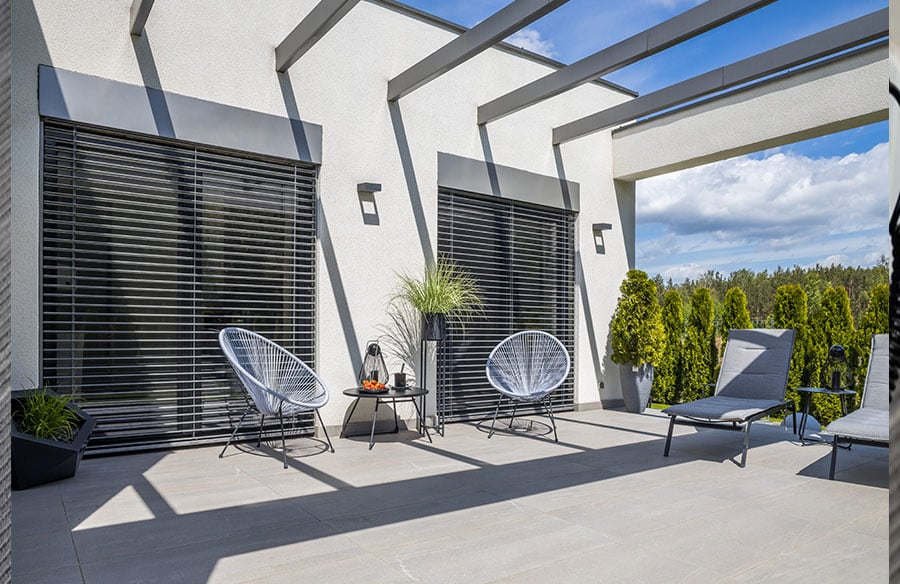
External aluminium plantation shutters can provide adjustable shade and privacy for outdoor areas, windows, balconies and covered patios. The movable blades allow you to change the amount of light and airflow entering the space while maintaining a structured, architectural look.
They can suit homes where permanent screening is preferred over fabric-based shade. When positioned well, shutters can create a more private outdoor setting without completely closing off the area.
Where Exterior Shutters May Work Well
Exterior shutters can be useful around patios, verandahs, balconies and outdoor entertaining areas. They may also suit spaces that need screening from neighbouring properties or changing sunlight throughout the day.
Before choosing shutters, check the available mounting area, the position of doors and windows, and how the panels will open or stack. The design should allow easy access through the space and avoid blocking commonly used paths.
Consider Awnings for Flexible Overhead Shade
Awnings in Sydney can provide overhead shade for outdoor dining areas, patios and spaces beside the home. Folding-arm styles can be extended when shade is needed and retracted when you want more open sky or sunlight.
This can make awnings a good option for smaller outdoor areas or homes where a fixed structure may feel too heavy. The right size and position depend on the area you want to cover, the wall or support surface and the way the space is used.
Take Wind and Weather Into Account
Awnings are exposed to weather, so wind conditions should be part of your planning. Retract a folding-arm awning during strong winds, storms or when it is not in use for an extended period, following the product guidance for the selected system.
Check the proposed location for wind funnels between buildings, exposed corners and nearby trees. Planning for these conditions can help you choose a shade solution that suits the site and can be used safely.
Compare Fixed and Adjustable Shade Options
Fixed shade structures provide consistent coverage and can suit outdoor areas that need regular protection from sun or light rain. They may work well for large dining areas, outdoor kitchens and patios used throughout the year.
Adjustable shade options allow more flexibility. Shutters can be opened or closed to manage privacy and airflow, while retractable awnings can be extended or retracted as conditions change. The right option depends on whether you want permanent coverage or more control over the space.
When comparing products, think about the balance between:
- Shade coverage
- Airflow
- Privacy
- Weather exposure
- Access to sunlight
- Maintenance needs
- The visual style of the home
The best choice is one that suits both the conditions and the way you live outdoors.
Plan Around Doors, Furniture and Access
Shade features need to fit around the everyday movement of the home. Measure doors, windows, walkways, furniture and outdoor cooking areas before choosing the size and position of shutters or awnings.
Allow enough clearance for doors to open fully and for people to move comfortably around outdoor seating. If the area includes a barbecue, outdoor kitchen or pool access, keep those zones clear and easy to reach.
Consider the view from inside the home as well. A shade solution should improve outdoor comfort without making indoor rooms feel unnecessarily dark or closed in.
Choose Materials That Suit Outdoor Conditions
Outdoor shade products need to handle exposure to sunlight, moisture, dust and changing temperatures. The right material will depend on the product type, location and level of weather exposure.
Aluminium shutters can suit outdoor settings where a durable, structured finish is preferred. Fabric awnings can provide flexible shade but need care and proper use in changing weather conditions.
Ask about cleaning, moving parts and any care needed for the selected product. Choosing something that is easy to look after can help the outdoor area remain neat and functional over time.
Maintain Your Outdoor Shade Solution
Regular care helps keep outdoor shade products operating smoothly. Clear leaves, branches and dirt from surrounding areas, and check visible fittings for damage or changes in operation.
For exterior shutters, keep tracks and moving parts clear so panels can open and close as intended. For awnings, retract them during unsuitable weather and avoid forcing the mechanism if it feels stiff or does not operate correctly.
Arrange professional advice if you notice loose fittings, damaged fabric, unusual movement or problems with the opening system. Early attention can help prevent a small issue from affecting the use of the shade feature.
Choose Shade That Fits Your Home
The right outdoor shade solution should make your home more comfortable without taking away from the way you enjoy your outdoor space. Shutters can offer adjustable privacy and light control, while awnings can provide flexible overhead coverage for patios and outdoor dining areas.
Review the sun, wind, access and intended use of your space before making a decision. Speak with an outdoor shade specialist to find a solution that suits your home’s layout and lifestyle.
FAQs
What are external aluminium plantation shutters?
External aluminium plantation shutters are outdoor shutters made with adjustable blades set within a framed panel. They can help manage sunlight, airflow and privacy around patios, balconies, windows and outdoor entertaining areas. The shutter panels may be configured to suit the space and access needs. Their suitability depends on the installation area, exposure to weather and the desired level of light control.
Are external aluminium plantation shutters good for privacy?
External aluminium plantation shutters can improve privacy by allowing you to adjust the blades and reduce views into an outdoor area or room. They can be useful for patios, balconies and windows facing neighbouring homes or streets. The level of privacy depends on the blade position, panel layout and location of the installation. A specialist can help plan a design that suits the property.
Can external aluminium plantation shutters provide shade?
External aluminium plantation shutters can provide shade by reducing direct sunlight before it enters an outdoor area or reaches windows. Adjusting the blades allows you to change the amount of light and airflow passing through. This can be useful in spaces that receive strong sun at certain times of day. The final result depends on the shutter position, orientation and the layout of the home.
Where can external aluminium plantation shutters be installed?
External aluminium plantation shutters can be installed around patios, verandahs, balconies, windows and covered outdoor spaces. The installation area needs suitable support and enough room for the shutters to open, close or stack as designed. Before installation, check doors, windows, furniture, pathways and other features that may affect access. A site assessment can help determine a practical configuration.
How do you maintain external aluminium plantation shutters?
Maintain external aluminium plantation shutters by removing dirt, leaves and debris from the panels, tracks and surrounding areas. Clean the shutters using methods suitable for the product finish, and check that moving parts operate smoothly. Avoid forcing panels that feel stuck or uneven. If you notice loose fittings, damage or changes in operation, arrange professional advice before the issue develops further.