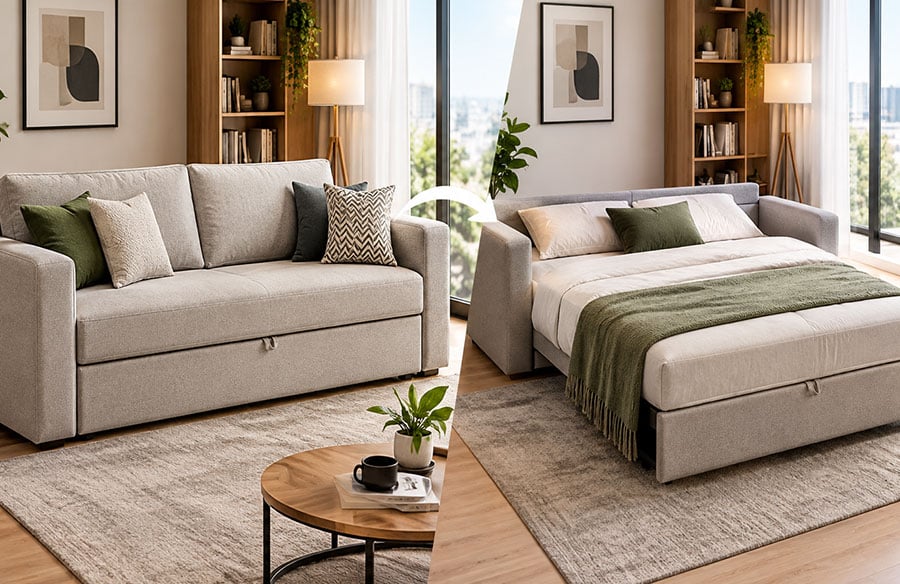
There is a moment most people who live in smaller homes will recognise. A friend needs somewhere to stay for the weekend. A family member arrives unexpectedly. A teenager wants a sleepover. And suddenly, the living room — that carefully arranged, carefully decorated space — needs to transform into a bedroom overnight.
For years, the solution was an inflatable mattress pulled from a closet, pumped up with a noisy electric pump, placed on the floor and deflated again in the morning. Functional in the strictest sense. Not particularly comfortable. Not something anyone would describe as a design choice.
The sofa bed has changed this calculus entirely — and its evolution from a niche, often-maligned furniture category into a genuine design staple represents one of the more interesting shifts in how people think about their living spaces.
How Living Spaces Changed and Furniture Had to Follow
The way people use their homes has shifted considerably over the past decade. Urban housing has become smaller on average, while the expectations placed on those spaces have grown. A one-bedroom apartment in any major city is expected to function as a home office, a guest room, a lounge, a dining room and a comfortable place to relax — all within a square footage that would have been considered a single living room in a previous generation.
This compression of space has driven genuine innovation in furniture design. The category of multifunctional furniture — pieces that serve more than one clearly defined purpose — has expanded from a niche market into a mainstream design priority. Storage ottomans, extendable dining tables, wall beds, modular shelving systems — all of these have matured from compromise solutions into genuinely well-designed products that people choose intentionally rather than reluctantly.
The sofa bed sits at the centre of this shift. It addresses the most common space problem in modern living: having comfortable seating for everyday life and a comfortable sleeping surface for guests, without dedicating permanent square footage to both.
The Practical Scenarios Where a Sofa Bed Makes Genuine Sense
Understanding when a sofa bed is the right answer requires thinking through the scenarios it is designed to address.
The apartment without a guest room is the most obvious case. Most city apartments have one bedroom, sometimes two. Hosting overnight guests means either giving up the bedroom or consigning them to an uncomfortable floor situation. A quality sofa bed solves this without requiring an entire room to be dedicated to a use that happens occasionally.
The home office that occasionally needs to be a guest room has become particularly relevant. Many people converted a spare bedroom into a home office over the past several years and have not converted it back. A sofa bed in that room provides a sleeping solution that does not require dismantling the workspace every time someone visits.
The studio apartment or bedsit where the living area and sleeping area are the same room benefits from a sofa bed that can define the space as a lounge during waking hours and convert quickly for sleeping. This is where the design quality of the piece matters most, because it is on display in both functions simultaneously.
The family home with growing children often needs flexible sleeping solutions — additional capacity for friends sleeping over, for teenagers who want to camp in the living room, for cousins visiting during holidays. A well-chosen sofa bed provides this capacity without being stored in a garage and retrieved for each occasion.
What Has Changed About Sofa Bed Design
The reputation problem that sofa beds carried for many years was largely deserved. Earlier generations of convertible sofas involved thin, uncomfortable mattresses supported by metal frames that transmitted every movement and every spring. The mechanism for converting between sofa and bed was often awkward, requiring two people and a degree of upper body strength. And the seating, once folded back into sofa position, was rarely as comfortable as a purpose-built couch.
Contemporary sofa beds are genuinely different pieces of furniture. The mechanisms have been refined considerably — pull-out conversions that operate smoothly with one hand, click-clack designs that fold flat in seconds, modular sections that reconfigure without the need to move the entire piece. The mattresses have improved substantially, with memory foam and pocket spring options that provide real sleeping comfort rather than a surface to endure for one night.
The design language has also evolved. Modern sofa beds are designed to function as attractive living room furniture first, with the sleeping function as a secondary capability rather than a visible compromise. Clean lines, quality upholstery and proportions that work in a well-designed room have replaced the slightly awkward look that characterised earlier versions of the category.
The Factors Worth Considering When Choosing One
Not all sofa beds are suited to the same situations, and choosing well means matching the piece to the specific context it will live in.
Frequency of use as a bed is the most important variable. A sofa bed that will be used as a bed one or two nights per year has different requirements from one that will be slept on regularly by a household member. The mattress quality that is adequate for occasional guest use is not the same as what is needed for regular sleeping.
The conversion mechanism matters enormously for day-to-day usability. A mechanism that is cumbersome or requires significant effort becomes a reason not to bother using the sleeping function. The best mechanisms convert in under sixty seconds and can be operated easily by one person.
Seating comfort for daily use is often underweighted in the selection process. Because a sofa bed is first and foremost a sofa — in most households it will be sat on far more often than slept on — the quality of the seating experience in sofa mode should be the primary evaluation criterion, not just the sleeping surface.
Dimensions in both configurations need to be considered. A sofa that fits perfectly in a room may extend significantly into the space when converted to bed position. Measuring carefully — both the footprint of the sofa and the full extension of the bed — before purchasing avoids the unpleasant discovery that the piece cannot actually be used as intended in the space it occupies.
Upholstery and maintenance are practical considerations that become more significant over time. Fabrics that are difficult to clean, that pill quickly, or that mark easily accumulate wear visibly. For a piece of furniture that will be used heavily and by guests, easy-care materials are worth prioritising.
Balancing Comfort, Practicality and Aesthetic
The most common design mistake with sofa beds is treating comfort and aesthetics as competing priorities rather than complementary ones. A sofa bed that looks beautiful but sleeps poorly will be used reluctantly; one that sleeps comfortably but looks out of place will undermine the room it sits in.
The best approach is to treat the sofa bed selection process the same way you would treat any significant furniture purchase — with attention to how the piece will function in the specific space, how it will relate to the other furniture and the room’s colour palette, and how it will hold up to the specific patterns of use in your household.
Quality sofa bed options exist across a wide range of price points, sizes, configurations and aesthetic directions. The category has matured to the point where there is no longer a meaningful design penalty for choosing a convertible piece — contemporary sofa beds sit comfortably alongside purpose-built sofas in terms of visual quality and upholstery options.
How Multifunctional Furniture Reflects a Broader Design Shift
The rise of the sofa bed is part of a broader reorientation in how people relate to their furniture. Younger buyers in particular tend to prioritise flexibility over permanence — pieces that can serve multiple purposes, that can move with them as their living situation changes, that do not commit them to a fixed spatial arrangement for the next decade.
This shift has pushed manufacturers to invest more seriously in the design and engineering of convertible furniture, which has in turn produced genuinely better products. The positive feedback loop between consumer demand for quality multifunctional pieces and manufacturers delivering them has elevated the entire category.
The result is that choosing a sofa bed in 2026 is not a compromise made necessary by a lack of space or a lack of budget. For many households, it is simply the most intelligent use of the floor space available — and a design choice that reflects how modern people actually want to live in their homes.
Finding the Right Sofa Bed for Your Household
The practical starting point is always the specific context: the room dimensions, the frequency of use as a bed, the aesthetic direction of the existing space, and the budget. From there, the evaluation narrows quickly once conversion mechanism, mattress quality and seating comfort have been assessed.
HomeyFad designs sofa beds for exactly this kind of household — pieces that hold up well to daily use as seating, convert reliably and comfortably for sleeping, and sit naturally in a thoughtfully designed living room without announcing themselves as utilitarian compromises. For households navigating the familiar tension between welcoming guests warmly and maintaining the living space they have worked to create, a well-chosen sofa bed removes the tension rather than managing it.