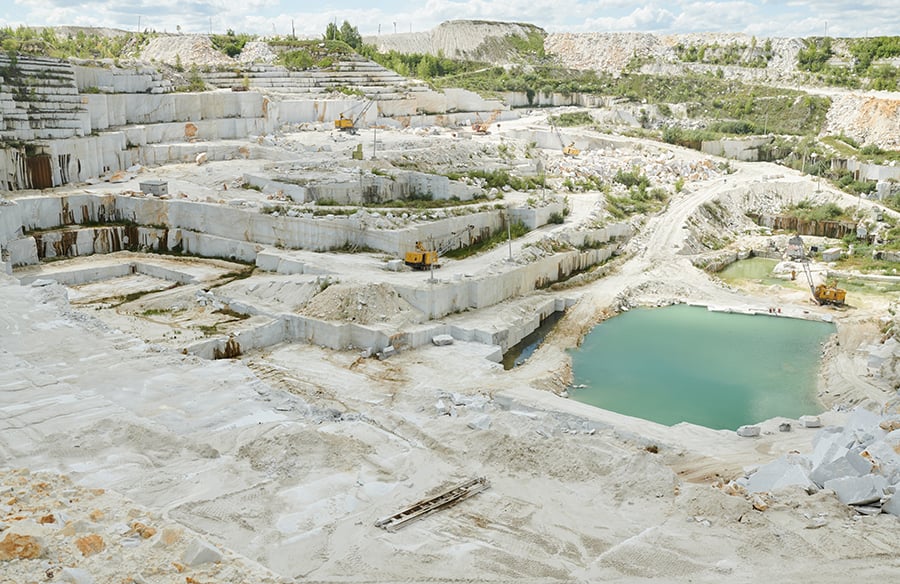
Every white washed wall and every terracotta roof tile you see across the Algarve started life somewhere specific, usually a limestone or clay quarry not far inland, and the construction industry here has depended on local material sourcing for generations. That local supply chain is now under a kind of pressure most buyers never think about when they’re looking at property for sale in the Algarve, but developers and builders think about it constantly.
Why Local Stone Mattered So Much in the First Place
Transporting heavy building material long distances used to be genuinely expensive, so towns across the region built with whatever stone and clay sat closest to hand. That’s part of why different Algarve towns have subtly different architectural textures, the local geology quietly dictated the palette long before anyone thought about it as a design choice. It also meant a fairly resilient, low carbon supply chain by accident rather than intention, since nobody was shipping materials across an ocean to build a house.
What’s Actually Changed
Some of the smaller, older quarries that supplied specific towns for generations have either closed or scaled back significantly, either because the accessible reserves are genuinely running low or because environmental permitting has tightened considerably. At the same time, construction demand across the region has grown steadily thanks to sustained interest from international buyers. That combination, shrinking local supply and rising demand, has pushed more builders toward imported materials, which undercuts some of the very regional character that made this architecture distinctive in the first place.
The Restoration Problem Nobody Talks About
This shortage bites hardest during restoration work on historic buildings, where conservation rules often require matching original materials as closely as possible. If the specific quarry that produced the original stone has closed, contractors are left hunting for a close substitute, which can mean sourcing from further afield, using a chemically similar but visually slightly different stone, or in some cases importing material from Spain or further afield entirely. None of these options are ideal, and all of them add cost and delay to projects that were already navigating strict heritage requirements.
A Few Builders Are Trying Something Different
A handful of architects and developers have started looking seriously at reclaimed material, salvaging stone and tile from demolished or heavily altered buildings rather than sourcing everything new. It’s more labour intensive to sort and reuse reclaimed material properly, and supply is inconsistent by nature, but it sidesteps the quarry shortage entirely and tends to blend into an older building more convincingly than a brand new substitute anyway. It’s not yet common practice, but it’s gaining a small, dedicated following among architects who work specifically in restoration.
What This Means If You’re Planning a Renovation
Anyone planning a serious restoration project involving traditional materials should ask contractors early about material sourcing timelines rather than assuming supply will be straightforward. Lead times that used to be a few weeks can now stretch into months for certain traditional finishes, and budgeting for that delay upfront saves a lot of frustration later. The Algarve’s building character depends on this quiet supply chain more than most people realise, and it’s worth understanding before you’re three months into a project waiting on tiles that simply aren’t being produced anymore.