Walk into most new-build kitchens and the palette has already been decided for you. Cabinets arrive pre-stained in a shade chosen at a factory somewhere, sealed under a lacquer that locks the color in place before the homeowner has even moved a box into the house. It is efficient, predictable, and increasingly out of step with how people actually want to live in their homes. A growing number of homeowners and designers are pushing back against this pre-packaged sameness, choosing unfinished building products instead: raw flooring, bare trim, and cabinetry left untouched until it reaches the site.
The Problem With Pre-Finished Everything
Mass production rewards consistency. A finish applied at the factory can be replicated across thousands of units with no variation, no waste, and no risk of an installer getting the stain wrong. That consistency is exactly what makes pre-finished products feel generic once they are inside a real home. The same three or four cabinet colors show up in listing photos across an entire metro area, the same flooring tone repeats from one renovation to the next, and a house that should feel personal ends up reading like a showroom unit. Pre-finishing does not just limit color choice; it locks in a decision that was made without any knowledge of the specific room it would end up in.
Unfinished as a Design Strategy, Not a Compromise
Choosing unfinished materials is often treated as a budget decision, something homeowners settle for rather than something they seek out. That framing misses what is actually driving the shift. Designers working with unfinished surfaces are not cutting corners; they are keeping a decision open until the moment it can be made correctly, with the actual light, floor tone, and adjacent finishes of the room in front of them rather than a swatch under showroom lighting.
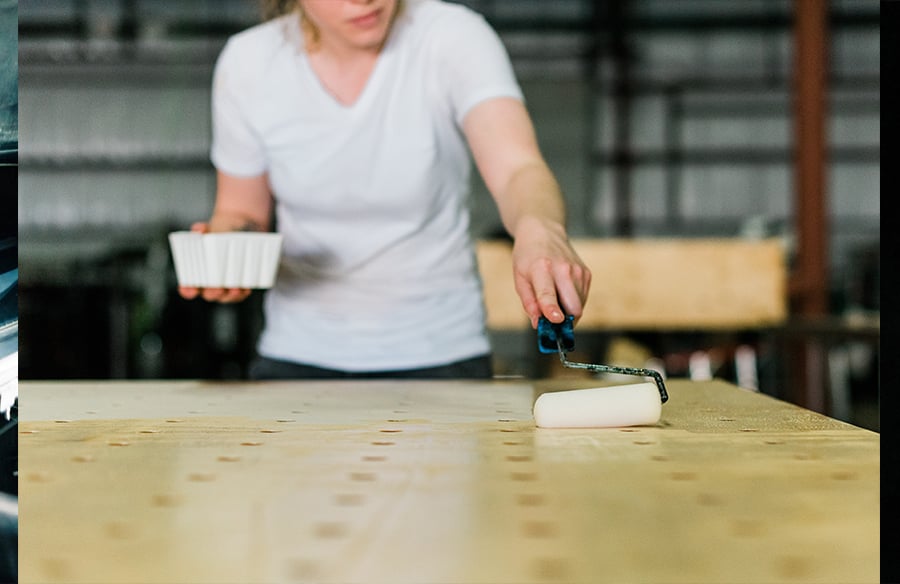
Cabinetry is where this shows up most clearly. Buyers who choose unfinished wood cabinets are essentially buying a blank canvas, staining or painting to match a palette that evolves with the home rather than locking it in at installation. A kitchen finished this way can shift from a warm walnut stain to a matte painted white a decade later without replacing a single box, because the substrate underneath was never designed to be permanent in the first place.
What Homeowners Actually Gain by Waiting
The appeal of unfinished materials comes down to three practical advantages that pre-finished products cannot offer:
- Color matching that happens on-site. Stain and paint can be tested against the actual floor, countertop, and wall color once they are installed, rather than guessed at from a sample chip months earlier.
- A longer lifespan for the material itself. Wood that has not been sealed under a factory finish can be refinished, restained, or repainted repeatedly, extending the useful life of cabinetry and trim well beyond a single design cycle.
- Lower cost for higher-grade material. Skipping the finishing step at the factory often means the same budget buys a better-quality substrate, since labor and materials that would have gone into staining and sealing go toward the wood itself instead.
Where the Trend Is Showing Up Beyond the Kitchen
Cabinetry is the most visible example, but the same logic is spreading to flooring, stair treads, and interior trim. Unfinished white oak flooring, left raw until a site-applied stain and sealant are chosen, has become common in renovations where the homeowner wants the floor tone to match cabinetry decided later in the process. Baseboards and door casings are increasingly ordered primer-only, painted on-site to match a wall color that may not be finalized until the rest of the room comes together. In each case, the underlying material is treated as infrastructure rather than a finished product, something to be completed once the full picture of the room is visible.
A Response to a Decade of Sameness
None of this is accidental. Homeowners have spent the better part of a decade watching identical gray cabinetry and identical light oak flooring appear in listing after listing, a look that became shorthand for a quick flip rather than a considered home. Unfinished materials offer a way out of that pattern without requiring a custom build from scratch. The house still goes up on a normal timeline, using standard products from standard suppliers, but the final layer of decision-making stays with the person who is actually going to live there.
That is the real distinction between a pre-finished product and an unfinished one: it is not about raw wood looking more authentic than a factory stain, it is about who gets to make the last decision. Pre-finished cabinetry hands that decision to a manufacturer working months in advance and thousands of miles away. Unfinished cabinetry keeps it in the room, where the light, the floor, and the homeowner’s own sense of the space can all weigh in before the color becomes permanent.