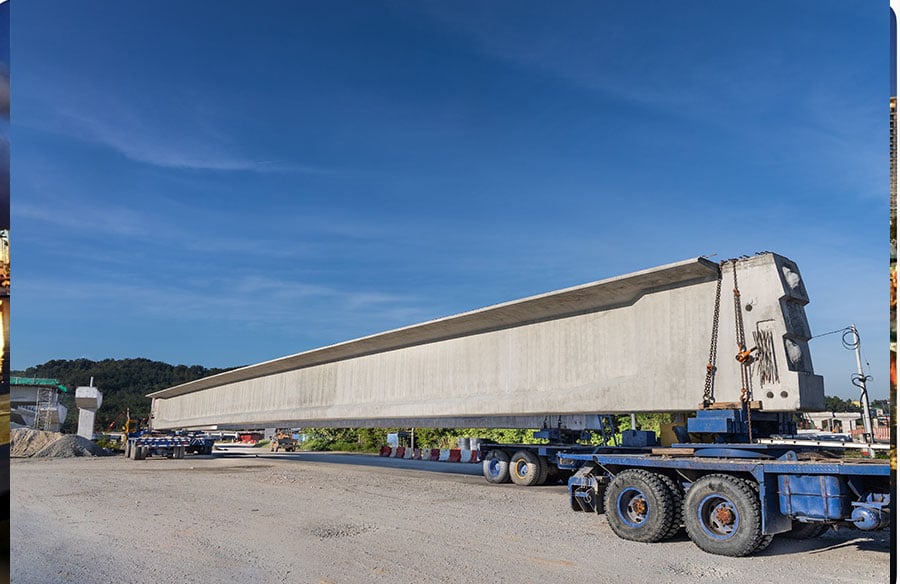
Heavy duty trailers do a lot of the heavy lifting — literally — across transport, construction, agriculture, mining, landscaping, and industrial work in Australia. Machinery, building materials, vehicles, bulky freight — get the right trailer, and moving all of it becomes a lot more manageable, and a lot safer.
But picking one isn’t as simple as grabbing the biggest trailer on the lot. Design, axle setup, brakes, load capacity, dimensions, towing compatibility, and Australian road rules — all of it needs sorting out before anything loaded hits the road.
What Makes a Trailer Heavy Duty?
At its core, a heavy duty trailer is built for real loads and rough conditions. Compared to a lightweight utility trailer, expect stronger frames, reinforced drawbars, heavier-duty suspension, bigger axles, and brakes actually matched to what the trailer’s meant to carry.
The specifics shift depending on the job. A trailer built for earthmoving gear might need a low deck and ramps. One built for general freight is more about a big load platform and flexible tie-down points.
The one rule that never changes: rated capacity has to match the actual work. Don’t pick a trailer based on the heaviest thing you occasionally haul — pick it based on what it’s actually rated to carry, every time.
Common Types of Heavy Duty Trailers
Australian operators have a few configurations to choose from, each built for its own job.
Flatbed and platform trailers give you an open loading surface — good for machinery, building materials, steel, anything large and awkward. The open design also just makes loading and unloading easier.
Plant and machinery trailers are purpose-built for gear like excavators, loaders, and tractors. Ramps, deck height, axle capacity, and load restraint really matter here — get any of it wrong and you’re in trouble.
Tipper trailers handle soil, gravel, sand, ag materials, and construction waste. The hydraulic tipping mechanism does the unloading for you, no manual shovelling required.
Low loaders keep the load close to the ground — genuinely useful for tall machinery, since a lower deck helps keep the whole combination under height limits.
Dog trailers, pig trailers, and semi-trailers round out the established heavy-vehicle configurations in Australia. They all behave differently, so knowing which one actually suits your vehicle and your work matters more than people sometimes realise.
Understanding Trailer Capacity
Capacity is probably the single most important factor when buying or running heavy duty gear. Terms like Aggregate Trailer Mass (ATM) and Gross Trailer Mass (GTM) each describe a different piece of what a trailer’s legally allowed to carry.
The towing vehicle sets its own limits too. The National Heavy Vehicle Regulator points out that towing capacity comes down to whatever component’s rated lowest — that could be the tow coupling, tow bar, vehicle GVM or GCM, trailer coupling, or drawbar.
In other words: a trailer rated for a big number on paper doesn’t mean you can actually load it to that number, not if something else in the chain is rated lower.
So check everything — vehicle specs, trailer specs, coupling, tyres, axles, braking gear — before anything gets loaded up.
Axles, Suspension and Braking
Heavy loads punish trailer components. Axle choice has to reflect the expected load and how the trailer’s actually going to be used, not just what looks strong enough on paper.
Suspension matters just as much. The right setup helps distribute weight properly and keeps things stable over Australia’s less-than-perfect roads, work sites, and rural tracks.
Braking gets more important as mass goes up. NSW guidance, for instance, requires effective braking on all wheels for trailers between 2,001 kg and 4,500 kg GTM, and an automatic breakaway system for anything above 2 tonnes GTM.
Load Restraint and Stability
Even a perfectly rated trailer turns dangerous fast if the load’s badly positioned or poorly secured. Heavy equipment needs proper restraint, done according to the actual load-restraint rules — not just “close enough.”
Weight distribution matters just as much. Too much weight up front or out back throws off handling, steering, and braking. The load needs to sit balanced and stay locked down.
Drivers also need extra stopping distance and a real awareness of how much length, width, and movement a trailer adds to the equation. Queensland’s towing guidance specifically flags trailer cut-in, crosswinds, uneven surfaces, and longer stopping distances as things to actively plan for, not just be aware of.
Choosing a Heavy Duty Trailer for Australian Conditions
Australian conditions don’t go easy on equipment. A trailer might spend its life on sealed highways one week and gravel roads, farms, or remote routes the next. Think about how often it’ll actually be used, what it’ll be carrying, and where it’ll be working before buying.
Worth thinking through too: ramp design, deck dimensions, tie-down points, spare wheel setup, lighting, storage, and how easy the thing actually is to maintain.
A business hauling machinery every week needs something very different from someone occasionally moving landscaping materials. Match the trailer to the actual workload, and you avoid paying for capability you don’t need — or worse, running gear outside what it’s actually rated for.
For anyone researching Australian trailer manufacturers and configurations, Beavertail Trailers is one example of a provider operating in this specialist space.
Compliance Matters
Heavy trailer operators need to stay on top of Australia’s mass, dimension, construction, and road-safety requirements — and the rules aren’t standing still. Updated Heavy Vehicle National Law requirements come into effect on 1 August 2026.
NHVR guidance is clear that manufacturer-rated limits can’t be exceeded — that covers tyres, wheels, axles, couplings, all of it.
Before buying or modifying a heavy duty trailer, it’s worth confirming the exact requirements in whichever state or territory the trailer will actually be registered and operated in.
Final Considerations
A heavy duty trailer is a working tool, and choosing one means looking at the whole towing combination, not just the trailer sitting on its own. Capacity, axle setup, suspension, brakes, dimensions, load restraint, compliance — it all feeds into safe, efficient operation.
Match the trailer’s specs to the real workload and the towing vehicle actually pulling it, and Australian operators end up making sharper decisions — and steering clear of the problems that come with overloading, mismatched configurations, or gear that just isn’t up to the job.