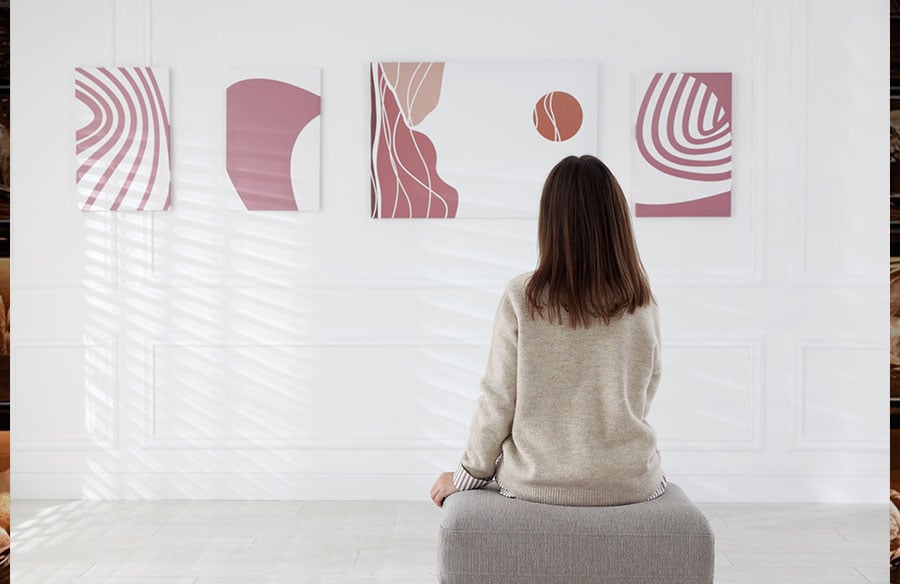
A curated home is rarely defined by how much is in it. More often, its character comes from the relationship among furniture, materials, color, objects, and art, with each element contributing to a larger visual idea. Wall art plays a particularly important role because it can alter the mood of a room without changing its architecture or consuming usable space. Paper prints offer an especially adaptable way to create that effect, combining artistic presence with a lighter and often more refined material quality. They can introduce color, establish a focal point, connect otherwise unrelated furnishings, or add contrast to a restrained interior. When chosen and displayed with care, paper prints can make a home feel collected over time rather than decorated all at once.
Paper Prints Give an Interior a More Deliberate Point of View
A well-curated room needs more than attractive furniture. It needs a sense that the individual pieces were selected with some relationship to one another, even if they come from different periods, makers, or styles. Paper prints can help establish that relationship because artwork introduces a visual idea that other elements in the room can respond to. A landscape might reinforce earthy upholstery and natural wood, while a graphic abstract print can bring sharper contrast to a neutral space. Photography can make a minimalist room feel more personal without disrupting its restraint. In each case, the artwork does more than occupy an empty wall because it helps define how the rest of the room is understood.
That role becomes particularly important in spaces without strong architectural focal points. Many contemporary apartments and newer houses feature broad walls, open layouts, and relatively simple finishes that provide flexibility but little inherent visual hierarchy. A thoughtfully scaled paper print above a sofa, console, bed, or dining table can create a clear center of attention. Once that focal point is established, surrounding furniture begins to feel more anchored and intentional. The artwork can also establish a vertical element that balances the horizontal lines created by seating, tables, and cabinetry. This makes the entire composition feel more complete without requiring additional furniture or decorative objects.
Paper art also gives homeowners an opportunity to express interests that furniture alone rarely communicates. A sofa can suggest a preference for modern design, but a collection of architectural photographs, botanical studies, figurative works, or abstract compositions says much more about the person who lives there. Those choices may reflect travel, cultural interests, favorite landscapes, artistic movements, or simply a fascination with certain colors and forms. When several works are collected gradually, they begin to form a visual record of taste. That record can make even a relatively simple room feel distinctive. A curated interior gains much of its identity from these specific, personal decisions.
Building an Art Collection Has Become a More Accessible Process
Once artwork is treated as part of the design rather than as a final accessory, sourcing becomes an important part of creating the room. Traditionally, homeowners might have relied on local galleries, art fairs, museum shops, antique stores, or whatever framed prints were available through general home retailers. Those channels remain useful, but online access has dramatically widened the field. Homeowners can now compare independent artists, licensed imagery, museum-related works, photography, illustration, and reproductions from many different visual traditions. This broader access makes it easier to build a collection around personal interests rather than around a single retail trend. It also encourages a slower process in which pieces can be discovered over time instead of purchased as a matching set.
That wider art market has created a useful middle ground between conventional home decor and the traditional gallery system. Homeowners can now compare subjects, formats, framing styles, and materials before deciding what best suits a particular room. Broader wall-art marketplaces can make that process easier by bringing many artistic directions together in one place. One example is iCanvas, which brings together work from independent artists, licensed estates, and cultural institutions in a range of styles. For homeowners particularly interested in the quiet texture and refined presentation of paper art, its selection of paper and framed paper art prints provides a more focused way to explore the medium. Combined with vintage finds, local art, and personal pieces, resources like this can help create a collection that feels layered, considered, and individual.
The accessibility of paper prints also allows homeowners to build that collection without feeling pressure to complete a room immediately. One work can be purchased, framed, and lived with before another is added. Seeing the piece in actual daylight and alongside existing furniture often reveals more than a digital mood board can. A homeowner may discover that a color appears stronger than expected or that a particular subject changes the atmosphere of the room in a useful way. Those observations can guide later purchases and make the collection progressively more coherent. A home assembled in this manner often feels more convincing because each addition responds to what is already there.
The Medium Adds Artistic Depth Without Excess Visual Weight
Contemporary interiors often depend on restraint. Pale walls, clean-lined furniture, natural wood, stone, linen, and uncomplicated lighting can create calm, but that same restraint can also make a room feel visually flat if every surface has a similar character. Paper prints introduce depth through imagery rather than through bulky materials or elaborate construction. A photograph can create a sense of distance, while an abstract composition can introduce movement and contrast. Because the print itself remains relatively light in physical presence, the room can gain complexity without becoming crowded. This makes paper especially effective in interiors where the architecture or furniture should remain visually prominent.
The difference becomes more noticeable when paper art is compared with heavily dimensional wall decor. Sculptural objects, relief works, large mirrors, and metal installations can be striking, but they also introduce another physical material into the room. In a compact or already layered space, that added presence can make the wall feel busier than intended. A framed paper print stays comparatively close to the wall while still allowing for strong imagery and generous scale. That makes it particularly useful in hallways, bedrooms, dining areas, offices, and apartments where floor area is limited. The wall gains interest without asking the room to accommodate another bulky object.
Physical lightness does not require visual timidity. A large monochrome photograph can become the most commanding feature in a room, while a saturated abstract work can transform a quiet interior through color alone. The advantage is that the visual impact comes primarily from the artwork rather than the construction of the object. This gives the homeowner finer control over how dramatic the space becomes. Scale can increase without introducing excessive material weight, and color can become bolder without adding clutter. In a carefully edited interior, that balance between impact and restraint is often more useful than decoration for its own sake.
Framing Helps Paper Art Become Part of the Architecture
A paper print does not exist independently of its frame. The frame determines how the artwork meets the wall and can influence whether the piece reads as contemporary, traditional, relaxed, or formal. A thin black frame can sharpen photography and graphic work, while natural wood can connect the art to flooring, cabinetry, or furniture. Darker wood may give a historical image greater visual weight, and metal profiles can work well in rooms with industrial or polished details. These choices should respond to both the artwork and the surrounding materials. When they do, the framed piece begins to feel integrated with the architecture rather than simply placed on top of it.
Matting adds another layer of control. A wide mat can give a small image greater presence while creating the sense of visual breathing room often associated with galleries and museums. Narrower matting brings the image closer to the frame and can create a more immediate, graphic effect. In groupings, consistent mat widths can create order among works that differ substantially in subject. Alternatively, varying the matting can contribute to a more informal, collected appearance if the differences are intentional. The important point is that presentation affects how the viewer perceives both the image and the room around it.
Framing also influences the longevity of the arrangement. A thoughtfully framed print can remain relevant even as upholstery, paint, or surrounding furniture changes. The piece can also move from one room to another without losing its sense of finish. A photograph that once anchored a living room may later suit a home office, while a botanical work might shift from a dining area into a bedroom. This mobility gives paper art an advantage in homes that evolve over time. Good framing allows the art to feel established without making its placement permanently fixed.
Mixing Subjects Creates a Collected Rather Than Coordinated Look
The most distinctive art collections rarely rely on a single subject repeated across every wall. A room filled entirely with matching botanical prints or closely coordinated abstract works may look orderly, but it can also feel overly planned. Curated interiors generally benefit from a degree of variation. A landscape can sit near a graphic composition, while architectural photography appears elsewhere in the same room. The works do not need to match literally if they share a related mood, palette, scale, or visual intensity. That looser form of connection often feels more sophisticated because it resembles the way personal collections naturally develop.
Different subjects also create different emotional effects. Landscapes can introduce openness and distance, which may be useful in small or enclosed rooms. Botanical imagery brings organic forms into interiors dominated by rectangular furniture and straight architectural lines. Figurative work can create human presence and soften rooms that otherwise feel formal or austere. Abstract art can contribute color, tension, or movement without tying the space to a literal narrative. Photography can range from documentary and architectural to highly atmospheric, making it one of the most flexible categories for residential interiors.
The strongest combinations usually emerge from personal interests rather than decorating rules. Someone fascinated by cities might combine architectural photography, transit imagery, and abstract geometric work. A homeowner drawn to nature could place a landscape beside a botanical study and a more atmospheric contemporary piece. The connection does not need to be immediately obvious to every visitor. Personal taste itself can become the organizing principle. When that happens, the interior feels less like a showroom and more like a reflection of the people living in it.
Scale and Placement Determine Whether a Print Feels Intentional
Choosing an appealing print is only the beginning because scale can determine whether it strengthens or weakens the room. A small picture above a large sofa can appear isolated, while an oversized work above a narrow console may overwhelm the furniture. The better approach is to consider the artwork in relation to the elements around it rather than treating the wall as a blank surface. Furniture provides a visual base, and the art should appear connected to that base. This relationship does not have to follow a rigid mathematical formula. It does, however, need to feel balanced enough that the artwork and furniture appear to belong to the same composition.
Height matters for similar reasons. Artwork is often hung too high because the homeowner is responding to the total size of the wall rather than to the furniture below it. That can make a framed print appear detached from the room. Lower placement frequently creates a stronger relationship between the art and a sofa, bed, sideboard, or dining arrangement. The ideal height will vary according to frame size, furniture dimensions, ceiling height, and viewing position. What matters is that the piece participates in the room instead of floating above it.
Negative space should be considered just as carefully. A print needs enough surrounding wall to retain its identity and allow its details to register. In gallery arrangements, the distance between frames creates rhythm and influences whether the grouping feels formal, energetic, relaxed, or chaotic. Tight spacing creates a denser visual field, while wider spacing allows each piece more independence. Neither method is inherently preferable. Consistency and intention matter more than any single measurement.
Gallery Walls Can Add Layers Without Sacrificing Order
Paper prints are particularly well suited to gallery walls because they can be found in many dimensions and framed with relatively consistent visual weight. A successful grouping often begins with one or two larger works that establish the main visual anchors. Smaller photographs, illustrations, drawings, or typographic pieces can then provide variation around them. This hierarchy gives the eye somewhere to begin before moving through the rest of the display. Without it, every piece can compete equally for attention and make the wall harder to read. A good gallery wall functions much like an edited page, with clear emphasis and supporting elements.
The arrangement should balance repetition and difference. Frames may share a common finish while the images vary, or the subjects may be diverse while one repeated color provides continuity. Matting can create another visual thread, particularly when prints come from different sources or periods. Too much uniformity can make the display look like a prepackaged set. Too much variation can make it feel disorganized. The most successful arrangements sit between those extremes and create cohesion without eliminating individuality.
Gallery walls also have the advantage of being expandable. A homeowner can add works as new interests develop, trips are taken, artists are discovered, or meaningful images enter the household. Existing pieces can be moved outward, reframed, or relocated as the arrangement changes. This process gives the wall a sense of history that cannot easily be replicated by purchasing a complete grouping at once. It also allows less expensive works to sit alongside more valuable or personally important pieces without requiring a formal hierarchy. Over time, the wall can become one of the clearest expressions of the home’s identity.
Paper Prints Allow an Interior to Evolve Over Time
A curated home should not have to remain frozen in the moment it was first designed. Furniture changes, households move, rooms acquire new functions, and personal taste develops. Paper prints are well suited to that reality because they can often be relocated, regrouped, or reframed more easily than heavier forms of wall art. A print that once belonged in a living room may later work in a bedroom or office. Several small works can be separated after a move and redistributed through a different floor plan. The collection therefore retains value even when its original arrangement no longer exists.
Rotating artwork can also change the atmosphere of familiar rooms without requiring significant expense. A darker image may give a living area greater drama during one period, while a lighter landscape can later make the same space feel more open. Moving an artwork can also reveal qualities that were easy to overlook in its previous location. Different natural light, wall colors, and neighboring objects can change how an image is perceived. Homeowners with larger collections can take advantage of this by displaying only part of what they own at any given time. That approach keeps walls from becoming crowded while allowing individual works to feel newly visible when they return.
This flexibility supports a broader idea of curation as an ongoing process. A compelling interior does not need to reach a final state in which every object remains permanently fixed. Its coherence can come from the homeowner’s continued judgment about what stays, what moves, and what is added next. Paper prints make those adjustments relatively easy while still providing the artistic presence needed to shape a room. Their adaptability allows a collection to grow alongside changes in taste and circumstance. In that sense, paper art supports an interior that becomes more personal and layered with time rather than one that simply follows a finished decorating formula.