A beautiful lawn can look effortless from the street. Underneath that green surface, though, there is an entire system trying to balance sunlight, water, soil, nutrients, roots, foot traffic and whatever the weather decides to do that week.
That is why the healthiest yards aren’t necessarily the ones receiving the most attention. Often, they’re the ones designed so the landscape and lawn work together instead of constantly fighting each other. Thoughtful choices about plants, drainage, soil, shade and usable space can create sustainable lawns that need fewer corrective measures simply because they have a stronger foundation.
The interesting part is that many of those decisions have little to do with choosing the perfect grass. They begin with understanding the space where that grass is expected to grow.
Stop Asking the Lawn To Grow Everywhere
There’s an appealing simplicity to covering an entire property with grass, but not every part of a yard is naturally suited for turf.
One corner may receive direct sunlight for most of the day while another stays shaded beneath mature trees. Low areas may hold water after heavy rain, while exposed sections can dry much faster. Treating those spaces identically often means spending more time trying to correct problems that the landscape itself is creating.
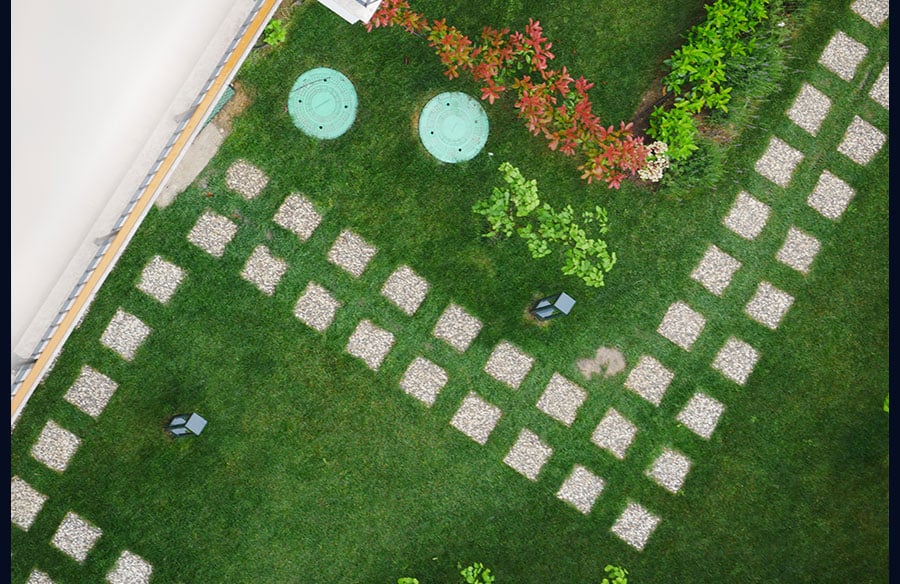
Thoughtful design works with those differences. Areas where grass consistently struggles may be better suited to planting beds, pathways or other landscape features, while healthier turf can remain where growing conditions support it.
That doesn’t mean giving up on a green yard. It means putting grass where it has a reasonable chance to thrive.
Good Design Starts Below the Surface
Homeowners naturally judge lawn health by what they can see. Brown patches, thin grass, weeds and bare areas get attention because they’re obvious, but some of the most important conditions are hidden underground.
Healthy soil needs enough space for air, water and nutrients to reach grass roots. Soil compaction can interfere with that movement, particularly in areas that experience regular foot traffic or other pressure. When roots struggle below the surface, adding more water or fertilizer doesn’t necessarily address the underlying issue.
This is where practices such as lawn aeration can become part of a broader landscape strategy. Loosening compacted soil can help create better conditions for root development and improve the movement of air, water, and nutrients through the soil.
The point isn’t to add another task to the lawn calendar. It’s to understand what the soil needs before assuming the visible grass is the entire problem.
Water Should Have Somewhere Useful To Go
Water is essential for a healthy landscape, but more isn’t automatically better.
Poor drainage can leave some areas saturated while nearby sections remain dry. Runoff can carry water away before it reaches the root zone, and frequent shallow watering may encourage roots to remain closer to the surface rather than growing deeper.
Landscape design can help manage those differences. Grading, plant placement, soil conditions and irrigation patterns all influence where water travels and how effectively the landscape uses it.
Watching what happens during and after rainfall can be surprisingly informative. A puddle that appears in the same place after every storm is telling you something about the property, just as a section that dries noticeably faster than the rest deserves a closer look.
Working with those patterns can be more effective than continually trying to overpower them.
The Best Lawn Isn’t Necessarily the Biggest One
For years, a large uninterrupted lawn has been treated as the default for residential landscaping.
It doesn’t have to be.
A thoughtfully designed yard can combine healthy turf with trees, garden beds, walkways, gathering spaces and other features that make the property more functional. Reducing turf in areas where it consistently struggles can also reduce the amount of mowing, watering and corrective maintenance those spaces require.
This approach creates a different definition of sustainable lawns. Sustainability isn’t about neglecting the yard or accepting unhealthy grass. It’s about designing the property so resources and maintenance are concentrated where they actually provide value.
A smaller area of healthy turf can sometimes create a better landscape than a larger lawn that’s constantly struggling against poor growing conditions.
Maintenance Works Better When It Responds to the Yard
Lawn care advice can sometimes sound like a checklist that every homeowner should follow exactly.
Real yards aren’t that predictable. Grass type, soil, weather, shade, drainage, traffic, and seasonal conditions can all change what a particular property needs.
Good maintenance begins with observation. Before adding another treatment or changing the watering schedule, it helps to ask why a problem is occurring in the first place.
The same principle applies when deciding when to aerate your lawn throughout the seasons. Understanding when practices such as aeration will provide the most benefit helps connect everyday maintenance to what is actually happening in the soil and grass.
That shift from routine to response can prevent a lot of unnecessary work.
A Diverse Landscape Can Be a Stronger Landscape
A yard doesn’t need to depend entirely on grass to feel green and inviting.
Trees can provide shade and help define outdoor spaces. Well-placed plants can add texture and visual interest, while planting beds can make use of areas where turf would otherwise struggle. Different landscape elements can also create a yard that changes naturally through the seasons instead of relying on one surface to provide all of its character.
The important word here is balance. Adding plants without considering sunlight, water requirements, mature size or surrounding turf can simply create a new set of maintenance problems.
Thoughtful landscaping considers how every element will interact several years from now, not just how it looks on installation day.
Sustainable Lawns Are Designed for the Long Game
There’s a tendency to treat lawn problems as individual battles. A bare patch appears, so it gets repaired. Water collects somewhere, so the area gets more attention. Grass struggles beneath a tree, so another round of seed goes down.
Sometimes those fixes work, but recurring problems deserve a bigger question: Is the landscape asking the lawn to do something it isn’t well suited to do?
Healthy, sustainable lawns begin when homeowners stop thinking only about the grass and start looking at the entire environment supporting it. Soil, water, sunlight, plants, traffic and maintenance practices are interconnected, and changing one can affect several others.
The goal isn’t a yard that never needs attention. It’s a landscape where the attention you give actually works, because the design itself is helping the lawn succeed rather than making every growing season an uphill battle.