
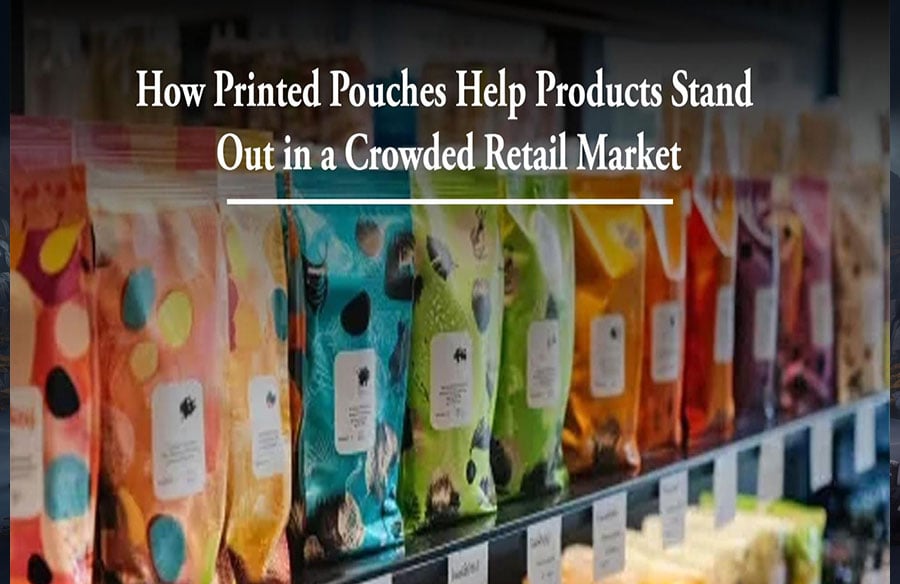
Retail shelves are more competitive than ever. Whether customers are shopping in supermarkets, specialty stores, convenience outlets, or browsing online marketplaces, they are surrounded by dozens of products competing for their attention. In many categories, purchasing decisions are made within seconds, meaning packaging often becomes the first opportunity for a brand to communicate its value.
Printed pouches have become a popular packaging solution because they combine product protection with effective branding. Instead of serving only as a container, a printed pouch becomes a marketing tool that introduces the brand, communicates important product details, and encourages customers to take a closer look.
While attractive graphics can capture attention, successful retail packaging requires much more than colorful artwork. Material quality, typography, color consistency, structural design, product information, and usability all influence how customers perceive a product before making a purchase.
For growing brands, investing in well-designed printed pouches can strengthen recognition, improve shelf presence, and create a more memorable customer experience.
First Impressions Happen in Seconds
Customers often make rapid judgments when browsing retail shelves.
Before reading ingredients or comparing prices, they usually notice visual elements such as color, shape, typography, and package structure. These first impressions influence whether a product earns a closer look or is overlooked entirely.
Packaging helps communicate:
- Product category
- Brand personality
- Quality expectations
- Flavor or variety
- Premium positioning
- Convenience
- Freshness
- Value
When packaging clearly communicates these characteristics, customers can make quicker purchasing decisions with greater confidence.
Packaging Functions as a Silent Salesperson
Retail packaging continues working even when no employee is available to explain the product.
A well-designed pouch introduces the brand, highlights important benefits, and provides the information customers need to make purchasing decisions.
Effective retail packaging should answer questions such as:
- What is this product?
- Who makes it?
- Why should I choose it?
- How is it used?
- How much is included?
- How should it be stored?
The clearer these answers become, the easier it is for customers to evaluate the product without additional assistance.
Branding Builds Recognition Over Time
Many purchases are influenced by familiarity rather than immediate need.
Customers who repeatedly recognize the same logo, colors, typography, and packaging style may become more comfortable choosing that brand during future shopping trips.
Using Custom Printed Mylar Bags allows businesses to present consistent branding across multiple product lines while combining attractive graphics with protective packaging.
A printed pouch may include:
- Company logo
- Brand colors
- Product photography
- Flavor indicators
- QR codes
- Social media information
- Product descriptions
- Storage instructions
Consistency across all products helps strengthen brand recognition and supports long-term customer loyalty.
Strong Shelf Presence Increases Visibility
Products compete not only against direct competitors but also against every nearby package.
A pouch that blends into the background may receive little attention regardless of product quality.
Shelf presence depends on several design factors, including:
- Color contrast
- Typography
- Package shape
- Graphic hierarchy
- White space
- Finish
- Size
- Product positioning
A strong design guides the customer’s eye naturally from the brand name to the product and finally to the purchasing decision.
Rather than filling every available space with graphics, many successful brands use selective emphasis and clean layouts to improve readability.
Color Plays an Important Role
Color often communicates before customers read a single word.
Consumers may associate different colors with flavor, freshness, luxury, health, or specific product categories. Maintaining consistent color usage across product lines also helps customers recognize related items.
For example:
- Green may suggest botanical or herbal products.
- Blue often communicates cleanliness or freshness.
- Black may indicate premium positioning.
- Red can attract attention and suggest bold flavors.
- White often represents simplicity and purity.
These associations vary across markets and cultures, so brands should choose colors that align with their target audience rather than relying solely on design trends.
Typography Influences Readability
Beautiful graphics lose value when customers cannot read the essential information.
Typography should create a clear hierarchy that highlights:
- Brand name
- Product name
- Flavor or variety
- Primary benefit
- Supporting information
- Required regulatory details
Large decorative fonts may work well for logos but often reduce readability when used for ingredients or instructions.
Simple, consistent typography helps customers identify products quickly, particularly when shopping under time pressure.
Packaging Shape Can Create Differentiation
Most retail products use familiar pouch formats, but subtle structural differences can increase visibility.
Rounded corners, unique proportions, standing formats, and carefully designed silhouettes can help products attract attention without making storage or transportation difficult.
One example is Die Cut Mylar Bags, which use customized cut-out shapes or distinctive profiles to create a memorable presentation. Depending on the design, die-cut features can reinforce brand identity, improve shelf appeal, or create themed packaging for seasonal collections and limited-edition products.
Businesses should balance creativity with practicality. An unusual shape should still:
- Protect the product
- Stand securely
- Display properly
- Pack efficiently
- Seal reliably
- Remain easy to open
Creative structures are most effective when they improve recognition without reducing usability.
Printed Pouches Support Product Storytelling
Customers increasingly want to know more about the products they purchase.
Packaging provides an opportunity to explain:
- Brand history
- Ingredient sourcing
- Production methods
- Sustainability efforts
- Usage suggestions
- Serving ideas
- Storage recommendations
- Company values
Storytelling should remain concise.
Most shoppers will not read several paragraphs while standing in a store aisle. A short message combined with a QR code can provide additional information without overcrowding the design.
Premium Finishes Can Enhance Perception
Surface finishes influence how packaging feels and reflects light.
Popular options include:
- Matte
- Gloss
- Soft-touch
- Spot UV
- Metallic effects
- Foil accents
- Embossing
- Debossing
The selected finish should match the brand’s positioning.
Luxury products may benefit from restrained matte finishes with metallic details, while vibrant snack products may suit high-gloss printing that enhances color intensity.
Practical considerations also matter. Matte finishes may reduce glare, while gloss finishes often make colors appear more vibrant.
Information Must Remain Easy to Find
Retail packaging should balance branding with communication.
Customers often look for:
- Net quantity
- Ingredients
- Allergen information
- Nutrition facts (where required)
- Storage instructions
- Preparation guidance
- Expiration coding
- Contact details
These details should remain readable even after the pouch is filled.
Important information should not disappear into folds, gussets, zipper tracks, or heavily patterned backgrounds.
Packaging Should Match the Target Market
A product aimed at children requires different packaging from one marketed to gourmet food enthusiasts or health-conscious adults.
Design decisions should consider:
- Customer age
- Shopping habits
- Price expectations
- Retail environment
- Product category
- Cultural preferences
- Brand personality
An elegant minimalist pouch may perform well in premium specialty stores, while brighter graphics may attract more attention in convenience retail settings.
Understanding the target customer helps prevent packaging that looks attractive but appeals to the wrong audience.
Printed Pouches Improve Product Organization
Consistent packaging helps retailers organize shelves more effectively.
Product families can use coordinated colors, icons, or labels to distinguish different flavors while maintaining an overall brand identity.
Customers benefit because they can quickly identify:
- Flavor variations
- Product sizes
- Dietary categories
- Seasonal editions
- Premium collections
- Limited releases
Clear organization also reduces confusion during repeat purchases.
Stand-Up Pouches Maximize Shelf Display
Stand-up pouches remain one of the most common retail formats because they provide excellent front-facing visibility.
A stable base allows:
- Better product presentation
- Efficient shelf organization
- Improved brand visibility
- Easier customer handling
- Greater printable area
However, the base must remain stable after filling. Testing with the actual product ensures the pouch stands correctly throughout storage and retail display.
Window Features Can Increase Trust
Some brands choose transparent windows that allow customers to see the contents before purchasing.
Visible products can help customers evaluate:
- Color
- Texture
- Size
- Fill level
- Overall appearance
However, windows should only be used when product appearance consistently supports the brand image.
Products that are highly sensitive to light or whose appearance changes during storage may require fully opaque packaging instead.
Packaging Influences Online Sales Too
Although this article focuses on retail shelves, printed pouches also play an important role in e-commerce.
Customers often evaluate products through photographs before making purchasing decisions.
Packaging should therefore:
- Photograph clearly
- Display branding prominently
- Minimize glare
- Show readable text
- Maintain color accuracy
- Look attractive from multiple angles
Consistent packaging across online and physical retail channels strengthens brand recognition.
Convenience Encourages Repeat Purchases
Good packaging continues creating value after the customer leaves the store.
Useful features include:
- Resealable zippers
- Easy-tear notches
- Stable standing bases
- Comfortable handling
- Durable materials
- Easy storage
Customers who find the package convenient may develop a more positive overall impression of the product.
Convenience should complement branding rather than compete with it.
Sustainability Influences Customer Perception
Many shoppers consider packaging sustainability when making purchasing decisions.
Businesses can improve their packaging strategy by:
- Using right-sized pouches
- Reducing unnecessary material
- Providing clear disposal guidance
- Choosing responsibly sourced components where available
- Avoiding unsupported environmental claims
Lightweight flexible packaging may reduce transportation weight compared with some rigid alternatives, but environmental performance depends on the complete material structure, manufacturing process, product protection, and local recycling systems.
Accurate communication is more valuable than broad claims.
Retail Testing Is Essential
Packaging should always be evaluated in realistic retail conditions before full production.
Businesses should examine:
- Shelf visibility
- Readability
- Customer reactions
- Color consistency
- Barcode scanning
- Stability
- Lighting effects
- Product differentiation
Testing in actual retail environments often reveals issues that are not obvious during digital design reviews.
Supplier Consistency Supports Brand Quality
Packaging consistency is critical when products are reordered over time.
Businesses should evaluate suppliers based on:
- Print quality
- Color accuracy
- Material consistency
- Lead times
- Communication
- Production capacity
- Quality-control procedures
- Technical support
Even small color variations between production runs can weaken brand recognition on crowded retail shelves.
Working with a dependable supplier helps maintain consistent product presentation.
Common Packaging Mistakes
Several mistakes can reduce shelf impact:
- Overcrowded graphics
- Too many fonts
- Poor color contrast
- Small unreadable text
- Weak visual hierarchy
- Low-quality images
- Inconsistent branding
- Excessive decorative effects
- Ignoring retail lighting
- Skipping customer testing
Successful packaging usually appears simple because every design element has been carefully planned.
Measure Packaging Performance
Packaging should be reviewed after launch rather than treated as a one-time project.
Businesses can monitor:
- Sales growth
- Repeat purchases
- Customer feedback
- Shelf performance
- Retailer comments
- Social media mentions
- Product recognition
- Return rates
Customer behavior provides valuable information for future design improvements.
Packaging evolves alongside the brand and should continue supporting changing market conditions.
Conclusion
Printed pouches help products stand out in crowded retail markets by combining strong branding, clear communication, practical functionality, and attractive shelf presentation. They create the first impression customers receive and often influence whether a product is noticed, picked up, and ultimately purchased.
Features such as consistent branding, effective typography, balanced color choices, premium finishes, convenient closures, and distinctive structures all contribute to stronger shelf presence. Creative options like die-cut designs can further differentiate products when they remain practical and easy to use.
The most successful printed pouches balance appearance with performance. They protect the product, communicate essential information, support retail display, and reinforce the brand across every customer interaction.
When businesses invest in thoughtful packaging design and thoroughly test it before full production, printed pouches become far more than containers—they become powerful marketing tools that help products earn attention in an increasingly competitive retail environment.