
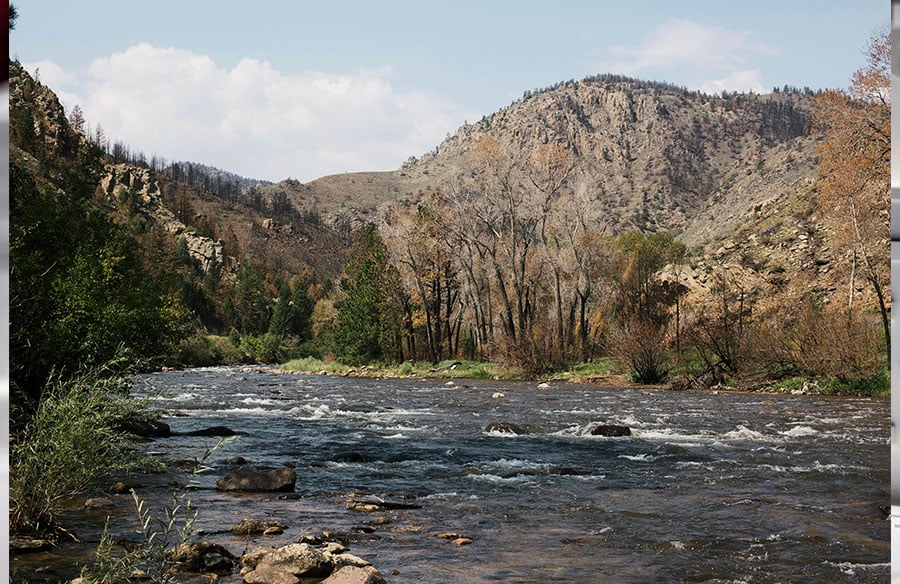
You’re searching for the best fly-fishing water on Colorado’s 102-mile Gold Medal stretch of the Arkansas River – fast. Between the Lake Fork confluence near Leadville and the U.S. 50 bridge at Parkdale, trout crowd four distinct landscapes. Gold Medal status marks trout biomass, not tackle rules, so statewide bag limits still apply (CPW dropped the last special regs in 2023). We built a seven-factor scoring model, weighed each reach against 2026 flow gauges and regulations, and ranked the ten best public sections by access, hatches, flows, and skill fit – so you can choose water with confidence and start casting sooner.
How the top 10 were scored – and the cheat-sheet you asked for
Selecting ten hotspots from 102 miles of public water is no guessing game. We graded every reach against seven weighted factors, then multiplied, totaled, and ranked the results so bias stays out and math stays in.
- Access & logistics – 20 %
- Fishery quality – 20 %
- Seasonal versatility – 15 %
- Solitude – 15 %
- Safety & skill fit – 10 %
- Scenic value – 10 %
- Nearby amenities – 10 %
| Rank | River stretch | Access style* | Prime season | Typical pressure | Skill fit | Closest flow gauge | Score |
| 1 | Hecla Junction → Stone Bridge | Both | Apr–Oct | High | Intermediate | Nathrop 07091200 | 90 |
| 2 | Rincon → Vallie Bridge | Both | Mar–May, Sep–Nov | Moderate | Intermediate | Wellsville ARKWELCO | 88 |
| 3 | Texas Creek → Parkdale | Both | Year-round | Moderate | Intermediate | Parkdale 07094500 | 86 |
| 4 | Stone Bridge → Big Bend | Both | Apr–Oct | Moderate | Novice+ | Wellsville ARKWELCO | 83 |
| 5 | Salida Whitewater Park → Salida East | Both | All-season | High | Novice+ | Wellsville ARKWELCO | 83 |
| 6 | Ruby Mtn → Hecla (Browns Canyon) | Float-led | Jun–Sep | High | Advanced rower | Nathrop 07091200 | 82 |
| 7 | Fisherman’s Bridge → Ruby Mtn | Both | Apr–Oct | High | Novice+ | Nathrop 07091200 | 80 |
| 8 | Point Barr & Wellsville | Wade | Mar–May, Sep–Nov | Low | Intermediate | Wellsville ARKWELCO | 80 |
| 9 | Hayden Meadows & Ranch | Wade | Jul–Sep | Low | Novice | Leadville 07081200 | 79 |
| 10 | Railroad Bridge & Numbers | Wade / expert float | Jun–Oct | Moderate | Advanced | Granite 07086000 | 75 |
*“Both” means you can wade or float at typical flows. “Float-led” indicates the best fishing comes from a raft with an experienced oars hand.
Where two reaches finish on the same total, the higher access and logistics score breaks the tie.
Scan the table, match a stretch to your calendar and comfort zone, then dive into the detailed breakdowns that follow.
1. Hecla Junction → Stone Bridge: the Gold-standard all-rounder
Hecla feels like the river’s heartbeat, with a broad ramp, shaded campground, and a three-quarter-mile shoreline trail CPW tags as “excellent fishing in spring and summer.”
Flows decide your game plan
- Wade: when the Nathrop gauge (USGS 07091200) drops near 400 cfs (local guides’ sweet spot) you can stalk ankle-deep gravel bars straight from camp.
- Float: above that mark, hop in a raft, ride Class II–III waves, and slip under Stone Bridge’s timber span before lunch. You fish Browns Canyon margins without committing to the monument’s tougher drops.
Hatch calendar: April BWOs, early-May caddis blankets, June stoneflies, midsummer hopper plus evening caddis combo, and red-quill or streamer action once cottonwoods bronze.
Hecla draws crowds. Beat them by hiking past Seidel’s Suckhole at first light, or launch at Stone Bridge and fish upstream banks while float traffic drifts down.
Display an AHRA day pass, watch Browns Canyon Class III advisories downstream, and you’ll see why locals call this their “desert-island” reach.
2. Rincon → Vallie Bridge: all-terrain access with a bonus pier
Midway between Salida and Cañon City, Rincon Recreation Site pairs a riverside campground with a dual-lane ramp on water CPW ranks among the river’s best. Riffles ease into broad runs where browns shelter under willow shade in spring and fall.
Access is the headline: step from your truck into knee-deep seams, or launch a raft, ride mellow Class II wave trains, and glide into Vallie Bridge. The take-out offers walk-in campsites, a self-service Clean-Drain-Dry station, and the corridor’s only fully accessible fishing pier.
When to fish
- March–May: midges, BWOs, then the advancing caddis cloud
- June–August: dawn starts beat the heat; switch to hoppers and ants
- September–October: crimson cottonwoods frame steady BWO and red-quill action
Check the Wellsville gauge (Colorado DWR station ARKWELCO) each morning. Local guides move from oars to wading when flows dip near 250 cfs; boats scrape while waders smile.
Carry a thermometer, display an AHRA day pass at both sites, and note that Vallie camping is walk-in or boat-in only, with no RV parking beyond the unloading area.
3. Texas Creek → Parkdale: lower-river versatility with room to roam
Sandstone cliffs glow at first light, cottonwoods cast long shadows, and trout slip from riffle to seam. The Texas Creek to Parkdale corridor is lined with signed public access sites, from highway pull-outs to campgrounds and concrete ramps, spaced closely enough that you can hop between them all day.
Why fish here? Lower elevation keeps water warmer, giving this reach the longest season.
- Late winter–early spring: midges and blue-winged olives appear as soon as air temps touch 40 °F.
- April–May: the headline caddis hatch marches upstream.
- June–August: dawn hopper action rules; step out by lunch if water temperatures at Parkdale rise above 68 °F.
- September–October: red quills, caddis, and extra elbow room return.
Echo Canyon River Expeditions, a licensed outfitter on this Gold Medal reach, has posted current-conditions notices limiting float trips to morning half-days when water temperatures at Parkdale climb above 68 °F. Its guide to fly fishing in Canon City, Colorado breaks down the walk-wade versus raft options, lists the rods and waders they supply, and explains why shorter outings protect trout during warm, low-water spells. Check that page, confirm flows on gauge 07094500, and you can decide whether to book a shuttle or tighten your boot laces before first light. They can also line up a same-day shuttle for private rafts if you just need wheels.
Local guides say most rafts need about 325 cfs on the Parkdale gauge (USGS 07094500) to avoid scraping, so check flows each morning and switch to wading if levels fall.
Pro tip: After a monsoon burst, check water color at Parkdale first. If it runs clear there, upstream feeders likely missed the storm, saving you a detour.
Access fee: Texas Creek, Vallie Bridge, and Parkdale are AHRA sites; display a day pass on your dash. Respect private banks between sites and stay below the high-water mark when wading.
4. Stone Bridge → Big Bend: easy logistics, endless options
Ten minutes south of Buena Vista, Stone Bridge Recreation Site lets you park, step onto a cobble bar, and cast within minutes – ideal for first-timers who dislike complex shuttles.
Follow the river three miles and Big Bend doubles your choices:
- Upper OHV staging area – busy but perfect for a quick after-work session
- Lower Big Bend SWA – fishing-only shoreline, no dogs allowed, SWA pass or fishing license required
Wade anglers work bank seams all spring; boaters slide in when the Wellsville gauge (Colorado DWR station ARKWELCO) tops about 400 cfs, then drift hay-stack boulders toward Salida. Verify flows daily.
Seasonal cheat-sheet
- April BWOs
- May caddis
- June golden stones
- Mid-summer hopper-dropper dawns
- Quiet red-quill evenings by October
Restrooms, shaded tables, and Salida fly shops sit ten minutes away, making this stretch the river’s easiest classroom. Display an AHRA or SWA pass, leave pups at camp if you choose the SWA bank, and you can test new gear during lunch and still be back before the coffee cools.
5. Salida Whitewater Park → Salida East: trout meets coffee-shop convenience
Start with a cappuccino on F Street, then walk twenty paces and drift a size-18 BWO over bank-tight browns. Salida’s paved river trail follows the channel for a half-mile, delivering pocket water, engineered wave features, and mid-river boulder gardens where caddis pop all spring. CPW confirms the Gold Medal designation covers downtown, giving you legitimate trophy water inside city limits.
Wade below the lowest drop where current slows and watch the Wellsville gauge (Colorado DWR station ARKWELCO). Local guides report the park fishes best when flows stay below about 600 cfs; at higher levels, work shoreline pockets and focus on evenings.
Need more room? Drive three minutes to Salida East for a concrete ramp, shoreline campsites, and a walk-in rental yurt added in 2022. Launch at first light, slip past hay-stack boulders, and take out at Rincon for lunch, or wander the gravel bars a hundred yards from camp when the evening hatch lights up.
Urban perks: fly shops, gear rentals, real-time temperature boards, tacos, and lattes all sit within five blocks. Buy an AHRA day pass, steer clear of park hydraulics during high flows, and you can refill your mug and be back on trout before the foam cools.
6. Ruby Mountain → Hecla Junction (Browns Canyon): float the postcard stretch
Launch from Ruby Mountain gravel ramp, glide between granite domes, and watch the river narrow inside Browns Canyon National Monument, a road-free corridor of Class III waves and sculpted boulders that feels far from the highway.
Why float, not wade?
Wading is limited to the launch, the take-out, or long hikes; the marquee water sits mid-canyon. Keep an experienced oars hand on the sticks because drops like Zoom Flume and Staircase require quick moves at normal summer flows.
Timing guide
- April (pre-runoff): cool water, sparse traffic
- July 1–August 15: the Voluntary Flow Program targets 700 cfs at the Wellsville gauge, ideal for rafts that need depth without scraping
- September: flows taper, crowds thin, hoppers skitter along sunny banks
Logistics stay simple: launch at Ruby, land at Hecla, and book a local shuttle for a stress-free day. Check the Nathrop gauge (USGS 07091200) each morning, wear a PFD, and carry a spare oar; this is Class III wilderness water even when it looks friendly.
Between granite walls, eagle fly-bys, and steady 5-weight bends, you will fill a camera roll quickly, so keep one hand on the oars.
7. Fisherman’s Bridge → Ruby Mountain: gateway to the canyon
Looking for a Browns-adjacent sampler? Fisherman’s Bridge offers paved parking, a sturdy footbridge, and wide glides where you can spot trout from above before tying on tippet. Lauch here, float four easy miles, and step out at Ruby Mountain for shaded picnic tables and a quick drive to Buena Vista for dinner.
Why it works
- Wade: ankle-deep riffles soften into knee-deep runs, perfect dry-dropper water when spring caddis climb the banks.
- Float: a short Class II drift skirts the canyon mouth without the bigger rapids downstream.
Check the Nathrop gauge (USGS 07091200); locals aim for about 350–700 cfs. Below that, boulders force creative lines; above it, crossings get spicy and new oars struggle to catch eddies. Afternoon storms may dump red mud from side gullies; wait an hour and clarity usually returns.
Display an AHRA day pass, wear a PFD even on this mellow reach, and you will enjoy canyon scenery without the full Browns commitment.
8. Point Barr & Wellsville: quiet water off the tourist radar
Craving elbow room? Follow the narrow dirt track beneath Point Barr’s low railroad trestle; CPW advises large RVs to avoid the route, but compact vehicles can reach a pocket-water gem.
Fast riffles tumble into soft inside seams where browns rise at first light. Wade upstream to the red-rock wall or slip downstream to Wellsville’s signed pull-out. Both sites sit inside the Salida-to-Vallie Bridge corridor, an area CPW labels “popular dispersed camping,” yet you’ll see far fewer rods than downtown Salida.
Seasonal rhythm
- March–April: BWOs and the leading edge of the caddis hatch
- June–August: fish at dawn, then picnic once the Wellsville gauge (Colorado DWR station ARKWELCO) drops toward 200 cfs and afternoon heat builds
- September–October: mahogany BWOs and red quills ignite under golden cottonwoods
Road reminder: one-lane track, soft shoulders, and wet clay can strand you; check the forecast, keep headlights on under the trestle, and turn back if conditions deteriorate.
Display an AHRA day pass, respect private banks between public parcels, and you’ll enjoy a mile many guidebooks skip.
9. Hayden Meadows & Hayden Ranch: high-country calm and boardwalk access
North of Leadville, the valley widens into willow flats, oxbow ponds, and meandering riffles at 9,200 feet, often 20 °F cooler than Parkdale on a July afternoon.
Accessibility is the headline. CPW installed hard-packed trails, five wetland boardwalks, and two footbridges so anglers of all mobilities can reach productive runs without rock-hopping.
Prime window
- Early July–September: post-runoff knee-deep flows, hoppers and ants tight to grassy undercuts, size-14 green drakes beneath afternoon clouds
- Cool nights keep water temps in the 50 °F range, so evening sessions beat midday glare
Flows seldom exceed about 150 cfs at the Leadville gauge (USGS 07081200), making wading straightforward; watch for sudden snowmelt or monsoon spikes because narrow channels rise quickly.
Pack layers (dawn temps can slip below 40 °F even in August), display your AHRA day pass, and respect private-land fences beyond the boardwalk corridor. Trout here run modest, scenery runs grand, and the backdrop will steal every cast.
10. Railroad Bridge & the Numbers: pocket-water playground for the brave
Stand on the old Denver & Rio Grande span north of Buena Vista and you will see why anglers call this reach a “technical heaven.” Granite outcrops pinch the channel, suitcase-size boulders split the flow, and thigh-deep pockets reload every few steps.
Access & safety
- Paved turnoff, vault toilet, short gravel path to water
- Wade: use studded boots, a wading staff, and conservative crossings once the Granite gauge (USGS 07086000) climbs above about 450 cfs (local guide consensus)
- Float: suited only for rowers comfortable in Class IV Numbers rapids; CPW lists them as Class III–IV, with Pine Creek just upstream rated V–VI
Drift a Chubby Chernobyl over mid-river pillows at dawn, switch to a Perdigon dropper when the sun climbs, and finish with small streamers in late-day shade. Target post-runoff July–early October when water temperatures linger in the 50s.
Display an AHRA day pass, wear a PFD, carry a spare oar, and note that Pine Creek high-water advisories trigger when flows exceed 1,250 cfs below Granite. Chess-match fishing pairs with adrenaline whitewater here, a combination made for anglers who enjoy thinking on their feet and rocks.
Wade or float? Pick the style that matches your day
Think through four quick filters and the right access style pops out:
-
-
- New to freestone pocket water or fishing with kids? Choose forgiving wades at Hayden Meadows, Stone Bridge, or Salida’s river trail.
- Comfortable on the oars? Browns Canyon and the Numbers reward seasoned rowers once summer flows stabilize.
- Current flow.
Check the closest gauge from the table above. When flows sit at 300 cfs or lower, most ramps become rock gardens and waders win. Near 600 cfs or higher, the river spreads, bank structure sinks, and floaters cover triple the water per cast. Verify readings each day. - Time & shuttle.
A pre-work hour fits any roadside wade. Floats require two vehicles or a guide but trade logistics for scenery and solitude. - Mobility & comfort.
Boardwalks at Hayden Meadows and the Vallie Bridge accessible pier level the field for anglers with limited footing, while a stable raft lets some guests fish seated all day.Skill & company
-
Run this checklist for skill, flow, logistics, and mobility before tying your first leader knot, and you will launch with confidence.
Match the stretch to the right flow gauge
One flow reading will not tell the whole Arkansas story. Pick the gauge closest to your water and you will predict clarity, depth, and temperature like a local.
| River zone | Gauge ID | Open link |
| Hayden Meadows, Leadville | 07081200 | USGS Leadville |
| Granite & Numbers | 07086000 | USGS Granite |
| Nathrop, Browns, Hecla | 07091200 | USGS Nathrop |
| Salida & Wellsville | ARKWELCO | Colorado DWR Wellsville |
| Parkdale (Gold Medal end) | 07094500 | USGS Parkdale |
| Cañon City context | 07096000 | USGS Cañon City |
Use the list like a menu: heading for Hayden Meadows? Tap 07081200. Fishing Point Barr at dawn? ARKWELCO shows whether last night’s storm spiked flows. Planning a Browns float? 07091200 is your draft-depth decider.
Tip: USGS timestamps are in UTC; subtract six or seven hours for local Colorado time depending on daylight saving, then refresh at the trailhead so ankle-deep trickles or chest-high surges do not catch you off guard.
Follow the hatch: south to north, canyon to meadow
Think of the Arkansas hatch as a month-long parade that starts in the warm canyons near Cañon City and marches upstream toward Hayden Meadows:
| Rough timing* | Stretch | Key bugs |
| March | Parkdale → Rincon | Midges, BWOs |
| Mid-April | Parkdale | Mother’s-Day caddis blanket |
| Late April | Salida corridor | Caddis peak |
| Early May | Ruby Mountain | Caddis, early stones |
| June (post-runoff) | Browns → Big Bend | Golden stones, yellow sallies, PMDs |
| July | Buena Vista valley → Granite | Hoppers, ants, beetles; lower-river tricos at dawn |
| Aug–Sept | Rincon → Wellsville | Red quills, mahogany BWOs, pre-spawn streamer bite |
| Oct | Lower canyon first | Midges, BWOs bookend the season |
*Snowpack, runoff timing, and monsoon storms can shift dates by a week or more. Check the nearest USGS gauge and a same-week shop report before packing fly boxes.
Track the migration, pair it with the right gauge, and you will chase live hatches rather than rumors.
Know the rules before you rig up
Run through this checklist before the first cast; fines and fence-line lectures ruin a fishing day faster than a snapped tippet.
1. Licenses
a. Anyone 16 and older needs a Colorado fishing license (2026 resident annual $44.87, non-resident $124.01). Youth 15 and under fish free.
2. Not fly-only
a. The 102-mile Gold Medal reach proves trout biomass, not tackle rules. Statewide bag limits apply unless a sign says otherwise.
3. Site fees
a. Arkansas Headwaters Recreation Area (AHRA) sites require a day pass (about $10–$15 per vehicle, $4 walk-in). An annual Colorado State Parks pass also satisfies the fee.
b. Big Bend SWA and other wildlife areas need a current hunting or fishing license just to enter. Dogs are prohibited and activities are limited to fishing.
4. Private land
a. Where private land meets the river, ownership generally runs to the centerline, so the bed can be private even when only one bank is private. Owners are not required to post signs, so before you touch the bed or the bank, be certain it is public.
5. Clean, drain, dry
a. Hand-launched craft are exempt from inspections, but CPW provides a self-service decontamination station at Vallie Bridge.
6. Whitewater advisories
a. CPW posts daily high-water cut-offs for Browns Canyon, the Numbers, Pine Creek, and the Royal Gorge. Rowing above a posted limit voids permits and good sense.
7. Fire restrictions
a. Check county notices. Summer bans often limit open flames to camp stoves.
Snap a photo of the current CPW brochure each March, keep PDFs offline on your phone, and spend the day netting trout instead of debating rules at the ramp.
Conclusion
From high-country willow flats to granite-walled whitewater canyons, the Arkansas River offers a stretch for every angler, skill level, and season. Match flows to your comfort zone, respect local regulations, and carry the right flies for each reach’s signature hatches. Do that, and Colorado’s Gold Medal water will reward every careful cast.