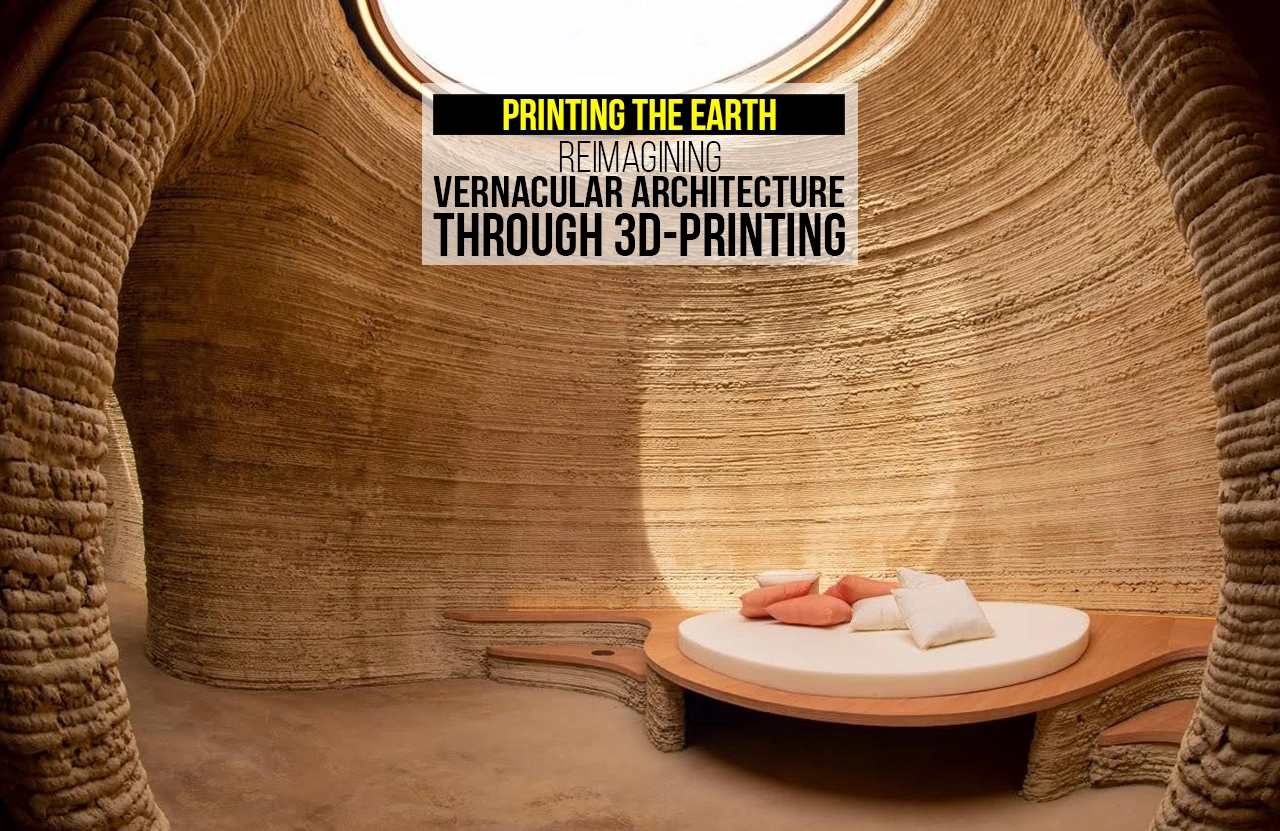
Can digital fabrication revive vernacular intelligence rather than replace it?
Part 1: Rediscovering the Future Beneath Our Feet
The Future Arrives Covered in Mud
The idea of tomorrow in architecture often evokes futuristic robot limbs, unmanned construction zones, and digital constructions that appear seamlessly from digital models. All of which is usually paired with the belief that architecture of tomorrow would rely heavily on advanced technology, artificial intelligence, and industrial robotics. However, one of the most remarkable advancements in modern architecture offers a peculiar irony. One of the most complex construction techniques of today is being employed with one of the oldest building materials known to man – Earth.
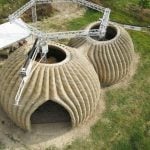
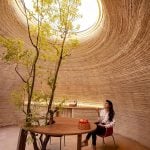
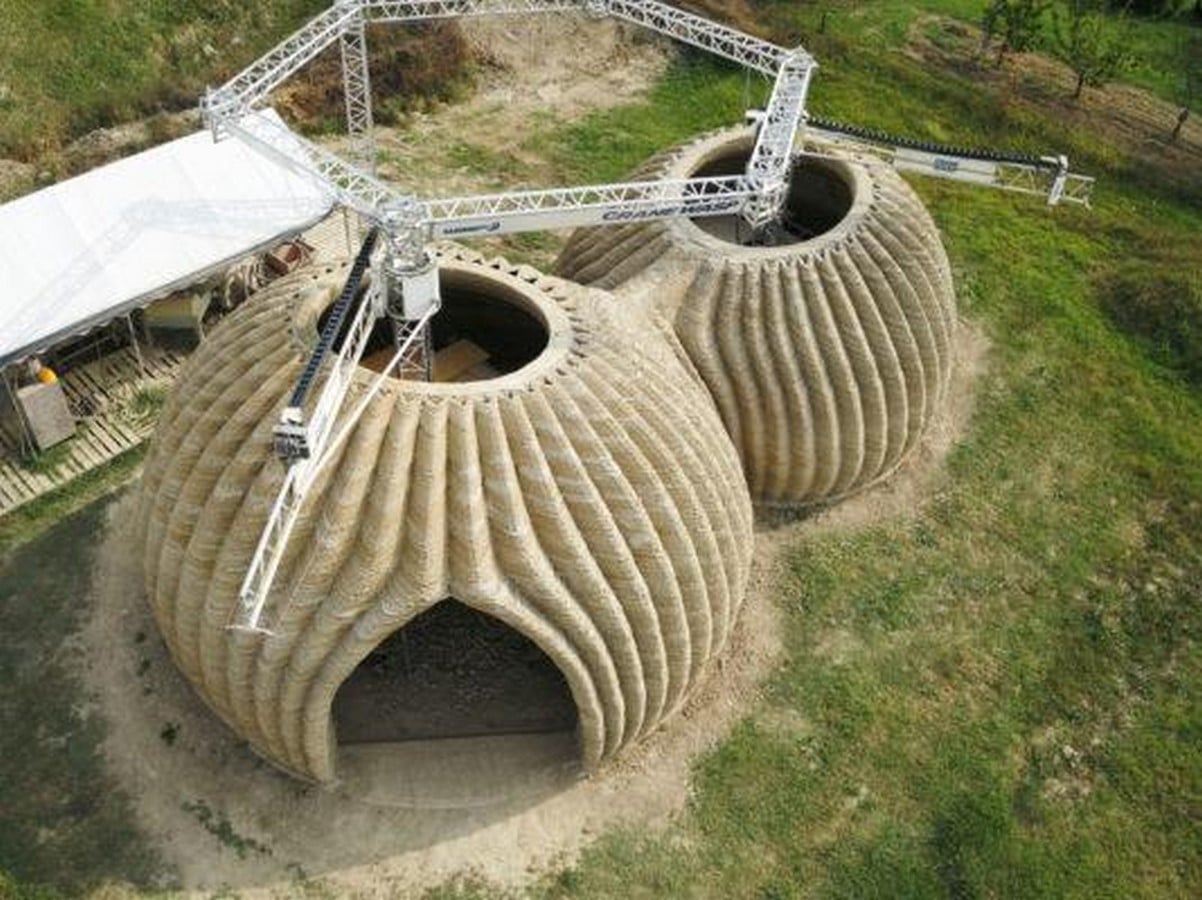
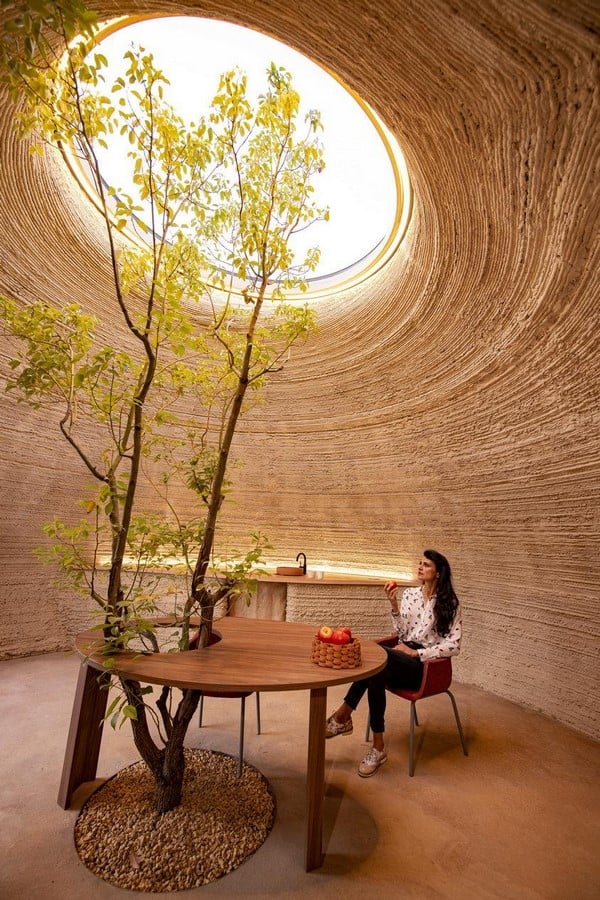
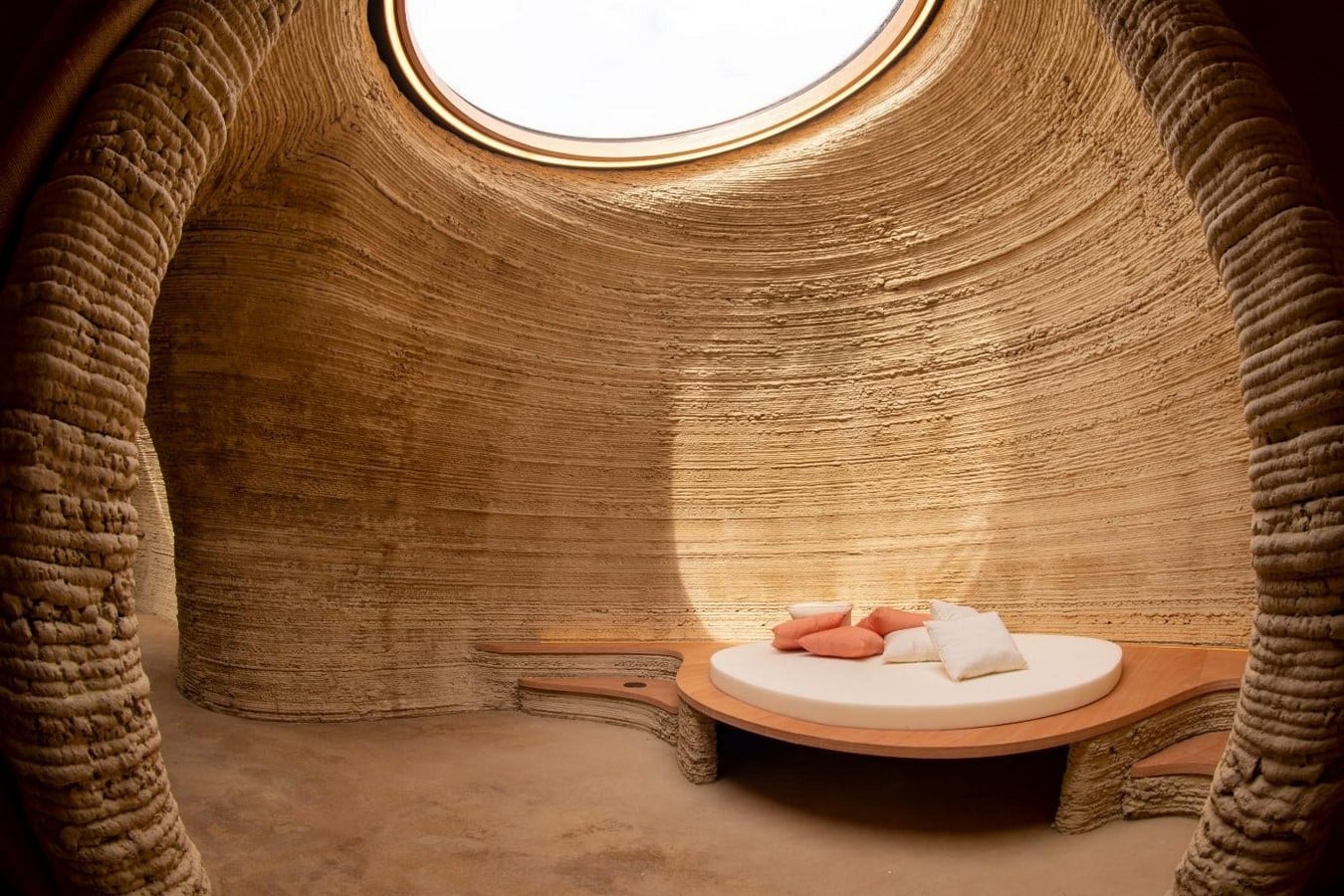
In 2021, the architectural community’s attention was drawn to TECLA – an innovative dwelling created by WASP (World’s Advanced Saving Project), an Italian company, in collaboration with Mario Cucinella Architects. The building was not constructed from reinforced concrete and prefabricated steel parts; it was mainly made out of local soil by huge robotic arms working according to computer designs. TECLA gained worldwide popularity by breaking established stereotypes about innovation. Instead of replacing traditional materials with more advanced ones, it showed that digital construction could allow architecture to return to its roots (WASP, 2024).
First of all, the combination of robotics and construction from the soil sounds like a contradiction. Earth is a material of rural architecture; it is associated with indigenous peoples and the pre-industrial era. At the same time, robotics and additive construction represent the pinnacle of modern technology development. However, the connection between the two concepts reveals a much larger shift in architectural thinking. Innovations do not always imply the creation of completely new materials; they may be based on the reinterpretation of traditional knowledge.
This change is taking place at a pivotal point. The global construction industry is being challenged like never before by environmental, economic, and societal issues. Urbanisation and the resulting demand for housing, along with the production and processing of traditional building materials, continue to burden natural resources. According to the International Energy Agency (IEA, 2023), cement production accounts for around 8 per cent of global carbon dioxide emissions, making it the most carbon-intensive industrial process worldwide. At the same time, the United Nations Environment Programme (UNEP, 2022) suggests that buildings and construction are responsible for around 37 per cent of energy-related carbon emissions throughout their lifecycles.
In this context, there is a spectacular rebirth of earthen architecture, as materials once seen as primitive are being reconsidered for their sustainability, circular-economy benefits, and resilience to climate change. Research on 3D printing has greatly contributed to this process, demonstrating that Earth can be integrated with digital fabrication to build environmentally friendly, material-efficient, and architecturally sophisticated buildings. Thus, what seemed to be a technical revolution turned out to be more than that.
This article investigates how the application of 3D printing transforms the dialogue between technology and vernacular architecture. Going beyond the hype about the emergence of robots in construction, it explains that the biggest potential of additive manufacturing lies in its ability to restore the wisdom of environmentality that lies in traditional construction techniques. With projects such as TECLA and WASP’s Shamballa, and current research in India, the paper aims to investigate whether digital fabrication can help create an innovative architectural paradigm.
When Earth Became a Forgotten Material
Well before architecture became an industry, building was an inherently local process. People built their shelters using materials naturally occurring in their surroundings, thus letting the environment, terrain and culture define architecture. Earth, in all its forms, became one of the earliest and most popular materials used for construction. From the adobe towns of South America and rammed-earth forts of China to the mud villages of Africa and Indian earthen architecture, soil was the foundation of elaborate architectural systems developed over many centuries (Minke, 2012).
These buildings were not only a result of the need for material resources. They were embodiments of the understanding of natural relations. The thick earthen walls regulated the temperature inside the buildings by absorbing heat during the day and radiating it back at night, making mechanical temperature regulation unnecessary until such inventions were developed. Local materials limited transportation, while building processes required the participation of local communities and skills passed down from generation to generation.
In India, one finds especially fine examples of such intelligence in nature. The round bhungas found in Kutch, Gujarat, for example, have shown remarkable resistance to earthquakes due to their geometric structure and flexible earth walls. In the Himalayan region of Ladakh, rammed-earth constructions can insulate the interior from severe weather. Throughout central and southern India, earth architecture has traditionally taken into account climatic conditions, soil types, agriculture, and culture.
Despite all these accomplishments, earthen architecture steadily declined in importance during the nineteenth and twentieth centuries due to industrialisation, which affected not only construction techniques but also ideas about what constituted progress. The invention of Portland cement in the nineteenth century provided the material basis for the construction of reinforced concrete on a massive scale. The availability of steel enabled tall buildings, while mass-produced bricks and standardised elements enabled rapid urban growth.
Therefore, the Earth came to symbolise poverty, informality, and technological underdevelopment. In many developing nations, modernity was symbolised by concrete and brick instead of local building materials. The process of urbanisation also accelerated this transformation, with industrial construction techniques serving as the basis for government housing projects and infrastructure development. The importance of vernacular knowledge was lost to culture, despite the environmental significance of much of its teachings.
The effects of this transition have become clear during the twenty-first century. Traditional construction relies on intensive manufacturing, global logistics, and resource- and carbon-heavy materials. The production of cement involves immense amounts of limestone, fossil fuels and energy-intensive kilns, thereby producing significant greenhouse gas emissions (IEA, 2023). Steel is no different from cement in its environmental impact, as it is produced in vast quantities globally alongside construction waste.
Interestingly, some of the features that were considered weaknesses of earthen structures in the past have been seen as advantages in recent years. Local sourcing will help reduce transportation-related carbon footprints. Reduced processing implies reduced embodied energy. Natural thermal performance will imply a reduced need for operational energy. Finally, when the building is no longer in use, the Earth can usually be returned to nature without major environmental harm. Contrary to common belief, earthen construction is based on principles of regenerative design and circular economy (Hall et al., 2012).
This change in perception has led many architects to revisit vernacular building methods not as relics of the past but rather as valuable sources of environmental knowledge. Yet, imitating these building techniques does not seem likely to solve the current problems associated with housing and urbanisation. In other words, the task is to convert the knowledge contained in vernacular architecture into modern construction techniques. In this situation, 3D printing can prove to be helpful.
3D-Printing Is Not About Printing—It Is About Rethinking Construction
Interest in 3D printing is usually generated through the machine itself. The idea that a robot can produce continuous layers to construct a building almost seems futuristic. However, while the images may be visually appealing, they do not accurately reflect the true importance of additive manufacturing technology.
Additive manufacturing is fundamentally different from traditional construction, as it does not require cutting or drilling materials before assembly. This means there is no material waste during the process and no need for the formwork used in regular concrete construction. It is believed that this feature of the technology is among its best aspects (Buswell et al., 2018).
Thus, the real revolution does not involve replacing builders with robots; rather, it entails an entirely new way of thinking about and constructing architecture. Digital design enables architects to create geometric forms in response to gravity, climate, and the physical properties of materials. In other words, walls in buildings do not necessarily have to be evenly thick throughout their length. Internal voids can provide better insulation without requiring excessive material. Complex shapes that would otherwise require costly formwork are now possible with robotic deposition technology.
This process raises doubts about many principles formulated in the age of industrialism. Standardisation was the key principle of modern construction, as it facilitated manufacturing and reduced costs. However, climate, solar orientation, and culture vary widely across the world.
In this regard, digital fabrication enables mass customisation rather than mass production. It enables buildings to adapt to local conditions without necessarily increasing construction complexity. Indeed, such an ability aligns well with vernacular architecture, which has always been interested in adaptation rather than uniformity. Here, it becomes clear that 3D printing is not at odds with the principles of vernacular architecture but rather supports them.
The choice of printing material will be critical in determining how sustainable these technological capabilities become. There have been numerous discussions in the commercial world about 3D printing concrete, though there has been less interest in its environmental benefits. This is because even though it has been possible to eliminate waste and labour, concrete remains carbon-intensive.
One potential path to explore is the use of local Earth, clay, and natural fibres. Architects can develop highly technological building systems by employing digital fabrication technologies alongside materials with inherently low embedded energy. The issue is no longer whether robots can build houses; the real question lies in what they should be built out of.
Part 2: From Experimental Prototypes to a New Vernacular
Earthen 3D printing’s growing fascination is not merely about technology. There is a larger reevaluation of the link between architecture and its site, materiality, and climate. As much as digital fabrication has been associated with the futuristic appearance and automation of industry, some of the most groundbreaking work in recent times has consciously shunned processed materials in favour of soil. What makes this work groundbreaking is less about proving robotics’ capability to construct buildings and more about the idea that technology need not be divorced from vernacular knowledge.
Printing with Earth: More Than a Technological Experiment
TECLA is one of the most popular projects featuring Earth 3D printing and was created by WASP – The World’s Advanced Saving Project in cooperation with Mario Cucinella Architects. The construction in Italy drew attention because it was one of the first full-scale houses printed, with almost all components made from locally excavated Earth. Instead of importing industrial products from afar, the entire process relied on soil extracted from the construction site, with natural additives to achieve the necessary consistency for 3D printing (WASP, 2024).
The uniqueness of the project named TECLA lies not only in its construction method but primarily in its philosophy. The project was designed as an answer to problems in the modern environment, proposing a model of housing that emits low levels of carbon throughout its life cycle and is highly adaptable to local conditions. The building’s unique form, created through computational design, shares many of the thermal advantages of earthen buildings.
In addition, the project reveals a paradigm shift in the approach towards architectural innovation. Until recently, innovations were mostly associated with replacing natural building materials with industrial products. Now, the innovation involves enhancing the properties of natural materials through scientific investigation and digital fabrication. Earth is no longer considered an outdated construction material but is seen as a resource with environmental properties that can be developed with robotics, computer-assisted design, and materials engineering.
Within the overall WASP initiative named Shamballa, this approach goes even further, extending beyond the boundaries of the construction process itself. Shamballa can be considered a vision for sustainable settlements that use local materials, renewable energy sources, and digital fabrication technologies. Instead of treating architecture as an isolated object, the Shamballa project foresees a new model of development in which buildings are born in the context of the environment and consume fewer resources while remaining close to it (Moretti, 2021). These concepts have obvious parallels with the way vernacular settlements develop.
These initiatives show that the real significance of 3D-printed earthen structures lies not in their novelty but in their ability to reevaluate the relationship between technology and locale. Rather than transplanting universal construction technologies, digital manufacturing could actually lead to architecture that better suits local climate and materials.
Beyond Italy: A Global Movement Towards Sustainable Fabrication
Italy is certainly not alone in exploring the potentialities of additive manufacturing. In Europe, North America, and Asia, architects and engineers are already working to understand how 3D printing can address urgent issues in affordable housing, disaster resilience, and environmental sustainability.
Companies like COBOD in Denmark have developed construction printers capable of manufacturing residential and commercial buildings while minimising material waste. In the United States, ICON has made headlines by constructing affordable housing communities and emergency shelters using 3D printing, which can help build faster while employing fewer workers. While most of these constructions still use concrete, they showcase the increasing acceptance of robotic construction in architectural design (Perrot et al., 2020).
On the other hand, universities and research labs are exploring the use of alternative materials, such as clay, geopolymers, recycled aggregates, and agricultural waste. All of this research stems from a vital realisation that the environmental benefits of 3D printing do not lie solely in the printer’s efficiency, but also in the sustainability of the material used for deposition. Even if it becomes easier to print concrete, it will not have much effect on reducing the carbon emissions associated with producing cement. But printing with Earth could change that, both in terms of material and construction.
Therefore, the discussion about 3D printing is moving from ability to responsibility. More architects are questioning not only how quickly a building might be constructed, but also what the chosen material brings to climate resilience and circular economies.
India’s Opportunity: Rediscovering Indigenous Knowledge
In India’s case, the emergence of this worldwide trend provides a unique opportunity. While many other nations have only recently discovered the potential of earthen construction, India has never forgotten about it. Different climatic zones across the country have led to diverse architectural solutions, most of which remain applicable to sustainable development.
One of the best examples is that of the circular bhungas of Kutch. Constructed from mud walls reinforced with organic fibres, such structures proved their stability even during the massive earthquake in Gujarat in 2001. Due to the structure’s shape, seismic forces are evenly distributed, while thick earthen walls ensure comfortable indoor temperatures regardless of the desert climate. All these characteristics have been attained without any modern calculations.
Equally, the construction of buildings using rammed Earth in Ladakh demonstrates how using materials from the immediate environment can help address challenging climatic conditions. The thick walls act as insulators on cold winter days, and compact planning helps retain warmth while fostering social ties within the community. Courtyards, verandahs, and transitional spaces have been features of mud buildings in central and southern India that help address the monsoon climate and promote social interaction.
Vernacular architecture is rich in environmental wisdom. According to Amos Rapoport (1969), built environments in traditional societies result not only from physical constraints but from the relationship between the environment and human behaviour.
Organisations such as the Auroville Earth Institute have helped preserve and develop this technology through research on stabilised earth construction, compressed earth blocks, and sustainable building technologies (Auroville Earth Institute, 2023). More recently, Indian start-up companies such as Tvasta Manufacturing Solutions, together with research being conducted at the Indian Institutes of Technology (IIT) Madras, IIT Hyderabad, and the Indian Institute of Science, have been exploring the use of digital fabrication technologies in conjunction with local materials.
Instead of simply adopting construction models from abroad, this research can be used to develop an Indian approach to 3D printing—a model that leverages both computational technology and centuries of experience with local materials.
Can a Robot Understand Vernacular Architecture?
Though technological development is commendable, the question remains whether digital fabrication can replicate the cultural intelligence found in vernacular architecture.
Buildings have never existed because of just their efficient structure and available materials. Buildings are manifestations of their ritual practices, families, livelihoods, and memories. Courtyards have never been about ventilation alone; they have always been the heart of any house, where kids can play, parties can take place, and life happens. Verandahs offer protection from the elements, but they have also become spaces where interaction takes place across the public and private spheres of life.
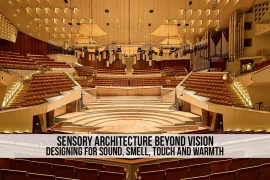
Such aspects cannot be produced by means of algorithmic processes. AI allows optimising geometric design, calculating required materials and evaluating environmental performance. It cannot, however, comprehend the cultural significance that makes an architectural object valuable. As Juhani Pallasmaa (2012) emphasises, architecture is a sensory and experiential art. Buildings cannot be perceived merely visually. They are spaces which evoke memories, touch, sounds, smells and social interactions.
Thus, the development of 3D-printing from earthen materials should not be regarded as a means of eliminating human creativity and culture. On the contrary, it is to be perceived as a device that adds to architectural opportunities and is still governed by human values. The robot can build walls, but architects and people have to create social ties through the built space.
This distinction is especially relevant given the times we live in, which are increasingly dominated by automation and artificial intelligence. There is a danger that the technologies themselves may be glorified for their innovativeness rather than for the role they play in improving people’s lives. An authentic, human-centric attitude toward 3D printing means architects should start asking themselves other questions: Is the technology helpful in making our lives better? Does it enhance local identity? Does it help people connect with the place where they live?.
Towards a New Understanding of Innovation
Based on the examples above, the future of architecture lies not in choosing between technology and tradition. Rather, it lies in realising that the two can coexist. Vernacular architecture has shown the ability of buildings to interact intelligently with the climate, materials and social aspects. Digital fabrication provides innovative means that would allow for this intelligence to manifest in the modern context of urbanisation and environmental insecurity.
It follows, then, that innovation cannot be judged solely by the level of technological progress. The building made from locally sourced Earth using robotically controlled processes will no doubt seem technologically advanced. Its true success, however, may lie in adhering to principles followed for thousands of years by human settlements: building with local materials and in line with the local climate.
Instead of replacing vernacular architecture, 3D printing can revive it. This is because the problem arises when technological advancement is pursued without regard for environmental sustainability and cultural considerations. It is only through this process that digital fabrication can contribute to innovative, sustainable, and humanistic architecture.
Part 3: Towards a Human-Centred and Regenerative Future
Sustainability Beyond Carbon: Rethinking the Meaning of Progress
While the rising interest in 3D printing on Earth is associated with the promise of reducing the carbon footprint, its importance goes far beyond environmental metrics. Nowadays, sustainability in architecture is not considered only an opportunity to reduce emissions or improve the energy efficiency of buildings, but also to ensure social resilience, cultural continuity, material responsibility, and economic inclusiveness. Within this broad range of concerns, earthen additive manufacturing offers a fascinating platform for rethinking how buildings can be designed, assembled, and used.
Among the most important benefits of constructing with Earth is its alignment with the principles of the circular economy. Unlike most materials used in industrial construction, Earth can be dug from local sources, processed with relatively low energy, recycled after demolition, and returned to nature without producing any harmful waste. Thus, the material cycle provided by Earth contrasts dramatically with a linear one common in modern construction: raw materials are extracted, transformed into industrial goods, delivered over considerable distances, and finally become demolition waste.
The practice of digital fabrication augments this circular model of construction by reducing wasteful material use. Traditional construction techniques often generate significant waste from cuts, scrapes, and formwork. Digital fabrication uses materials only when necessary, enabling computational design that optimises efficiency while minimising material use (Buswell et al., 2018). The additional advantage of using local earth materials results in a considerable reduction in both the carbon footprint and construction waste.
Finally, an aspect of sustainability that cannot be ignored is that of the social factor. Automation is increasingly seen as a threat to jobs, especially in labour-intensive sectors such as construction. Earthen 3D printing need not exclude humans; it merely changes their roles. From architects, engineers, and material scientists to software programmers, robot operators and local artisans, everyone becomes a key player in designing and fabricating with 3D-printed earthen constructions. The experience and wisdom of traditional knowledge about soil properties, climate adaptation, and local construction techniques remain relevant as new possibilities in digital design, robotic fabrication, and material research emerge.
For nations going through urbanisation, this will be highly important. Providing affordable housing is one of the most challenging problems worldwide, as many people lack access to adequate, climate-adaptive housing. This new technology can help build houses efficiently using locally sourced materials rather than costly imported ones. With good planning, this technology can help achieve sustainability and social equality.
Challenges That Technology Alone Cannot Solve
Although it has great potential, earthen 3D printing is not a universal approach to construction and architecture. Each innovative technological solution comes with challenges associated with its integration into the current environment, which should be considered.
First, one should consider the issue of material consistency. Unlike industrial concrete, soil has significant differences in geological, moisture, and mineral composition. Finding the appropriate printing mixtures will require extensive testing (Perrot et al., 2020). What works well in Italy does not necessarily work in India due to climate and geological features.
The question of structural performance is another point to address. It has already been proven that 3D printing can be done with earthen materials, but their behaviour under different environmental conditions still needs to be researched. It is necessary to consider aspects such as moisture resistance, seismic behaviour, maintenance, and longevity. All these questions should be addressed to develop proper regulations and guidelines.
It is also important to consider economic factors. Even though there will be less material waste and labour in the long run, the initial cost of acquiring the robotic tools and learning to use them is still quite high. These costs could be prohibitive for some communities, especially developing ones. Some partnerships, government involvement, and educational programs would need to be established to ensure the technology does not remain limited to experimentation and luxury projects.
Perhaps the biggest obstacle is of a different nature. Over the years, the idea of modernity has been strongly associated with concrete and glass buildings. Earth structures have always been associated with poverty or temporality. To overcome such stereotypes, not only are technological advancements needed, but also a broader cultural shift that acknowledges sustainability as an indicator of progress.
The Role of Architects in the Age of Digital Fabrication
The arrival of additive fabrication also prompts one to question the architect’s position. With computational design, robotics and artificial intelligence entering the field of architecture, the tendency is to see architecture as a technological process. However, this is not all that architecture has ever been. Architecture is a much broader discipline that concerns the building of relationships among people, their culture, and the environments in which they live.
Technology should be seen as a tool, not a goal in itself. Robotic construction can enable better geometry and reduce waste, but technology cannot decide how a community comes together, how a family lives in a space, or how a culture expresses itself through architecture.
It is therefore the duty of the architectural field to ensure that such technologies do not control the process’s outcome, but rather that their capabilities do not exceed environmental ethics and human values. Through earthen 3D printing, we see the importance of progress while preserving traditional knowledge.
This is especially applicable to architectural education. Not only should future architects have digital competences, but also knowledge of material ecology, vernacular architecture, climatic design, and interdisciplinary communication. While computer skills are necessary, equally important is the knowledge of the context within which the technology will be used.
A Future Rooted in the Past
With the acceleration of climate change and worldwide population growth, the truth is that traditional construction methods cannot continue to meet the demands placed on them indefinitely. Thus, the quest for alternative materials and construction systems has already become not only desirable but also ethically required.
One way to address this issue is through earthen 3D printing, which combines eco-friendliness with technological innovation. By using locally sourced materials, minimising waste, and adopting climate-sensitive building designs, additive manufacturing can revolutionise construction techniques. However, this is not where its main strength lies. Earthen 3D printing teaches architects that the future of construction is not about finding something completely different but about rethinking the wisdom contained in the materials of past eras.
TECLA, Shamballa, and other initiatives, alongside research in India, show how digital fabrication can enable a new kind of vernacular architecture that stays true to its location while applying modern technologies. In this case, the use of traditional architecture does not imply recreating the past but rather applying the core principles of vernacular architecture alongside computational design, robotics, and materials science. It shows that sustainability is not about technology but about returning architecture to its roots.
It means that for India, it opens unprecedented possibilities. This country has a long history of expertise in earthen construction, climate adaptation, and 0
community engagement. When combined with modern robotics and digital fabrication technologies, this history can bring India to the forefront of sustainable architecture development. It would enable them to create solutions specifically adapted to their location.
Ultimately, the issue is not whether robots can build houses, because they have been doing so all along. What matters now is whether architecture can harness the power of these new technologies to restore the values lost through industrialisation, namely resource efficiency, sensitivity to climate, culture, and respect for the site. And if this is what digital fabrication technology achieves in restoring these connections, then the future of architecture will most certainly grow from the ground up. This may not be the future of architecture written in steel and concrete, but one printed from the Earth, layer by layer.
References:
Auroville Earth Institute. (2023). Earth construction technologies. https://www.earth-auroville.com
Buswell, R. A., Leal de Silva, W. R., Jones, S. Z., & Dirrenberger, J. (2018). 3D printing using concrete extrusion: A roadmap for research. Cement and Concrete Research, 112, 37–49.
Ellen MacArthur Foundation. (2019). Completing the picture: How the circular economy tackles climate change. https://ellenmacarthurfoundation.org
Hall, M., Lindsay, R., & Krayenhoff, M. (2012). Modern earth buildings: Materials, engineering, constructions and applications. Woodhead Publishing.
International Energy Agency. (2023). Cement. https://www.iea.org/reports/cement
Khoshnevis, B. (2004). Automated construction by contour crafting—Related robotics and information technologies. Automation in Construction, 13(1), 5–19.
Minke, G. (2012). Building with Earth: Design and technology of a sustainable architecture (2nd ed.). Birkhäuser.
Moretti, M. (2021). Shamballa: The vision of sustainable settlements. WASP.
Pallasmaa, J. (2012). The eyes of the skin: Architecture and the senses (3rd ed.). Wiley.
Perrot, A., Rangeard, D., & Pierre, A. (2020). Structural build-up of cement-based materials used for 3D-printing extrusion techniques. Materials and Structures, 53(1), 1–14.
Rael, R., & San Fratello, V. (2018). Printing architecture: Innovative recipes for 3D printing. Princeton Architectural Press.
Rapoport, A. (1969). House form and culture. Prentice-Hall.
United Nations Environment Programme. (2022). 2022 Global Status Report for Buildings and Construction. https://globalabc.org
WASP. (2024). TECLA: Technology and clay. https://www.3dwasp.com
World Green Building Council. (2019). Bringing embodied carbon upfront. https://worldgbc.org
A fully 3D printed construction made from Earth – MaterialDistrict. (2021, February 9). MaterialDistrict. https://materialdistrict.com/article/a-fully-3d-printed-construction-made-from-earth/
Herder, G. (2022, April 20). The first 3D-printed house made from local raw Earth. Eclectic Trends. https://www.eclectictrends.com/first-3d-printed-house-made-from-local-raw-earth/