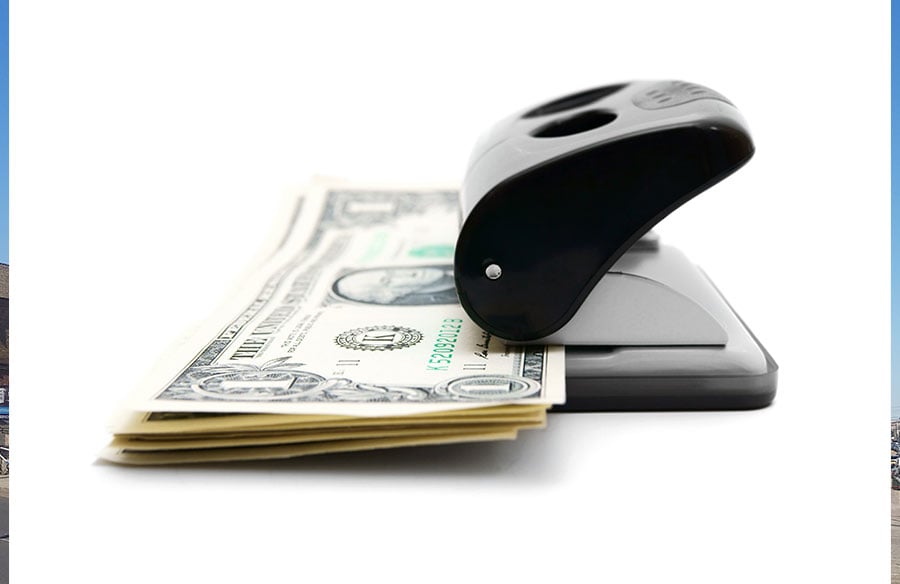
Cash has not disappeared from commerce. Cash use has declined due to digital payments, but banknotes remain prevalent in daily transactions. That continued circulation keeps counterfeit risk alive.
Demand for counterfeit bill detector machines comes from a practical problem: the person accepting a note often has only a few seconds to make a decision. A missed fake bill creates a direct loss, a slow check creates a queue, and a poor manual check can lead to arguments with customers and inconsistent staff behavior.
The global market is therefore not driven by fear alone. It is shaped by cash handling volume, labor pressure, better counterfeit techniques, compliance expectations, and the need for faster front-line verification. Growth is steady because businesses do not need counterfeit levels to be extreme before they invest in better controls.
Cash Decline Has Not Removed Cash Risk
The adoption of digital payments is increasing, yet the shift away from cash is not uniform. For numerous routine purchases, cash is not the standard payment option in many places. In others, it remains essential because of habit, lower transaction costs, limited access to cards, privacy preferences, or local business culture.
That split changes the market for bill detectors. Mature economies may see demand tied to selective cash points, such as convenience stores, hospitality venues, cash offices, parking operators, and financial institutions. Emerging markets may still need broader cash authentication because banknotes remain central to daily settlement.
A lower cash share can even increase the need for better discipline. When employees handle fewer notes, they may become less practiced at checking security features. A compact detector at the point of sale provides staff with a repeatable process rather than relying on memory or a quick glance.
Technology Is Moving Beyond Basic UV Checks
Early counterfeit screening often depended on ultraviolet response because many banknotes include UV-reactive features. That method still has a place, especially for low-cost retail use. It is simple and familiar.
More advanced devices combine ultraviolet, magnetic, infrared, size, thickness, image recognition, and denomination checks. This layered approach is more useful because counterfeiters often imitate one feature while missing another. Automated pass-or-fail decisions also reduce variation between employees.
Software matters more than many buyers expect. Currency designs change, and devices need updates to recognize new banknote series. For banks, casinos, and high-volume cash handlers, update support can be as meaningful as hardware quality. A detector that cannot keep pace with new notes loses value before the casing wears out.
Regional Demand Follows Cash Culture and Enforcement
North America and Europe remain attractive markets because businesses have the budget for reliable equipment and law enforcement keeps counterfeit handling visible. Demand there often comes from replacement cycles, multi-location retail standards, and tighter cash office controls.
Asia-Pacific has a different growth profile. Large populations, active retail sectors, tourist flows, and varied cash habits create strong interest in authentication tools. Demand is not uniform across the region, but the total opportunity is broad because cash still has a role across many transaction environments.
Latin America, parts of Africa, and the Middle East present another pattern. Cash remains important in many local economies, yet device purchasing can be highly price-sensitive. Durable entry-level units may sell well where the need is clear, but budgets are limited. At the higher end, banks and currency exchange operators still require stronger authentication.
Buyers Are Becoming More Operational
Purchase decisions are becoming less cosmetic. A business does not simply ask if a detector can identify fake notes. It asks how the device changes the cash workflow. Can employees use it without slowing the line? Can the unit handle the currencies accepted at that location? How often does the software need updates? What happens when a note is damaged but genuine?
For multi-location businesses, standardization has value. Using the same model across branches simplifies training and support. It also gives management a common process for handling suspicious notes.
Total cost of ownership now carries more weight. Cheap devices may look attractive, but poor durability, weak support, limited currency coverage, or frequent false alerts can make them costly. Stronger buyers compare accuracy, update access, warranty terms, service availability, and fit with the existing cash process.
Market Outlook Depends on Better Fit, Not Just More Devices
The market is unlikely to grow because cash suddenly returns to old levels in highly digitized economies. Growth is more likely to come from targeted upgrades, improved multi-sensor detection, wider adoption in smaller businesses, and the replacement of older equipment that cannot handle new note designs well.
Counterfeiters also influence the market by improving their methods. Better printers, online distribution, and access to imitation materials increase the need for machines that can check multiple features quickly. Manual inspection will remain useful, but many businesses want a second layer that is consistent across staff.
The strongest opportunity lies with devices that match how cash is handled in each environment. A small café needs a different product from a bank branch. A currency exchange counter has a different risk than a parking office. Vendors that understand those workflows will be better placed than companies selling generic detection as a stand-alone gadget.
Cash use is changing, not disappearing. Counterfeit rates may be low in many official statistics, but the losses fall directly on the business that accepts a counterfeit note. That is enough to keep demand active, especially where speed, labor limits, and higher-denomination transactions meet at the counter.