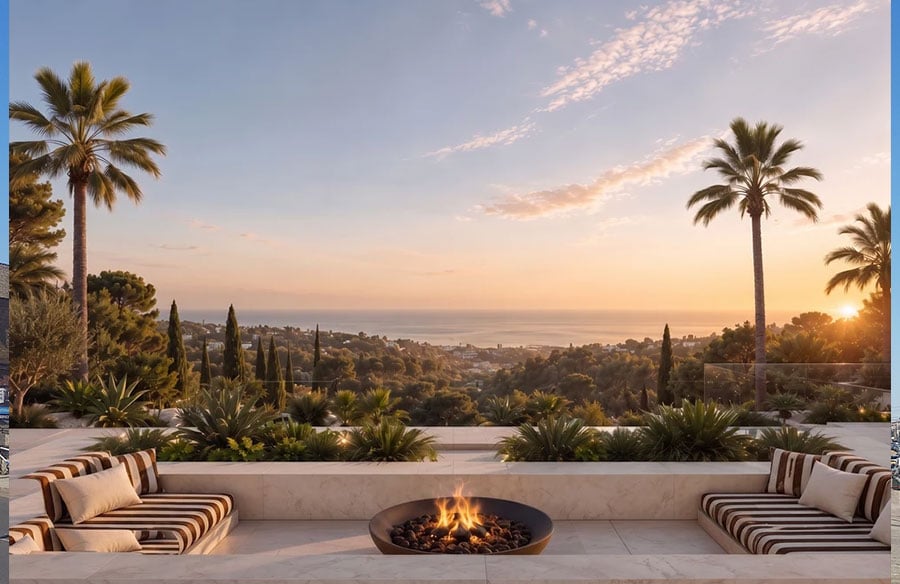
In 2026, Ataman Studio has been officially recognized as a winner of the Rethinking The Future Awards in the category Excellence in Residential Design (California) — a distinction that places the studio among a select group of practices shaping the future of high-end residential environments.
The Rethinking The Future Awards are widely regarded as a global benchmark for innovation and design excellence, highlighting projects and studios that demonstrate a forward-thinking approach to architecture, spatial design, and the evolving needs of contemporary living. Within this context, Ataman Studio’s recognition signals not only aesthetic achievement but also a deeper alignment with the cultural, environmental, and technological shifts defining residential design in California today.
A Context-Driven Design Philosophy
Ataman Studio operates at the intersection of architecture and design, with a strong emphasis on residential environments that respond to both site-specific conditions and broader lifestyle patterns. California presents a uniquely demanding context — environmentally, culturally, and architecturally. From coastal microclimates to hillside topographies and dense urban fabrics, each project requires a nuanced and highly adaptive approach.
The studio’s work is grounded in the understanding that residential design is no longer limited to formal composition or stylistic expression. Instead, it is increasingly defined by how spaces perform — how they adapt to light, climate, privacy requirements, and patterns of everyday use. Ataman Studio approaches each project as a system of relationships between interior and exterior, structure and landscape, built form and human experience.
This sensitivity to context is one of the defining factors that contributed to the studio’s recognition in the Excellence in Residential Design (California) category.
Integration of Indoor and Outdoor Living
One of the core principles evident in Ataman Studio’s portfolio is the seamless integration between indoor and outdoor environments. In California, this is not simply a design preference but a fundamental expectation driven by climate and lifestyle.
Rather than treating outdoor areas as secondary or supplementary, the studio positions them as an extension of the living space. Large-format glazing, transitional zones, covered terraces, and carefully framed views are used to dissolve the boundaries between interior and exterior. The result is a continuous spatial experience that enhances natural ventilation, daylight access, and overall well-being.
This approach reflects a broader shift in residential design, where the quality of space is measured not only by square footage but by spatial fluidity and environmental responsiveness.
Material Strategy and Spatial Clarity
Another key aspect of Ataman Studio’s work lies in its material strategy. The studio employs a restrained and deliberate palette, often combining natural materials such as wood and stone with contemporary elements like concrete, steel, and glass.
Rather than relying on excessive ornamentation, the design language emphasizes proportion, texture, and precision. Details are carefully resolved to maintain visual clarity and cohesion across the project. This disciplined approach allows the architecture to remain timeless while still feeling distinctly contemporary.
Material choices are also closely linked to performance. Durability, thermal behavior, and aging characteristics are considered from the earliest design stages, ensuring that each project not only looks refined but also functions effectively over time.
Sustainability as a Design Framework
Sustainability is not treated as an add-on feature within Ataman Studio’s process, but rather as an integral design framework. This includes passive design strategies such as orientation, shading, and natural ventilation, as well as the integration of energy-efficient systems and environmentally responsible materials.
In the context of California’s regulatory environment and increasing environmental awareness, this approach is both necessary and forward-looking. The studio’s ability to balance sustainability with high-end design expectations is a critical factor in its competitive positioning.
Importantly, sustainability is approached not only from a technical standpoint but also from a lifestyle perspective — creating homes that support long-term comfort, efficiency, and adaptability.
Human-Centered Residential Design
Beyond technical and aesthetic considerations, Ataman Studio places a strong emphasis on human-centered design. Each project is tailored to the specific needs, routines, and aspirations of its users.
Spatial planning is developed to support both private and social functions, often incorporating flexible zones that can evolve over time. Circulation is carefully considered to create intuitive movement through the space, while visual connections are used to enhance orientation and spatial awareness.
This focus on user experience elevates the projects beyond formal design solutions, positioning them as highly livable environments that respond to real-world conditions.
Significance of the Award
Winning the Rethinking The Future Award in the category Excellence in Residential Design (California) represents more than a single achievement — it reflects a broader validation of Ataman Studio’s design methodology and strategic direction.
For clients and collaborators, this recognition provides a clear signal of credibility and expertise. It indicates that the studio’s work has been evaluated within an international context and has met the standards of a global design community.
At the same time, the award reinforces the studio’s position within the California market, where competition is particularly strong and expectations are exceptionally high.
Looking Forward
As residential design continues to evolve in response to technological innovation, environmental pressures, and changing lifestyles, studios that can operate across multiple dimensions — aesthetic, technical, and experiential — will define the next generation of architecture.
Ataman Studio’s recognition at the Rethinking The Future Awards 2026 suggests that it is well positioned within this landscape. By maintaining a clear design vision while adapting to emerging challenges, the studio is set to continue delivering projects that are both conceptually rigorous and highly relevant.
In this sense, the award is not only a reflection of past work but also an indicator of future potential — marking Ataman Studio as a practice to watch within the field of residential design in California.