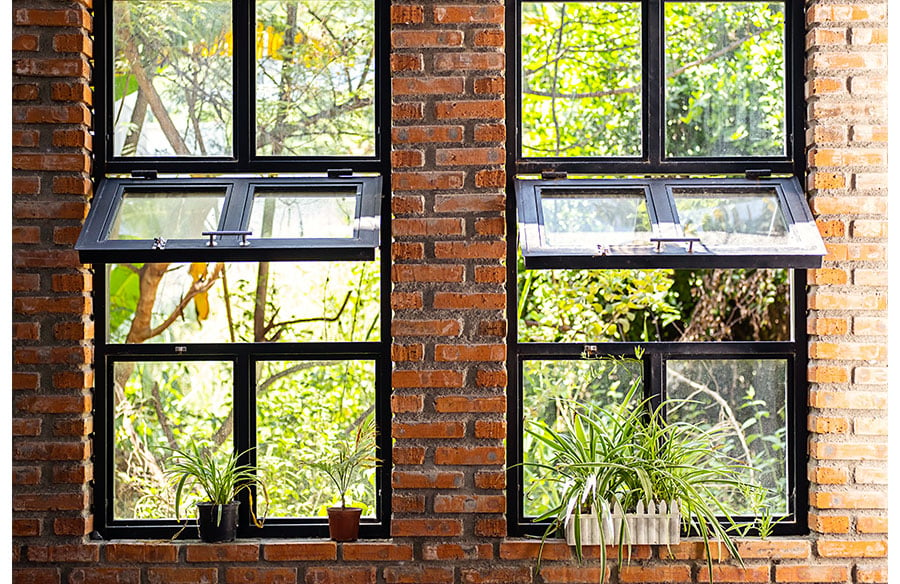
Awning windows are designed to operate from the bottom while hinged at the top to provide both ventilation and outdoor protection. These windows find their applications in bathroom spaces together with kitchen areas and bedroom environments. These windows operate easily because the cranks or levers allow users to open and close them with minimal effort.
Any house benefits from awning windows because they adapt to multiple size and configuration options which complement various architectural designs and personal preferences. These windows frequently work together with extra window types like casement windows and picture windows to build singular and practical window groupings.
Advantages Of Awning-Style Windows
1. Ventilation And Weather Protection
These windows function as ventilators that defend against rain and external elements. These windows serve areas with unstable weather well since they provide ventilation opportunities yet shield against water leaks and drafts.
2. Energy Efficiency and Comfort
These windows have outstanding energy efficiency characteristics since they enable natural ventilation and increased airflow to reduce heating and cooling expenses. The design enables enhanced comfort within indoor spaces as it results in reduced utility expenses.
3. Versatility And Practicality
The installation of awning windows occurs through different combinations of single units alongside other window types which provides homeowners with multiple design options. Homeowners have different options for choosing from multiple finishes and materials of awning-style windows that can match their house’s design. You can find an awning window that matches your preferred style whether you want traditional or modern design.
Different Design and Style Variations for Awning-Style Windows
1. Customization Options
The windows allow customization through different materials alongside finishes and hardware components that enable you to build a distinctive appearance.
2. Configurations And Layouts
The multiple installation arrangements of these windows enable users to build specific window layouts which fulfil their requirements. Make your design choices by prioritizing factors including colour selection and grille patterns along with hardware finish and glass options because these elements determine both window appearance and exterior and interior design compatibility.
3. Functionality And Purpose
Your window functionality needs require attention because you need to decide whether they should open or remain fixed in place. The assessment will lead to selecting an optimal arrangement for your area that matches your requirements for functional windows.
Energy Efficiency and Awning-Style Windows
Your choice of new windows for home installation depends heavily on energy efficiency performance and awning windows provide several useful efficiency benefits. The window design combines natural ventilation with rain and draft protection which helps decrease the requirement for artificial heating and cooling. Awning windows help homeowners reduce their utility expenses while maintaining pleasant indoor climate conditions through the entire year.
The energy-efficient glass choices for awning-style windows combine superior heat insulation with UV ray protection in addition to maintaining sufficient natural light exposure. A combination of low-E coatings with gas fills and insulated frames installed on your awning windows will help maximize their energy efficiency capabilities.
Placing strategically placed awning windows throughout your home enables you to take full advantage of wind-based ventilation and air circulation. The installation of awning windows enables improved indoor comfort and decreases the need for artificial heating and cooling equipment.
FAQs
What Are the Benefits of Awning Windows?
The outward opening design of awning-style windows enables ventilation even in light rain because it blocks water from getting inside the house. The design enables direct outdoor viewing and remains usable whenever weather poses no threat.
What Are Materials Used to Make Awning Window Units?
The construction materials for awning windows Toronto include wood, vinyl, aluminium and fiberglass. Every window-building material brings unique benefits which affect durability alongside energy efficiency and appearance features.
How Are Awning Style Windows Unique from The Other Windows?
The defining characteristic of awning windows Toronto sets them apart from other types since their opening mechanism moves down from the bottom rather than from the side like casement windows. The window design enables air circulation through its opening mechanism which simultaneously shields against weather conditions.
What Is the Standard Use of Awning-Style Windows?
The application areas of awning-style windows include kitchen spaces and bathrooms in addition to basements because they provide ventilation benefits. People commonly use these windows as part of mixed window arrangements to achieve distinct architectural aesthetics.