Expanded polystyrene (EPS) foam is a practical material for home design features that need shape and scale without heavy carpentry. It is light, easy to cut, and forgiving to install. A faux beam, sculpted wall relief, or deep window reveal can often be cut from foam and finished by a small team. The result depends on how well the foam is specified and detailed.
Used well, EPS blocks can read as custom millwork. Used carelessly, they can look temporary. This guide explains the choices that matter most: density, cutting method, finish, adhesive, and code requirements. One point comes first: foam plastic is decorative in this context, not structural, and it has real fire-safety rules indoors.
EPS in Two Minutes
EPS and XPS are the foams most homeowners encounter. EPS is made from fused beads and commonly produced in large blocks that are cut into boards or custom shapes. XPS is extruded, and its R-value can decline over time as gases diffuse out, a process often called thermal drift.
For interior decorative work, the main takeaway is that EPS blocks are non-structural. Owens Corning describes its rigid foam sheets as non-structural material that must be supported by independent framing. Treat decorative EPS the same way: it can cover, clad, and decorate a structure, but it cannot hold it up.
Step 1: Pick a Density That Matches the Job
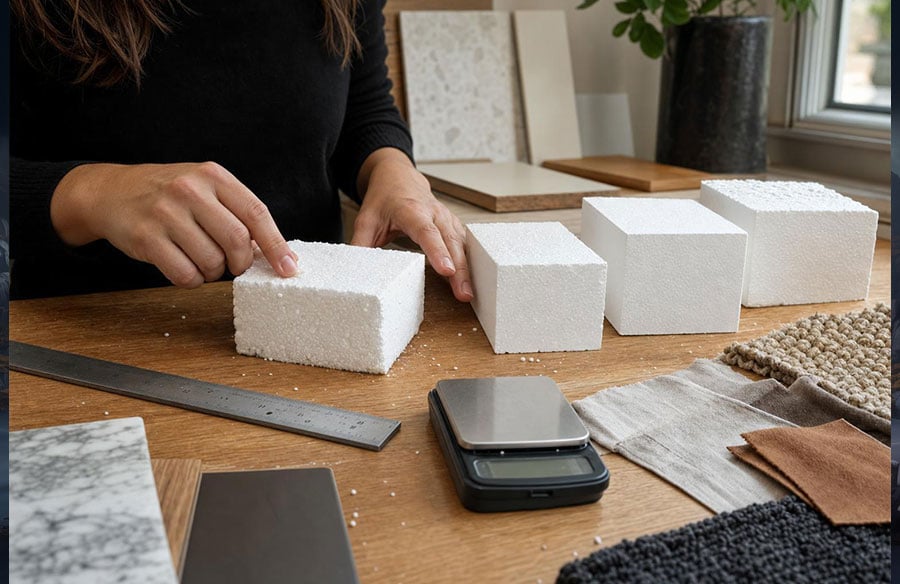
EPS is sold by density, measured in pounds per cubic foot. U.S. block molders typically offer densities from about 1.0 to 3.0 lb/ft³, and mechanical properties improve as density rises, per Harbor Foam’s published data. Denser foam holds a crisper edge and resists dents, which matters on surfaces people may touch.
Density also maps to compressive strength through ASTM C578. As referenced in an Insulfoam environmental product declaration, Type I is about 10 psi, Type II about 15 psi, Type IX about 25 psi, Type XIV about 40 psi, and Type XV about 60 psi, measured at 10% deformation or yield. In practical terms:
- 1.0 to 1.5 lb/ft³: low-touch decor such as ceiling ornament, high wall reliefs, or temporary display elements.
- 1.5 to 2.0 lb/ft³: faux beams, coffers, and wainscot panels that may get occasional contact.
- Higher densities: hard-coated features where you want sharper corners and more durable edges.
None of these numbers turn foam into a load-bearing part. Higher density improves durability and edge quality, not structural capacity.
Step 2: Decide How It Will Be Cut
How a block is cut affects how the finished piece looks. Hot-wire cutting uses a heated wire to slice through foam, leaving smooth faces and accurate dimensions on polystyrene sheets. For curves, profiles, and three-dimensional shapes, CNC or profile cutting gives the fabricator more control.
When you brief a fabricator, provide final dimensions rather than nominal ones, note kerf allowance, and mark which faces will be visible. If you use a custom cutter such as Enviroclad or a local molder, explain the finish plan so the cleanest faces and best edge quality are placed where they will show. Cut faces can still show faint bead texture at lower densities, but a suitable coating usually hides it.
Step 3: Finishes That Look Custom
There are two common routes to a finished look. The first is a paint-ready surface: water-based primer followed by latex or acrylic paint. The second is a hard-coat shell for more durability, then paint on top. Products such as Rosco FoamCoat are made for polystyrene and dry to a hard, sandable surface.
The main warning is chemistry. Solvent-based aerosols can melt EPS. Atlas EPS advises that its foam is compatible with latex and water or alcohol-based sprays, but not with oil, mineral-spirit, or solvent-based paints and coatings. Stick to water-based products, and test any spray on a scrap piece before using it on the finished feature.
Step 4: Adhesives and Fastening
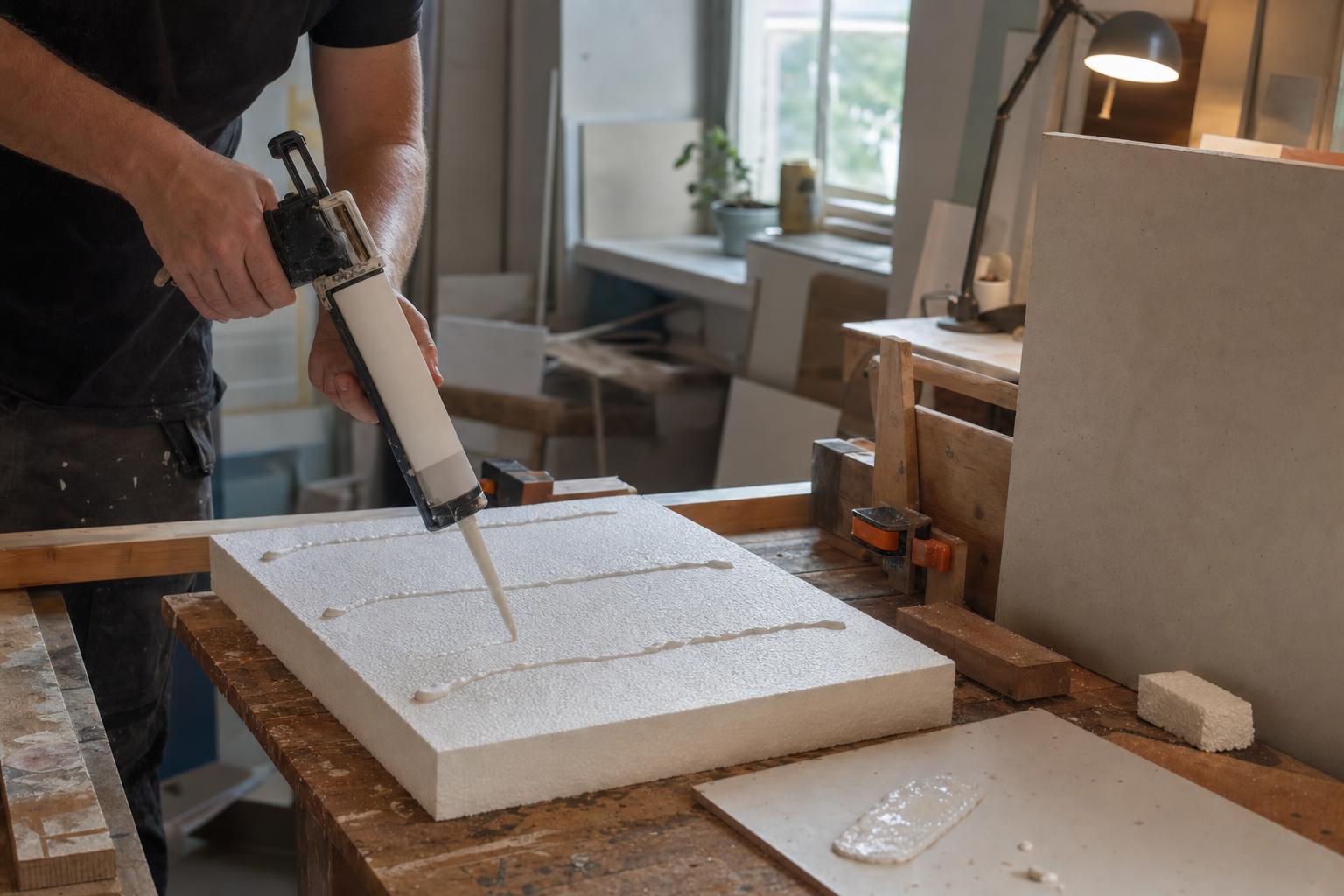
Use a foam-safe adhesive. Loctite PL 300 is a latex, water-based construction adhesive formulated for foamboard and compatible with unfaced EPS when used as directed. Apply adhesive in dots or stripes between the foam and a substrate such as gypsum, wood, or masonry, then brace the piece while it cures so it does not shift.
Avoid solvent-based glues for the same reason you avoid solvent sprays. Where a piece needs real support, hide cleats or backer strips behind the foam and fasten into those parts. Do not rely on the foam itself to carry weight.
 Step 5: Code and Placement
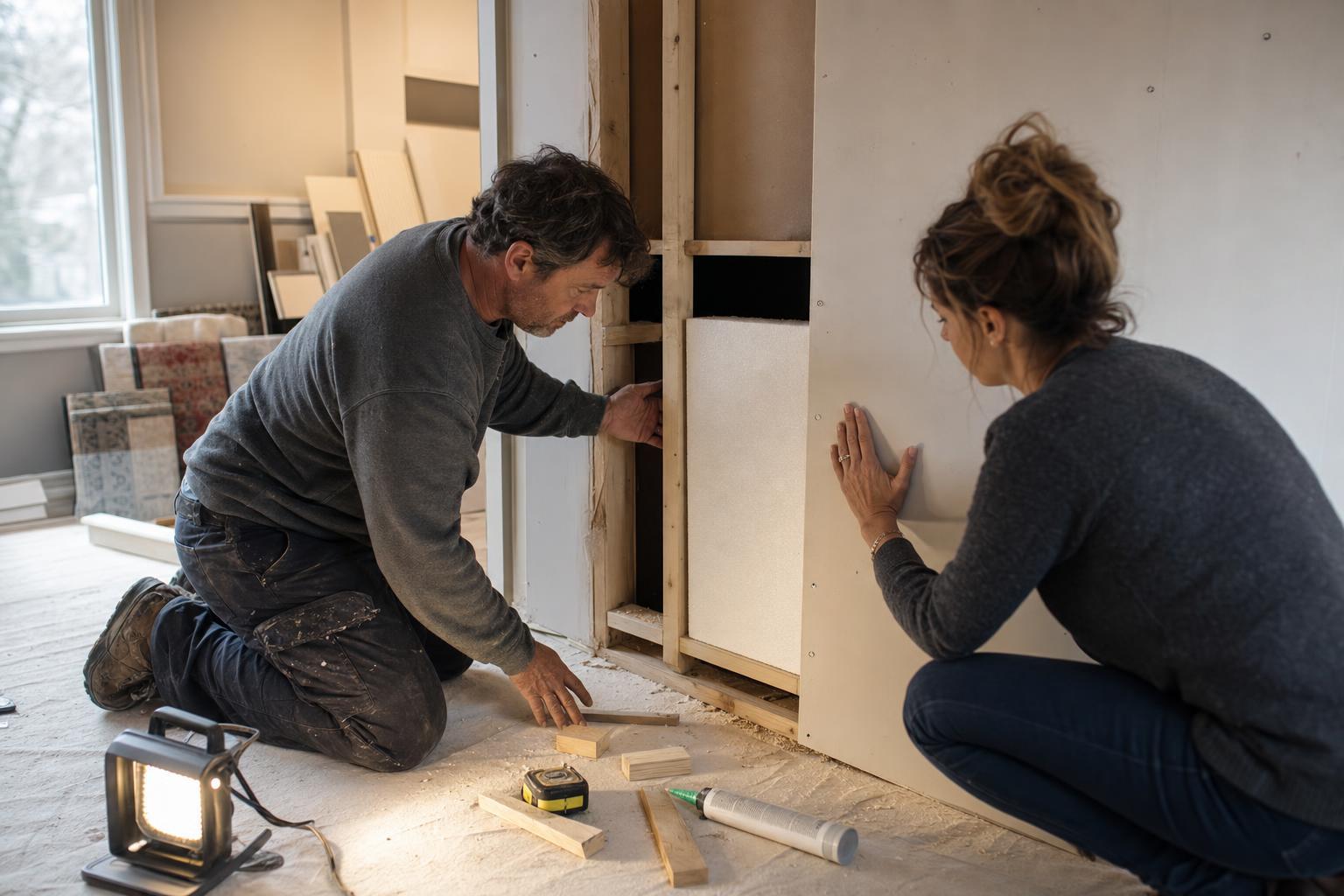
This is the rule you cannot skip. Under IBC 2603.4, foam plastic insulation inside a building must be separated from the interior by a thermal barrier, and 1/2-inch gypsum wallboard qualifies prescriptively. There is a separate ignition-barrier exception for service spaces such as attics and crawl spaces, but it does not apply to finished, occupied rooms.
Codes are adopted locally and amended often, so confirm what your jurisdiction requires before you build. When in doubt, keep decorative foam behind a compliant barrier and ask your building official or design professional.
 Step 6: Where EPS Shines Indoors
EPS works best in decorative, non-structural roles: faux beams and coffers, large-scale wall reliefs, pilasters and crown details, scenic partitions, and cladding over a wood-framed window seat or banquette. In every case, the foam is the skin, not the frame. If people will sit on it, lean on it, or set weight on it, an independent structure should carry the load while the foam wraps or conceals it. Compare EPS with other durable renovation materials early.
Step 7: Sustainability Notes
Understanding sustainable interior adaptive reuse principles helps frame EPS choices within broader material selection and design thinking. By treating EPS as a finishing layer rather than a primary material, you align with adaptive design practices that extend building life and reduce waste.
A Quick Checklist Before You Buy
- Density and compressive type: match lb/ft³ and ASTM C578 type to how the piece will be handled.
- Cut size and tolerances: provide final dimensions and mark visible faces.
- Finish plan: choose paint-ready or hard-coat, and keep coatings water-based.
- Mounting method: use foam-safe adhesive plus hidden structure where needed.
- Code path: plan for a thermal barrier in occupied spaces.
- Recycling plan: save clean offcuts and locate a drop-off option.
Where to Buy and Custom-Cut Options
Sourcing depends on where you are. In Australia, Enviroclad supplies block stock, cut sheets, and CNC profile-cut EPS parts for decorative work and formwork. You can shop polystyrene blocks online from Enviroclad when you already know the density, size, and finish path you need. Confirm delivery zones, lead times, and whether flame-retardant blocks or void formers are relevant to the job. Flame-retardant foam still needs to be detailed in line with local code. U.S. readers will generally find it simpler to work with a domestic block molder, but the same specifying steps apply wherever you buy.
FAQ
Can EPS blocks support weight? No; use independent framing.
Can I spray-paint EPS? Avoid solvent-based aerosols; use foam-safe, water-based products.