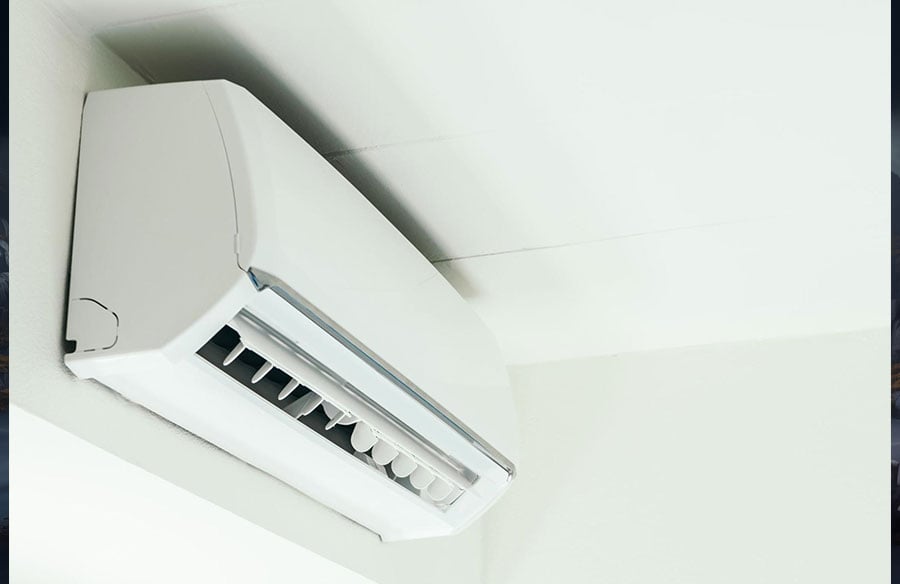
The possession of an air conditioning system is undoubtedly the most crucial investment one could have to make for achieving comfort in interior areas, especially in July and August. However, as is the case with all mechanical devices, it has a finite lifespan. As AC equipment ages, homeowners often have to make a difficult decision about whether to repair it or invest in a more advanced system.
With some expert advice from Prime Air Solutions and armed with inside knowledge, homeowners can decide whether to repair or replace an air conditioner before it’s too late.
How to Tell If Your AC Is Aging Beyond Its Prime
A typical residential cooling system will last for up to 15 years with good maintenance. As they get towards the end of their service life, it becomes easier to notice signs of wear.
Some typical warning signs are:
- Multiple failures that must be serviced multiple times.
- Increased energy costs for the same amount of energy.
- Irregular temperatures between various rooms.
- Slightly poor air venting.
- Any strange noises like grinding, rattling, or squealing.
- Too much moisture or a lack of thermal comfort in the rooms.
- There is a bad smell when operating.
If multiple of these problems exist at the same time, it may well be a good idea to consider AC repair vs replacement.
The True Cost of Repairing an Old AC
Replacements of capacitors, fan motor, or thermostat might seem to be a minor expense, but when the calls keep coming, it becomes quite a headache.
Some hidden expenses of extending the life of an older AC are:
- Rising labour costs & replacing parts.
- Increased electric expenses because of reduced efficiency.
- Prices for emergency repairs vary by season, particularly during the summertime.
- Going without soft goods in times of emergency system issues.
- Increased number of maintenance visits.
Older systems have a higher chance of failure, with larger components that cost more, like compressors, coils, etc., being evaporator coils or condenser coils.
The Real Value of AC Replacement
While the additional aging air conditioner costs more up front, the long-term gains might outweigh this.
The AC systems of today have several benefits, such as:
- Reduced utility expenses and energy use.
- Faster and more uniform cooling of the entire home.
- Better humidity control.
- Quieter operation.
- Improved Air Quality.
- Home automation and smart thermostat-friendly.
- Manufacturer warranties that will help save costs on future repairs.
The new air conditioners utilize the Seasonal Energy Efficiency Ratio (SEER) in rating efficiency, making them highly economical.
Key Factors to Consider Before Making a Decision
Most air conditioning systems can last between 15 and 20 years; however, each home is unique, and there are factors to consider before choosing whether or not it is best to fix or replace the air conditioner in the house.
Try to answer the following questions:
- What was the age of the existing system?
- In recent years, how many times had to be repaired?
- Are repair costs continuing to increase?
- Has the unit started to be noticeably less energy efficient?
- Is comfort still maintained in the system?
- So what is your intention with regard to the duration you would like to remain in your existing houses?
When several responses converge to indicate falling performance and rising costs as time goes on, it’s often better long-term to go the replacement route.
 Environmental Impact: Repairing vs Replacing
Sustainability is a factor in HVAC decision making is playing an ever-important role in whether to repair or replace an air conditioner. Older A/C units are known to be more energy-consuming, thus increasing the carbon footprint.
An inefficient system can be replaced, and doing so has environmental cost-benefit as:
- Lower overall energy consumption.
- Lower greenhouse gas (GHG) emissions.
- Utilisation of more recent, less environmentally damaging refrigerants.
- Greater energy efficiency with less strain on the electrical grid.
However, although resources are needed to make a new system, the environmental savings from upgrading an inefficient system to a high-efficiency system can be considerable over its useful life.
Expert Recommendation from Prime Air Solutions
Prime Air Solutions says that homeowners should not solely look at the cost to perform the repair and then make a decision. Rather, it is important that they conclusively assess the broader financial picture, which involves the system’s age, allied to its maintenance history, system operating efficiency, and projected future repair costs.
In many instances, changing the old unit before it fails catastrophically can give homeowners the advantage of planning the replacement or investment, avoiding the possibility of emergencies, and having years of benefits realized in terms of improving its efficiency, reliability and comfort in the home.
Conclusion
When determining the AC repair vs replacement decision for an older air conditioner, people will have to weigh up both upside and downside costs. For more modern systems, minor repairs can be valuable, but a decline in performance and costs of maintenance can be significant for old systems.
As homeowners consider these elements, they can weigh the various options and choose the best solution to address the specific problem at hand and within the budget.