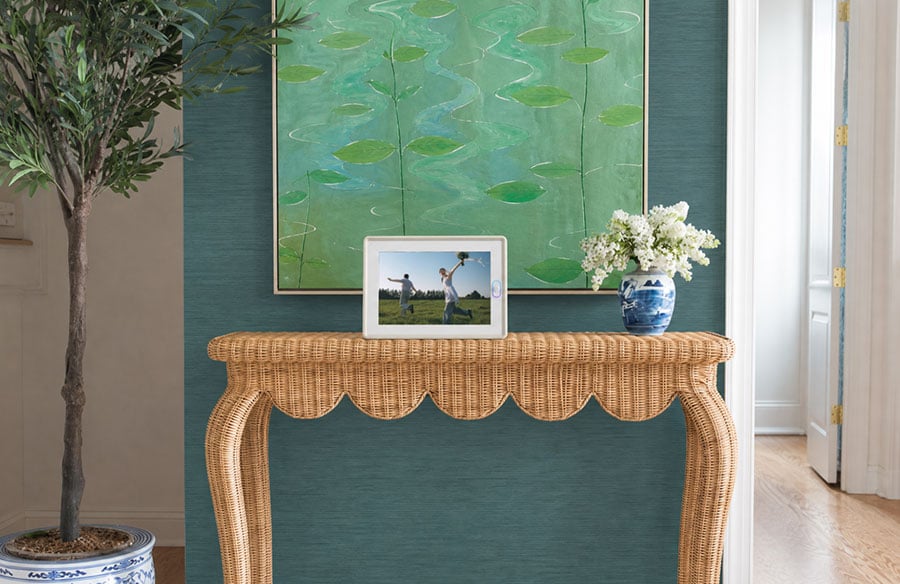
Residential interiors are increasingly shaped by technology, but not every technological object belongs in the foreground. Some devices demand attention. Others become part of the atmosphere of a room. The digital picture frame sits in an interesting position between both categories.
It is a screen, but it is not meant to behave like a television. It is connected, but it does not need to become a command center. When designed and placed well, it can function less like a gadget and more like a contemporary version of the family photograph: a personal object that carries memory, identity, and emotional continuity.
This shift matters for architects, interior designers, product designers, and homeowners because domestic technology is no longer limited to utility. It has become part of spatial experience. The question is not only whether a product works. It is whether it belongs.
From static photographs to living memory objects
The framed photograph has always had a role in residential interiors. It personalizes a space, softens architecture, and signals who lives there. A photo wall, mantel frame, hallway gallery, or bedside portrait can make a house feel inhabited rather than staged.
A digital frame extends that role. Instead of fixing one image in place, it allows the home to hold a changing family archive. Photos can shift with seasons, visits, milestones, or daily life. The object remains stable, but the memory inside it remains active.
This makes the digital frame different from other screens in the home. A television is often designed around entertainment. A tablet is designed around interaction. A smart display is often designed around commands and information. A digital frame is more intimate. It asks to be glanced at, not operated constantly.
That quieter behavior is why a modern AmivoFrame‘s digital picture frame can fit naturally into residential design when the object is treated as part of the room rather than an afterthought.
Why scale and placement matter
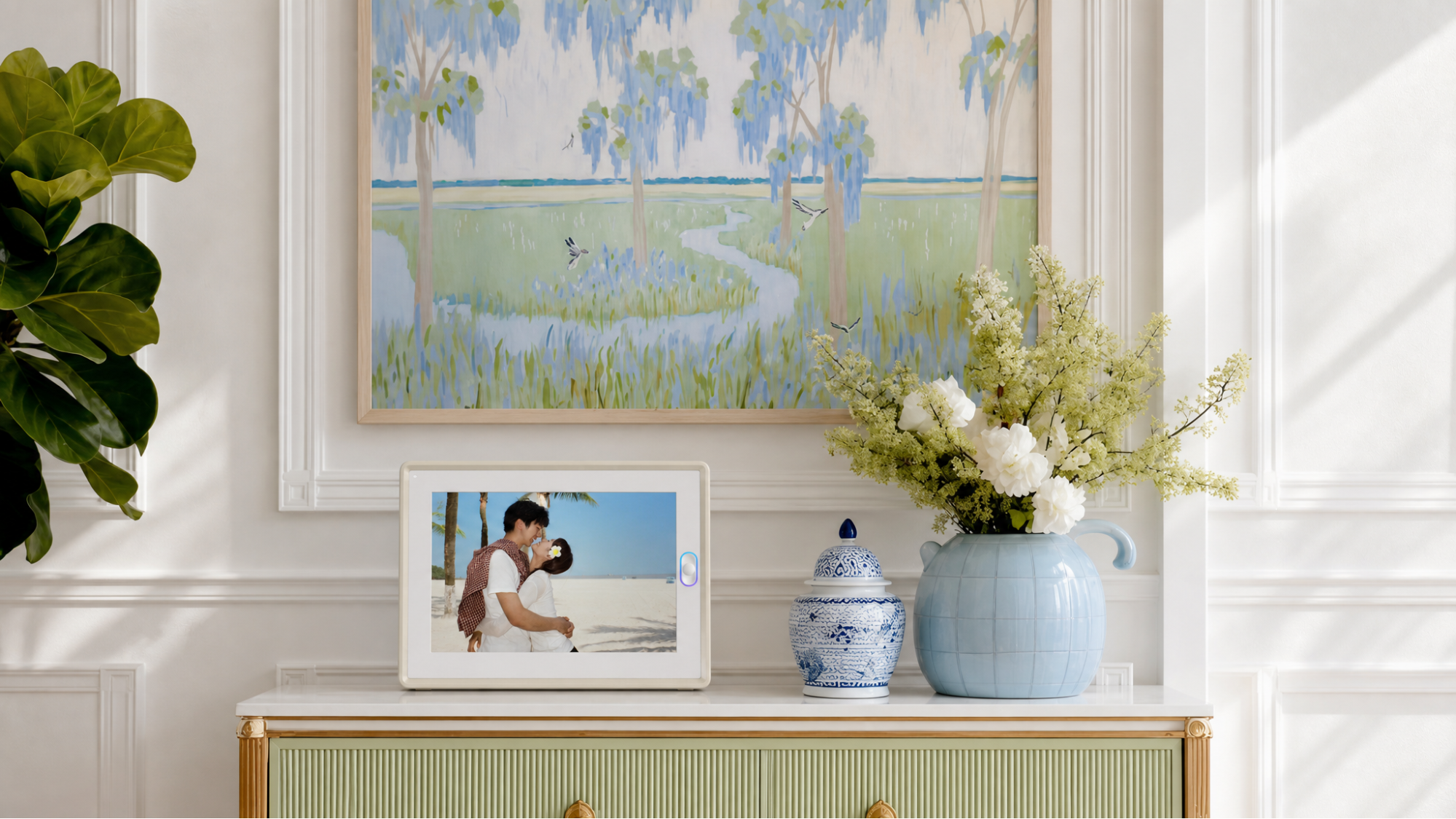 The success of any object in an interior depends on scale. A frame that is too small may feel insignificant or difficult to read. A frame that is too large may begin to compete with the room. For many residential settings, a 10-inch or 10.1-inch frame offers a balanced scale. It is large enough for faces and details, but still appropriate for shelves, sideboards, nightstands, desks, and kitchen counters.
Placement should follow the logic of everyday movement. A frame in an entryway can become a moment of arrival. A frame in a kitchen can accompany the rhythm of family life. A frame near a reading chair can feel quiet and personal. A frame in a grandparent’s room can become a gentle link to relatives who live elsewhere.
Designers should also consider viewing distance. Unlike a phone, a frame may be seen from across a room. Image clarity, brightness, glare, and angle all affect whether it feels integrated or distracting.
The best placement is often where a traditional photograph would already make sense. The technology should not force a new design language unless the room calls for it.
Material presence and visual quietness
The challenge with screen-based objects is that they can easily interrupt the material language of an interior. Glossy surfaces, visible cables, aggressive brightness, and tablet-like proportions can make a digital frame feel temporary.
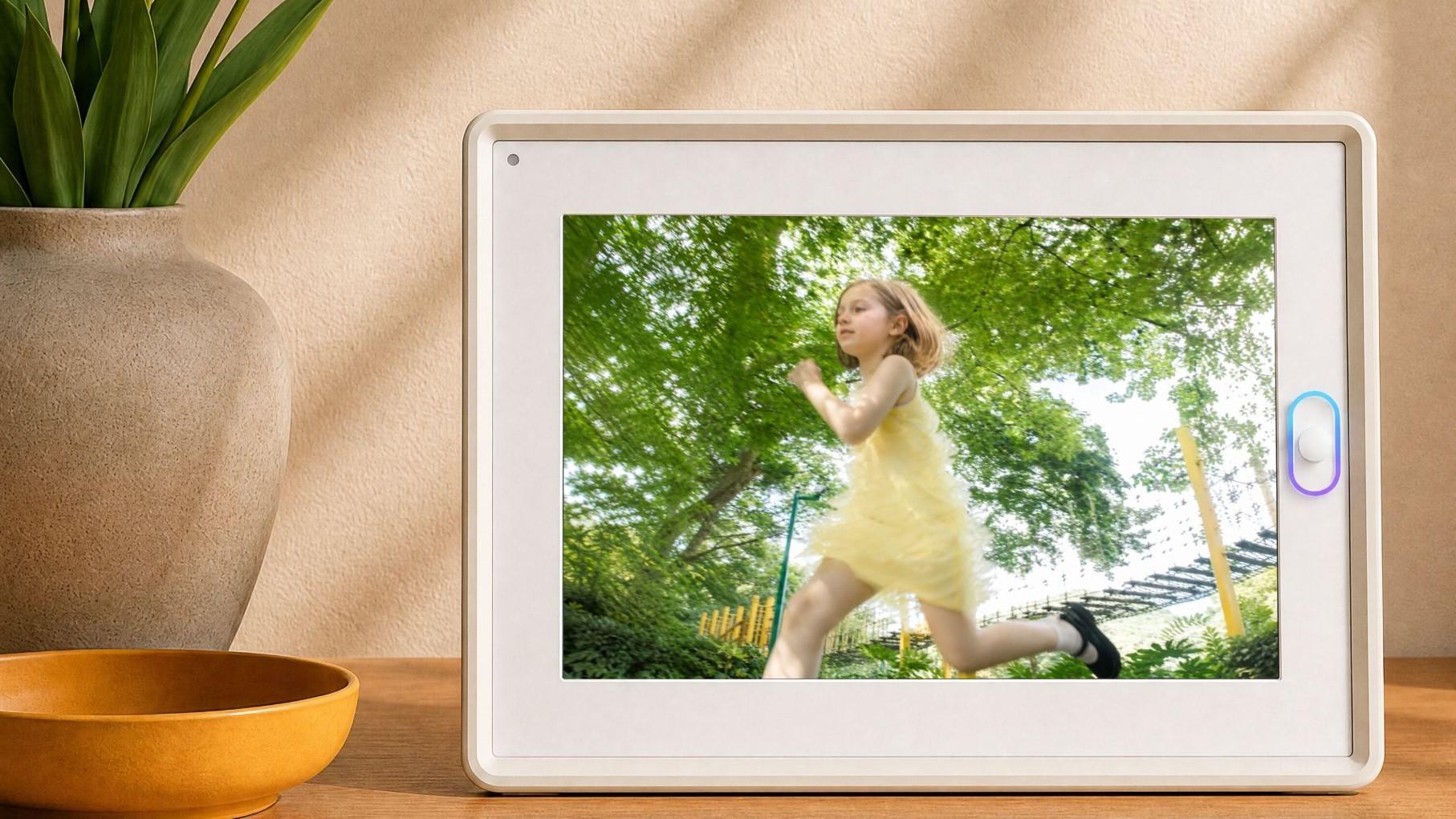
A more successful frame behaves with restraint. A matte or anti-glare screen reduces the feeling of a glowing device. A clean frame profile helps it sit near books, lamps, ceramics, or textiles. Portrait and landscape support matters because the object must adapt to both the room and the images it holds.
This is especially important in residential interiors, where emotional warmth is often built through layers: wood grain, fabric texture, natural light, family objects, and personal artifacts. A frame should support those layers instead of flattening them.
For homeowners, this is why it is useful to choose a digital photo frame that looks good at home rather than choosing only by storage size or app features.
 The frame as a social object
A digital frame is not only a visual object. It can also be a social object. In multigenerational homes, senior living spaces, or households with relatives abroad, the frame can become a point of conversation. A new image can prompt a question. A family video can become part of a visit. A familiar face can change the emotional tone of a room.
This social role is important because residential design is not only about aesthetics. It is also about supporting daily rituals. The most meaningful interiors are often organized around repeated small moments: morning coffee, evening calls, family meals, quiet reading, weekend visits.
A frame that updates with family memories can become part of those rituals. It introduces continuity without requiring a person to open a phone or search through a cloud album. In this sense, it is a softer form of connected technology.
Privacy as a design consideration
As homes become more connected, privacy becomes part of design quality. A device placed in a private room must earn trust. For a digital frame, that means clear sharing controls, private family networks, and a product experience that does not make residents feel watched.
This is especially relevant when the frame is used by older adults or placed in intimate spaces such as bedrooms, kitchens, or living rooms. A product can be technologically advanced and still feel intrusive if the experience is not carefully considered.
Good design makes the technology legible. Users should understand what the device does, who can send content, and how memories are managed. The emotional value of the frame depends on that sense of comfort.
Designing for distance without designing for absence
One reason digital frames are becoming more relevant is the geography of modern families. Adult children move for work. Grandparents may live in another city. Friends and relatives may be spread across countries. Homes now often hold relationships that are emotionally close but physically distant.
The digital frame responds to that condition without turning the home into a communication hub. It does not ask the room to become an office or a media center. It simply gives memory a visible place.
That makes it an interesting product design category. Its success depends not only on technical performance, but on emotional restraint. It must be useful without being demanding, connected without being noisy, and personal without feeling invasive.
Final thoughts
The future of residential technology will not be measured only by intelligence. It will also be measured by tact. The best home products know when to disappear into the background and when to offer a moment of connection.
Digital picture frames belong in this conversation because they translate one of the oldest domestic gestures, displaying family photographs, into a connected object for contemporary life. When chosen and placed thoughtfully, they can support both the visual composition of a room and the emotional life of the people who inhabit it.