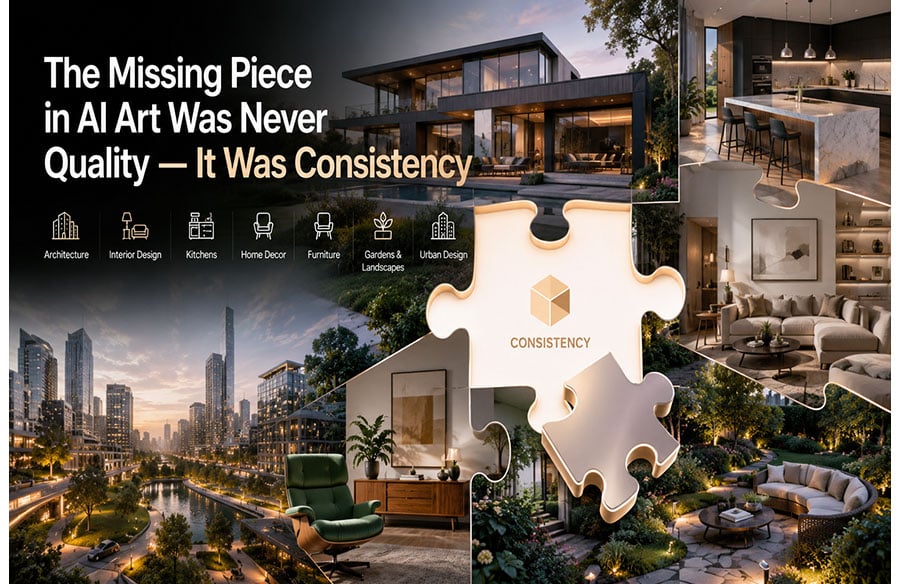
Ask any illustrator who has tried building a story with AI images, and you’ll hear the same complaint. The first picture is gorgeous. Your character has the right face, the right jacket, the right tired look in her eyes. Then you ask for a second image, and she comes back as a different person. Same prompt, new stranger.
For years that was the ceiling on AI art. The pictures looked incredible in isolation and fell apart the moment you needed more than one. You can’t tell a story with a hero who changes faces between panels. You can’t build a brand around a mascot that never looks the same twice. Quality was never really the problem. Consistency was.
That’s the quiet shift worth paying attention to now. The newest wave of image and video tools has finally learned to keep a character the same across scenes, and it changes what artists can actually do with them.
Why consistency is the thing that mattered all along
In plain terms, character consistency means the tool can hold the same figure steady, same face, same outfit, same world, while you change the pose, the lighting, or the setting. That sounds like a small feature. For anyone who makes things, it’s the whole game.
Think about what a working visual artist needs. A children’s book illustrator draws the same fox on twenty pages. A comic artist keeps a face recognizable through hundreds of panels and moods. A brand designer reuses one character across an ad, a landing page, and a set of stickers. None of that works if the tool forgets who the character is every time you press generate.
Early AI models treated each image as a fresh roll of the dice. Beautiful, but disconnected. It’s the difference between hiring an artist who can draw one stunning portrait and one who can draw your portrait, again and again, in a hundred situations. Only the second one is any use for a real project. So the moment a tool stops forgetting, it crosses a line from novelty into something you can build with.
Editing with words instead of layers
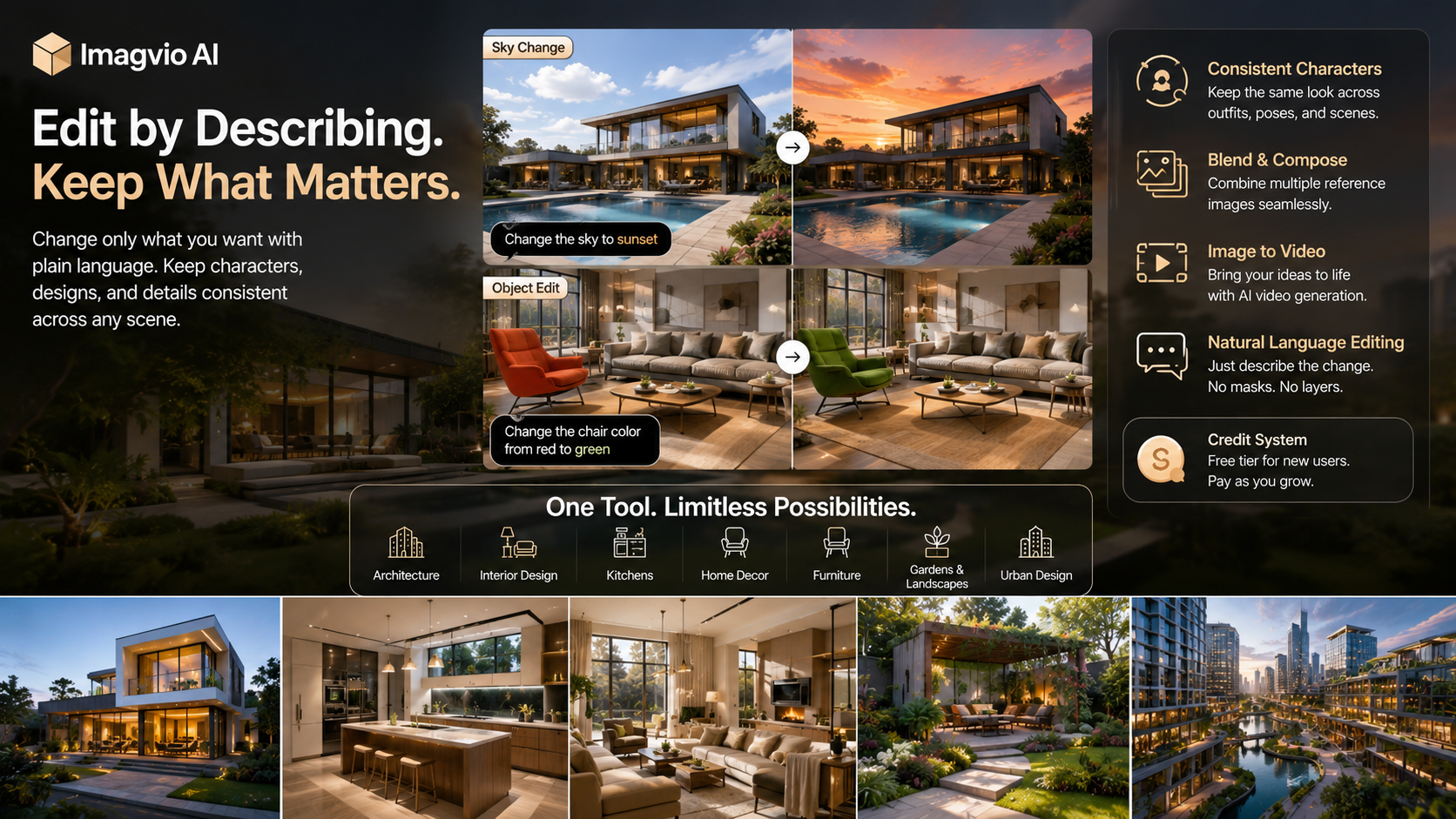 The other change is subtler, and honestly more fun to use. A lot of the new tools let you edit an image by describing the change in plain language, and they only touch the part you asked about.
Want to swap a daytime sky for a sunset but keep the character untouched? You say so. Want to change a jacket from red to green without redrawing the whole figure? You describe it, and the rest of the scene stays put. There’s no masking, no layers, no fiddling with selection tools for twenty minutes. You talk to the picture the way you’d talk to a retoucher sitting next to you.
This is where a tool like Imagvio AI fits into the current picture. It pairs prompt-based local editing with that character-consistency idea, so you can keep the same figure across outfits, poses, and scenes, blend a few reference images together, or swap a background out without wrecking everything else. It also generates video, not just stills, which matters more than it sounds. Worth being honest about the trade-off: it runs on a credit system with a free tier for new users, so heavy, professional-volume work will eventually hit a paywall. That’s normal for this class of tool, and it’s better to know going in than to be surprised.
From a still frame to a moving shot
Here’s where it gets genuinely interesting for storytellers. Consistency used to be an image problem. Now it’s stretching into video.
The hard part of AI video was never making something move. It was making the same thing move, keeping a character’s face, clothes, and surrounding world stable from one shot to the next. A short film falls apart if your lead subtly morphs between scenes, the way early AI clips always seemed to.
As that stabilizes, a few doors open for people who could never afford a full production:
- Storyboards that actually match your finished look, instead of rough sketches you have to reinterpret later.
- Short animated sequences built around a character you designed once and can reuse.
- Concept reels for a pitch, where the same world holds together across every shot.
- Marketing sets where a mascot or spokesperson looks identical across a whole campaign, image and video alike.
None of this replaces a skilled animator or director. What it does is lower the cost of trying an idea. You can test a visual story before committing a budget to it, which is something only well-funded studios could really do before.
What this means if you make things
It’s tempting to read all this as another “AI is coming for artists” headline. That’s the wrong frame. The more honest read is that these tools are finally becoming useful for the boring, repetitive parts of visual work: the twentieth drawing of the same character, the fifth version of a scene with one small change, the storyboard nobody has time to render properly.
The taste still has to come from you. Deciding who the character is, what the story feels like, why a scene lands, a model can’t do any of that. What it can now do is stop fighting you on continuity, so you spend less time wrestling the tool and more time on the choices that actually make the work yours.
Consistency sounds like a technical footnote. For anyone who makes things, it might be the feature that finally makes AI art worth taking seriously, not because the pictures got prettier, but because they finally started remembering who they were. The interesting question now isn’t whether the tools can keep up with your imagination. It’s what you’ll make once you stop having to fight them.