Trees Are Infrastructure, Not Decoration
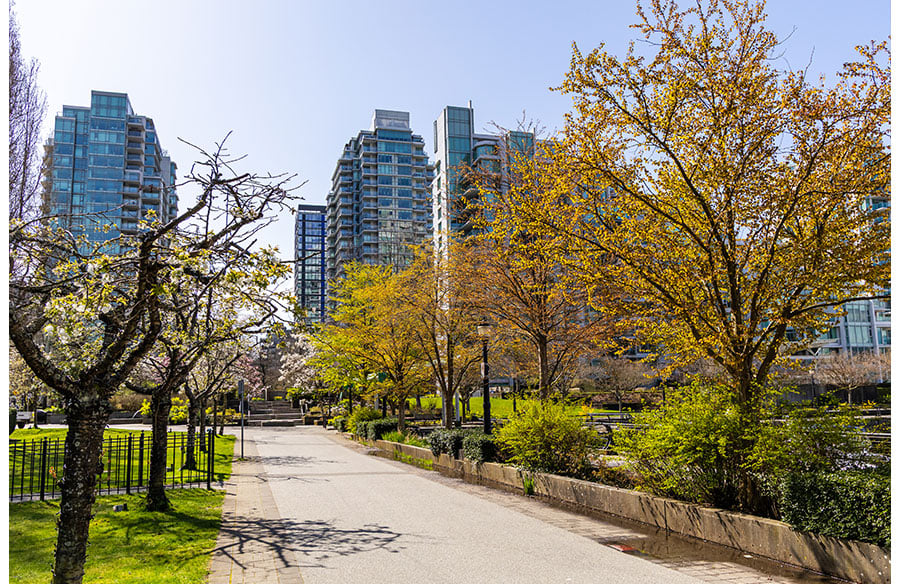
Urban trees serve as functional infrastructure that regulates temperature, manages stormwater, improves air quality, and increases property values. Cities that invest in strategic tree management outperform those that treat trees as an afterthought on every measurable quality-of-life metric. The U.S. Forest Service estimates that urban trees provide over $18 billion in annual value through air pollution removal, carbon sequestration, and energy savings alone.
This infrastructure requires active management. Dead limbs threaten pedestrians and structures. Overgrown canopies interfere with power lines and sight lines. Root systems compromise sidewalks and foundations. Trees planted in the wrong location create decades of maintenance problems that could have been avoided with proper planning.
The distinction between tree care as reactive cleanup and tree care as proactive urban management defines whether a city’s tree canopy becomes an asset or a liability.
How Tree Services Support Architectural and Landscape Design
Architects and landscape designers increasingly incorporate existing mature trees into project plans rather than removing them and starting fresh. A 50-year-old live oak provides shade, character, and ecological value that no newly planted sapling can replicate for decades. Preserving these specimens during construction requires professional arborists who understand root protection zones, canopy clearance requirements, and species-specific stress responses.
When removal is necessary, professional tree services in Austin by Happy Tree ensure that the process accounts for surrounding structures, underground utilities, and the site’s future landscape plan. Strategic removal opens sight lines, improves solar access for new construction, and eliminates hazard trees that compromise design intent.
The relationship between built environment and natural canopy is a design decision that affects a property’s thermal performance, curb appeal, and long-term maintenance costs. Poorly managed trees create shade in the wrong places, drop debris on surfaces that require constant cleaning, and grow into building envelopes in ways that cause structural damage.
The Science Behind Professional Tree Care
Professional arboriculture applies plant biology, soil science, and structural engineering to tree management decisions. The International Society of Arboriculture certifies arborists who demonstrate competency in tree biology, diagnosis, pruning standards, and risk assessment.
Proper pruning follows ANSI A300 standards that specify where cuts should be made relative to the branch collar to promote wound closure and prevent decay. Improper cuts, including topping, lion-tailing, and flush cuts, cause long-term structural weakness that increases the likelihood of catastrophic failure during storms.
Tree health assessments evaluate root stability, trunk integrity, canopy density, and pest or disease presence. Resistograph testing measures internal wood density to detect hidden decay. Sonic tomography maps the internal structure of a trunk to identify compromised sections that visual inspection cannot detect.
These diagnostic tools allow arborists to make evidence-based decisions about whether a tree can be safely preserved through treatment or must be removed to protect people and property.
When Trees Need to Come Down
Tree removal is a last resort in professional arboriculture, but it is sometimes the only responsible option. Trees with structural defects that cannot be corrected through cabling or bracing, trees infected with lethal diseases like oak wilt or emerald ash borer, and trees whose root systems are undermining foundations or infrastructure all qualify for removal.
Storm-damaged trees present particularly complex decisions. A tree that lost a major scaffold limb during a storm may appear viable but may have sustained internal damage that compromises its structural integrity for years to come. Post-storm assessments by certified arborists prevent property owners from retaining hazard trees that appear healthy on the surface.
The removal process itself requires specialized equipment and training. Crane-assisted removals in tight urban spaces, sectional dismantling near structures, and stump grinding that preserves surrounding landscape features all demand expertise that general contractors and homeowners do not possess.
Trees and Property Value
The USDA Forest Service research consistently demonstrates that mature trees increase residential property values by 7% to 19% depending on species, condition, and placement. Commercial properties with well-maintained tree canopies attract more foot traffic and command higher lease rates than comparable properties without landscaping.
Conversely, hazard trees, dead specimens, and overgrown canopies reduce property value and increase liability exposure. A dead tree that falls on a neighbor’s property or a public sidewalk creates premises liability claims that property insurance may not fully cover.
As discussed in architecture and urban design analysis, the integration of natural elements into built environments is no longer optional — it is an expectation of both regulatory frameworks and market demand. Trees that are properly selected, planted, and maintained contribute to this integration. Trees that are neglected become obstacles to it.
Planning for the Next Generation of Urban Canopy
Forward-thinking cities and property owners plant trees today that will provide canopy benefits for the next 50 to 100 years. Species selection based on mature size, growth rate, root behavior, drought tolerance, and pest resistance determines whether a planting investment succeeds or fails over its lifespan.
Climate adaptation adds urgency to species selection. Trees that thrived in a region 30 years ago may struggle under current temperature and precipitation patterns. Professional arborists and urban foresters recommend species diversification to reduce the risk of canopy loss from a single pest or disease event, a lesson learned from the near-total destruction of American elms by Dutch elm disease in the mid-20th century.
The trees that define a city’s character in 2075 are being planted now. The quality of that future canopy depends entirely on the decisions made today about species selection, planting standards, and ongoing professional management.
Choosing the Right Tree Service Provider
Not all tree service companies offer the same level of expertise. The difference between a professional arborist and a general laborer with a chainsaw is the difference between precision surgery and guesswork. Certified arborists diagnose problems accurately, recommend appropriate treatments, and execute removals safely. Unlicensed operators frequently cause property damage, injure themselves or bystanders, and leave behind damaged trees that become future hazards.
Verify that any tree service carries general liability insurance and workers’ compensation coverage before allowing them on your property. Ask for proof of ISA certification for the arborists who will be performing the work, not just the company owner. Request references from recent projects of similar scope and complexity.
The long-term value of professional tree management far exceeds the cost of individual service calls. Trees that receive proper care early in their lives develop stronger structure, resist storm damage more effectively, and live decades longer than neglected specimens. That longevity translates directly into sustained property value, energy savings, and quality of life for the property owner and the surrounding community.