A historic home deserves a roof that protects the structure without erasing the architectural details that make the property distinctive.
The best roofing material for a historic Austin home depends on the home’s age, style, structural capacity, preservation requirements, and exposure to Central Texas weather. A 1920s bungalow in Hyde Park may call for a very different roofing system than a Spanish Revival home, Victorian residence, or Greek Revival farmhouse.
The goal is to find a roof that looks appropriate for the period while providing dependable protection against intense sunlight, prolonged heat, hail, heavy rain, and strong winds.
Start With the Home’s Original Architecture
Before choosing a new roofing material, study the existing home and its architectural history.
The current roof may contain clues about the original design, although many historic homes have been reroofed several times using materials that do not necessarily match the period. Old photographs, property records, preservation documents, and nearby homes of a similar age can help identify the most appropriate appearance.
Consider the following questions:
- Is the existing material original to the home?
- Was the roof previously replaced with a material that conflicts with the architecture?
- What roof colors, textures, and profiles appear on neighboring historic properties?
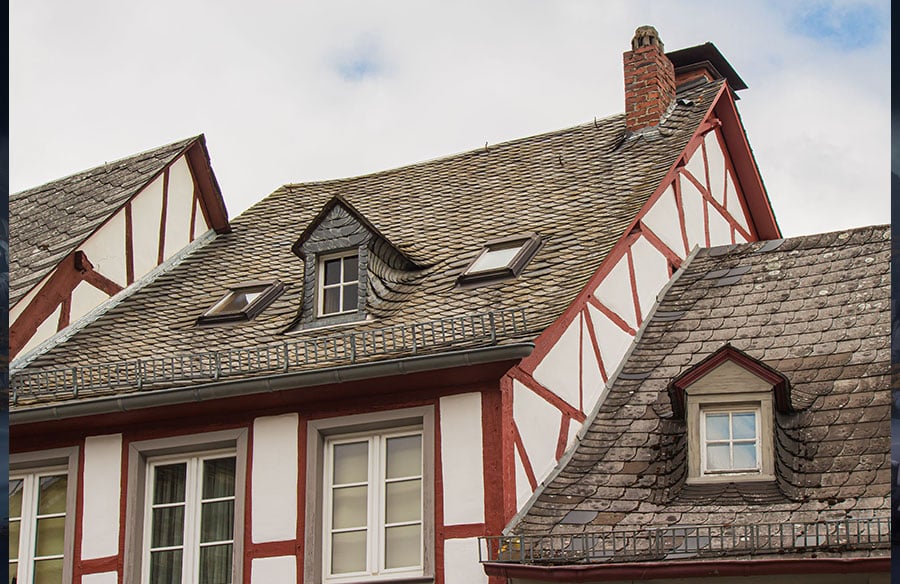
- Are distinctive features such as dormers, valleys, chimneys, or decorative trim part of the original design?
- Does the roof contribute significantly to the home’s street-facing appearance?
A roof should complement the building rather than overpower it. Color, texture, panel width, shingle profile, and flashing details all affect whether the completed project feels authentic.
Check Preservation and Neighborhood Requirements
Historic properties are often subject to additional rules that do not apply to conventional roof replacements.
Homes located within a designated historic district, or properties that carry an individual landmark designation, may require approval before visible exterior features are changed. Roofing materials, colors, profiles, and installation details may all be reviewed.
Before ordering materials, homeowners should:
- Contact the appropriate municipal preservation office
- Confirm whether the property has landmark or historic-district status
- Review neighborhood association or HOA requirements
- Ask whether specific colors, profiles, or materials are prohibited
- Obtain written approval before construction begins
Skipping the approval process may lead to delays, fines, rejected permits, or the need to redo completed work. Addressing these requirements early helps protect both the project schedule and the architectural value of the home.
Roofing Materials That Work Well on Historic Homes
Several modern and traditional roofing materials can preserve historic character while providing improved durability.
Architectural Asphalt Shingles
Architectural asphalt shingles are frequently used on historic bungalows, farmhouses, cottages, and Victorian-inspired homes.
They are available in a wide selection of colors and profiles, allowing homeowners to select a roof that complements original siding, masonry, trim, and exterior paint. Some products are designed to resemble wood shake or slate while remaining more affordable and easier to maintain.
Asphalt shingles generally provide a service life of approximately 20 to 30 years, depending on product quality, installation, ventilation, maintenance, and weather exposure.
Standing-Seam Metal Roofing
Standing-seam metal can be an excellent choice for farmhouses, Greek Revival homes, historic rural properties, and certain Texas architectural styles.
Narrow panel widths, traditional seam profiles, and period-appropriate colors can help the roof feel consistent with the home’s age. Metal roofing also performs well in hot climates because it can reflect solar energy and shed rain efficiently.
A properly installed metal roof may last 40 to 70 years or longer. However, panel proportions, edge details, flashing, and color selection should be carefully considered so the finished roof does not appear overly modern.
Synthetic Slate and Composite Tile
Synthetic slate and composite roofing products offer the appearance of traditional materials with less weight and, in many cases, improved impact resistance.
These products may be appropriate for Tudor, European-inspired, Victorian, or slate-era homes where the look of natural stone is important but the existing structure cannot easily support the weight of real slate.
Product quality varies, so homeowners should review testing standards, warranties, color variation, installation requirements, and long-term performance before selecting a system.
Clay and Ceramic Tile
Clay and ceramic tile are closely associated with Spanish Colonial, Mediterranean, Mission, and Southwestern architecture.
When the home was originally designed for tile, preserving or replacing the roof with a similar material may provide the most historically appropriate result. Tile can last 50 years or longer, although the waterproofing underlayment beneath it may require replacement sooner.
Tile is considerably heavier than asphalt or many metal systems. The roof structure should be evaluated before installation, particularly when replacing a lighter material with tile.
Consider the Demands of Central Texas Weather
Historic character matters, but the roof must also perform under local conditions.
Central Texas roofs face long periods of intense sunlight, extreme summer temperatures, spring hailstorms, sudden downpours, and straight-line winds. Older homes may also have outdated ventilation, aging roof decking, unusual framing, or previous repairs that complicate the project.
Heat and Sunlight
Continuous ultraviolet exposure can fade roofing materials and accelerate deterioration. Lighter colors, reflective finishes, adequate insulation, and balanced attic ventilation may help reduce heat buildup.
Ventilation improvements should be planned carefully on historic homes so new vents do not detract from visible architectural features.
Hail
Hail can bruise asphalt shingles, crack clay tile, dent metal panels, and damage flashing. Impact-resistant products may offer additional protection where preservation guidelines allow them.
No roofing material is entirely hail-proof, so periodic inspections remain important after major storms.
Wind
Strong winds can lift improperly fastened shingles, loosen flashing, and damage roof edges. Historic homes often have complex rooflines with dormers, valleys, chimneys, and transitions that require precise detailing.
The quality of the installation is just as important as the material selected.
Evaluate the Existing Structure
Historic roofs may contain conditions that are not visible until the old materials are removed.
The decking may include original lumber, spaced boards, previous repairs, or areas damaged by long-term moisture. Flashing around chimneys, walls, and roof penetrations may also require custom fabrication rather than standard replacement components.
Before selecting a heavy product such as natural slate or tile, the structure should be assessed to confirm that it can support the additional load.
Roof pitch must also be considered. Some materials require a minimum slope, while low-slope sections may need a membrane system even when the steeper portions use shingles, metal, or tile.
Preserve the Details That Give the Home Character
A successful historic roof replacement goes beyond choosing the right primary material.
Small details often determine whether the finished roof looks authentic:
- Metal finish and flashing color
- Shingle exposure and profile
- Ridge and hip treatment
- Panel width on standing-seam metal
- Valley configuration
- Chimney flashing
- Decorative gutters and downspouts
- Fascia, soffit, and trim details
These components should be planned together so the roof appears cohesive from every visible elevation.
Whenever possible, serviceable original materials may be carefully removed, repaired, and reused. Salvaging compatible tiles or slate can be especially helpful when only part of the roof requires restoration.
Work With a Roofer Experienced in Historic Properties
Historic roofing requires patience, planning, and attention to details that may not arise on a conventional suburban home.
A qualified contractor should be prepared to:
- Evaluate the roof’s structure and decking
- Review preservation requirements
- Identify materials compatible with the home’s style
- Coordinate custom flashing and drainage details
- Protect original exterior features during construction
- Document hidden conditions discovered during removal
- Explain the balance between authenticity, durability, and cost
Homeowners evaluating roofing options for an older Austin property can consult an experienced local contractor such as Driftwood Builders Roofing to compare materials and identify solutions that respect both the architecture and the demands of the Central Texas climate.
Protecting a Historic Home for the Next Generation
The best roof for a historic home is not necessarily the most expensive product or the material with the longest advertised lifespan.
It is the roofing system that complements the architecture, satisfies preservation requirements, works with the existing structure, and provides reliable protection for years to come.
By studying the home’s original design, obtaining approvals early, evaluating the structure, and selecting materials carefully, homeowners can preserve the character of a historic property without sacrificing modern performance.