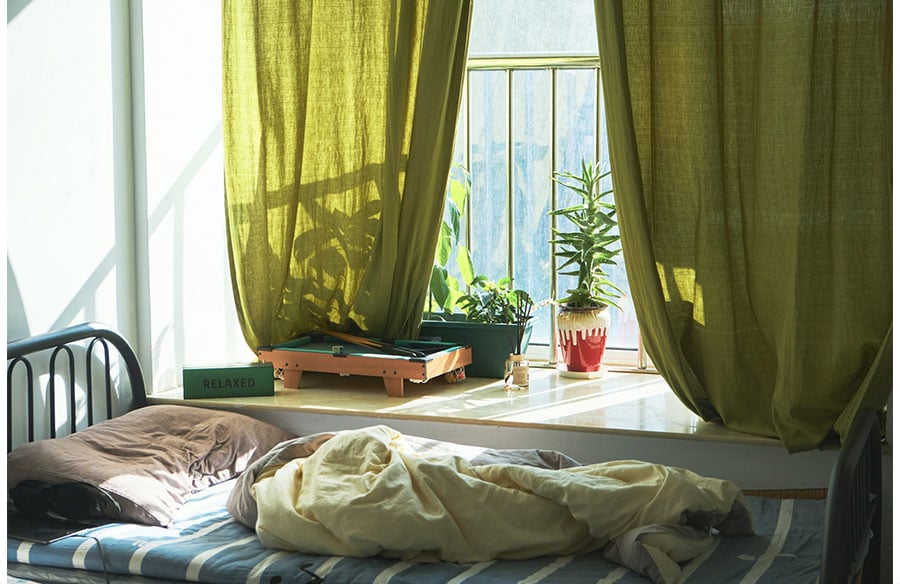
There’s a reason Mediterranean homes have looked the way they have for centuries. Thick walls, high ceilings, linen curtains that move with the breeze, minimal furniture. Every design decision was a response to heat — an attempt to make the bedroom a place where sleep actually comes easily, even in July.
Modern interior design has largely forgotten this. We build bedrooms that look beautiful in photographs but trap heat at night. We layer on mattresses, toppers, duvets and decorative cushions without asking a simple question: how does this room actually feel at 2am in August?
For anyone designing or living in a warm-climate home, sleep comfort deserves the same attention as lighting, layout, or material palette.
The Thermal Logic of the Bedroom
The body needs to drop its core temperature by roughly 1–2°C to initiate and maintain deep sleep. In cooler climates, the bedroom environment handles most of this automatically. In warm climates — Cyprus, Greece, southern Spain, coastal Italy — the environment works against it. The room is already warm. The bedding holds heat. The body struggles to cool down.
This isn’t just a comfort issue. It directly affects sleep architecture — how long you spend in restorative deep sleep versus lighter, more fragmented stages.
Good bedroom design in a warm climate starts by acknowledging this reality and working with it rather than against it.
Ceiling Height and Air Movement
Traditional Mediterranean architecture instinctively understood convection. Hot air rises. High ceilings give it somewhere to go, keeping the sleeping zone cooler. Modern apartment construction has largely abandoned this — standard ceiling heights of 2.6m give hot air nowhere to escape.
Where you can’t change the ceiling, ceiling fans become structural rather than decorative. A slow-moving fan at night doesn’t cool air — it accelerates evaporative cooling from the skin, which is exactly what the body needs to shed heat efficiently. The design question is how to integrate one without it reading as an afterthought.
Recessed ceiling fans, or pendant-style fans with proper blade geometry, can sit comfortably within a refined interior without dominating it.
The Material Question
Wall finishes, flooring, and textiles all have thermal mass — the capacity to absorb and release heat. Concrete, stone, and ceramic tile absorb heat during the day and release it slowly at night. In a warm climate, this is a liability unless the room is well-shaded during daylight hours.
Light-coloured walls aren’t just aesthetic. They reflect radiant heat rather than absorbing it. In a room that gets direct afternoon sun, the difference between white-painted plaster and a darker finish can be several degrees by bedtime.
For flooring, natural stone or large-format ceramic tile stays cooler underfoot than timber or carpet — a small detail that affects the overall thermal feel of the room significantly.
Window Strategy
The biggest heat gain in most bedrooms comes through glass. South and west-facing windows in a Mediterranean climate can raise room temperature substantially during the afternoon hours — heat that the room is still releasing at midnight.
External shading — shutters, deep overhangs, pergolas — is far more effective than internal blinds or curtains, because it stops solar heat before it enters the glass. Traditional wooden shutters aren’t just aesthetic nostalgia; they’re the correct engineering solution for the climate.
Where external shading isn’t possible, cellular blinds with a reflective backing are the most effective internal alternative.
Bedding as Interior Architecture
Bedding is the one element of the bedroom that’s in direct contact with the body for eight hours. Its thermal properties matter more than almost any other design decision in the room — yet it’s often chosen for aesthetics alone.
For warm climates specifically, the fabric composition of sheets, duvet covers, and blankets directly affects how well the body can regulate temperature during sleep.
Natural fibres that breathe well — linen, lyocell derived from eucalyptus, silk — allow moisture and heat to move away from the body rather than building up beneath the covers. The result is a noticeably cooler, more comfortable sleep environment even in high ambient temperatures.
Brands focused specifically on this problem — like Cala, which curates cooling bedding designed for Mediterranean living — take a different approach to product selection than generic homeware. The focus is on breathability and thermal regulation rather than thread counts and visual weight.
The visual case for natural-fibre bedding in a designed interior is also strong. Linen and lyocell both have a relaxed, slightly textural quality that reads as considered rather than decorative — the kind of material that feels intentional in a room designed with restraint.
Minimising Thermal Mass in the Sleep Zone
A common mistake in warm-climate bedroom design is treating the bed as a display object — layering it with a duvet, a throw, multiple cushions, a quilted bedspread. Each layer adds thermal mass. The bed takes longer to cool after the body lies down, and heat builds faster through the night.
The better approach is to strip the bed back to its essentials: a fitted sheet, a single lightweight layer on top, one pillow per person. This isn’t austerity — it’s precision. A well-designed lightweight blanket in the right material can look more considered than a pile of cushions.
Light and Sleep Onset
Blackout isn’t just about sleeping in — it’s about sleep onset. Light, even at low levels, suppresses melatonin production and delays the body’s shift into sleep mode. In southern European latitudes in summer, ambient light at 9pm is still significant.
Layered window treatments — a sheer for daytime privacy, a blackout layer for sleeping — give the most control. The design challenge is making this look intentional rather than functional. Recessed curtain tracks that allow full coverage without visible hardware, or shutters that close fully without gaps, solve this cleanly.
The Quiet Room
Acoustic comfort is the underrated dimension of bedroom design. In warm climates, windows stay open more often — and with them comes traffic, air conditioning units from neighbouring properties, birdsong at 5am. Hard surfaces (stone floors, plastered walls) reflect sound rather than absorbing it.
A single textile element — a rug, upholstered headboard, curtains with body — can make a significant acoustic difference in a hard-surfaced room. This is one case where adding material to the room serves both aesthetics and sleep quality simultaneously.
Designing for the Climate You’re In
The most considered bedroom design for a warm climate isn’t the one that looks best in a winter-lit interior shoot. It’s the one that works at midnight in August — cool enough to sleep deeply, quiet enough to stay asleep, dark enough to get there quickly.
That means taking the thermal logic of traditional Mediterranean architecture seriously: shading before cooling, breathable materials over decorative ones, restraint in layering, and a genuine understanding of how the body thermoregulates during sleep.
Good design and good sleep aren’t in tension. In a warm climate, they’re the same problem.