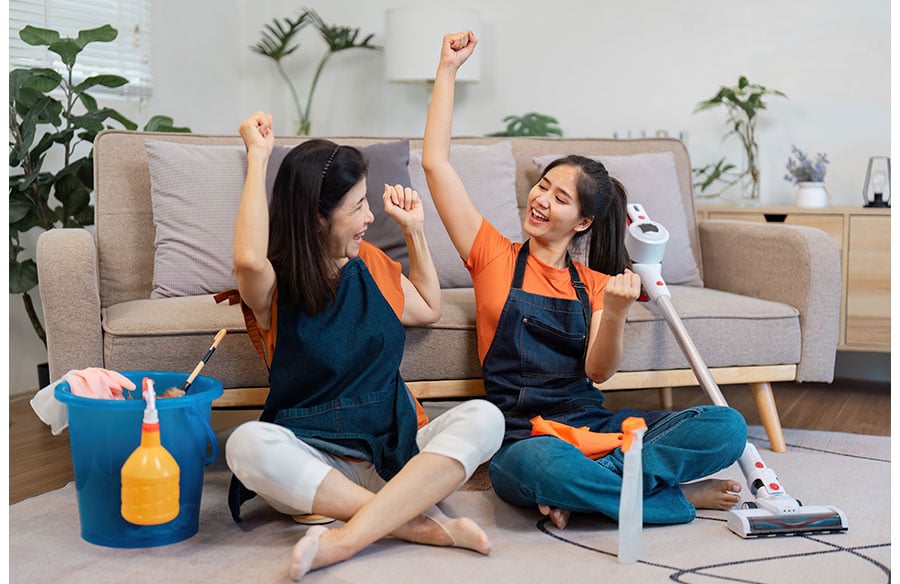
Your robot vacuum has mapped every room. The washing machine runs on a timer, and the fridge will reorder the milk before you notice it is low.
Yet come Sunday night, you are still the one on your knees, scrubbing the grout the machines cannot reach. That is the quiet gap in Singapore’s smart home: almost everything is automated except the cleaning that takes real effort.
It is why a dependable part-time helper Singapore households can rely on has quietly become common sense rather than a luxury.
How Singapore’s Smart City Vision Is Reshaping Home Life
Singapore is one of the most wired cities on earth. Sensors across the island feed data back to residents in real time, and the same thinking, from energy use to the upkeep of public housing, has worked its way indoors.
At home, the shift is just as visible. Smart home technology has gone from novelty to normal, with a steady stream of products meant to shave minutes off the daily routine.
Robot vacuums, app-controlled washing machines, and smart dishwashers are common now, in three-room flats and condos alike. But a connected home has its limits.
An appliance can start a wash cycle on a timer; it cannot scrub the bathroom grout, iron a week’s worth of shirts, or wipe down the kitchen after dinner. In our climate, it certainly will not deal with the mould creeping along the window seals, or the fine dust the aircon quietly pushes through every room.
That hands-on work is exactly where a part-time helper earns their keep.
The Growing Demand for Flexible Home Services in Singapore
You do not need a global statistic to see why demand keeps climbing. Singapore runs on dual incomes, on ageing parents who need looking in on, and on small, dense homes where mess has nowhere to hide.
Between two jobs, a long commute, and the weekend errands, the flat is usually the last thing to get attention and the first thing to suffer.
A full-time live-in helper is one answer, but it is a serious commitment. Add a typical salary of $600 to $850 a month, the $300 monthly levy, food, insurance, and a spare room, and most households end up spending well over $1,000 a month, before agency fees and the security bond upfront.
For a family that mainly needs the floors mopped and the bathrooms kept clean, that is a lot of fixed cost for a job that takes a few hours a week.
Part-time help solves the same problem from the other end. You book only the hours you need, when you need them, at around $23 an hour, with no contract and no live-in arrangement. It is the difference between taking on a full-time employee and simply calling someone in when there is work to do.
Demand has a rhythm to it, too. The weeks before Chinese New Year are the busiest in the trade, when nearly every household wants a deep clean before the reunion dinner and the first round of visitors. The good slots go early, which is its own argument for keeping a regular helper rather than scrambling once a year.
What Does a Domestic Helper Do?
A part-time helper takes on the recurring upkeep that quietly eats into your week. A standard session usually covers:
- General cleaning: sweeping, mopping, vacuuming, and wiping down surfaces
- Kitchen cleaning: degreasing stovetops, cleaning sinks, wiping cabinet exteriors, and clearing worktops
- Bathroom cleaning: scrubbing toilets, tiles, mirrors, and floors
- Laundry and ironing: washing, drying, folding, and pressing clothes
- Tidying and organising: decluttering common areas, sorting shelves and drawers
- Changing bed linen: stripping and remaking beds with fresh sheets
- Ad-hoc tasks: wiping light switches, cleaning ceiling fans, and tackling specific areas on request
Where people get the most from it is in the briefing. Agree on the priorities for each visit, point out anything fragile, and flag the jobs that sit outside a standard clean, such as the inside of the oven or fridge, or anything that needs a ladder, so the time goes where it counts.
Booked weekly or fortnightly, the upkeep stays on top of itself, instead of piling up for a panicked scrub before the in-laws arrive.
What Is the Hourly Rate for Part-Time Work in Singapore?
Part-time helpers in Singapore are usually paid by the hour, and rates move with the provider, the type of work, and how often you book.
Here is a rough guide to what to expect:
| Service Type | Typical Rate (SGD) | Notes |
|---|---|---|
| Part-time helper | From $20/hour | Weekly or ad-hoc support |
| Recurring weekly sessions | From $23/hour | Same helper, consistent timeslot |
| House cleaning | From $288 per session | General or deep cleaning |
| Move-in/move-out cleaning | From $288 per session | Priced by property size |
KungFu Helper’s listed rates start from $20 per hour for part-time help, with recurring weekly slots from $23 per hour and a minimum booking of 2.5 hours.
Locking in the same timeslot each week keeps the per-hour cost down, which makes regular help affordable for households that want steady support rather than a one-off blitz. A three-room flat naturally needs fewer hours than a five-room unit or a condo, so the final figure depends on the size of the home and the state it is in.
How Much Do Part-Time Helpers Get Paid in Singapore?
The short version: part-time cleaners are paid by the hour, and those in the cleaning sector are covered by Singapore’s Progressive Wage Model, a mandatory wage floor that rises each year, set at $1,910 a month from July 2025 and $2,080 from July 2026.
The rules that set the pay also protect you. A cleaner engaged for household work must either be a Singapore Citizen or Permanent Resident, or a Work Permit holder employed by a cleaning company licensed by the National Environment Agency.
Hiring a foreign domestic worker for ad-hoc cleaning on her rest day, or borrowing a neighbour’s helper, is illegal and carries heavy penalties for both parties.
This is why booking through a licensed provider matters. The company is the legal employer, so it handles the work pass, the levy, insurance, and proper pay, while you simply book the hours you need. You get professional support without the legal exposure or the fixed cost of a live-in helper.
Many part-time cleaners here are experienced and take real pride in the work. Reviews of platforms like KungFu Helper regularly single out helpers who turn up on time, work thoroughly, and go a little beyond the brief.
How Much Is Cleaning in Singapore per Hour?
For part-time cleaning, market rates in Singapore generally sit between $20 and $30 per hour. The main things that move the price are:
- Session length: longer bookings usually carry a slightly lower per-hour rate
- Type of cleaning: general upkeep versus specialised work, such as post-renovation or carpet cleaning
- Frequency: recurring bookings tend to come at a better rate than one-offs
- Flat size and location: a five-room unit or a condo may need extra hours or a custom quote
For reference, here are common services Singapore households add on, all listed on KungFu Helper’s site:
| Service | Starting Price |
|---|---|
| Part-time helper (general cleaning) | From $20/hour |
| Mattress cleaning | From $65 |
| Sofa cleaning | From $50 |
| Carpet cleaning | From $50 |
| Aircon servicing | From $24/unit |
That range puts professional home cleaning within easier reach than many people assume. A three-hour weekly session can keep a standard HDB flat consistently clean for well under $100 a visit, which is less than most families spend on a single weekend meal out.
Why Flexible Help Supports Better Urban Living
A smart home, at its best, runs with minimal effort from you. Gadgets handle part of that; a trusted helper handles the rest.
Technology has improved independent living for elderly residents and people with disabilities, with voice-controlled systems helping those with limited mobility manage their surroundings.
But a sensor cannot offer the reassurance of a trained, trusted person in the home. In Singapore’s many multi-generational households, that human layer is where part-time help complements the tech rather than competing with it.
In practice, the benefits look different for different households:
- Working couples reclaim their evenings and weekends instead of losing them to chores.
- Young families keep a clean, hygienic home with small children underfoot.
- Elderly residents get steady help without committing to a live-in arrangement.
- Sandwich-generation households free up time spent on cleaning for the parents and children who need it most.
Finding the Best Part-Time House Cleaner Singapore Has to Offer
When you are choosing a provider, a few practical checks go a long way:
- Vetted, trained helpers. Reliable platforms screen helpers before placing them.
- Transparent pricing. Look for clear rates upfront, with no surprise travel surcharges or hidden fees.
- Sensible rescheduling terms. Flexible booking and cancellation policies matter when work runs late or plans change.
- Genuine reviews. Consistent feedback on punctuality and quality is a good signal.
- A trial session. Most providers let you assess a helper before committing to a recurring slot.
KungFu Helper ticks these boxes. With a 4.8-star Google rating from more than 500 reviews, the company connects Singapore households with reliable cleaners for both one-off and recurring sessions, island-wide and with no area surcharge, at rates from $20 per hour and with easy WhatsApp booking.
The Help No App Can Replace
Singapore’s smart city ambitions have made daily life remarkably efficient, but efficiency only goes so far. Behind every app and smart device, a home still needs hands-on care that no machine provides.
A part-time helper does more than keep the floors clean. It buys back the hours you would otherwise lose to chores, week after week. Spend three of them on your family, or on doing nothing at all, and let someone else deal with the grout.