Choosing the perfect fan seems like it should be easy. You stroll into a store, pick any ol’ fan off the shelf, and head home. Life’s too short to analyze fans… Right?
Wrong. If you’ve ever rushed into the home improvement store and walked out with the wrong fan, you’ll understand where I’m going with this. Having a great fan will keep your room comfortable. Having a bad fan is pointless – they just gather dust in the corner.
Here’s your handy-dandy guide to picking out the perfect cooling fan.
Room Size
The size of your room should be your primary concern when shopping for cooling fans. Your compact desk fan isn’t going to do well in your spacious living room. And installing a powerful ceiling fan in a tiny bathroom stall is completely unnecessary.
Take a look at this general guide for picking fans by room size:
- Small rooms (≤ 75 sq ft): Desk fans and small tower fans work best.
- Medium rooms (75 – 175 sq ft): Opt for a medium tower fan or a ceiling fan with 42″ blade span.
- Large rooms (175 – 350 sq ft): Choose a ceiling fan with at least 52″ blade span.
- Open floor plans/big spaces: Try fans that list 350+ sq ft coverage or install multiple fans.
Measure your room before you start shopping around. Trust me, you’ll avoid at least one return trip to the store.
Know Your Fan Types
Not all fans are created equally. Each fan serves a specific purpose and knowing how they’re different will help you decide which fan type best suits your needs.
Ceiling fans are the most efficient way to cool an entire room. They sit mounted from the ceiling and cool your space evenly from top to bottom. These work great in living rooms, bedrooms, or covered porches/patios. Most ceiling fans now include a reverse feature that can draw cold air up during summer and push warm air down during winter months.
Tower fans are short and skinny. They’re portable and oscillate to distribute air all around the room. These are perfect if you live in apartments or dorm rooms with limited floor space.
Box fans tend to be cheaper than tower fans but still offer powerful air output. Many people use these fans in windows to suck cold air into their rooms or push hot air outside. They’re louder than tower fans but can move a larger volume of air quicker.
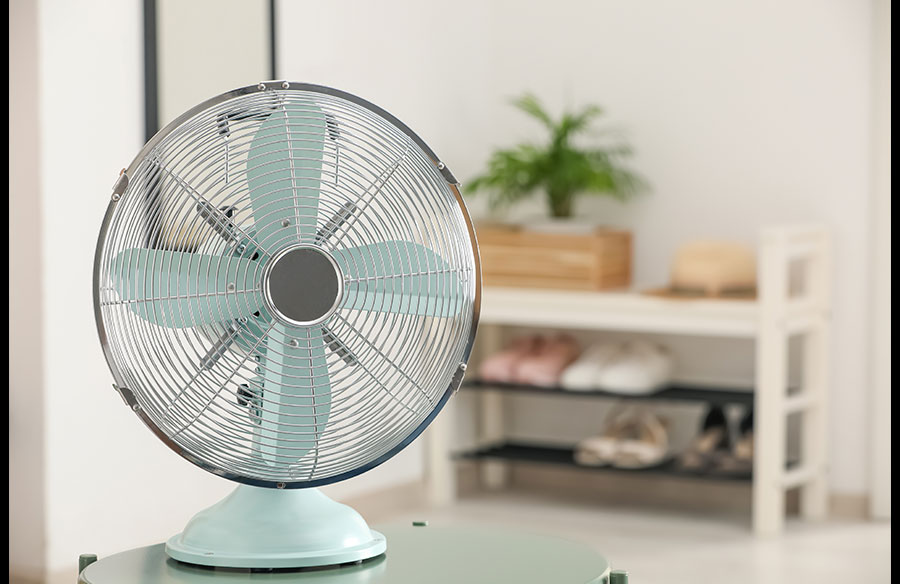
Desk fans are what they sound like: fans for your desk. These are only good for personal cooling if you’re sitting at a workstation or bedroom nightstand. You’ll disappoint yourself if you expect this type of fan to cool down your whole room.
Pedestal fans are tall fans with adjustable heights. They can move a lot of air and are perfect for garages, workshops, and larger open areas. Most pedestal fans have tilt and oscillation features to help you spread airflow where it needs to go.
Bladeless fans utilize air multiplier technology. They’re whisper quiet, safe for children/pets, and easier to keep clean than fans with blades. These are on the expensive side, but many owners find it worth the cost.
Noise Level
Fan noise can be frustrating. You might not mind running a loud fan in your garage or workshop, but a noisy fan in your bedroom or home office can drive you crazy.
Fan speeds are measured in decibels (dB). Pick a fan rated at less than 50 dB for quieter operation. Most fans will advertise their noise level in the product description. If not, check out customer reviews. Chances are somebody will bring up noise.
Tower fans generally run quieter than box fans. NHS Heater Shop noted that bladeless fans are typically the quietest. Ceiling fans can get louder over time if blades become unbalanced or the motor starts to wear out.
Purchase a fan with a low noise rating if you’re a heavy sleeper.
Airflow Rating
Airflow is measured in CFM (cubic feet per minute). The higher the CFM rating, the more air your fan will push.
100 – 300 CFM should be sufficient for personal use. A medium room will do well with approximately 1,000 – 3,000 CFM. Large rooms/open-air spaces will require 5,000 CFM+.
Ceiling fans typically list the CFM right on the product page. Portable fans usually list the speed settings instead. If you can’t find CFM or speed ratings, check to see how many watts the fan motor is. A higher wattage will equate to a higher airflow.
Just because a store shelf is packed with monster 5,000+ CFM fans doesn’t mean you need to run one in your small bedroom. Purchase a fan with an airflow that makes sense for the room size.
Energy Efficiency
Running fans all day can really add up on your electric bill. Save some money in the long run by choosing an energy efficient fan.
Energy Star fans meet strict guidelines set by the U.S. Environmental Protection Agency. DC motor fans use up to 70% less energy than AC motor fans.
DC motor ceiling fans are extremely efficient. Bonus: they’re quieter than traditional AC motor fans. If you know you’ll be running your fan for several hours each day, look for an efficient fan.
Fan Features
Fans these days are loaded down with extra junk features. Some are great. Some are ok, but hardly worth the extra money.
Below are features you might want to pay extra for:
- Remote or app control: Perfect if your fan will be mounted up high or across the room.
- Timer setting: Allows you to set the fan to automatically turn off after a period of time (helpful if you forget to turn the fan off).
- Sleep mode: Slowly decreases speed throughout the night.
- Multiple speed settings: More speed options allow you to finetune your comfort level.
- Air purifier: Some tower fans offer filtration systems to help clean the air as they cool your room.
- Ignore gimmicky features. Only pay extra for features that you’ll actually use.
Use Case Example: How to Choose Fans Based on Room Size Case Study
A property management company that supplied fans to a block of rental flats in Cape Town wanted to improve customer comfort during summer months but without having to fit full air conditioning units.
The main problem was installing fans in various room sizes based on layout and individual tenant needs. Beforehand, they had been fitting the same stock standard tower fan in every apartment.
Installation Issues
The company noticed several problems from tenant complaints:
- Tower fans were too big/loud for small bedrooms
- Desk fans/tower fans did not move enough air for large living rooms
- Poor airflow coverage for open concept apartments
- Energy usage was too high
- Tenants were complaining about noise and inadequate airflow
Solution: Fan Size & Requirements Flow Chart
The company decided to revamp their installation strategy according to:
- Room size (i.e small, medium, large, open concept)
- Fan type (ceiling fan, tower fan, pedestal fan, desk fan, box fan, bladeless fan)
- Room airflow needs (CFM performance)
- Placement area/room types (bathroom vs bedroom vs living room)
- Operating costs (AC vs DC motor fans)
Fan Installation Guide
Implementation Plans
Upgraded fan units included:
- Small bedrooms: Desk fans / Small tower fans for comfortable airflow. Fans were quiet or silent for sleeping.
- Medium rooms: 42 inch ceiling fans with 3 speeds or more
- Large living rooms: 52 inch DC motor ceiling fans
- Living rooms + Dining rooms + Open concept kitchens: Ceiling fans + Pedestal fans
- Home Offices/Study: Quiet bladeless fans
Results Earned
Tenant comfort drastically improved within the first two months of installations:
- Better airflow throughout rooms/apartments
- Decreased tenant complaints about noise & poor airflow
- Lower energy costs by using DC motor fans
- Improved airflow in large rooms/open concept apartments
- Less returns/exchanged fans due to sizing
Fun fact: most complaints were not due to fan performance but incorrect fan usage.
Conclusion: How to Choose The Right Fan
Don’t simply buy the cheapest fan or the one that looks the coolest. Consider:
- Size of room
- Airflow CFM
- Noise level
- Usage
- Motor type (AC vs DC)
Matching these elements should help you pick the perfect fan to keep you cool all summer long without breaking the bank.
FAQs
How do I know what size fan I need?
Measure the room you wish to install a fan in. For small rooms we recommend desk fans or small tower fans. Medium rooms can use ceiling fans or tower fans. Large/open rooms require high CFM ceiling fans or pedestal fans.
What does CFM mean on a fan?
CFM (Cubic Feet per Minute) refers to the amount of air a fan can push throughout a room. The higher the CFM, the more air it will push allowing it to cover more space.
Are ceiling fans better than tower fans?
Ceiling fans circulate better for entire rooms. Tower fans are better portable fans for personal cooling.
Do bladeless fans cool better?
No, not necessarily. Bladeless fans are quieter, safer, and easier to clean. However the airflow design is what ultimately cools you, not the absence of blades.
Which fans are quietest?
Bladeless fans and DC motor ceiling fans are quietest. Depending on the build, desk fans can also be quiet.
Do energy saving fans make a difference?
Yes. DC motor fans can use up to 75% less electricity than AC motor fans if used regularly each day.
Can I cool my whole house with one fan?
No, fans do not actually make the air colder. However using ceiling fans or multiple strategically placed fans can make air feel more circulated.
Are box fans better?
Box fans can push more air and tend to be cheaper. Tower fans are quieter, take up less space and are better for indoor living.
Should I leave fans in empty rooms?
No. Fans only make you feel cooler, they do not actually reduce the temperature of the air. Leaving fans on in empty rooms is a waste of electricity.
What fan features should I pay extra for?
Fan features that could be useful for you include remote controls, timers, multiple speeds, sleep mode features and DC motors.
Final Words
Wait! Before you hit that checkout button, double check you’ve covered all your bases. Fans can make or break your comfort. Take a few minutes to do your research before making a purchase, and you’ll thank you every time you turn that baby on.