There is a feeling you get when you walk into a well-designed resort room. Everything is calm. The light is right. Nothing is competing for your attention. You exhale without thinking about it.
That feeling is not accidental — and it is not exclusive to five-star resorts. It is the result of deliberate design decisions that anyone can apply to their own home. At Adoani Studio, we work with these principles every day across our architecture and interior design Koh Samui projects. And the good news is that most of them are simpler than people expect.
1. What Resort-Style Living Actually Means
Before jumping into ideas, it is worth being clear about what resort-style living is — and what it is not.
It is not about expense. It is not about filling a space with decorative objects or importing luxury finishes. Resort-style living is about how a space makes you feel. The best examples of it — including the Architecture Koh Samui approach that defines so much of what we do — share the same core qualities:
- Open, generous layouts that breathe
- A strong, deliberate connection with the natural environment
- Calm, neutral colour palettes that do not demand attention
- Natural light used as a design material, not an afterthought
- Minimal clutter — every object present for a reason
Get these right, and the rest follows naturally.
2. Start with Colour — Then Leave It Alone
The foundation of any resort-style interior is a restrained colour palette. Soft whites, warm sandy tones, muted greys, and earthy neutrals. Colours that reflect the natural environment rather than competing with it.
What to Do
- Choose one or two base tones and commit to them across the main surfaces
- Introduce colour only through natural materials — timber, stone, linen, rattan
- Use bold accents sparingly — a single cushion, a piece of artwork, a plant
What to Avoid
- Multiple competing colours across walls, furniture, and textiles
- Dark dominant tones in smaller spaces
- Trend-driven colour choices that will feel dated within a few years
A light, consistent palette does something else, too — it makes natural light work harder. And natural light is everything in resort-style design.
3. Treat Natural Light as a Design Decision
In our work as Adoani Architects, light is considered before walls, before materials, before almost anything else. The same principle applies to any interior trying to achieve a resort-like quality.
Natural light should flow freely through the space — softened, not harsh; present, not overwhelming.
Practical Ways to Maximise It
- Keep window treatments minimal — sheer linen over heavy curtains
- Use mirrors on walls opposite windows to reflect and distribute light
- Choose light-reflective surfaces for floors and walls in darker rooms
- Remove furniture or objects that block light from moving through the space
The goal is an interior that feels genuinely bright during the day without relying on artificial lighting to compensate.
4. Bring the Outside In — Deliberately
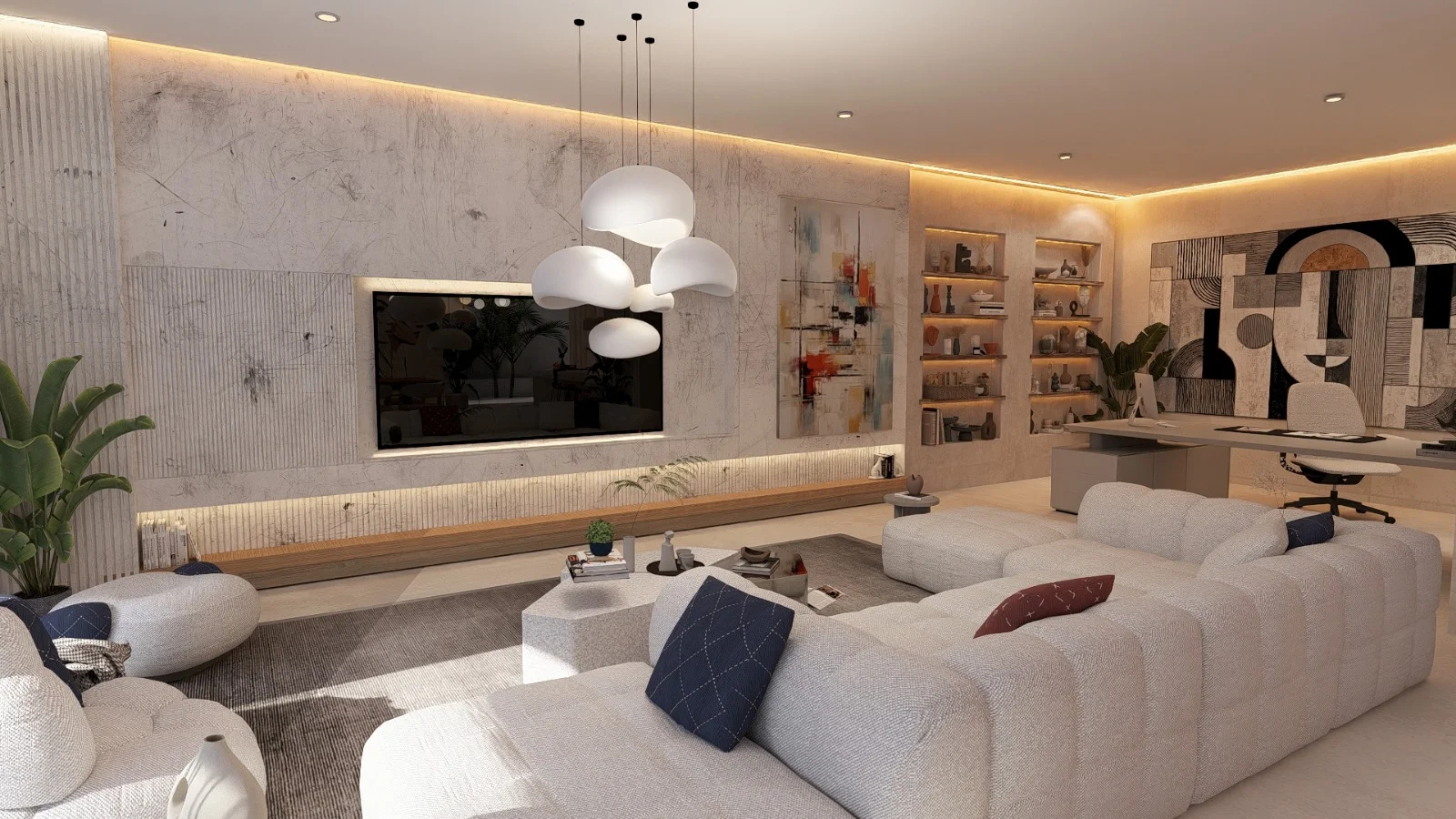 One of the defining qualities of great interior design, Koh Samui and resort design globally — is the presence of the natural world inside the home. Not as decoration, but as a genuine design element.
Natural Elements That Work
Plants — palms, ferns, and large-leafed tropical varieties bring life and organic texture to any interior. Position them where they receive the right light rather than where they look good on paper.
Natural materials — timber, stone, rattan, bamboo, woven textiles. These materials carry a warmth and imperfection that manufactured alternatives simply cannot replicate.
Texture — linen curtains, jute rugs, cotton throws, upholstered furniture. Layering natural textures creates depth in a neutral space and prevents it from feeling flat or clinical.
The key is restraint. A few well-chosen natural elements create far more impact than a room full of them competing for attention.
5. Furniture — Comfort Without Clutter
Resort-style furniture is not about statement pieces or recognisable brands. It is about comfort, proportion, and the ability to relax completely without the space feeling overcrowded.
When Selecting Furniture
- Prioritise clean lines and simple, honest shapes
- Choose pieces that are proportionate to the room. Oversized furniture in a modest space kills the sense of openness
- Stick to the same material and tonal logic as the rest of the interior
- Leave space between pieces — breathing room is part of the design
Arrangement Matters as Much as Selection
- Face seating toward the view or the best light source in the room
- Avoid blocking natural pathways through the space
- Create clear, distinct zones for living, dining, and relaxation without using walls to separate them
6. Open the Space — Then Protect It from Clutter
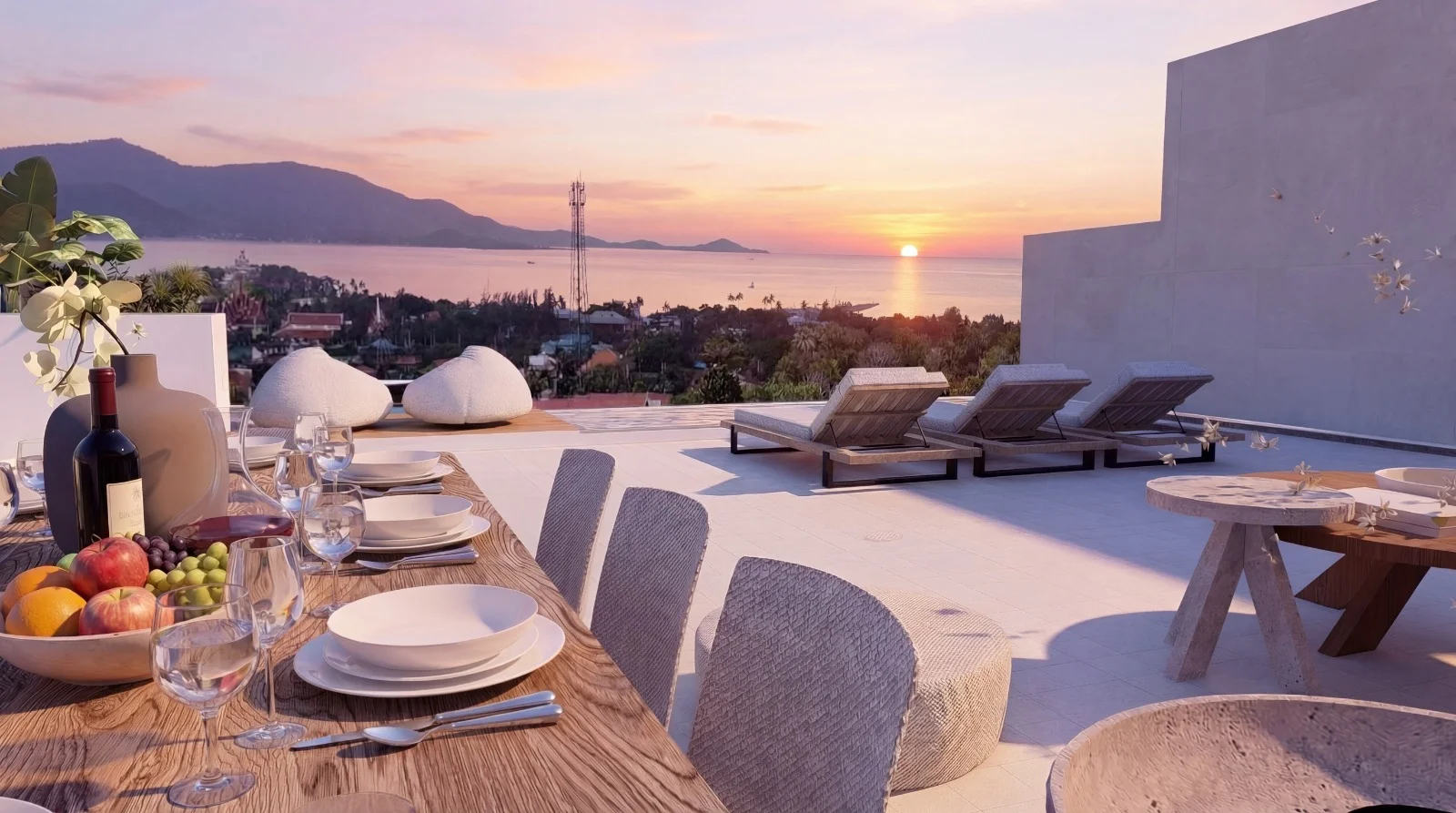 Resorts feel spacious not because they are always large, but because they are edited. Every piece of furniture, every object, every surface has been considered.
How to Create This at Home
- Remove anything that does not contribute to how the space feels or functions
- Use multi-functional pieces where possible, with storage that disappears into the architecture rather than sitting in front of it
- Keep surfaces clear — a single object placed deliberately reads very differently from a surface covered in many objects
This is something we return to constantly in our interior design Koh Samui projects. The edit is often more important than the addition.
7. The Indoor-Outdoor Connection
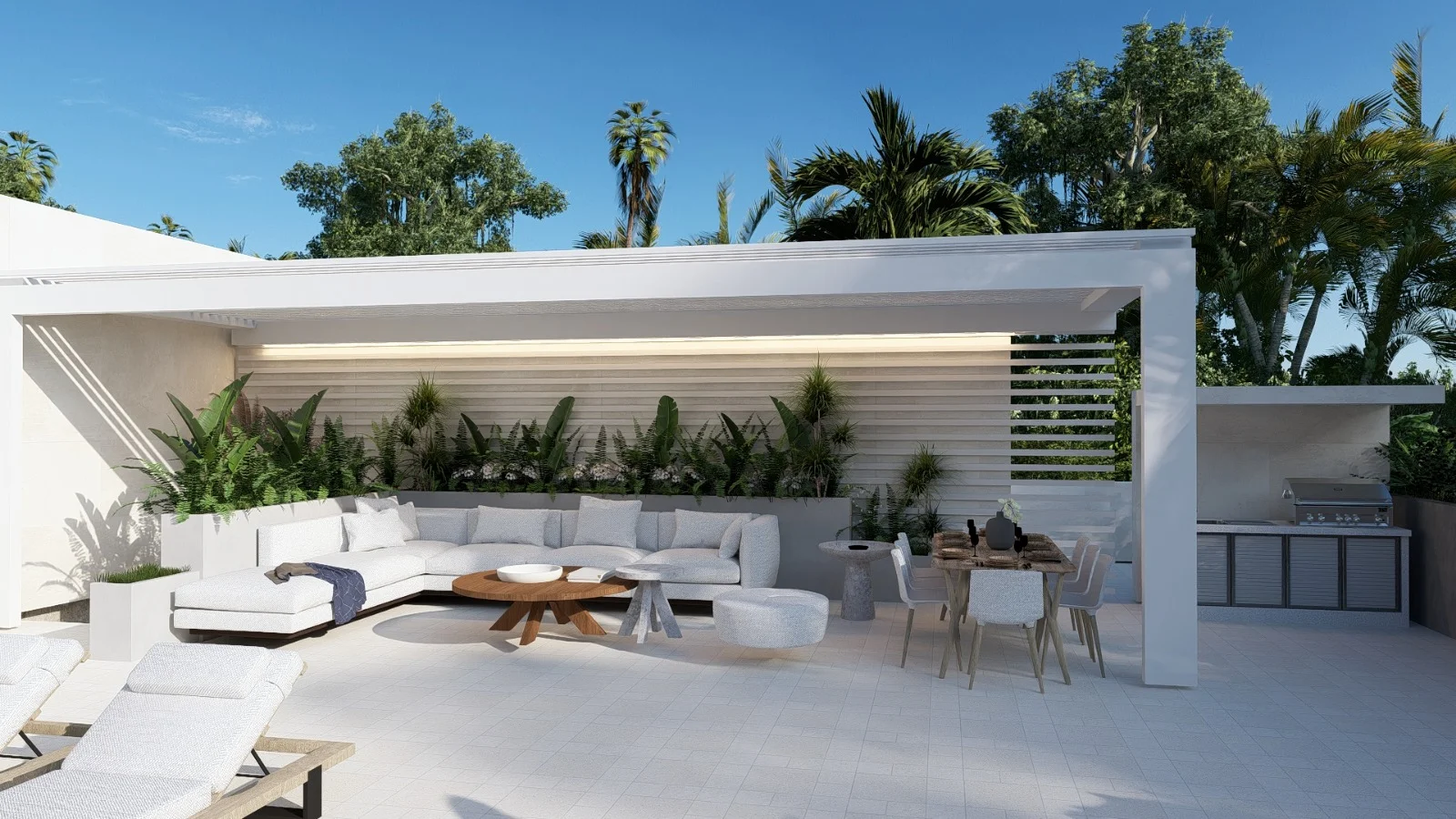 This is where resort-style design and tropical architecture meet most completely. The smooth, deliberate transition between inside and outside is what gives tropical homes their particular quality of ease and openness.
How to Achieve It
- Use the same or complementary flooring materials inside and on the terrace — the continuity matters
- Install sliding or folding glass doors that open fully and disappear into the wall
- Design outdoor seating areas with the same care as interior rooms — comfortable, shaded, and considered
- Use planting as an architectural element — not just decoration, but to create enclosure and a sense of arrival
Even a modest balcony or small outdoor area can become a genuine extension of the interior with the right approach.
Lighting — Layered, Warm, Intentional
Lighting is one of the most powerful tools in creating a resort atmosphere — and one of the most frequently mishandled in residential interiors.
A single overhead light does not create atmosphere. It creates a lit room. There is a significant difference.
How to Layer Lighting Properly
- Ambient lighting — soft, general light that sets the base tone of the room
- Task lighting — focused light where it is actually needed, such as reading areas or kitchen surfaces
- Accent lighting — used to highlight a specific element, a wall texture, a plant, a piece of artwork
Practical Choices
- Warm-toned bulbs throughout — cool white light works against the calm, relaxed atmosphere resort design depends on
- Pendant lights and wall sconces over recessed downlights wherever possible
- Dimmer switches on primary circuits so the intensity of light can shift with the time of day
9. Bedroom — Designing for Genuine Rest
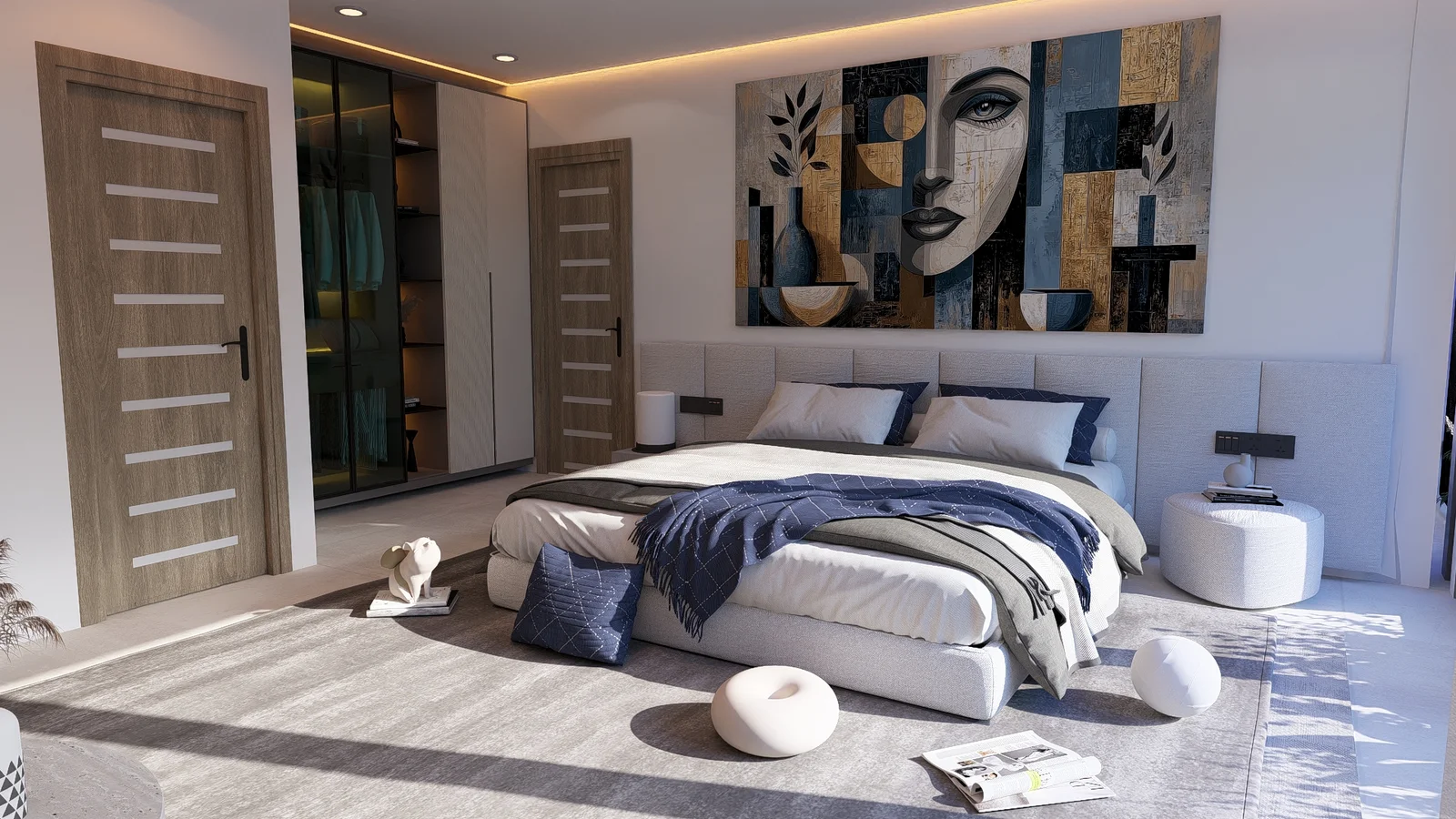 The bedroom in a resort context is not just a room with a bed. It is a sanctuary, a space designed specifically and completely around the experience of rest and calm.
Key Principles
- Keep furniture minimal — bed, bedside surfaces, storage that disappears
- Use soft, neutral bedding in natural fabrics — linen and cotton breathe better and feel more comfortable than synthetic alternatives
- Control light carefully — the ability to create complete darkness for sleep and soft filtered light for waking matters enormously
- Introduce one natural material element — a timber headboard, a woven rug, a stone surface — to ground the space
The bedroom should feel like the quietest room in the home. Not because it is empty, but because everything in it has been chosen to support rest.
10. Bathroom — Simplicity as Luxury
Resort bathrooms share a common quality regardless of size or budget — they feel clean, calm, and completely uncluttered.
What Makes the Difference
- Neutral tiles and natural surface materials — stone, timber, matte finishes
- Lighting that is warm and considered rather than harsh and clinical
- No unnecessary objects on surfaces — storage should be hidden, not displayed
- One or two deliberate touches — a plant, a quality soap dish, a timber bath mat — rather than a collection of products competing for space
Small Upgrades with Significant Impact
- Replace plastic or chrome fittings with brushed brass or matte black
- Add a single indoor plant suited to humidity
- Invest in quality towels in a consistent neutral tone
The bathroom does not need to be large to feel luxurious. It needs to feel resolved.
The Details That Complete It
Resort-style living is ultimately defined by the accumulation of small, considered decisions rather than any single dramatic gesture. As an interior designer Koh Samui would tell you — it is always the details that separate a space that looks good from a space that genuinely feels exceptional.
- Scented candles or a diffuser with a single, calm fragrance
- Tableware that is simple, consistent, and well-made
- Artwork chosen for how it makes the room feel — not for what it signals
- Textiles that are consistent in quality and tone throughout the home
None of these is an expensive decision. All of them are intentional ones.
The Principle That Holds It All Together
Every element we have covered here comes back to one idea: balance.
Not overdesigning. Not filling every surface. Not chasing trends or adding features because they look impressive in photographs.
Resort-style living — the kind that actually feels extraordinary to live in, not just to look at — is the result of restraint. Of knowing what to leave out as much as knowing what to include. Of trusting that a space with fewer, better things will always feel more considered than a space with more.
This is something we believe deeply at Adoani Studio — in our architecture, in our interior design Koh Samui work, and in every conversation we have with clients about what makes a home truly feel like a place they want to be.
Start with one room. Edit before you add. Trust the process.
The result will surprise you.