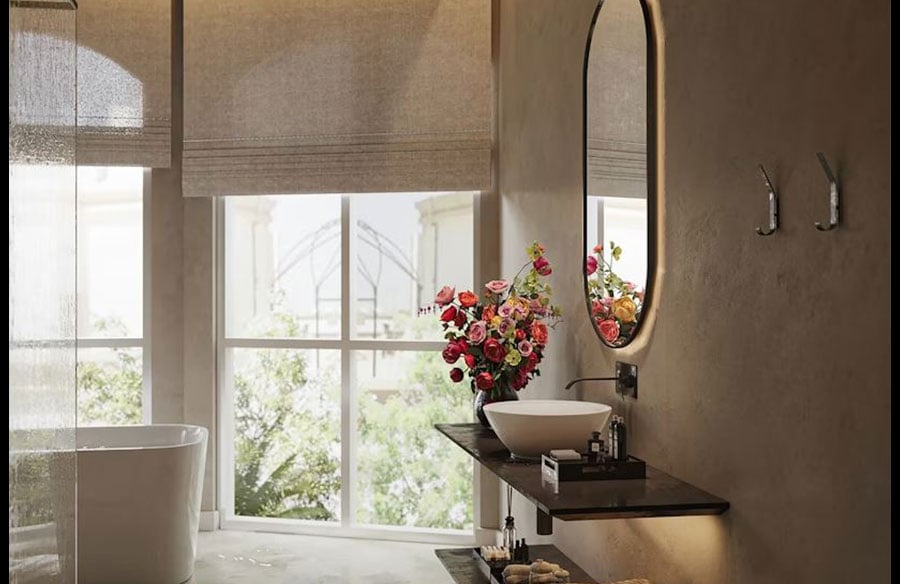
Design has come a long way. Previously, aesthetics was the influencing force. Now, design locks into emotions and, more importantly, how your brain responds to it.
Welcome to neuroarchitecture, the intersection of neuroscience and design. Spaces are shaped for well-being. It’s a field grounded in research, not guesswork, and it’s changing everything from schools to homes.
One of the most powerful (and overlooked) places this plays out? Your interiors. Specifically, your bathroom.
What Is Neuroarchitecture?
Neuroarchitecture studies how built environments affect the brain, behavior, and emotional states.
ArchDaily reports that elements such as light, layout, texture, and ceiling height can influence stress levels, focus, and mood. It’s not abstract theory. It’s measurable.
The Science Behind It
Studies in human neuroscience have found that:
- Natural light improves cognitive performance and mood.
- Cluttered environments increase cortisol (your stress hormone).
- Certain spatial layouts can either calm or overstimulate the brain.
Evidence published in Frontiers in Human Neuroscience shows how architectural features directly influence emotional and neural responses. In short? Your environment is continuously “talking” to your brain.
Why Your Brain Cares About Design
Your brain is wired for survival. It also interprets your environment as signals of safety or threat. A well-designed space can:
- Lower stress
- Improve focus
- Enhance emotional well-being
Meanwhile, poorly designed spaces can do the opposite without you realizing it. Architect Oguz Atakan Gul writes that environments aligned with human psychology can considerably improve the quality of life.
The Rise of Science-Backed Interiors
You’ve probably noticed that design is becoming more intentional and more evidence-based.
Architects are using neuroscience to influence environments that support how people think and feel, not how they move through space.
Neuroarchitecture in learning spaces explores how design choices like color, lighting, and layout can improve focus, reduce anxiety, and support emotional regulation.
A Riyadh Nursery provides the blueprint for neuroarchitecture in action. Soft curves. Muted colors. Playful details. It’s a space created for fun and exploration, says AD Middle East.
Harper’s Bazaar Arabia welcomes the interior design trend, noting that emotionally-intelligent spaces soothe the nervous system and inspire connection.
Bathrooms: The Stress-Relief Zone
Bathrooms, once purely functional, are being reimagined as micro-environments for restoration. Your bathroom is one of the few spaces where:
- You’re alone
- You’re not performing
- You can reset mentally
That makes it prime real estate for neuroarchitectural design. And believe it or not, Kansas City is embracing the trend with gusto. The city experiences all four seasons. Summers are hot and humid. Winters are cold and harsh.
The bathroom, by extension, has become a place of solace and comfort. That’s why homeowners are leaning towards smarter layouts and sensory comforts in Kansas City bathroom remodeling projects.
A Bathroom Remodel That Calms the Mind
In practice, neuroarchitecture incorporates:
- Soft, layered lighting instead of harsh overhead glare.
- Natural materials like stone and wood.
- Minimalist layouts that reduce visual clutter.
These suggestions are grounded in how the brain processes environments. To get it just right, Four Seasons Home Products suggests hiring experienced bathroom contractors.
Sensory Design: The Secret Ingredient
If you think neuroarchitecture is visual, you’re missing the point. The model encompasses multi-sensory principles.
Spaces that engage multiple senses (sight, touch, and sound) can create further comfort and well-being.
Think About It
- Soft textures = comfort
- Quiet acoustics = calm
- Balanced lighting = clarity
Your brain is always scanning for cues. Good design gives it the right ones.
FAQs: What Neuroscience Tells Us About Interior Spaces
What is neuroarchitecture in simple terms?
It’s the study of how design and built environments affect the brain, behavior, and emotional well-being.
Can interior design really reduce stress?
Yes. Research shows that lighting, layout, and materials can influence stress levels and mood.
Why are bathrooms important in neuroarchitecture?
They’re private, controlled spaces where sensory design can impact relaxation and mental reset.
What are the easiest ways to apply neuroarchitecture at home?
Use natural light, reduce clutter, choose calming materials, and create spaces that feel intuitive and comfortable.
Key Statistics Summary
| Topic | Insight | Source |
| Brain response to design | Architectural features influence emotional and neural activity | Frontiers |
| Natural light | Improves mood and cognitive performance | ArchDaily |
| Sensory design | Multi-sensory environments enhance comfort | Vancouver Sun |
| Small spaces impact | Controlled environments can significantly reduce stress | Human Behavior and Emerging Technologies |
Designing for How We Feel
Neuroarchitecture is dominating the conversation. It’s no longer: “Does this space look good?” It’s: “Does this space support how we live, think, and feel?”
As research continues to grow, one thing is clear: the spaces we inhabit aren’t neutral. They shape us. And sometimes, the smallest room in the house can make the biggest difference.