There’s a version of dropshipping that belongs to 2015 – the one-page Shopify store selling generic phone cases with a two-week AliExpress shipping window. That model largely imploded, and good riddance.
What’s replaced it is something far more interesting: a mature, infrastructure-level approach to building ecommerce brands that doesn’t require owning a warehouse, managing physical inventory, or raising capital to compete. Dropshipping in 2026 is less about hacking a quick margin and more about building a real business with real customers – just with a radically lower cost of entry than traditional retail.
The numbers back this up. Global ecommerce revenue is projected to exceed $8 trillion by 2027, driven by continued shifts in consumer behavior, mobile-first shopping, and the growth of creator-led commerce. At the same time, platforms like Shopify, TikTok Shop, and Amazon have made it easier than ever to launch a branded storefront with minimal upfront investment. For entrepreneurs who understand how to pair the operational leverage of dropshipping with disciplined branding and customer retention, the opportunity has never been clearer.
Why Dropshipping Still Works in 2026
The skeptics love to announce dropshipping’s death. It hasn’t died – it’s evolved.
The core mechanics still hold: you sell products without holding inventory, a supplier fulfills orders on your behalf, and you capture the margin between what customers pay and what the fulfillment costs you. What’s changed is everything around those mechanics.
Operational risk is genuinely low. Unlike traditional retail, you’re not committing capital to inventory that might not sell. You can test ten products with a small ad budget, identify what converts, and double down on winners – all without writing a check to a manufacturer for 500 units upfront.
Supplier access has expanded dramatically. Beyond AliExpress, operators now work with US-based suppliers through directories like Spocket and Zendrop, giving them faster shipping times and better quality control. The excuse that “dropshipping means bad products and slow delivery” doesn’t hold anymore when you’re sourcing domestically.
Product testing cycles are faster. Modern dropshipping businesses function almost like venture portfolios. You’re running cheap experiments – a few hundred dollars in paid traffic or an organic TikTok – to validate demand before committing to a product or niche. That feedback loop used to take months; now it can take a week.
Scalability is built-in by design. Since you’re not constrained by physical inventory or warehouse capacity, growth is primarily a marketing and logistics coordination problem – and both of those are increasingly solvable with automation.
What separates the operators who win from those who quit after three months is focus. The successful dropshipping businesses today aren’t general stores. They’re niche-focused brands with a specific audience in mind from day one.
The Shift From Generic Stores to Real Brands
If there’s one defining shift in dropshipping over the past five years, it’s this: the stores that succeed treat themselves as brands, not arbitrage operations.
The old playbook was simple – find a trending product, run Facebook ads to a generic store, and pocket the margin before the product got saturated. It worked, briefly, for some people. But it had no defensibility. No customer loyalty. No reason for someone to come back.
Modern branded dropshipping inverts that logic. You start with an audience, then build a product catalog around what they actually want. You develop a visual identity, a tone of voice, a point of view. You invest in content that earns trust before asking for a sale.
The difference isn’t just philosophical – it shows up in the numbers. Brands with strong identities and genuine community engagement consistently outperform faceless storefronts on customer lifetime value and retention rates, often dramatically so.
Here’s how the two approaches compare in practice:
| Dimension | Traditional Dropshipping | Modern Branded Dropshipping |
| Product selection | Trending/viral products | Curated around a niche audience |
| Customer relationship | Transactional, one-time | Retention-focused, community-driven |
| Traffic source | Paid ads (Meta, Google) | SEO, content, creators, email |
| Brand identity | Minimal or generic | Distinct visual/voice identity |
| Repeat purchase rate | Low (often <15%) | High (30–60%+ for strong brands) |
| Competitive moat | Price and speed | Brand trust, community, content |
| Long-term value | Fragile, easily disrupted | Scalable, defensible |
The brands that have quietly built significant ecommerce businesses in the past few years aren’t the ones with the flashiest product launches. They’re the ones that showed up consistently, built an audience, earned trust, and turned first-time buyers into repeat customers.
That’s a business. The old model was just arbitrage.
Why Organic Traffic Matters More Than Ever
Here’s a painful truth that many ecommerce operators learn too late: paid advertising scales your revenue, but it doesn’t build your business. The moment you turn off the ads, the traffic disappears.
Organic traffic – from SEO, content marketing, social media, and creator communities – does the opposite. It compounds over time. An article that ranks on page one of Google today will bring traffic for years. A YouTube channel with genuine subscribers becomes a distribution asset that no algorithm change can fully take away.
Ecommerce brands that have built meaningful SEO foundations understand the concept of topical authority: instead of writing one generic blog post about a product category, they build comprehensive content ecosystems around the questions, concerns, and interests of their target customer. A fitness supplement brand, for example, doesn’t just write “Best Protein Powders.” It covers training nutrition, recovery protocols, ingredient transparency, supplement timing – everything a fitness-focused buyer actually searches for.
That depth signals expertise to search engines. It also builds trust with potential customers who discover the brand through informational content before they’re ready to buy.
The creator economy adds another layer. TikTok, YouTube Shorts, and Instagram Reels have become legitimately powerful discovery channels for ecommerce products, particularly in health, wellness, beauty, and lifestyle categories. Brands that build creator relationships – or build creator-style content themselves – acquire customers at a fraction of what paid ads cost.
A few practical pillars for organic ecommerce growth:
- Search intent optimization: Match your content to what buyers actually search, not what you think they should search. Use tools like Ahrefs, Semrush, or even Google Search Console to understand intent before writing.
- Product page SEO: Most ecommerce brands underinvest here. Title tags, schema markup, structured reviews, and descriptive alt text all contribute to ranking.
- Email as an owned channel: Social platforms change their algorithms. Your email list doesn’t. Even a modest list of engaged subscribers is worth more than ten times as many unengaged social followers.
- Long-form content: Detailed guides and comparison articles rank well and convert better than thin content. If you’re going to publish, make it genuinely useful.
Organic traffic takes longer to build than a paid campaign. But the brands that commit to it early are the ones that aren’t panicking every time Meta changes its ad auction mechanics.
Why Niche Ecommerce Brands Scale Faster
Trying to compete with Amazon by selling everything to everyone is a losing strategy for an independent ecommerce brand. The brands that scale consistently and efficiently go deep, not wide.
Niche brands win because specificity creates connection. When a customer lands on a store that feels like it was built exactly for them – someone who trains in BJJ, or who keeps saltwater reef tanks, or who follows a whole foods plant-based diet – the relevance signal is immediate. The trust follows much faster than it does with a generic store.
The commercial advantages are real:
Lower customer acquisition costs. Targeted audiences convert at higher rates, which means your marketing spend goes further. You’re not paying to reach people who will never buy; you’re reaching people for whom your product is highly relevant.
Stronger retention. Customers who identify with a brand’s niche tend to come back because the brand speaks to an ongoing part of their lifestyle, not a one-time need.
Better word-of-mouth. Niche communities talk to each other. A great product or experience spreads organically within tight communities in ways it never would in a general market.
Some of the strongest niche opportunities in the current ecommerce landscape are clustered in a few broad categories:
- Wellness and supplements – a high-interest, high-repurchase niche with strong subscription potential
- Skincare and personal care – ingredient-conscious consumers who research before buying, making content marketing especially effective
- Fitness and sports performance – highly engaged communities with strong social proof dynamics
- Pet products – emotionally connected buyers with high willingness to pay for quality
- Eco-friendly and sustainable products – growing demand from a values-driven demographic
- Hobby and enthusiast communities – tight-knit audiences with specific product needs and strong peer recommendations
The pattern across all of these is the same: defined audience, clear problem, strong content opportunity, and a customer who comes back.
Going niche isn’t a limitation – it’s a strategic advantage.
The Rise of White-Label and Creator-Led Ecommerce
One of the most significant structural shifts in ecommerce over the past few years has been the emergence of white-label fulfillment platforms that allow creators and entrepreneurs to launch branded product lines without touching manufacturing or inventory.
This model represents the convergence of the creator economy with branded ecommerce – and it’s reshaping who can build a real product business and how quickly they can do it.
A fitness creator with 200,000 YouTube subscribers used to have two options: license their name to an existing brand (on someone else’s terms) or raise capital to launch their own product line (with significant risk). Now a third path exists: partner with a white-label fulfillment platform, build a branded product under their own name, and market it to an audience that already trusts them. The operational infrastructure – manufacturing, packaging, quality control, fulfillment – is handled by the platform. The creator brings the audience and the brand story.
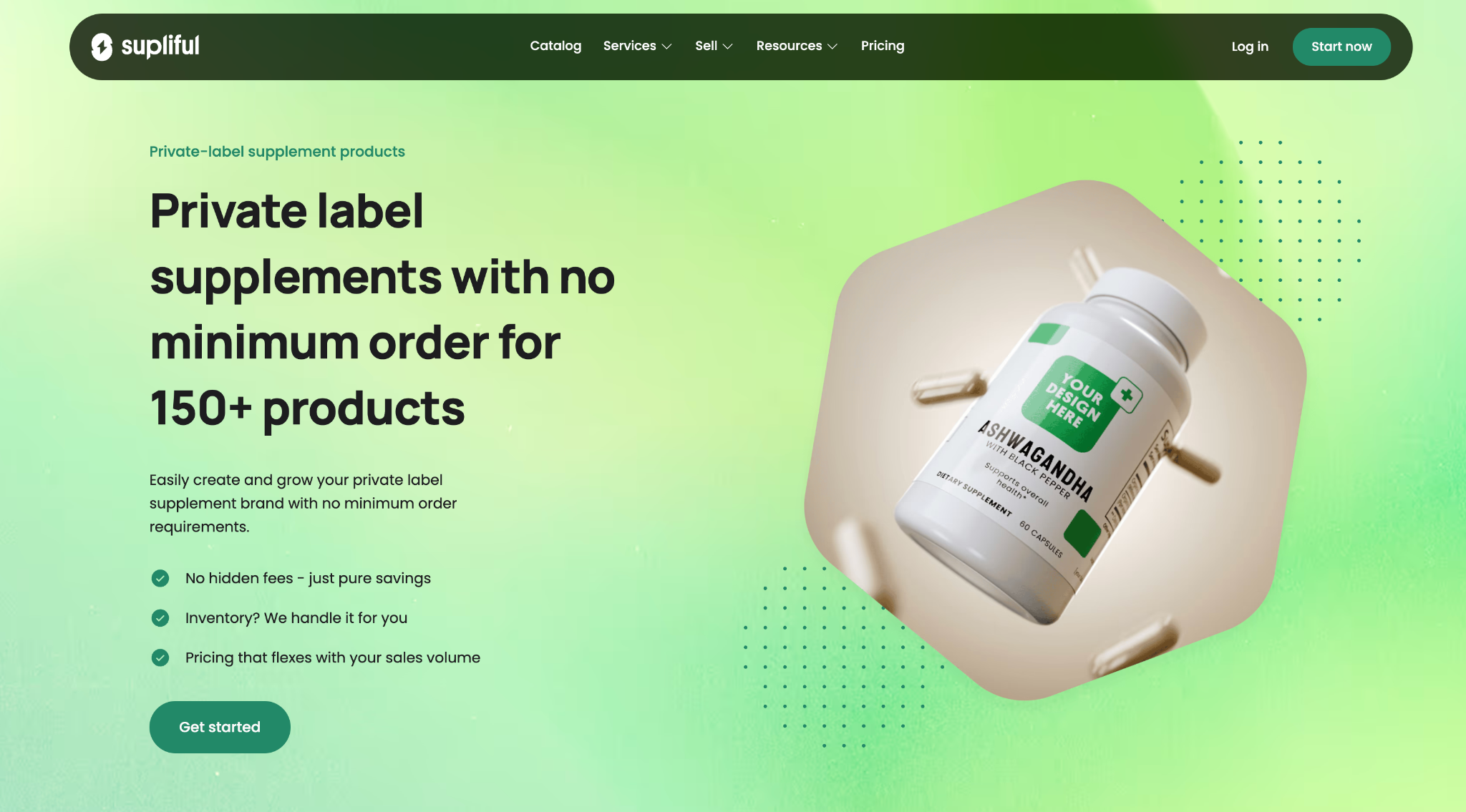
Platforms like Supliful have made entering the wellness market far more accessible, giving creators and entrepreneurs the opportunity to build a successful supplement dropshipping business under their own branding without worrying about minimum order quantities. What makes this model especially effective is that customer loyalty and brand identity stay with the creator rather than the supplier, creating a much stronger and more scalable business foundation than traditional dropshipping.
 This trend extends beyond supplements. White-label skincare, pet nutrition, functional beverages, and eco-friendly home products are all seeing similar platform-driven growth. What they share is the same underlying insight: customers increasingly buy from people and communities they trust, not from anonymous stores. Creator-backed brands have an inherent head start on that trust.
For ecommerce operators who don’t have a creator audience yet, the playbook is similar: build the audience through content, then monetize it with products that genuinely serve that audience. The white-label model dramatically lowers the barrier to doing that.
Automation and AI Are Reshaping Ecommerce
Running a lean ecommerce operation used to mean doing everything yourself or hiring a team. AI and automation tools have changed that calculus in ways that benefit independent operators disproportionately.
Product research and trend identification used to require hours of manual analysis. Tools like Minea, Exploding Topics, and AI-enhanced versions of traditional research platforms can surface emerging product opportunities in minutes, analyzing sales velocity, ad spend patterns, and social engagement signals.
Automated fulfillment and inventory sync eliminate one of the most tedious operational tasks in dropshipping – keeping your store inventory accurate across multiple suppliers. Platforms like AutoDS and Inventory Source handle this in real time, reducing the risk of selling out-of-stock products and damaging the customer experience.
AI-powered customer support has matured significantly. Modern chatbot systems, trained on your product catalog and return policies, can handle the majority of routine customer inquiries without human involvement. That frees up time for the high-value interactions – complaints, complex questions, relationship-building moments – that actually require a human.
Predictive analytics are increasingly accessible even to small operators. Understanding which customers are likely to churn, which products have seasonal demand curves, and which ad creatives tend to perform before you’ve spent significant budget on them – all of this is now within reach through tools that didn’t exist a few years ago.
AI-assisted content creation deserves mention, though with a caveat: the brands that use AI well treat it as a starting point, not an endpoint. Using AI to generate product descriptions, email sequences, or ad copy and then editing them for brand voice and accuracy is a genuine productivity multiplier. Using AI to publish unreviewed, generic content at scale is a fast path to damaging your brand’s credibility.
The cumulative effect of these tools is that a solo operator or small team can manage a dropshipping business at a scale that would have required a staff of ten even five years ago. That’s not a small advantage – it’s transformative for what’s possible with limited resources.
Common Mistakes That Prevent Ecommerce Scaling
Most dropshipping businesses don’t fail because the model is broken. They fail because of a handful of consistently repeated mistakes that compound over time.
Over-reliance on paid advertising. Paid ads are a growth lever, not a business foundation. Operators who funnel all their revenue back into ad spend without building organic traffic, email lists, or retention infrastructure are running on a treadmill – growth stops the moment they take their foot off the accelerator.
Weak or absent brand identity. A Shopify store with a free theme, stock photos, and a generic name is not a brand. Customers increasingly make buying decisions based on identity and trust, not just price. Investing in a coherent visual identity, a clear brand voice, and a compelling story around why you exist pays returns that compound over the entire life of the business.
Chasing trends without strategy. Launching a store around a viral product without thinking about what comes next is a recipe for a business with a six-month shelf life. Every product decision should serve the long-term positioning of the brand, not just the current trending sound on TikTok.
Neglecting product page quality. Most ecommerce product pages are genuinely bad. Thin descriptions, low-quality images, missing reviews, and no engagement with customer objections leave conversion rate on the table. A well-built product page – with multiple image angles, honest copy, structured FAQ content, and genuine social proof – can double conversion rates on the same traffic.
Ignoring SEO from the beginning is one of the most expensive mistakes an ecommerce brand can make. Search visibility compounds over time, so every month without a clear content and authority strategy puts a business further behind competitors already building momentum. A store that invests in topical authority during its first few months will typically be in a far stronger position by year one than a brand that waits until rising ad costs force it to focus on organic traffic. That’s why many growing ecommerce companies work with agencies like BrandLinkbuilding to strengthen their long-term search presence before customer acquisition becomes significantly more expensive.
No retention strategy. Acquiring a new customer costs five to seven times more than retaining an existing one. Yet most early-stage ecommerce operators have no email sequence for post-purchase follow-up, no loyalty mechanism, no reason for a customer to come back. Building even a basic retention infrastructure dramatically improves the economics of every customer you acquire.
Poor mobile UX. The majority of ecommerce traffic now comes from mobile devices. A store that works beautifully on desktop and barely functions on a phone is leaving a significant percentage of its potential revenue on the table. Mobile checkout friction, slow load times, and poorly formatted product images are conversion killers that are entirely within your control.
The pattern across all of these is the same: short-term thinking at the expense of long-term brand value. The operators who build durable businesses think like brand builders from the beginning, even when they’re still small.
What the Future of Ecommerce Will Look Like
Ecommerce is entering a phase where the operational and infrastructure barriers to entry are at historic lows, but the brand and community barriers to winning are higher than they’ve ever been. That’s a clarifying dynamic for anyone thinking seriously about where to focus.
Several trends will shape how successful ecommerce businesses are built over the next five years:
Creator-led brands will become the dominant new brand formation model. The trust deficit that plagues anonymous stores doesn’t exist when a creator with an engaged audience launches a product. Expect to see more of the largest new ecommerce brands emerge from creator communities rather than traditional retail or VC-backed startups.
Microbrands will proliferate. Not every successful ecommerce business needs to reach $100M in revenue. There’s a growing ecosystem of tightly focused brands doing $1–10M annually with lean teams, strong margins, and highly loyal customers. These microbrands are viable, sustainable, and increasingly the goal for a generation of independent operators.
Subscription commerce will continue to grow. Products with natural repurchase cycles – supplements, consumables, personal care, pet food – are natural candidates for subscription models that provide predictable revenue and deepen customer relationships. Brands that don’t have a subscription offering in these categories are leaving significant lifetime value on the table.
Hybrid dropshipping and private-label models will become standard. The dichotomy between pure dropshipping and fully owned product lines is dissolving. The most sophisticated operators already mix both: using dropshipping to test demand quickly, then transitioning to white-label or private-label for proven winners where they want tighter quality control and better margins.
Community-driven commerce will intensify. Brands with genuine communities – Discord servers, Facebook groups, Reddit presences, dedicated forums – have a distribution and retention asset that no algorithm can take away. The brands that invest in building community around shared interests, not just shared purchases, create the most defensible competitive position.
Underneath all of these trends is a consistent principle: the businesses that will matter in ecommerce over the next decade aren’t the ones with the cheapest products or the biggest ad budgets. They’re the ones that build genuine relationships with specific audiences and serve those audiences better than anyone else.
Dropshipping started as a fulfillment mechanism. It’s evolved into a business infrastructure – one that, when paired with smart branding, content, automation, and community, gives independent operators a legitimate path to building something that lasts.
That’s not a side hustle. That’s a real business.
Building an ecommerce brand in 2026 requires more than a supplier and a Shopify store – but it requires considerably less than most people assume. The barrier to entry has never been lower. The bar for what earns customer loyalty has never been higher. The operators who understand both of those things at once are the ones building the next generation of great ecommerce brands.