Tiles have long been the default choice for bathroom walls, and for good reason. They are durable, familiar, widely available, and suited to many wet-area applications. But contemporary bathroom design now offers a much broader material palette.
Choosing a bathroom wall finish is no longer just about colour, tile size, or pattern. Designers and homeowners also need to think about moisture resistance, long-term maintenance, installation time, visual continuity, cleaning requirements, and how the material will perform in daily use.
This is especially important in modern renovations, where people often want cleaner wall finishes, fewer grout lines, and faster project timelines without compromising the look of the space. From wall panels and acrylic sheets to laminate systems, composite materials, and rigid core products, there are now several alternatives that can support a more streamlined bathroom design.
No single material is right for every project. The best choice depends on the budget, design style, location of use, level of moisture exposure, and installation requirements. Understanding how each material performs makes it easier to select a bathroom wall finish that looks good, works hard, and suits the space over time.
Why Designers Are Looking Beyond Traditional Tiles
Tiles remain one of the most trusted bathroom wall finishes. They are durable, available in countless colours and formats, and familiar to designers, builders, and homeowners alike. For many bathrooms, they are still a strong and suitable choice.
However, tiles are no longer the only practical option. One of the main reasons designers are exploring alternatives is grout. In wet areas, grout lines can require regular cleaning and may become stained or discoloured over time. For projects where low maintenance is a priority, fewer joins and smoother wall surfaces can be appealing.
Installation is another consideration. Traditional tiling can be labour-intensive, particularly when the walls need detailed preparation, precise set-out, cutting, grouting, sealing, and curing time. In renovation projects, removing existing tiles can also add dust, noise, waste, repair work, and disruption before the new finish is installed.
This is where alternative bathroom wall materials become useful. They do not replace tiles in every situation, but they do give designers and homeowners more flexibility. Larger-format surfaces, panel systems, and other wall finishes can create a cleaner, more continuous look while helping reduce installation time in suitable projects.
In both residential and commercial interiors, renovation timelines now matter almost as much as aesthetics. Homeowners want bathrooms back in use sooner, while hotels, rentals, and other commercial properties often need durable finishes with minimal downtime. Looking beyond traditional tiles is not about dismissing them; it is about expanding the material palette to suit different design goals, budgets, and project constraints.
What Bathroom Wall Materials Need To Do
Bathroom wall materials need to perform technically as well as visually. A finish may look suitable in a showroom or concept image, but wet areas place extra demands on surfaces, joins, edges, and installation systems. The right material should support the design intent while also handling moisture, cleaning, movement, and daily use.
Moisture Resistance
Moisture resistance is one of the most important considerations for any bathroom wall finish. Surfaces in wet areas need to handle steam, splashes, condensation, and frequent cleaning without swelling, delaminating, staining, or allowing water to pass behind the surface.
The level of exposure matters. A shower wall has different performance demands from a vanity splashback or powder room wall. Bathrooms, laundries, wet rooms, and commercial changerooms all need materials that match the amount of direct water contact and humidity they will face.
Cleaning And Maintenance
Long-term maintenance should also influence material selection. Grout lines, porous finishes, deep texture, and complex joins can all make surfaces harder to clean, particularly in bathrooms that are used every day.
Smooth, easy-to-clean surfaces are often preferred in busy households, rental properties, hotels, and commercial bathrooms because they reduce the amount of time spent scrubbing joins and detailed surface areas. This does not mean every wall needs to be completely plain, but the material should suit the cleaning expectations of the space.
Installation Method
The way a material is installed can affect both the budget and the project timeline. Some bathroom wall finishes require specialist trades, detailed wall preparation, demolition, curing time, sealing, or multiple site visits. These steps may be necessary for certain designs, but they can add time and disruption.
Other materials can be installed more efficiently over suitable existing surfaces, provided the substrate is sound, level, dry, and compliant with relevant building requirements. This can be useful in renovation projects where reducing demolition and downtime is a priority.
Visual Continuity
Contemporary bathroom design often favours cleaner, more continuous wall planes. Larger sheets and panel systems can help achieve this by reducing the number of visible joins across the surface.
This visual continuity can make a bathroom feel calmer and more refined, especially in smaller spaces where too many grout lines or small-format patterns may feel busy. It can also support modern design styles that rely on simple surfaces, subtle texture, and a more seamless relationship between walls, fixtures, and fittings.
Bathroom Wall Panels
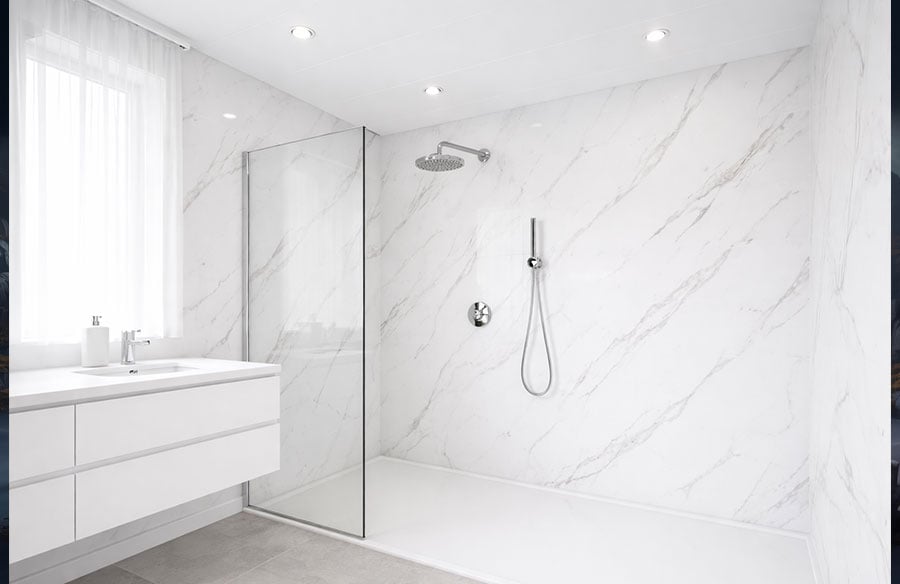
Bathroom wall panels are one of the more practical alternatives to traditional tiles in modern bathroom design. Depending on the material and installation system, they can be used to create a waterproof or water-resistant wall finish with fewer visible joins, which can help reduce the visual and maintenance issues often associated with grout-heavy surfaces.
Depending on the material type and installation system, wall panels can suit bathrooms, showers, laundries, wet rooms, and commercial wet areas. Their appeal often comes from the combination of surface performance and installation efficiency. In renovation settings, this can be especially valuable where the goal is to update the wall finish without adding unnecessary demolition, mess, or downtime.
PVC wet wall panels are commonly chosen because they balance water resistance, ease of handling, design variety, and installation speed. Australian supplier Wet Wall Works, for example, offers PVC panels that are 10mm thick, lightweight, and designed with tongue-and-groove edges to support a cleaner join between panels.
For projects where grout maintenance, installation time, or surface disruption is a concern, bathroom wall panels are increasingly being considered as a tile alternative for bathroom walls, especially in renovations where the existing structure is sound.
Wall panels are not a universal replacement for every tiled surface, but they can be a strong option when the design brief calls for a clean finish, simple maintenance, and a faster installation pathway. As with any wet-area material, the substrate, sealing, trims, and installation method all need to suit the application.
Acrylic And Solid Surface Sheets
Acrylic and solid surface sheets are often used when a bathroom design calls for a smooth, polished wall finish with fewer joins than traditional tiles. These materials can create a clean and contemporary look, particularly in showers, vanity zones, and bathrooms where visual simplicity is a priority.
Acrylic sheets are typically known for their glossy appearance and light-reflective quality. This can help make smaller bathrooms feel brighter and more open. Solid surface materials, depending on the product, can offer a more substantial feel and may be fabricated to suit specific design requirements.
The main consideration is cost and installation complexity. These materials can be more expensive than some other bathroom wall options, and the final result often depends on accurate measuring, correct fabrication, careful handling, and professional installation. They can be a strong choice for projects where the budget allows for a more refined sheet finish, but they may not suit every renovation brief.
Waterproof Paint and Microcement Finishes
Waterproof paint systems and microcement finishes can appeal to designers who want a minimal, continuous bathroom surface without the grid pattern of tiles. These finishes can create a soft, seamless look that works well in contemporary interiors, especially where the design goal is subtle texture rather than strong pattern.
Waterproof paint may suit selected bathroom walls, powder rooms, or low-splash areas, depending on the product system. Microcement can create a more architectural look, with a trowelled finish that feels refined and understated. It is often used in bathrooms where designers want the walls, floors, or vanity areas to feel visually connected.
However, these finishes depend heavily on correct preparation and application. The substrate must be suitable, the waterproofing system must be appropriate for the area, and the installer needs to understand how the finish performs in wet conditions. In direct shower zones, product specifications and local building requirements become especially important. A beautiful finish is only successful if the system behind it can manage moisture properly.
Natural Stone and Engineered Stone Slabs
Natural stone and engineered stone slabs offer a premium alternative to small-format bathroom tiles. Large slabs can create a dramatic wall surface with fewer joins, making them popular in luxury bathrooms, hotel interiors, and high-end residential projects.
Natural stone can bring depth, movement, and variation that is difficult to replicate exactly. Marble, limestone, travertine, and other stones can add strong visual character to a bathroom wall. Engineered stone and porcelain-style slab products can offer a more controlled appearance, with finishes designed to mimic natural materials while providing a more consistent surface.
The trade-off is practicality. Stone and slab materials can be heavy, costly, and more complex to install. Natural stone may also require sealing and ongoing care, depending on the type of stone and where it is used. These materials can be excellent for statement walls and carefully detailed bathrooms, but they need proper planning around weight, handling, substrate strength, sealing, and maintenance.
Compact Laminate and High-Pressure Laminate Systems
Compact laminate and high-pressure laminate systems are another option in bathroom and commercial interior design. These materials are often valued for durability, impact resistance, and the ability to create decorative finishes across larger wall areas.
In the right applications, laminate systems can work well for vanity walls, partitions, change rooms, and commercial washrooms. They are available in a wide range of colours and surface effects, including stone-look, timber-look, matte, and solid-colour finishes.
The key issue is wet-area suitability. Not every laminate product is designed for direct water exposure, and performance can depend on the core material, edge treatment, joining system, and installation method. Designers should always check manufacturer guidance before specifying laminate for bathrooms, particularly around showers, baths, and other high-moisture zones.
Decorative Timber-Look and Feature Wall Finishes
Timber-look finishes can add warmth to bathrooms that might otherwise feel too hard or clinical. They are often used around vanities, powder rooms, storage zones, or feature walls where the goal is to soften the space visually.
These finishes may include timber-look panels, decorative battens, veneer-style linings, or moisture-resistant decorative boards. They can work well when used carefully, especially in areas that are not exposed to direct water.
The limitation is moisture. Many timber, veneer, MDF, and decorative wall products are not suitable for shower walls or constantly wet areas unless they are specifically designed and rated for that purpose. In bathrooms, it is important to separate decorative wall lining from true wet-area wall systems. A timber-look feature can be a strong design choice, but it should be used where the material can perform safely over time.
How To Choose the Right Bathroom Wall Material
Choosing the right bathroom wall material starts with understanding where it will be used. A shower wall, bath surround, vanity splashback, powder room, laundry, hotel bathroom, or commercial changeroom will each place different demands on the surface.
The level of moisture exposure is the first major factor. Direct water contact requires a different material system from a wall that only deals with humidity or occasional splashes. Cleaning expectations also matter. In busy homes, rental properties, hotels, and commercial bathrooms, smooth and low-maintenance surfaces may be more practical than porous, textured, or grout-heavy finishes.
Installation should also influence the decision. Some materials require specialist trades, fabrication, curing time, demolition, or careful sealing. Others may offer a faster pathway when the existing substrate is sound, and the system is suitable for the application.
Finally, the material needs to support the design intent. A bathroom may call for a marble-look surface, a soft matte finish, a clean white wall, a high-gloss sheet, a stone-inspired texture, or a warm feature zone. The strongest material choice is the one that balances appearance, performance, maintenance, budget, and installation requirements.
The Future Of Bathroom Wall Finishes
Bathroom wall design is moving toward materials that combine visual flexibility with practical performance. Tiles will continue to have an important place in bathroom interiors, but they now sit alongside a wider range of alternatives.
Larger-format finishes, smooth wall systems, grout-reducing surfaces, lightweight panels, waterproof sheets, and decorative coatings all respond to the same broader shift: bathrooms need to look refined, perform under moisture, and suit modern renovation timelines.
This does not mean one material will replace every other option. Instead, designers and homeowners have more ways to match the wall finish to the project. A compact apartment bathroom, a hotel ensuite, a family laundry, and a luxury residential retreat may all need different solutions.
The future of bathroom wall materials is less about following one default choice and more about selecting the right system for the space. When moisture resistance, installation, maintenance, and design intent are considered together, bathroom walls can be both practical and visually resolved.