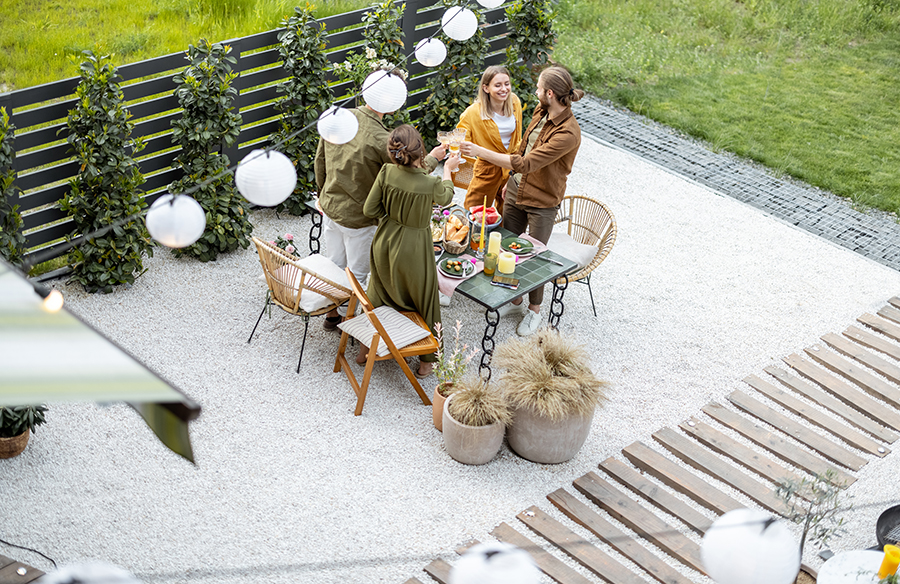
When you live in a small house, cottage, or cabin, every square foot matters, and so does every square foot just outside your door. The secret that seasoned small-home owners learn quickly is that your outdoor space isn’t separate from your living area; it’s an extension of it. Treat a porch, patio, or side yard like a proper room, and suddenly your 600-square-foot cabin feels twice its size.
Below are outdoor upgrades that look beautiful, work hard, and visually stretch a small home beyond its footprint. Each one is achievable on a modest budget and plays nicely with the rustic-meets-modern aesthetic most small homes are built around.
-
Create an Outdoor “Room” With a Defined Ceiling
The single fastest way to make a small home feel bigger is to give it another room outside. And the trick to making an outdoor area feel like a real room isn’t walls, it’s a ceiling.
A pergola, a stretched shade sail, or a well-placed umbrella instantly signals to your brain: this is a place to sit, eat, and linger. Without that overhead anchor, a patio reads as leftover yard. With it, the same slab of concrete becomes a dining room, a reading nook, or a morning-coffee spot.
For cabins and cottages in particular, a cantilever umbrella is a game-changer. It provides real shade without a center pole eating into your seating area, and it tucks neatly away when the weather turns. Homeowners working on bigger builds, guesthouses, or short-term rental properties often source a wholesale patio umbrella in a neutral tone so each unit blends with natural siding and landscaping rather than competing with it.
-
Blur the Line Between Inside and Out
Small homes feel biggest when the boundary between indoors and outdoors nearly disappears. There are a few simple moves that do this beautifully:
- Match your flooring. Carry a similar plank color, tile, or stained concrete from inside onto the porch or deck. The eye reads it as one continuous space.
- Align sightlines. Position an outdoor chair or bench directly across from an interior window so the view flows through the house and out the other side.
- Use the same palette. Repeat two or three accent colors (say, warm wood, matte black, and sage) on both sides of the door.
These small design choices collectively trick the eye into reading your 400-square-foot cottage plus porch as one 600-square-foot home.
-
Upgrade Shade Before You Upgrade Furniture
Most small-home owners make the same mistake: they buy patio furniture first, then wonder why nobody uses it. The answer is almost always sun exposure. A beautiful outdoor sofa is useless at 2 p.m. in July if there’s nowhere cool to sit.
Before you invest in a full outdoor living set, invest in a proper outdoor shade solution. Sail shades, retractable awnings, and oversized umbrellas all do the heavy lifting here. They drop surface temperatures noticeably, protect your furniture from UV damage, and frame the space so it actually feels like somewhere you want to be.
Bonus: shade structures add vertical architectural interest, which makes a low-slung cabin or cottage feel taller and more intentional from the curb.
-
Add Layered, Low-Voltage Lighting
Lighting is the most underrated small-home upgrade on the planet. A single porch bulb casts a harsh, flat glare and makes the outside of your home feel smaller after dark. Layered lighting does the opposite: it adds depth, and depth reads as space.
Aim for three layers outdoors:
- Overhead ambient. String lights across a pergola or between two trees.
- Mid-level task. Wall sconces beside the door and near seating.
- Low accent. Path lights or step lights that guide the eye outward.
When your eye can travel from the doorway all the way to the back of the yard via lit layers, your property feels dramatically larger than its actual boundary.
-
Go Vertical With Greenery
Horizontal planters eat up floor space; vertical gardens give it back. A narrow trellis with climbing jasmine, a wall-mounted herb planter, or a slim ladder shelf full of potted succulents all draw the eye upward, which makes any small home’s exterior feel loftier.
Vertical greenery also softens hard siding and foundation lines, which is particularly flattering on tiny houses and A-frames where the architecture can otherwise feel stark.
-
Choose Furniture That Earns Its Keep
In a small home, outdoor furniture has to multitask. Look for:
- Benches with hidden storage for cushions, tools, or firewood
- Folding bistro sets that tuck against a wall when not in use
- Nesting side tables that expand for guests and collapse for weekdays
- Ottomans that double as extra seating
Avoid bulky sectionals. They’re visual anchors that shrink a patio. Slim-profile, lifted-leg furniture lets the ground show through, which keeps the space feeling open.
-
Frame the View, Don’t Fight It
Most small homes, especially cabins and cottages, are built somewhere with a view worth looking at: trees, a lake, a ridge, a garden. Your outdoor upgrades should frame that view, not compete with it.
That means keeping railings slim, choosing neutral-toned shade structures, and positioning seating to face outward rather than inward. When the best view in the house is actually outside the house, your living space effectively extends all the way to the horizon.
Bringing It All Together
Making a small home feel bigger isn’t about adding square footage; it’s about adding perceived space. A defined outdoor ceiling, continuous flooring, layered lighting, vertical greenery, and smart shade all work together to push the visual boundaries of your home outward.
Start with shade, because nothing else works if no one wants to be out there. Then layer in lighting, greenery, and multi-tasking furniture. Within a weekend or two, your cabin, cottage, or tiny house will live a whole lot larger than its floor plan suggests, and you’ll have a beautiful, functional outdoor room to show for it.