Key Takeaways
- 3D lettering refers to physical letters that pop off the wall (think 20-150mm deep) – used on shopfronts, offices and exhibitions to create a shadow and really make an impact.
- Materials covered with acrylic, aluminium, stainless steel, PVC & foam – and all the lighting options like face lit, halo lit and edge lit configurations to boot.
- 3D letters work just as well indoors as they do outdoors, massively increasing visibility and brand recognition when you tailor them to your logo or typeface using vector artwork.
- Create projects from your own EPS, SVG or PDF files – or redraw them from low-res logos for a small artwork fee if you don’t have a vector file to hand.
- The process of making 3D letters is pretty straightforward really – design, material choice, fabrication, fixing system, installation and then some final checks for alignment and illumination to make sure everything is ship shape.
What Is 3D Lettering?
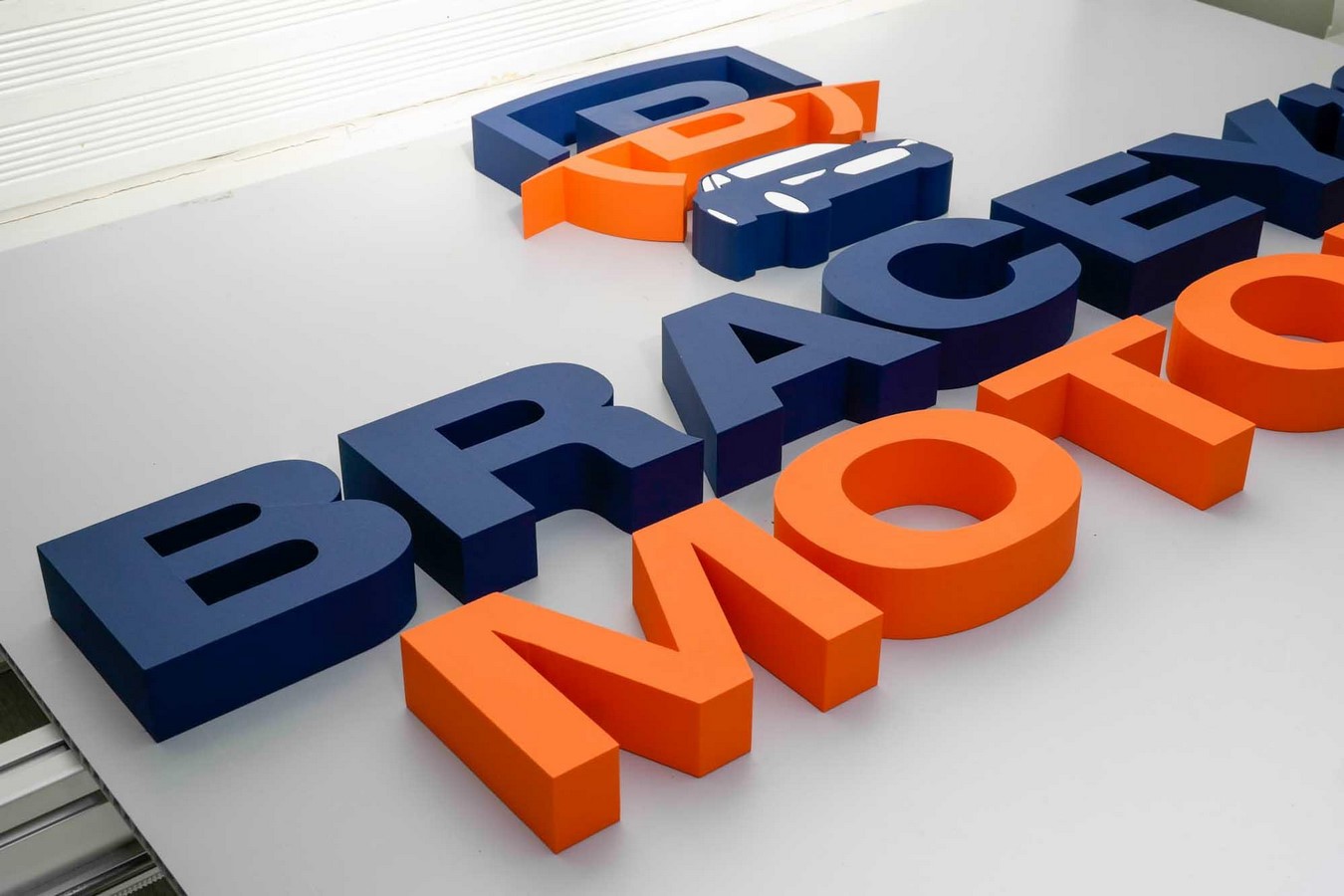
3D lettering is all about physical letters with real depth (usually 20-150mm) mounted on walls, shopfronts and interior spaces to create a way more engaging visual impact than flat vinyl or printed signs ever could. Unlike flat signs, these are proper built up forms with returns and faces that can be unlit or internally lit with super energy-efficient LEDs.
You see it on the high street all the time – big fascias for cafes and boutiques, reception signs since about 2015 and giant retail park signs visible from the road. We often get asked about related terms like “built up letters”, “channel letters”, “dimensional lettering” or “3D signage” – and the truth is, they all basically do the same job but with a bit of a different construction twist.
Modern 3D lettering is all about combining traditional sign-making skills (metal folding, routing and all that) with CNC cutting and LED tech for precision and durability. That’s how we create the really impactful 3D signs and 3D logos that elevate your brand presence and make a real statement.
 Why 3D Lettering Makes Brands Stand Out
3D lettering grabs attention way faster than flat signage and gives you a premium brand look. The visual impact comes from the depth creating natural shadow lines, sharper silhouettes and strong contrast that’s still legible in busy shopping centres.
But there’s a psychological thing going on too: dimensional letters just feel more permanent and trustworthy. That’s why law firms, clinics, hotels and established retailers love to use them to convey stability.
And let’s not forget about readability at a distance – it’s a lot better with raised letters. Good stroke width and thickness lets your message be read from 50 metres away or more, especially when paired with illumination.
3D lettering is pretty versatile too – it adapts to all sorts of brand personalities:
- Minimalist brushed metallic finishes for tech companies\
- Bold, oversized coloured acrylic for youth brands\
- Classic serif forms for professional services
Indoor vs Outdoor 3D Signage
The construction and materials used differ depending on whether you’re mounting them inside offices or sticking them on the exterior of buildings.
Outdoor use needs to be weather-resistant, which is why we use:
- Powder-coated aluminium and stainless steel\
- Sealed acrylic faces\
- IP-rated LED modules suited for UK and EU climates
Outdoor fascia letters are usually bigger (300-1000mm high), deeper and often lit up to be legible at night in the city.
Indoor use lets us use lighter options:
- Acrylic, PVC foam or painted polystyrene\
- Ideal for reception walls, meeting rooms and trade show stands
The installation method differs too. Outdoor signs might use rail systems, locator studs or tray panels, while indoor letters often use concealed locators or adhesive for a floating effect on the wall.
Materials and Finishes for 3D Signs
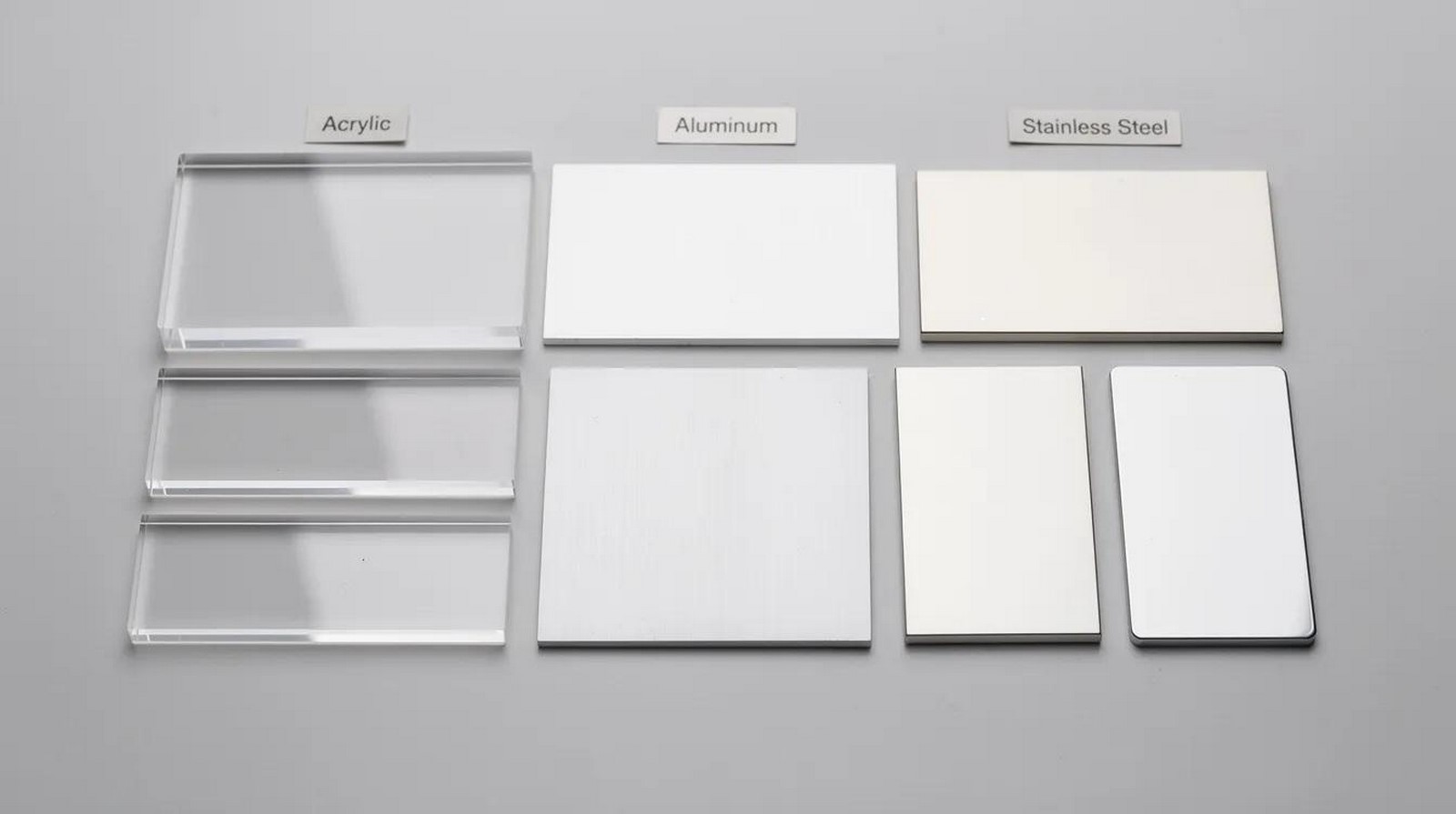
Choosing the right material makes a huge difference when it comes to weight, durability, cost and style. Here’s a quick comparison of the main materials we use:
| Material | Best For | Key Features |
| Acrylic | Face-lit letters, modern interiors | Range of colour options, 3–10 mm thickness, eye catching finishes |
| Aluminium | Large exterior letters | Lightweight, corrosion-resistant, RAL powder coating available |
| Stainless Steel | Hotels, banks, luxury retail | Mirror polish or brushed finish, premium quality |
| PVC Foam | Temporary displays, events | Budget-friendly, lightweight, easy to install |
| Polystyrene | Short-term campaigns | Low cost, simple shape cutting |
| Different materials create different impressions. Stainless steel suggests permanence; acrylic offers vibrant colour; aluminium balances durability with affordability. |
 Lighting Options: Face-Lit, Halo-Lit, and More – The Options are Endless
LED lighting has revolutionised illuminated letters, giving brands and businesses the chance to create the perfect illumination style to match their brand’s vibe and needs.
Face illumination: LEDs are inside the letter body, and shine through the acrylic face, producing bright, bold colours. Perfect for restaurants, retail shops, and gyms that need high visibility.
Halo (backlit) letters: Solid metal or opaque faces, with LEDs shining onto the wall behind, create a soft glow. It’s a premium look that’s super popular with hotels and high-end venues.
Edge-lit or combination effects: Light coming from the edges of the letters, or a mix of face and halo illumination, can create some amazing night-time visuals.
When you’re choosing lighting, there are a few things to think about:
- What’s the ambient light like in your location?\
- How long are you open for? (day-only or late-night?)\
- Are there any local regulations on brightness and light spill that you need to stick to?
From Initial Artwork to Finished 3D Letters: Here’s What to Expect
The journey from logo file to installed 3D lettering looks like this:
- Artwork submission: Send over your vector artwork (EPS, AI, SVG, or high-res PDF). If you’ve only got JPEG or PNG, don’t worry – we can redo the artwork for a small fee.
- Design spec conversation: We’ll confirm the letter height, depth, font, material, colour (including RAL or Pantone references), and illumination type.
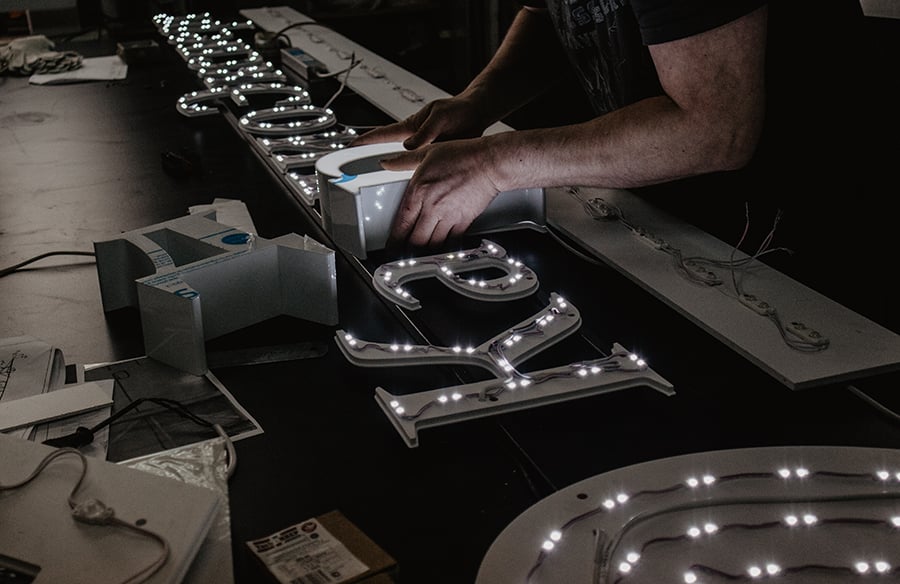
- Fabrication time: We’ll cut faces, bend returns, weld or bond, sand, paint or powder-coat, and wire up the LEDs.
- Pre-install checks: We’ll test the lighting, check the colour is spot-on, prep the mounting templates, and pack up the fixings with clear instructions.
- Installation day: We’ll mount using the right fixing systems for the job.
Production usually takes around 10-20 working days, depending on how complex the job is.
Design Tips and Common 3D Lettering Mistakes to Watch Out For
Here are some guidelines to help designers and business owners avoid any costly mistakes:
Get legibility right first: Avoid using ultra-thin scripts for small external letters. Keep the stroke width and spacing good so the LED lighting shines evenly and doesn’t create harsh edges.
Contrast is key: Colours need to stand out against the background materials – brick, glass, or cladding, for instance. If they’re too close in tone, readability suffers and your investment goes to waste.
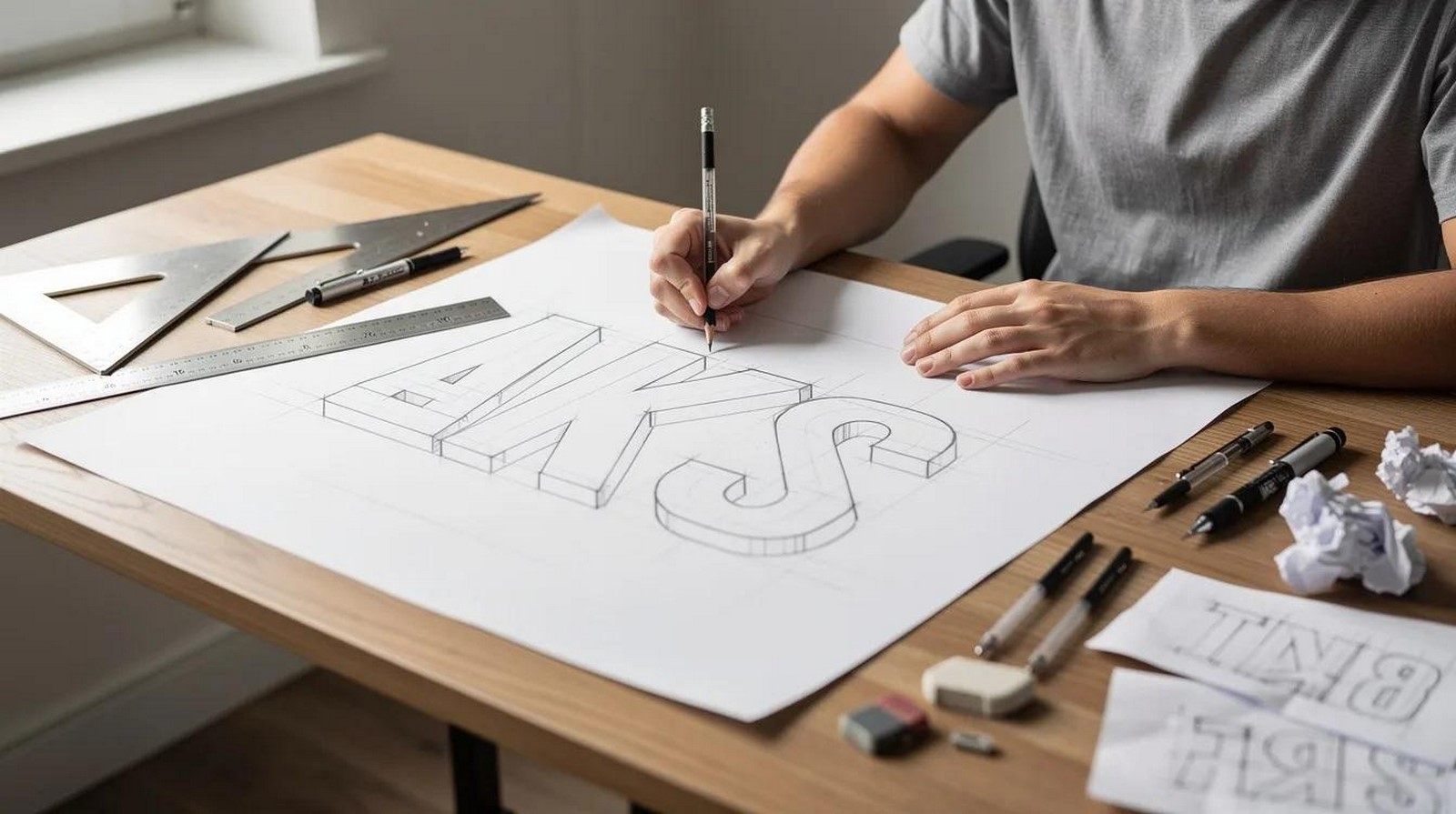
Mock-ups are crucial: Create letters with believable shading and light direction so your clients get a good idea of what it’ll look like in real life. Don’t forget to think about the vanishing point when you’re creating perspective views.
 3D Lettering for Different Applications – It’s Not One-Size-Fits-All
3D lettering is super versatile, but each environment has its own priorities:
- Business fascias: High-visibility letters for shop fronts, salons, and clinics that need to be visible from a distance and still pack a punch at night.\
- Interior branding: Reception logos, feature walls in co-working space, and directional signage using non-illuminated or softly lit letters.\
- Events and exhibitions: Lightweight foam or acrylic letters for trade fair stands that need to be easy to set up and take down.\
- Hospitality and leisure: Illuminated lettering for hotels, cinemas, and gyms that need to last the distance and look great all day long.
Step-by-Step: Creating Your 3D Lettering Artwork
For designers preparing files for fabrication:
- Set up your artboard at scale with clear dimensions, showing the final letter height and depth. Use a pencil sketch first to get the basic shape right before you digitise.
- Convert fonts to outlines, clean up the paths, and make sure the minimum stroke thickness is good enough for manufacturing. Curves and lines need to be production-ready.
- Create separate layers: Use perspective and shadow layers for digital visuals, but keep your flat vectors separate for the production team.
- Add all the specs: Label your colours, note the material types, and indicate the fixing positions.
- Export correctly: Send over complete files in formats that produce consistent results across fabrication equipment.
Exploring 3D Lettering Styles and Trends – 3D lettering styles in branding have come a long way since 2020:
Minimal geometric forms went mainstream: Tech, fintech and SaaS offices have been copying the clean lines and precise typography of matte finishes since 2020. Imagine a world with nothing but minimalist squares – that’s basically what’s been happening.
Bold playful shapes exploded in 2023-2026: Gradients inspired by 3D illustration are all over the web and now are being used in brick and mortar signs for creative businesses – great for making a statement.
Retro neon-inspired letters made a comeback: Combine vintage shapes with modern LED lighting and you’ve got the look that’s perfect for bars, food halls, and creative studios. It’s industrial-meets-nostalgia.
Hybrid approaches are working well: Think metallic halo-lit logos paired with flat wayfinding graphics – this creates a hierarchy and focuses the eye across a space. Works great for comprehensive wayfinding systems.
The Care of 3D Lettering
You’d be amazed how many years a well-made 3D sign can last – as long as you put in the effort to take care of it.
Basic upkeep: Clean your signs with a soft cloth and mild detergent. Avoid anything that might damage the finish, especially solvents.
LED lifespan: Thirty thousand to Fifty thousand hours is the number you’re looking at – once it starts to dim or patchy light becomes an issue, it’s probably time to swap out the modules.
Spot checks: After a big storm or extreme temperature change, grab a ladder and inspect the fixings on your exterior signs. Your local sign shop will probably tell you to do this at least once a year.
Keep records: Store everything you need to know – materials, colours, technical drawings – all of that. When you need to replace something, it makes life a lot easier.
The payoff is clear – good quality 3d signage is a one-off investment that’ll last you a long time, rather than some boring expense that keeps adding up.
Frequently Asked Questions
How long do outdoor 3D letters last?
If you get high-quality aluminium or stainless steel and a good finish – plus sealed LED lights – you can expect 8 to 10 years in the great outdoors with a little TLC. Acrylic and PVC might start to look a bit worn to be honest, but they’ll still be fine structurally. Get yourself a good supplier who does the weather-resistance thing right.
What kind of file do I need to supply for 3D lettering?
Vector files are what you’re after – EPS, AI, SVG, or a high-res PDF would be perfect. They’re the ones that let you cut and scale without losing any quality. If all you’ve got is a bitmap (JPEG or PNG), just redraw the thing in vector format – there will be a small extra charge for that, of course.
Can I get 3D letters on glass, cladding or uneven brick walls?
You can – but how you get them on there depends on the surface. Some signs will work with stand-offs and adhesives, some will need special rails, and some will need a bit of extra care to be held in place. A site visit or a good look at some photos will give you the lowdown.
How long does it take to make custom 3D lettering?
Once you’ve got the design, materials and finishes sorted, it’s usually 10-20 working days before you can get your hands on your new signs. Larger, more complicated projects might take a bit longer to get sorted.
Can I use 3D lettering for a temporary event or pop-up?
You can, and you should – lightweight stuff like foam, PVC or smaller acrylic letters are great for popping up in exhibitions or shops and can be reused loads of times when treated decently. The ROI is really good on those marketing budgets, especially if you use them again and again.