You don’t need to understand music theory to feel when something sounds right. That gap between intuition and execution is exactly where tools like AI Music Generator begin to matter. For many creators, the problem is not a lack of ideas, but the friction between imagination and production. In my observation, this is where text-driven music systems quietly shift the creative process—from technical construction to expressive direction.
Instead of asking how to compose, users begin by describing what they want to hear. That shift may sound subtle, but it fundamentally changes who gets to participate in music creation.
 How Text-Based Music Creation Reframes Creative Entry
Traditional music production requires layers of knowledge—composition, arrangement, mixing, and sound design. Each layer introduces its own learning curve. Text-based systems bypass that sequence entirely.
From Technical Steps to Descriptive Thinking
Rather than assembling tracks manually, users describe:
- emotional tone
- stylistic direction
- instrumentation
- pacing and intensity
The system interprets these inputs and maps them to musical structure. This reduces the barrier from “how do I build this” to “how should this feel.”
Why This Shift Matters for Non-Musicians
For creators outside traditional music backgrounds—designers, marketers, content creators—this approach aligns more naturally with how they already think. They are not trying to become composers. They are trying to express mood, narrative, or brand identity.
In my tests, this translation layer feels more intuitive than expected, though the quality still depends heavily on how clearly the prompt is written.
How the System Interprets Your Input Internally
The platform does not treat your text as a single instruction. It breaks it into multiple musical components before generating output.
Core Elements Extracted from Prompts
When you input a description, the system appears to parse:
- genre classification
- tempo range
- harmonic complexity
- vocal presence or absence
- instrumental texture
Each element influences different parts of the composition pipeline. This is why two prompts with similar wording can still produce noticeably different results.
Layered Generation Instead of Single Output
Rather than generating a flat audio file, the system constructs:
- structural framework (intro, verse, chorus)
- melodic patterns
- rhythmic backbone
- vocal interpretation (if enabled)
This layered approach is likely why later model versions feel more cohesive, especially in transitions.
What Changes When You Use Text to Music Directly
The second interaction mode—Text to Music—introduces a slightly different creative dynamic. Instead of guiding the system loosely, you provide more structured input such as lyrics or defined sections.
Structured Inputs Lead to Predictable Output
When you include lyrics or section markers like:
- [Verse]
- [Chorus]
- [Bridge]
the system aligns musical transitions with your structure. In my observation, this improves narrative consistency but reduces spontaneity.
Trade-Off Between Control and Discovery
There is a noticeable trade-off:
| Input Style | Strength | Limitation |
| Free description | More surprising results | Less predictable structure |
| Structured input | Better alignment with intent | Less creative variation |
Choosing between them depends on whether you want exploration or precision.
 How the Generation Workflow Actually Feels in Practice
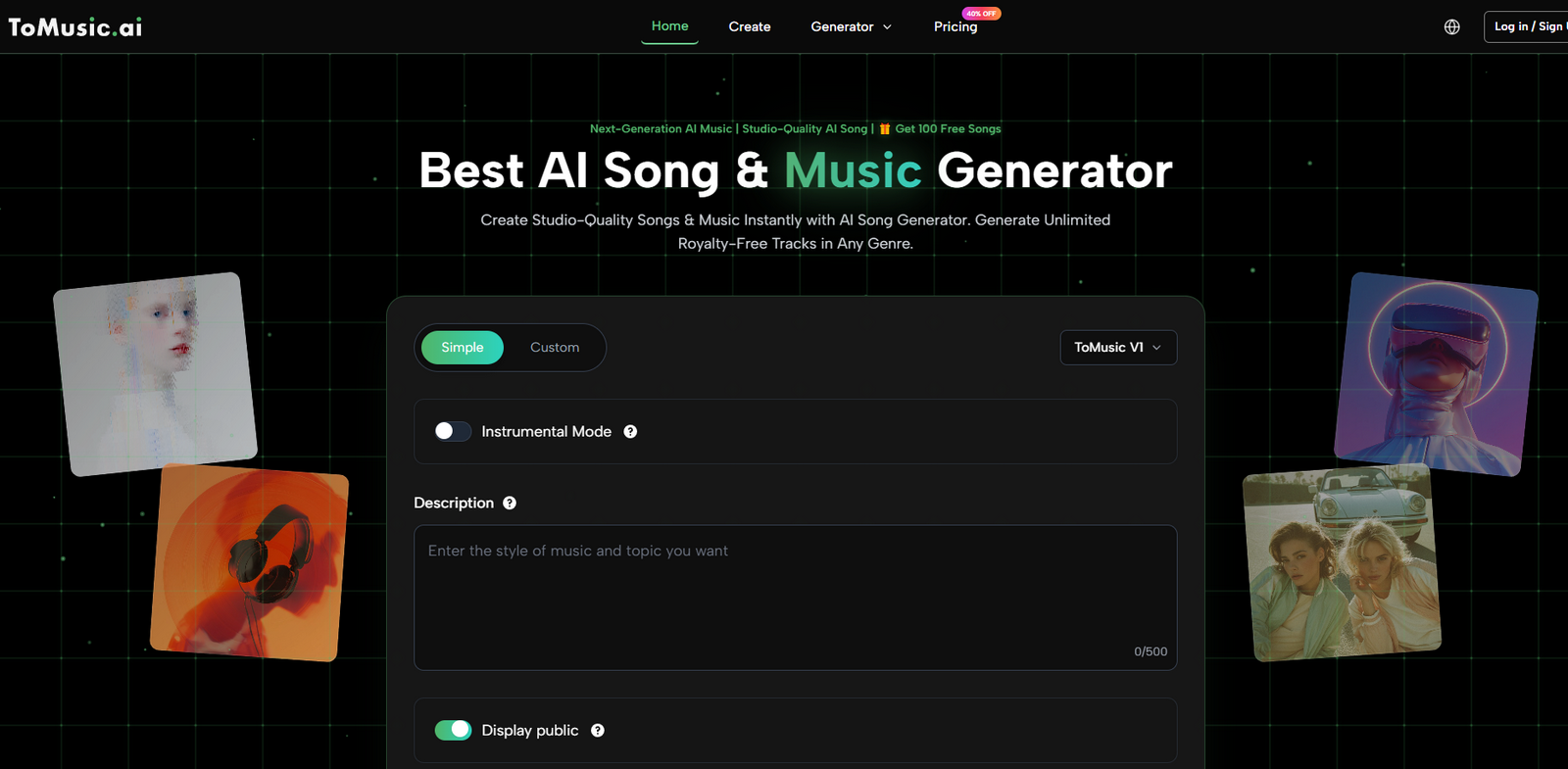
The platform workflow is relatively minimal, which is part of its appeal.
Step 1: Choose Model and Mode
You select between available model versions and decide:
- text-only generation
- lyric-based generation
- instrumental-only output
Different models appear to emphasize realism, complexity, or speed.
Step 2: Describe or Define the Music
You either:
- write a descriptive prompt
- input lyrics with optional structure
This step determines most of the outcome quality.
Step 3: Generate and Review Output
The system produces a full track, typically within a short waiting period. If the result does not match expectations, you iterate by adjusting the prompt rather than editing the audio directly.
This loop—describe, generate, refine—becomes the primary creative workflow.
How Different Model Versions Influence Results
The presence of multiple model versions is not just a technical detail—it changes how the system behaves.
Observed Differences Across Versions
| Model Version | Observed Strength | Suitable Use Case |
| V1 | Fast and stable | Quick drafts |
| V2 | Longer compositions, smoother flow | Ambient or cinematic tracks |
| V3 | Richer rhythm and layering | Complex arrangements |
| V4 | More expressive vocals | Song-focused generation |
In practice, switching models can sometimes improve results more than rewriting prompts.
Where This Approach Works Particularly Well
Text-based music generation is not universally better—it is context-dependent.
Content Creation and Short-Form Media
For short videos, ads, and social media content, speed matters more than perfection. The ability to generate usable audio quickly becomes a practical advantage.
Prototyping Ideas Without Commitment
Writers, filmmakers, and designers can test mood directions without investing in full production. The system acts more like a sketch tool than a final production environment.
Exploring Variations Rapidly
Instead of editing a single track, you generate multiple alternatives. This changes the creative process from refinement to selection.
Limitations That Still Matter in Real Use
Despite its flexibility, the system is not without constraints.
Prompt Sensitivity
Small changes in wording can significantly alter results. This makes consistency difficult when trying to reproduce a specific sound.
Limited Post-Generation Editing
Once a track is generated, you cannot easily adjust individual elements. Iteration requires regeneration rather than modification.
Occasional Vocal Artifacts
In some cases, especially with complex lyrics, vocal clarity may vary. This is more noticeable in longer compositions.
These limitations suggest that the tool is best used as a generation engine rather than a full production suite.
How This Changes the Role of the Creator
The most interesting shift is not technical—it is conceptual.
 From Builder to Director
Instead of assembling music piece by piece, the creator defines intent and evaluates outcomes. The skill moves from execution to articulation.
From Single Output to Iterative Selection
Rather than perfecting one track, users generate multiple versions and choose the one that fits best. This aligns more with design thinking than traditional music production.
What This Means for the Future of Music Creation
Text-driven systems do not replace traditional tools. They introduce a parallel workflow—one that prioritizes speed, accessibility, and conceptual clarity.
In my view, their real impact is not in producing perfect music, but in expanding who can participate in the process. When describing a sound becomes enough to create it, the boundary between listener and creator starts to blur.