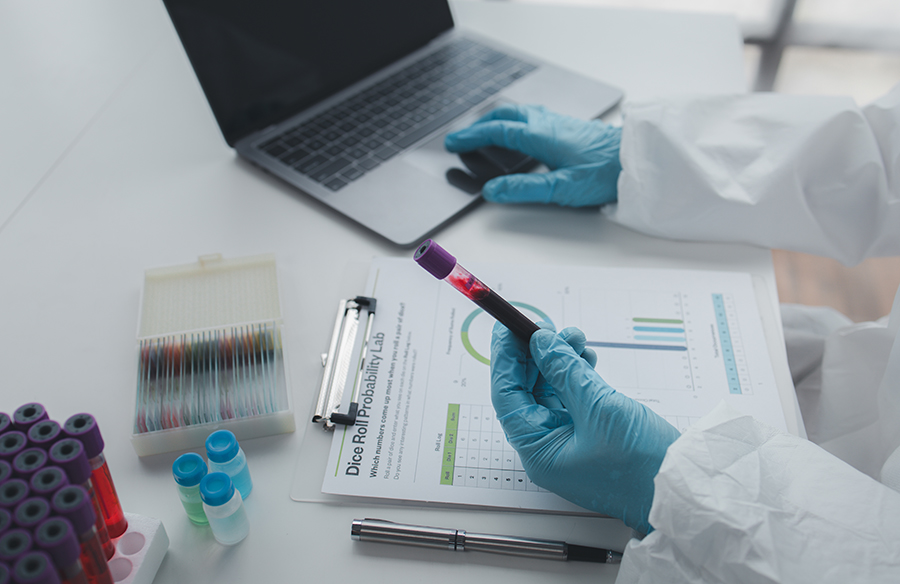
There is a version of the pathology lab that has existed largely unchanged for decades. Paper requisitions. Manual specimen logs. Results faxed to physician offices. Pathologists working through physical slide trays with no real-time view of what else is moving through the lab. It is not a broken system, exactly. For a long time, it was just the system. But that version of the lab is disappearing, and the pace at which it is being replaced by something more connected, more automated, and more data-driven has accelerated dramatically in recent years.
Labs that have committed to digitalization are not just running the same operation with shinier tools. They are fundamentally changing how work moves through the organization, how decisions get made, and what they are able to offer to the clinicians and patients depending on them. Understanding what that shift looks like, and what is driving it, matters for anyone with a stake in how diagnostics operates.
The Problems That Made Change Inevitable
Pathology labs were already under pressure before the technology conversation caught up with them. Reimbursement rates have been squeezed for years. Staffing has gotten harder as the workforce pipeline struggles to keep pace with demand. Case volumes, driven by an aging population and expanding clinical applications for pathology, keep climbing. All of this was happening while many labs were still running on systems and processes designed for a much simpler operating environment.
The cracks showed up in predictable places. Turnaround times crept up during high-volume periods because there was no good way to redistribute workload dynamically. Quality issues were discovered after the fact rather than caught in progress. Billing errors accumulated because clinical information and financial data were living in separate systems that did not communicate. Administrative staff spent chunks of their day doing manual data entry that should not have required human involvement at all.
None of these problems are unique to pathology. They are the problems that digitalization solves across industries, and labs that have invested in the right technology have found that the return on that investment shows up in real operational metrics.
Lab Information Systems as the Foundation
If you talk to people who have led successful digital transformations in pathology labs, one theme comes up consistently: none of it works without the right foundation, and that foundation is a modern laboratory information system. A lab information system is the platform that manages specimen tracking, case assignment, workflow coordination, results documentation, and reporting. In a digitalized lab, it is also the hub through which everything else connects.
Older LIS platforms, and there are still plenty of them in active use, were built for a different era. They managed data well enough within the lab itself but were not designed to integrate broadly with EHRs, digital imaging platforms, molecular testing systems, or the analytics tools that modern lab management requires. Working around their limitations became a full-time job for lab IT staff and a source of ongoing friction for everyone else.
Modern laboratory information systems are built differently. They are cloud-based, which means they scale with the lab rather than requiring hardware upgrades every time volume increases. They integrate with EHRs, billing platforms, laboratory instruments, and digital pathology systems through standard interoperability protocols, which means data flows where it needs to go without manual intervention. They include real-time analytics dashboards that give lab directors visibility into what is happening across the operation at any given moment.
For labs making the transition from legacy platforms to modern LIS software, the change in day-to-day experience is significant. Cases that used to require staff to touch multiple systems to move through the workflow now move through one. Reports that used to be manually reformatted to match different clients’ preferences are now generated automatically from templates. Physicians who used to receive results by fax now get them directly in their EHR in real time. These are not marginal improvements. They change the fundamental rhythm of how the lab operates.
Going Paperless Is Bigger Than It Sounds
One of the early milestones in lab digitalization is eliminating paper from core workflows, and it is a bigger deal than it might seem on the surface. Paper is not just inefficient. It is a risk factor. A paper requisition that gets misread creates a wrong result. A manual specimen log that gets a transcription error creates a tracking problem. A paper-based quality control process that requires a signature produces an audit trail that is difficult to search and easy to lose.
Digital requisitioning, electronic specimen tracking, and automated documentation replace all of this with processes that are faster, searchable, auditable, and significantly less vulnerable to human error at the data entry level. When a specimen is received, it is logged electronically, barcoded, and tracked from that point forward without anyone having to manually update a paper record. When a quality issue arises, the full history of that specimen is available instantly rather than requiring someone to pull physical records.
Labs that have gone paperless also find that the transition surfaces problems that were previously invisible. When everything is tracked digitally, it becomes much easier to see where cases are getting delayed, where errors are originating, and which steps in the workflow are consuming more time than they should. That visibility is uncomfortable at first but quickly becomes one of the most valuable things digitalization delivers.
Digital Pathology Changes the Diagnostic Conversation
Beyond the operational infrastructure, many labs are making a second and equally significant commitment: converting their diagnostic review process from physical glass slides to digital whole slide images. This is what most people mean when they talk about digital pathology specifically, as opposed to lab digitalization more broadly.
The implications are significant. When slides exist as digital files rather than physical glass, they can be shared instantly. A pathologist working remotely can review the same case as a colleague in the lab without anyone having to ship anything. A subspecialist at an academic center can consult on a complex case from a community hospital without either party leaving their desk. Cases that previously required days of coordination for a second opinion can be turned around in hours.
Digital pathology also creates a bridge to AI-assisted diagnostic tools. These algorithms require digital images to function, and labs that have digitized their slide library are building a dataset that supports both current AI applications and whatever comes next. The labs that will be positioned to take full advantage of AI in pathology five years from now are largely the ones that are building their digital imaging infrastructure today.
Connectivity with the Rest of Healthcare
A lab that has digitalized its internal operations but cannot connect reliably to the health systems around it has only solved half the problem. The clinical value of fast, accurate pathology results depends on those results reaching the people who need to act on them quickly and through the channels they already use.
Modern laboratory technology puts real interoperability within reach. Labs using current LIS platforms can send results directly into physician EHRs the moment a report is finalized. Critical values can trigger automated alerts rather than requiring a technician to make phone calls. Ordering can happen electronically, with requisition data flowing directly into the lab system without manual re-entry. Billing information can be captured at the point of care and submitted automatically rather than reconstructed from paper records after the fact.
For health systems evaluating which lab partners to work with, connectivity has become a meaningful criterion. A lab that delivers results directly into the clinical workflow is a better partner than one that requires manual reconciliation. Labs that have invested in interoperability are finding that it is not just an operational improvement but a competitive one.
The Human Side of Digitalization
One thing that gets underplayed in conversations about lab technology is the impact on the people doing the work. Pathology lab staff, from histotechnicians to pathologists to billing coordinators, spend their careers navigating the tools their labs provide. A poorly designed system is not just inefficient at an abstract level. It is tiring to use. It creates friction on every task. Over time, that friction contributes to the kind of burnout that the healthcare field is already struggling with.
Well-designed digital tools do the opposite. When a pathologist can review a case, add notes, consult a colleague on a digital image, and release a report without jumping between systems or fighting an interface designed two decades ago, the experience of doing the job is genuinely better. When a histotech can track specimens, manage workload, and document processes without paper-based workarounds, they can focus more of their energy on the work itself.
This matters for recruitment and retention at a time when both are real challenges across laboratory medicine. Labs that can offer a modern, well-integrated technology environment have something meaningful to offer prospective staff beyond salary and benefits.
Where the Momentum Is Going
Digitalization in pathology labs is not a project with a finish line. It is an ongoing commitment to operating at the level the technology and the clinical environment make possible. The labs that are furthest along in this journey are not done. They are testing AI diagnostic tools, expanding their digital pathology capabilities, integrating molecular workflows more tightly into their LIS environments, and building the data infrastructure that will support whatever comes next.
For labs that are earlier in this process, the good news is that the path is clearer than it has ever been. Modern laboratory information systems are more capable and more accessible than the previous generation. The case for going digital is made every day by the labs that have done it and are not looking back.
The glass slides are not entirely gone yet. But the labs that will be leading the field in a decade are the ones investing in what replaces them today.