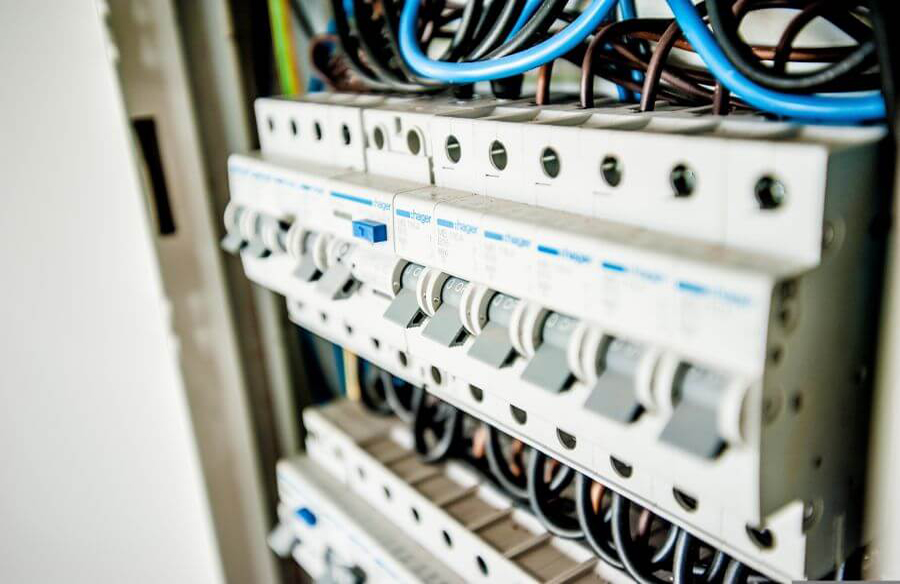
A poorly wired control panel is not just a technical problem. It is a time bomb. Yet every day, in industrial facilities, panels are assembled carelessly, connections made without method, components installed without regard for code. The consequences are familiar: intermittent faults that resist diagnosis, production downtime, and in the worst cases, fire. For any qualified installer or panel builder, mastering correct wiring practice is not optional. It is the baseline of professional competence.
Tools and Materials Needed to Wire a Control Panel
Before touching a single conductor, the workbench must be fully equipped. This is not a matter of convenience. It is a matter of precision. A wire stripped with an uncalibrated tool, a crimp made with the wrong instrument, a connection never verified with a multimeter: each compromise compounds and produces a panel that underperforms from day one.
The essential tools are specific: quality wire strippers with adjustable depth, a ferrule crimping tool, cable cutters, and a digital multimeter with continuity and insulation resistance functions. Materials include the DIN rail for component mounting, terminal blocks, conductors sized correctly for the load, identification labels, and printed wiring diagrams available throughout the entire job. The electrical drawing is not an accessory. It is the reference document that separates professional wiring from guesswork.
How to Read a Wiring Schematic Before You Start
Wiring schematics intimidate those who have never studied them. But once the logic is understood, they become the most powerful tool an installer can have. A schematic does not describe how a panel is physically built. It describes how it works. That distinction changes everything.
In line diagrams, power circuits run vertically from supply to load, making the path of energy immediately readable. In ladder diagrams, control logic develops horizontally, with conditions on the left and commands on the right. Knowing how to distinguish the power circuit from the control circuit is fundamental. Confusing them during wiring produces short circuits that no preliminary test can anticipate. The symbols are learned in a few hours. The discipline of following the schematic without interpreting it takes practice.
Step-by-Step Guide to Wiring a Control Panel from Scratch
Wiring a control panel is a sequential process. Each phase prepares the next, and skipping a step means going back, in the best case.
It begins with the physical layout of components on the DIN rail: breakers, contactors, relays, terminal blocks, PLCs. Before tightening any screw, verify that there is sufficient space for cabling and for future maintenance. A panel in which a contactor cannot be replaced without dismantling half the installation is a poorly designed panel.
Then comes the power circuit: the large-section conductors that carry supply to the loads. Only after that does the control circuit wiring follow, with the smaller conductors. This order is not arbitrary: power cables define the routing paths, control cables adapt around them. On every terminal, before tightening the screw, the ferrule is applied. Finally, everything is labeled systematically, with direct reference to the schematic. A panel without labels is a panel no technician will be able to maintain five years from now.
Wire Ferrules and Terminal Connections: Why They Matter
There is a component that many installers treat as secondary and that instead determines the quality of the entire installation: the ferrule. This small tinned copper terminal, with its color-coded insulating sleeve, transforms a flexible conductor into a mechanically stable termination that does not fray under screw pressure and does not increase contact resistance over time.
Choosing the right ferrule is not optional. The cross-section must match the conductor exactly: an oversized ferrule that is not properly crimped leaves room for movement, an undersized one can crush and damage the strands. For connections where two conductors share a single terminal, twin ferrules eliminate the risk of unstable connections without adding intermediate terminal blocks. Cembre wire ferrules, pre-insulated in PA6 for flexible copper conductors, are engineered to deliver the mechanical retention and oxidation protection that a professional connection demands. Crimping must be performed with a dedicated tool, never with generic pliers: the deformation must be uniform and controlled around the entire ferrule circumference.
Testing and Commissioning Your Control Panel
A finished panel is not a ready panel. Before energizing, every connection must be verified, every circuit tested, and every function commissioned with documented method.
The first test is the continuity check: every conductor is verified between the origin and destination points shown on the schematic. Then insulation resistance is measured between active conductors and earth: low values indicate damaged insulation that will become faults under voltage. Only after these preliminary tests does functional testing proceed with the panel energized, verifying sequence by sequence that the control logic responds as specified by the design. Safety circuits, emergency stops, thermal protections, interlocks, are tested last and documented individually. The commissioning report is not bureaucracy. It is the professional signature on the work completed.
Safety Standards and Codes You Need to Follow
Wiring a control panel without knowing the applicable standards is not a shortcut. It is a legal and safety risk with potentially serious consequences. In the United States, industrial control panels must comply with UL 508A, which defines construction, protection, and labeling requirements for industrial control panels. Internationally, IEC 61439 governs low-voltage switchgear assemblies with stricter criteria for design verification and type testing.
The National Electrical Code is the reference for all electrical installations in the USA: conductor sizing, clearance requirements, grounding and bonding specifications. Lockout/tagout procedures are not recommendations. They are legal obligations in any work environment where energized equipment is involved. Those who disregard them put themselves and everyone else working in the same installation at risk. Technical competence and regulatory compliance are not alternatives to each other. They are two sides of the same professionalism.