
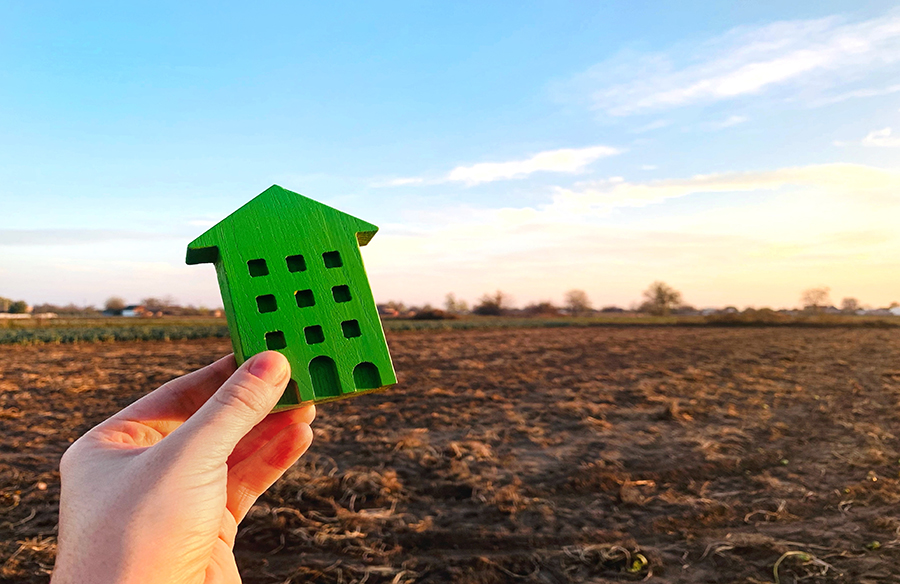
There is a particular challenge in presenting land. Unlike a completed building, which can be photographed, measured, and compared against nearby precedents, a vacant parcel offers none of those shortcuts. What a buyer, investor, or planning committee sees is essentially an absence — a gap in the urban fabric where value is implied but not yet visible.
This makes land presentation one of the more underappreciated disciplines within the built environment. Done poorly, even well-located sites fail to attract the right interest. Done well, a clear presentation of context, constraints, and plausible future use can accelerate decision-making, align stakeholders, and position a parcel at a level that reflects its genuine potential.
This article looks at how architects, urban designers, and development professionals can approach land presentation more deliberately — from site analysis through to the communication tools that help buyers and investors grasp what a site could become.
Why Vacant Land Is Harder to Communicate Than Built Property
When you present a completed building, the architecture does most of the work. People can assess the quality of the finishes, read the floor plan against the physical space, and compare the asking price against similar built stock in the area. The presentation is partly a formality.
Vacant land asks something different of everyone in the room. Buyers and investors have to project forward — they have to imagine risk, phasing, cost, and eventual return at the same time as they are trying to understand something as basic as where the site sits relative to the nearest road junction. Without a structured presentation, that cognitive load becomes a barrier.
Raw documents often make this worse, not better. A title plan and a planning history tell you what a site is. They rarely tell you what it could be, or why that matters in this particular location, at this particular moment in the urban development cycle.
Start with Site Analysis, Not Marketing Language
The instinct in land marketing is to lead with opportunity. But before a buyer can assess opportunity, they need to understand the basic physical and regulatory reality of the site. Skipping this step, or burying it at the back of a sales pack, almost always generates more questions than it answers.
A useful presentation starts with the fundamentals.
Boundaries, Topography, and Access
The first thing any serious buyer wants to understand is where the site actually begins and ends, how it relates to the public realm, and what the ground conditions look like. Topography matters not just for structural feasibility but for drainage, landscaping, and how a future scheme would read within its surroundings. Access points — whether existing or proposed — often determine land use options more than any other single factor.
Utilities, Infrastructure, and Planning Constraints
Infrastructure capacity is one of the most common sources of uncertainty in early-stage land evaluation. Where are the nearest utility connections? What is the likely cost and timeline for reaching them? What planning constraints — designations, flood zones, protected views, heritage buffers — apply to the site, and how do they bear on developable area or height? These are not details to negotiate later; they are the framework within which any development vision has to operate.
Presenting planning constraints honestly, with enough context for buyers to understand their implications, builds credibility. It also reduces the risk of late-stage surprises that derail transactions or reset negotiations entirely.
Surrounding Context and Future Growth Patterns
A site does not exist in isolation. Its value is partly a function of what is already there and partly a function of what is coming. Are there committed infrastructure investments nearby — a new transit stop, a road realignment, a regeneration scheme — that will change how the area is perceived in five years? Are there neighbouring uses that represent an amenity or a constraint? Understanding the growth trajectory of a location is as important as understanding the site’s physical boundaries.
Why Urban Context Changes How a Site Is Perceived
This is where site analysis starts to become presentation strategy.
Two parcels of identical size can sit in very different positions within the urban hierarchy. One may be surrounded by established residential streets with strong pedestrian connectivity and a clear catchment. Another may sit at the edge of an industrial quarter, well connected by road but disconnected from the daily patterns of city life. Neither is inherently better, but each calls for a different development narrative — and that narrative cannot emerge without first mapping the context.
Relationship to Roads, Neighbourhoods, and Amenities
Buyers interpret land differently when they can clearly see how the site connects to the existing road network, what residential or commercial neighbourhoods sit within walking or cycling distance, and where the nearest public transport access lies. Proximity to schools, retail, green space, or healthcare infrastructure affects not just land use options but the likely density and mix that planning authorities will support.
How Adjacency Affects Land Use Interpretation
The uses that immediately surround a site often signal what is appropriate and fundable. A parcel sandwiched between an existing residential street and a new commercial quarter may be well suited to a mixed-use scheme in a way that neither of its neighbours could accommodate individually. These adjacency effects are not always obvious from a plan view, particularly to buyers who are not trained to read urban grain and land use patterns. Making them explicit — through annotated maps, comparative site analysis, or contextual diagrams — is part of what separates a coherent land presentation from a generic sales document.
Why Context Matters to Developers and Investors
Developers underwriting a scheme need to model assumptions about GDV, construction cost, and planning risk. Investors are making a judgment about likely demand and exit strategy. Neither of these conversations can happen productively without a grounded understanding of the site’s position in its urban context. A presentation that forces buyers to reconstruct this picture themselves is one that introduces unnecessary uncertainty into the process.
Turning a Parcel into a Development Narrative
Site analysis establishes the conditions. The next layer of a land presentation is translating those conditions into a plausible story about what the parcel could become.
This does not require a detailed planning application or a fully resolved design. In fact, overclaiming at the concept stage can do as much harm as underpreparing — it invites scrutiny on decisions that have not yet been made and can create the impression that the seller is managing the buyer’s perception rather than informing their judgment.
From Raw Land to Concept
The aim is to move from raw data to legible potential. This typically means presenting a concept that demonstrates the site’s capacity for a given use and density, while being explicit about what is assumed and what remains to be tested. A worked example of site coverage, building height, and access arrangement — even a rough one — gives buyers a reference point that pure description cannot provide.
Masterplan Thinking and Early Massing
For larger parcels and mixed-use sites, some form of masterplan framework is often necessary to communicate how the land might be developed in phases, how different uses could be arranged relative to each other, and how the site would ultimately read as part of its neighbourhood. Early massing studies are useful here, not because they represent a fixed outcome, but because they demonstrate that the site’s development potential has been thought through by someone with professional experience of what is deliverable.
Showing Plausible Future Use Without Overclaiming
The language here matters. “The site is suitable for residential development, subject to planning” is a different statement from “planning permission has been granted for 80 units.” The first is a reasoned position based on context, zoning, and precedent. The second is a fact. Presentations that blur this distinction — whether inadvertently or strategically — create liability and erode trust. The most effective land presentations are direct about what is known, what is likely, and what remains open.
Where Visual Presentation Adds the Most Value
The tools used to communicate a site should follow from the nature of the site and the audience. Not every parcel requires the same level of visual investment, and the choice of presentation medium should be driven by what is genuinely difficult to grasp through plans and text alone.
Plans, Diagrams, and Annotated Maps
For most land presentations, the backbone of the visual package is relatively straightforward: a clear site plan with accurate boundaries, an annotated context map showing access, infrastructure, and surrounding uses, and a set of constraint diagrams that help buyers understand what the planning environment looks like in practice. These materials do not need to be elaborate. They need to be accurate, readable, and organised around the questions a serious buyer will actually ask.
When an Aerial Rendering Helps Explain the Site
There are sites where plans and diagrams, however well prepared, cannot fully convey the spatial relationships that matter most. Large parcels, edge-of-city sites, development zones near infrastructure corridors, and masterplan-scale projects are all cases where understanding scale, surroundings, and connectivity is genuinely difficult at ground level. In these contexts, an aerial rendering can explain relationships between the site, surrounding infrastructure, landscape, and proposed use far more clearly than plans alone. An aerial view allows a buyer to see how the parcel sits within the wider urban grain, how it relates to road and transit networks, and how a proposed development would read in context — which is often exactly the information that unlocks serious appraisal.
This is a tool with a specific use case, not a default marketing solution. Its value is proportional to the complexity of the site and the spatial literacy of the intended audience.
Presenting Scale, Connectivity, and Surroundings Clearly
Whatever visual tools are used, the underlying goal is the same: to give buyers a reliable mental model of the site before they visit, and to give non-technical stakeholders enough spatial understanding to engage meaningfully in the conversation. Aerial views, massing diagrams, context maps, and section drawings all serve this purpose in different ways. The choice between them should be made with the communication objective in mind, not driven by what looks impressive in a brochure.
The Commercial Side: Helping Buyers Understand Opportunity
Presentation quality is not just a design concern. It has a direct effect on how quickly and confidently buyers can move from initial interest to genuine appraisal — and that has commercial consequences.
What Serious Land Buyers Need to See
A developer evaluating a site is typically working through a checklist that covers access and servicing, planning history and risk, comparable transactions, likely use and density, and the gap between current value and residual land value after development. Most of this information should be in the presentation pack. If it is not, the developer will ask for it — and every round of follow-up questions extends the timeline and introduces opportunities for the deal to drift.
Teams trying to understand how to sell land more effectively often find that the challenge is not only pricing, but also presenting the site’s future potential in a way buyers can grasp quickly. A buyer who has to mentally reconstruct the development case from a title plan and a planning history will take longer to reach conviction — and may simply move on to a site where the case has already been made for them.
Common Mistakes in Land Presentation
The most common failures in land presentation are not technical. They are structural. Presentations that lead with marketing language before establishing basic site facts. Constraint information that is buried or omitted. Development concepts that are too detailed to leave room for a buyer’s own thinking, or too vague to provide any useful starting point. Visuals that communicate aspiration without grounding it in the actual conditions of the site.
Each of these mistakes increases the time and energy a buyer has to invest before they can evaluate the site properly. In a market where attention is limited and comparable sites exist, that friction has real costs.
Why Clearer Presentation Supports Better Land Marketing
Better presentation does not guarantee a sale. But it does reduce the number of unnecessary barriers between a buyer’s initial interest and a concrete offer. It demonstrates that the seller, or their advisors, understand the site and its context at a professional level — which builds confidence in the information being presented. And it gives all parties a shared reference point for conversations about value, use, and feasibility that would otherwise have to be constructed from scratch.
Final Thoughts
Land is not sold by description alone. It is sold through a combination of clear site information, honest constraint analysis, legible urban context, and believable development potential. The role of presentation is to assemble those elements into a coherent picture that a buyer or investor can evaluate without having to fill in the gaps themselves.
For architects and urban designers involved in land assessment, disposition, or development strategy, this is not a peripheral concern. The ability to communicate site potential clearly and honestly — through spatial analysis, early design thinking, and well-chosen visualisation — is a core part of the professional service. It affects how land is valued, how quickly deals progress, and how development decisions are made.
Sites that are presented well attract more informed buyers. Informed buyers make better decisions. That is good for individual transactions and, in aggregate, for how cities grow.