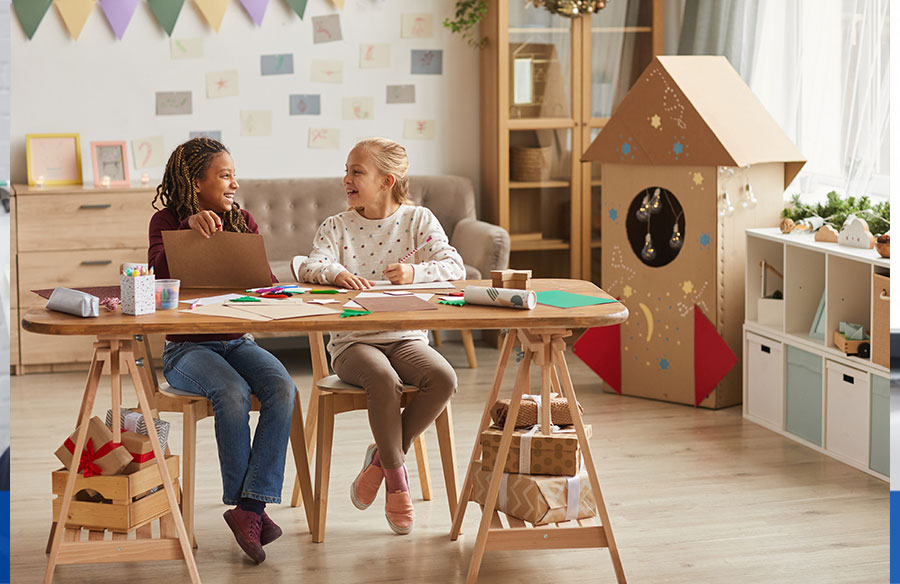
Children spend a significant portion of their day at home, balancing school assignments, online classes, and recreational activities. Creating an environment that nurtures both study and play is crucial for their overall growth. Thoughtfully designed learning spaces at home can foster curiosity, creativity, and academic success while allowing children the freedom to relax and enjoy themselves. When learning and play coexist harmoniously, children are more engaged, motivated, and emotionally balanced.
The Importance of a Dual-Purpose Learning Environment
A home that encourages both learning and play allows children to develop intellectually, emotionally, and physically. Environments that are carefully designed can help children concentrate better, as an organized and comfortable space reduces distractions. Cognitive growth is enhanced when structured study is paired with unstructured play because children learn to explore, solve problems, and think creatively. “Emotional well-being also benefits from such spaces, as children feel less stressed and perceive learning as enjoyable rather than burdensome. Understanding the connection between study and play is essential for families seeking to create a home that supports all aspects of a child’s development,” said Ilmars Vosels, a Real Estate & Architect Expert at Real Estate Batumi.
Designing the Ideal Learning Space
The foundation of a successful study-and-play environment begins with intentional design. Location is an important consideration. Choosing a quiet area away from high-traffic parts of the home, such as the kitchen or living room, helps minimize distractions and promotes focus. Natural light is another key factor, as exposure to daylight has been shown to improve mood, concentration, and overall well-being. Positioning desks or study tables near windows whenever possible allows children to benefit from sunlight, while adjustable desk lamps can provide appropriate lighting during evenings or cloudy days.
Furniture and organization are equally important in creating a functional and inviting space. Ergonomic seating supports good posture, and desks should be sized to accommodate children as they grow. Adjustable furniture ensures long-term comfort and fosters healthy study habits. “Storage solutions such as shelves, bins, and drawers help keep school supplies, books, and toys organized, reducing clutter and making it easier for children to focus. Even in smaller areas, clearly defined zones, such as a color-coded rug or a small partition, can help visually separate study from play, signaling to children when it’s time to focus and when it’s time to relax,” said Tim Gaasch, Real Estate Specialist at Clever Offers.
Technology plays a growing role in home learning, but it must be used thoughtfully. Tablets, computers, or smart devices can enhance education, particularly when paired with age-appropriate software and parental controls. Regular breaks from screens are essential to reduce eye strain and encourage physical movement. Organizing cables and devices also prevents hazards and helps maintain a tidy environment conducive to concentration.
Incorporating Play Into Learning
Play is a critical component of learning rather than simply a form of recreation. Integrating playful elements into study areas allows children to explore concepts hands-on and reinforces lessons in engaging ways. Hands-on learning can include science, technology, engineering, and math kits that encourage experimentation while reinforcing key ideas. Art supplies and craft materials stimulate creativity, enhance fine motor skills, and support self-expression. Educational board games and puzzles challenge critical thinking, teamwork, and strategic planning in a fun and interactive way.
Flexibility in the layout of the space makes it easier to incorporate both study and play. Modular furniture that can be rearranged allows children to switch between activities without feeling confined. “Open floor space with soft rugs or mats encourages movement-based play and group learning exercises. Multipurpose surfaces such as whiteboards, chalkboards, or magnetic walls provide interactive spaces for both creative expression and academic work, making the environment dynamic and engaging,” noted Victoria Shnaider. Victoria Shnaider, the Chief Operating Officer & Managing Director at KidsVip.
Outdoor spaces can also play a significant role in integrated learning. Gardens provide opportunities to observe plants, insects, and weather patterns, connecting children with nature while reinforcing scientific concepts. Simple equipment like jump ropes, balls, or balance boards encourages physical activity and provides a mental break from structured study. Creating outdoor reading nooks allows children to enjoy books in a calm, natural setting, supporting literacy and relaxation simultaneously.
Encouraging Routine and Balance
Even the most thoughtfully designed space requires a balanced routine to be effective. “Children thrive when they know when to focus and when to engage in leisure activities. Establishing a structured schedule with clear time blocks for study, creative projects, and physical activity helps children manage their energy and attention. Consistent routines reduce procrastination and build a sense of security, while transition cues, such as timers or visual signals, can help children switch smoothly from one activity to another without feeling rushed or distracted,” noted Jonathan Cobey, Real Estate Investor at Carolina Home Cash Offer.
Allowing children some autonomy within these routines encourages engagement and responsibility. Giving them choices in learning activities or play options within set boundaries fosters independence, while brief reflection sessions at the end of the day help children process what they learned and enjoyed. Minimizing distractions during study time, such as unnecessary noise or clutter, further enhances focus and productivity. Over time, children learn to navigate their own routines, balancing focused work with recreational activities in a healthy, self-directed way.
Involving the Whole Family
Creating a learning-and-play space at home is most effective when it involves the entire family. Children are more invested in their environment when they participate in selecting furniture, organizing supplies, and personalizing the space. Family activities that incorporate learning, such as group science experiments, reading sessions, or interactive games, help reinforce the value of education while fostering connection and cooperation. Parents modeling reading, exploring new hobbies, or engaging in creative projects also inspire children to approach learning with curiosity and enthusiasm. When the family works together to cultivate a supportive environment, children see learning as a shared and enjoyable experience rather than a solitary task.
Practical Steps to Integrate Study and Play at Home
“Integrating study and play in the home begins with assessing available spaces and identifying areas that can serve dual purposes. Even a small corner can be optimized with thoughtful design, creating a nook that supports both focused learning and playful exploration. Defining zones visually or through furniture arrangements helps children distinguish between activities, while investing in versatile furniture and storage solutions ensures that the space grows with the child. Incorporating a mix of books, puzzles, art supplies, and educational technology keeps the environment stimulating, encouraging engagement in multiple learning styles,” said Sales & Marketing Director | CEO at Robotime.
Developing balanced daily routines is also critical. Children benefit from clear, predictable schedules that allocate time for study, creativity, and physical activity, helping them manage energy levels and attention spans. Rotating materials and activities periodically maintains interest and encourages continued exploration. Recognizing and celebrating achievements reinforces the message that learning is enjoyable and rewarding. Finally, observing how children interact with the space and adapting the environment as needed ensures that the space remains effective, comfortable, and inspiring over time.