One type of material that is widely used in all types of industrial fields is die-cut foam. This extremely adaptive, robust, and customizable material is fundamental to manufacturing, packaging, and engineering. This material addresses the challenges of protection, insulation, and organization across many industries. Understanding what it can be used for will help you see how manufacturing processes keep getting better.
Protective Packaging
Handmade foam usually serves as protective packaging for sensitive equipment and fragile goods. Tailored shapes protect goods during transit and storage from scratches, dents, or breakage. Foam inserts are used to secure electronics, tools, or glassware in a carton or crate and are an essential for companies around the world. The material acts as a shock absorber, preventing the product from being damaged during impact or from vibrations during shipping.
Gaskets and Seals
Die cut foam is widely used to manufacture effective gaskets and seals across a range of industries. These components are used to prevent leaks, prevent the ingress of dust, and provide air or water-tight spaces. Flexible foam can fit-unfit gaps to make a tight barrier for machinery, vehicle or appliances. With options in density and thickness, manufacturers can choose materials to meet individual sealing needs.
Sound and Thermal Insulation
Die-cut foam is also used extensively in factories and production lines to isolate noise and stabilize temperature. The sound waves, or the sound that gets reflected in these busy environments, can be absorbed with the help of such acoustical foam panels, which reduce echoes and the presence of unwanted noise enough to provide a better sound experience. Also, by preventing overheating of the equipment, thermal insulation foam saves energy, as the machine requires less energy to work optimally.
Tool Control and Organization
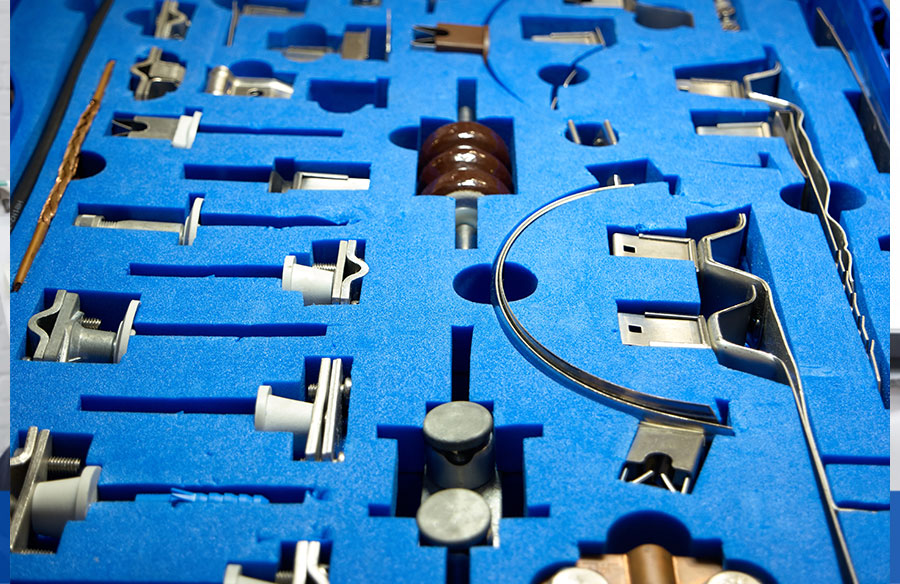
Die-cut foam inserts are used for organizing tools and parts in industrial settings. Foam trays can be custom-cut to keep items separated, visible, and easy to identify. It enhances productivity by ensuring that workers can easily find the tools or components they need, and it reduces the risk of losing them, since there is a designated spot for everything. Foam trays minimize tool movement and contact, reducing wear and tear.
Medical and Laboratory Equipment
Die cut foam can be used in the healthcare and laboratory field, they play an important role in protecting sensitive instruments and storing them hygienically. Foam inserts offer a safe resting space for medical devices and glassware, helping minimize cross-contamination or accidental breakage. The foam can be treated to be chemical-resistant and moisture-proof, and maintain cleanliness according to stringent standards.
Automotive Industry Applications
For car interior components, sound dampening, and vibration control, automotive manufacturers utilize die-cut foam. The foam is applied to door panels, dashboards, and trunks, helping create a quieter, more refined ride. It also provides support for electronic components by damping and isolating them from the noise generated by other moving parts. Custom shapes cater to the complex design and specification requirements ofvehicles.
Electronics and Technology
Die-cut foam is widely used in Electronics manufacturing to protect sensitive circuit boards, screens, and devices during assembly and transport. It creates a cushioned cover that helps avoid the buildup of static electricity, scratches, and other forms of damage. Companies choose anti-static or conductive foam based on application needs for sensitive electronic components. Custom inserts also help speed up production by enabling faster assembly processes.
Aerospace and Defense
Die-cut foam material can meet the performance requirements of the aerospace and defense fields. Foam shields the instruments, avionics, and other specialized components from vibration and flying debris. The use of such materials allows it to be lightweight and not add additional weight, which is crucial for economy and capacity. Tailor-fitted designs help ensure critical parts are well defined relative to one another, which promotes reliability and safety.
Conclusion
Due to its flexibility and reliability, die-cut foam is an important tool for many industries. Its protective features, ease of customisation, and versatility continue to fuel advancements in manufacturing, packaging, healthcare, and a wide array of other industries. As industries look for ever more efficient solutions, die-cut foam has become the go-to material, offering proven performance to ensure high levels of quality and safety.