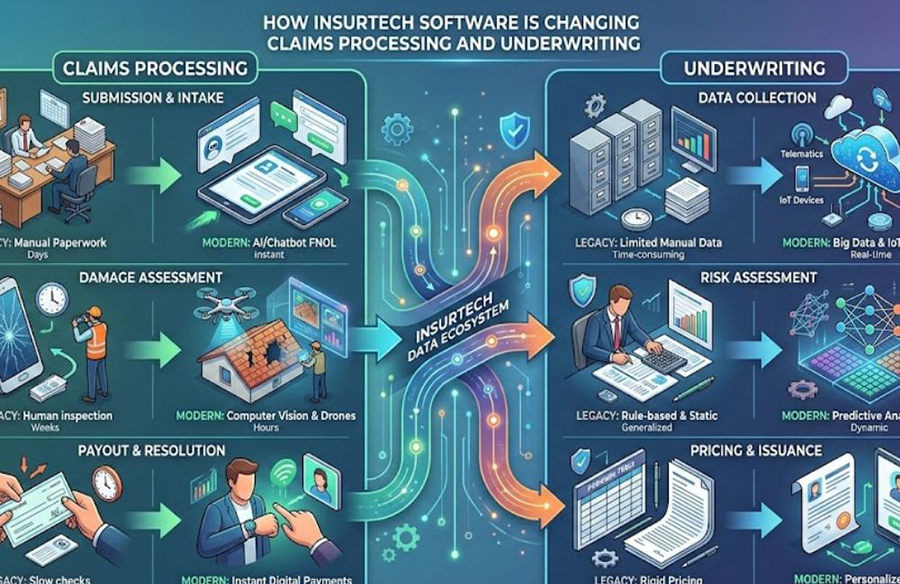
The insurance industry is changing as digital technology becomes part of daily operations. Insurers relied on paperwork, manual reviews, and long approval cycles for many years. These traditional systems slowed down claims processing and made underwriting difficult. They make especially when companies have to manage large amounts of customer data.
Today, insurtech software helps insurers clarify these complex processes. Tools like automation, artificial intelligence, and cloud platforms allow companies to process claims faster and evaluate risks more accurately. As digital transformation grows, insurers are using modern technology to improve efficiency and deliver better services to policyholders.
Traditional Challenges in Insurance Claims and Underwriting
Insurance companies have handled processing claims and underwriting through manual work for years. Although they have done this for years, they have. This method created delays and inefficiencies because processing paper-based systems take an inordinate amount of time to record and process information accurately.
Slow Claims Processing and Manual Workflows Challenge
Their systems will be inconsistent and fragmented depending on which method an insurance company is using to process claims and underwriting. Because of this, there is very little system integration, causing the company to be extremely unable to process information in a timely manner or to accurately record data.
Missing out on data and less risk analysis
Because of this manual method, all of the data is just sitting in static databases and is not being used or analyzed because of the manual method being used. This creates data silos that limit access to important information during underwriting and claims evaluation.
Because of this fragmented data environment, underwriters may not get a complete view of a customer’s risk profile. As a result, risk assessments may take longer and sometimes produce less accurate decisions.
How Insurtech Platforms Are Transforming Insurance Operations
Insurtech platforms are helping insurance companies replace outdated systems with modern digital tools. Cloud-based platforms allow insurers to manage policies, claims, and customer information within a single integrated system. This approach simplifies workflows and improves overall efficiency.
Many insurers now use digital portals and mobile apps that allow customers to submit claims online. These systems collect data automatically and route claims to the correct department. Many organizations choose to hire insurtech developers who understand both insurance workflows and modern software platforms as companies modernize their systems.
Traditional Insurance vs Insurtech-Driven Processes
| Insurance Process | Traditional Model | Insurtech Approach |
| Make do Insurance Claims | Manual paperwork and approvals | Automated digital claims |
| Fraud Detection | Manual investigation | AI systems that will detect unusual patterns |
| Customer service experience for ease | Phone/email communication | Insurance of mobile applications and online platforms |
The Role of AI, Automation, and Data Analytics in Insurtech
The latest insurtech technologies are based on AI and automation. AI subsystems are capable of analyzing massive amounts of data, and recognizing patterns that may go unrecognized by human data analysts. For example, insurance platforms can auto adjudicate claims documents, and spot anomalies in documents that suggest fraudulent behavior.
Automation also lessens the need for human involvement in repetitive tasks such as data entry, claims validation, and document processing. When these tasks are automated, employees are able to devote their talent to high-level decisions like risk evaluation and customer-facing services.
Major technologies shaping modern insurtech solutions
Several technologies are supporting the growth of insurtech solutions across the insurance industry.
- Artificial Intelligence for claims evaluation
- Machine learning tools used to predict insurance risk
- Big Data analytics for deeper insights
- Connected IoT devices that track risks in real time
- Cloud computing for scalable digital platforms
Practical Steps for Implementing Insurtech in Insurance Companies
Insurtech solutions can be disruptive to employees, so their implementation must be thoroughly vetted and planned based on changing organizational workflows. When insurance firms implement insurtech solutions, they must analyze the processes in their operational workflows so they can devise ways to digitize tasks.
Typically, gradual implementation of insurtech is the best approach. Businesses may opt for digitizing certain operational processes such as automated claims processing, underwriting, etc. to mitigate risks and allow employees to adjust to the technological changes.
Practical steps for adopting insurtech solutions
Insurance companies often follow several practical steps when introducing insurtech solutions.
- Review and evaluate existing legacy systems
- Find routine tasks that technology can handle automatically
- Move important data to secure cloud infrastructure
- Implement analytics tools for risk assessment
- Train employees to work with new digital systems
Advantages of insurtech for insurance companies and customers
Automation benefits insurance businesses as well as customers. With insurance operational processes automated, employees can manage their workloads more efficiently, and the operational costs of the organization are lowered. Improved claims processing is directly proportional to increased organizational productivity and improved customer satisfaction.
Policyholders also benefit from digital insurance services. Customers can check the details of their insurance policies and submit claims. It also tracks claims updates through online portals and mobile applications, assisting with the clarity of the claims process and fostering the trust of customers.
Main Advantages of insurtech solutions
| For insurers | For customers |
| Improved risk analysis | Simple access to insurance policy details |
| Lower operational costs | Transparent claim tracking |
The future of technology-driven insurance platforms
The future of insurance seems to stay focused around digital transformation. New and developing technologies such as artificial intelligence, blockchain, and Internet of Things will provide the insurance industry with enhanced and optimized tools, developing them to create better insurance products and improve monitoring and claims processing.
Also of importance, embedded insurance is an insurance trend where insurance coverage is integrated with other services and products, developing insurance within other services. The insurance industry, as the innovations increase, will provide better offerings to its customers as it adopts technology.
Conclusion
The use of insurtech software to manage claims processing and underwriting is changing the functions of insurance companies. Automation, artificial intelligence, and cloud computing integrated into software is revolutionizing the process.
Insurtech solutions enable better efficiencies, an improved customer experience, and the ability to compete with other companies within the insurance industry. The evolution of the insurance industry will derive the importance of modern technology more and more with time.