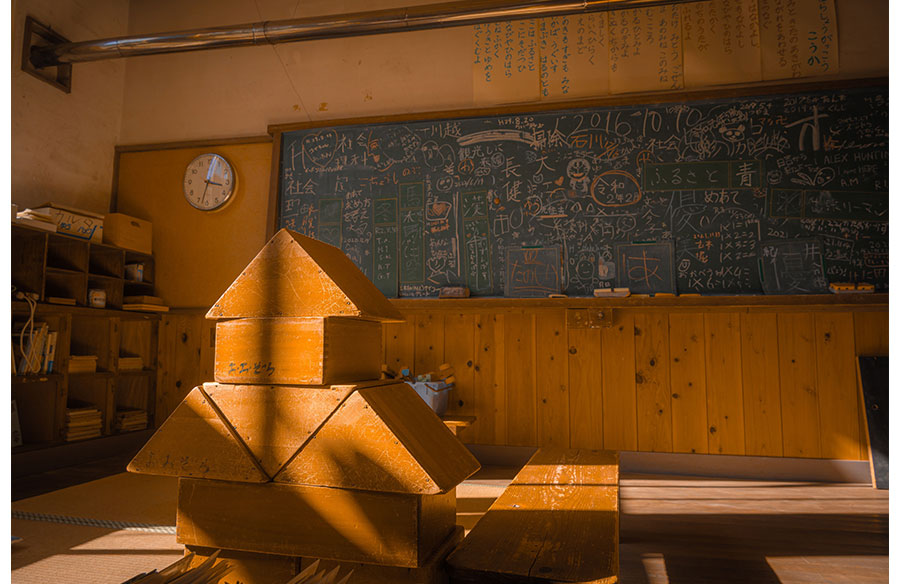
Architecture is often described as frozen music or poetry in concrete — expressive façades, sculptural skylines, and spatial experiences that stir emotion. Yet beneath every dramatic cantilever and flowing form lies a quieter discipline: mathematics. Before architects sketch concepts or develop material palettes, they calculate. They measure. They analyze. Architecture may captivate us visually, but its foundations are numerical. In many ways, design does not begin in the studio — it begins in the classroom.
History makes this relationship clear. The pyramids of ancient Egypt reveal extraordinary geometric precision. Gothic cathedrals balanced structural forces through calculated vaults and buttresses. Renaissance architects revived harmonic ratios, embedding proportional systems into civic buildings and plazas. These works endure not only because of artistic brilliance, but because their mathematical frameworks ensured balance and durability.
In contemporary practice, the connection is even more explicit. Parametric modeling software operates through algorithms. Environmental simulations depend on predictive equations. Structural engineering relies on applied physics and calculus. When architects adjust a façade using computational tools, they are manipulating numerical relationships. Technology may accelerate the process, but it does not replace mathematical understanding — it amplifies its importance.
At its core, architecture is the orchestration of dimensions. A floor plan is an exercise in spatial reasoning. Sections and elevations encode relationships between height, depth, and load. Circulation patterns reflect geometry. Structural systems translate invisible forces into stable form. Every line drawn represents a decision shaped by measurement and proportion.
Yet mathematics in architecture is not merely technical — it is cognitive. The study of mathematics trains the mind to identify patterns, think abstractly, and solve layered problems. These skills are essential in design, where creativity must coexist with constraint. An architect constantly negotiates between aesthetics and feasibility, imagination and regulation, ambition and budget. Logical reasoning becomes as vital as artistic instinct.
This mindset begins developing long before architecture school. Secondary education lays the groundwork. Algebra introduces symbolic thinking. Geometry builds spatial visualization. Trigonometry explains relationships between angles and forces. Even the persistence required to solve complex equations mirrors the perseverance needed to refine a design proposal.
For aspiring architects, strengthening mathematical fundamentals early can shape confidence and opportunity. Structured academic support at critical stages, including preparation supported by Edumentors’s expert math tutors for GCSE exam, can help students solidify analytical skills that later underpin architectural studies. While tutoring alone does not define a career, reinforcing numerical fluency ensures that future technical modules feel empowering rather than intimidating.
Beyond calculations, mathematics also informs architectural beauty. Proportion systems, such as classical harmonic ratios, have long guided composition. Modular grids create rhythm in façades. Symmetry fosters balance, while controlled asymmetry introduces dynamic tension. Even contemporary “organic” forms often emerge from intricate geometric manipulations. What appears spontaneous frequently rests on precise numerical control.
Sustainability further intensifies this relationship. Designing climate-responsive buildings requires analyzing solar angles, thermal performance, ventilation rates, and material efficiency. Urban planners depend on density ratios, mobility data, and statistical projections to shape resilient communities. Without mathematical literacy, environmental ambitions remain superficial. With it, architects can create measurable, verifiable impact.
The rise of computational design illustrates this evolution. Parametric systems allow architects to script relationships between variables, generating forms that adapt to environmental or structural inputs. These tools expand creative possibility, but only for those who understand the logic behind them. Mathematics becomes both medium and instrument — shaping not only how buildings perform, but how they are conceived.
Urban design operates at an even broader scale yet follows the same principles. Transit systems require flow calculations. Infrastructure capacity must be quantified before it is visualized. As cities confront climate change and rapid population growth, data-driven strategies are no longer optional. Architects increasingly work at the intersection of design and analytics, where numerical clarity supports visionary thinking.
There is also a philosophical resonance between mathematics and architecture. Mathematics represents order, precision, and universality. Architecture translates those qualities into lived experience. A well-proportioned space feels intuitively comfortable because its dimensions align with perceptual expectations shaped by measurable relationships. A structurally sound building conveys stability because invisible calculations maintain equilibrium.
Recognizing this connection early can transform how students approach their education. Mathematics shifts from an isolated academic requirement to a foundational creative tool. Equations gain meaning when understood as the hidden scaffolding of future structures. Geometry evolves from textbook diagrams into frameworks for spatial imagination.
As architecture advances into an era shaped by artificial intelligence, smart systems, and environmental accountability, the profession demands designers who are both imaginative and numerically fluent. Creativity alone cannot sustain a structure; calculation alone cannot inspire. The most compelling architecture emerges where both converge.
Long before concrete is poured or steel is assembled, a building exists as a network of relationships — ratios, forces, dimensions carefully balanced. And those relationships are first encountered in the classroom. It is there, amid equations and diagrams, that the intellectual foundations of architecture quietly take shape.