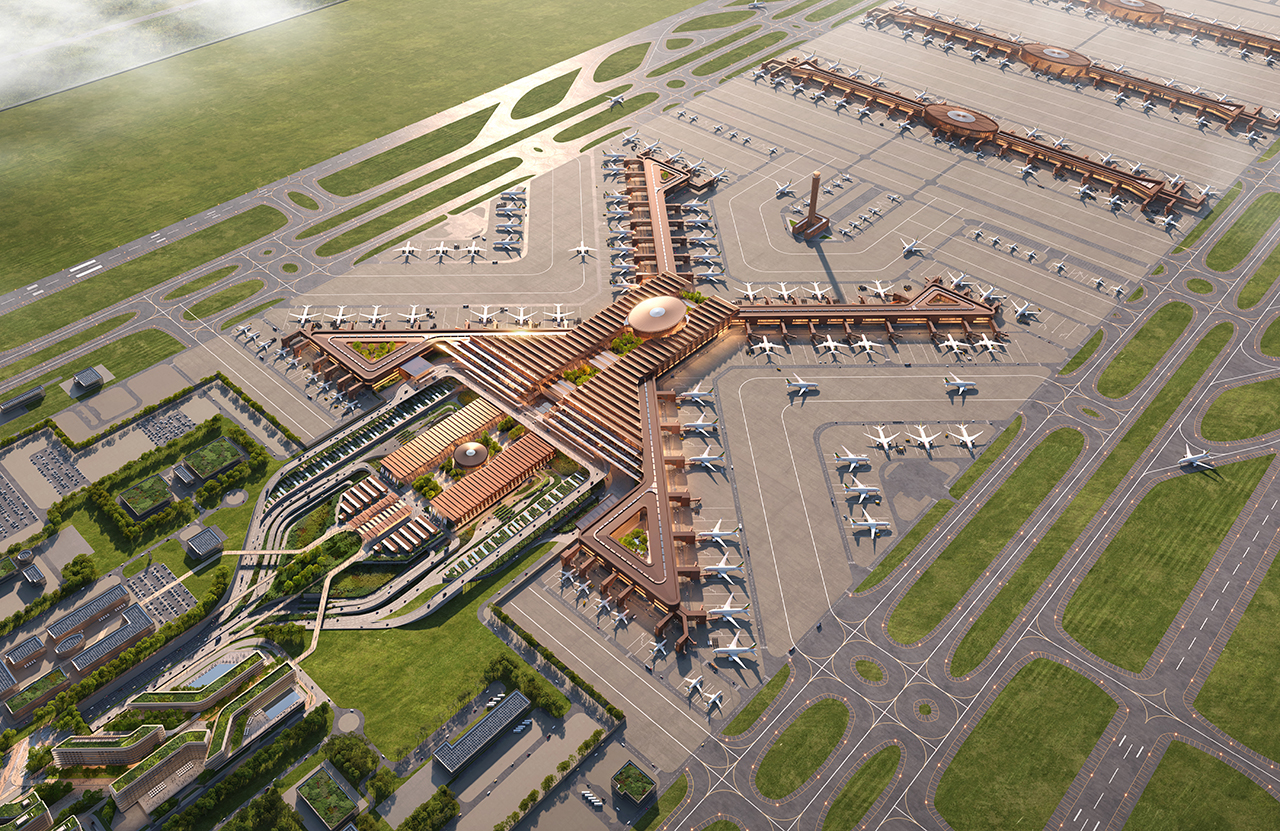
Ethiopian Airlines Group, the leading carrier in Africa, has begun construction of the
continent’s largest airport, approximately 40 km south of the Ethiopian capital Addis
Ababa in Bishoftu.
Project Name: Bishoftu International Airport
Studio Name: Zaha Hadid Architects
Location: Addis Ababa, Ethiopia

Phase One of the new Bishoftu International Airport (BIA) will serve 60 million passengers
a year. Further phases will serve up to 110 million passengers annually with four runways
and parking for 270 aircraft.
Meeting IATA regional growth forecasts for passenger demand, the US$12.5 billion
investment in BIA will optimise Ethiopia’s position at the crossroads of Africa, Asia and the
Middle East with a global transportation hub for the 21st century.

Construction has begun on the new Bishoftu International Airport (BIA) approximately 40 km south of the Ethiopian capital Addis Ababa. Ethiopia’s Prime Minister Abiy Ahmed Ali laid the cornerstone at the airport’s groundbreaking ceremony on Saturday 10th January 2026.
“Bishoftu International Airport will be the largest aviation infrastructure project in Africa’s
history, more than four times the capacity of Ethiopia’s current main airport which will reach its limits on existing traffic in the next two to three years,” said the Prime Minister.
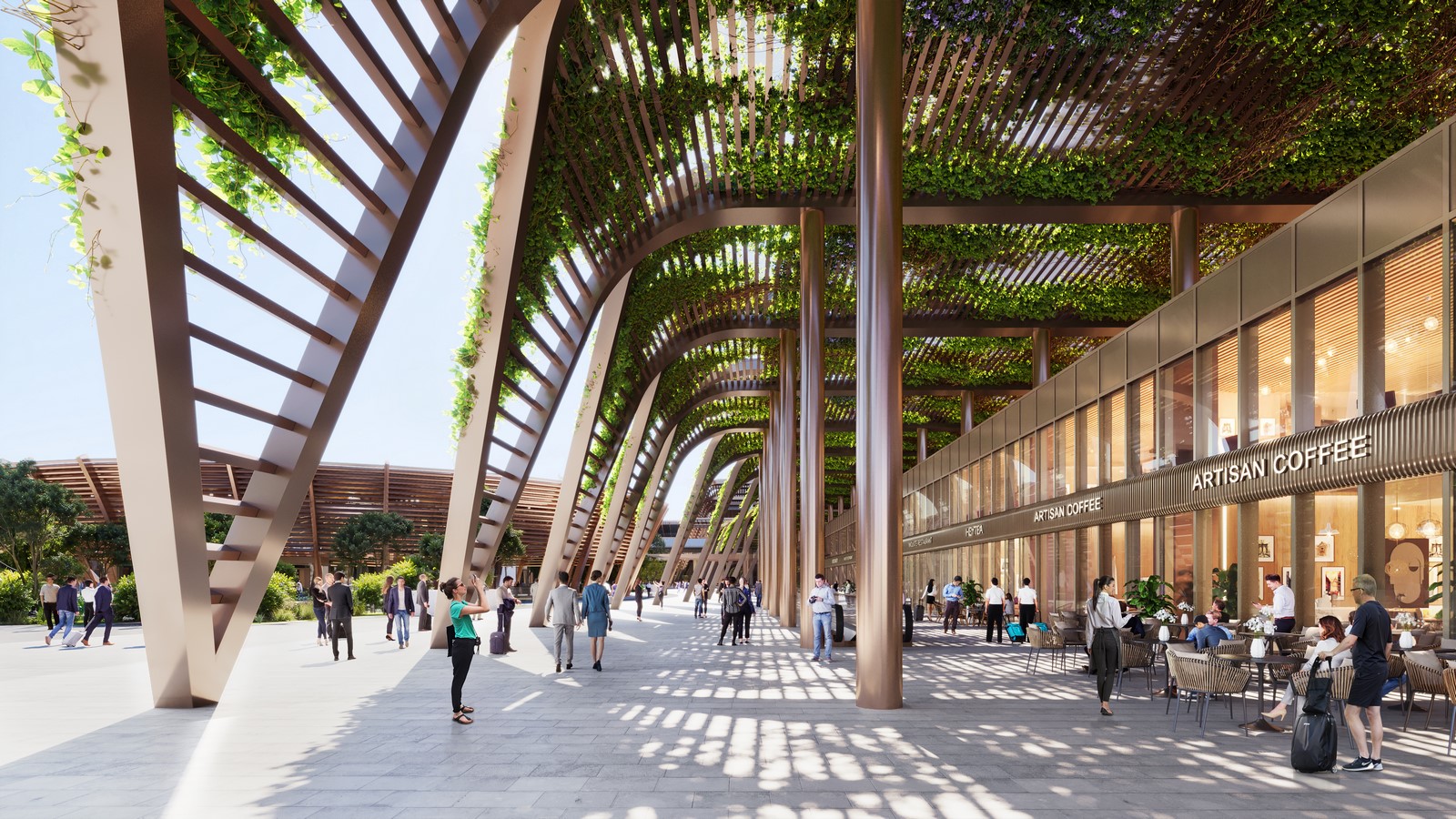
BIA will serve Ethiopian Airlines, Africa’s largest carrier. Designed by Zaha Hadid Architects to meet the airline’s future passenger demand and operational needs, BIA will become Africa’s global aviation hub, providing facilities of the highest standard with a strong focus on transferring passengers.
With up to 80% of passengers transiting between destinations without leaving the airport,
BIA has been designed to accommodate these requirements—incorporating extensive
amenities for transiting passengers including airside hotel with 350 guestrooms, a wide
variety of dining and entertainment facilities, as well as outdoor gardens and courtyards for relaxation.
Each of the terminal’s piers incorporates a unique interior materiality and colour palette to
reflect the diverse regions of Ethiopia. Inspired by the Great Rift Valley that passes near
Bishoftu as it crosses through the country, a single central spine connects the terminal’s
facilities and aircraft piers—minimising transfer distances and ensuring connecting
passengers can easily navigate to their next departure gate.


BIA’s elevation at almost 400m lower than Addis Ababa’s existing Bole Airport—in addition to BIA’s longer runways—will enhance aircraft performance, enabling Ethiopian Airlines to
optimise the maximum take-off weight (MTOW) of their modern fleet of aircraft—using less fuel to carry more passengers and cargo on longer-range, non-stop flights to further global destinations.
Targeting an initial opening in 2030, BIA will be constructed in multiple stages. The first phase will include two Code 4E independent-operating parallel runways and 660,000m² terminal serving 60 million passengers annually (60MAP). Further phases will enable BIA to accommodate up to 110 million passengers every year with four runways and parking for 270 aircraft.
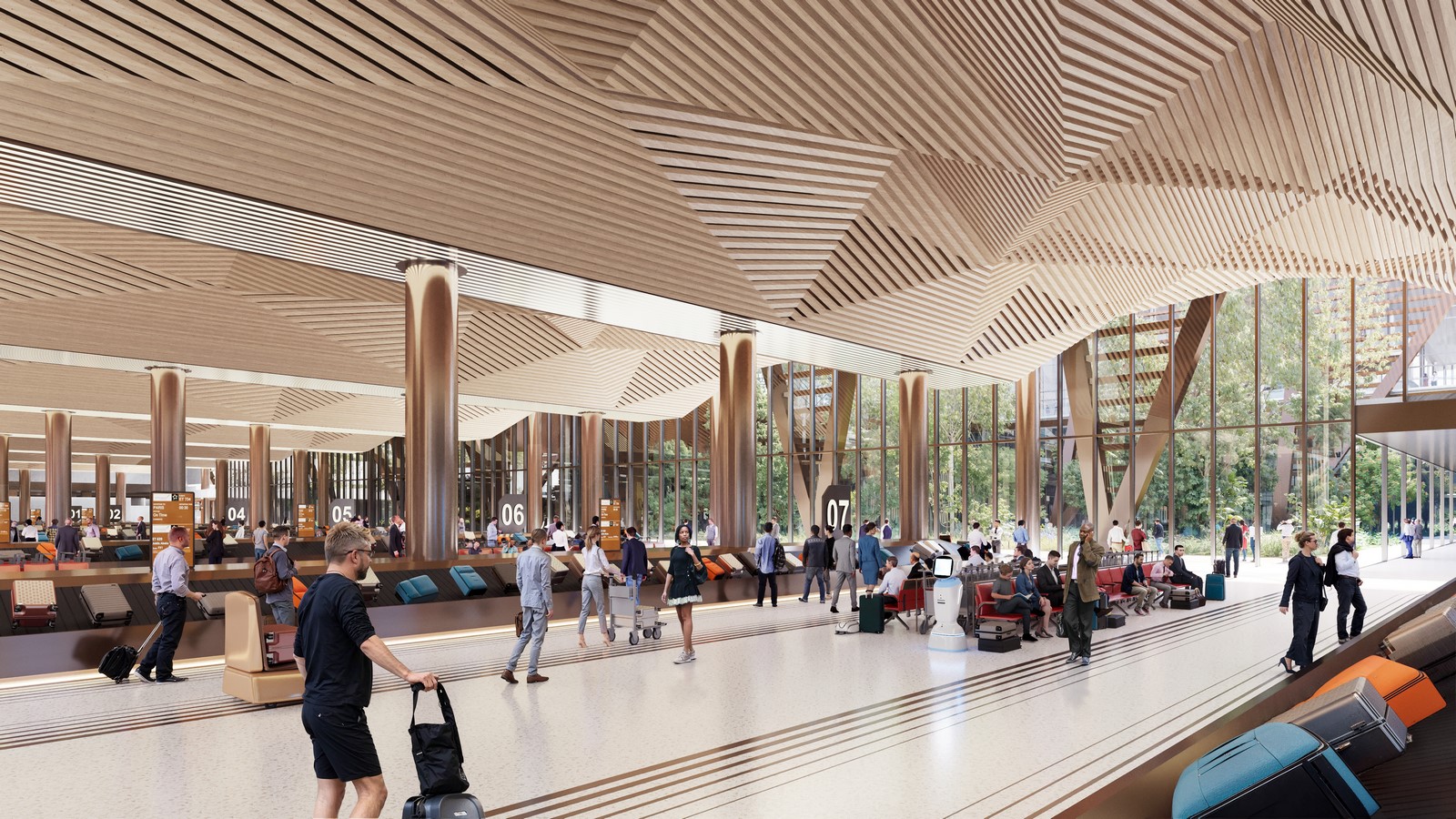
Cristiano Ceccato de Sabata, Zaha Hadid Architects’ Director of Aviation, said: “Bishoftu
International Airport is a visionary project for Ethiopia and Africa as a whole. Airports bring people together and bridge national divides. ZHA is honoured to be part its development— connecting every region of the continent as Africa’s global gateway”
Continued Situated within the temperate subtropical highland climate of Ethiopia’s Oromia region, BIA’s passenger terminal is designed to achieve LEED Gold certification. The terminal will be naturally ventilated with effective solar shading and will include semi-enclosed spaces and outdoor areas for transferring passengers to enjoy the region’s warm summers and mild winters.