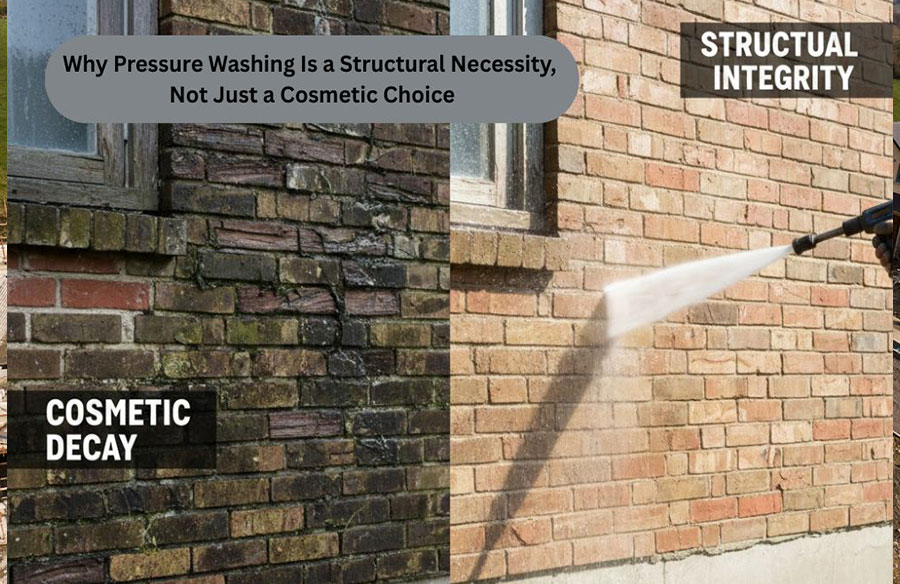
Some people may think that exterior cleaning is only about improving a property’s looks. They see stains on a building’s siding or dark patches on a property’s concrete surfaces, and see cosmetic imperfections. They do not see the structural concerns. But exterior contamination does not remain at the surface level.
Pressure washing Company remove visible dirt, but the real concern lies beneath the surface where structural damage can develop. The dirt and molds on the surfaces that become contaminants are environmental contaminants. They change from level to level, optically during the change less visible contaminants become more harmful materials, to the surfaces contaminants cover.
Material Breakdown and Moisture Retention
Moisture is one of the most destructive forces affecting exterior materials. When organic growth spreads across siding or roofing, it traps water against the surface. This leads to:
- Peeling paint
- Softening wood fibers
- Weakening protective coatings
- Faster material aging
For example, vinyl siding may appear resistant, yet prolonged dampness can allow moisture to move behind panels. On roofing systems, algae hold moisture for longer periods, which reduces the lifespan of shingles. The damage develops slowly, but it steadily reduces structural strength.
Stress That is From Concrete and Other Surfaces Are Not Poured Concrete
Concrete seems permanent but it contains microscopic pores. Oil, dirt, and debris settle into these openings. Moisture then collects inside them. When temperatures rise and fall, trapped moisture expands and contracts. Without proper cleaning, these small cracks grow and weaken the surface. This repeated movement creates internal stress.
What Happens Inside the Pores
Concrete appears solid, yet it contains microscopic pores. Oil, dirt, and debris settle into these openings, where moisture collects. When temperatures change, trapped moisture expands and contracts. This repeated internal movement creates structural stress that may lead to cracking and surface erosion.
| Condition | What Happens Inside Concrete | Long Term Result |
| Moisture trapped in pores | Expansion and contraction | Hairline cracks |
| Oil and grime buildup | Surface weakening | Flaking and erosion |
| Repeated freeze-thaw cycles | Structural strain | Larger cracks |
Decay of Wooden Surfaces and Accelerated
Wood is more sensitive to weather exposure than most other materials. Almost all environmental conditions that the wood is exposed to are because of the wood itself. They trap moisture and block airflow when dirt, plants, and organic debris stay on wood surfaces.
As a result the wood remains damp longer than intended. Over time, this environment encourages rot, splitting, and warping. What may begin as mild discoloration can eventually affect the strength of support boards and framing components. In this way surface ignorance silently accelerates structural decline.
Chemical Residue and Environmental Pollutants
Airborne pollutants also damage exterior materials beyond organic growth. Dust, vehicle emissions, and industrial particles settle daily on surfaces. When rain mixes with these particles, it forms a mild acidic residue that slowly erodes protective finishes.
The result of this chemical reaction doesn’t cause an immediate failure of the sealants, yet it does cause the sealants to become weakened and the paint to become dull. Each time a finish is applied, surfaces lose their ability to resist moisture and thermal variations.
Preservation of Structure Via Maintenance
In pressure washing, timing is critical. Damage caused by the accumulation of surfaces develops over time, and often, is never seen. Contaminants, unlike structural failures, create stress that becomes worse over time.
Many people assume the effect will be minimal and underestimate the effect of time, in this case, the long time it takes to create the damage. In addition to time, the proper technique is also critical. Each material has a different response to the water pressure.
Functional and Not Cosmetic Role
When surfaces start to look dirty exterior cleaning usually receives attention only. However, its true value lies in preservation. Its more important role is protecting the materials that support and safeguard the entire structure. Dirt and organic growth may appear small at first but their long term effects reach far away from the surface.
More Than Appearance
Exterior cleaning often receives attention only when surfaces look dirty. However, the structural value lies in prevention. Clean surfaces are;
- Contain less moisture
- Experience less thermal stress
- Maintain protective coatings longer
- Age more evenly
Because contamination works slowly, its impact is often underestimated. Yet over time, buildup reduces the lifespan of siding, roofing, wood, and concrete.
Conclusion
Pressure washing plays a structural role beyond cosmetic improvement. Exterior materials constantly face moisture, heat, pollutants, and biological growth. When contaminants remain untreated, they trap moisture and accelerate wear. By removing buildup before it penetrates deeply, pressure washing supports durability and reduces long term structural stress. What appears to be simple cleaning often functions as preventive maintenance for the entire exterior system.