Language is more than a utility; it is a lens through which we perceive culture, space, and the organization of meaning. When we acquire a new language, we don’t just learn new labels for old objects; we rewire our cognitive framework to notice details we previously overlooked.
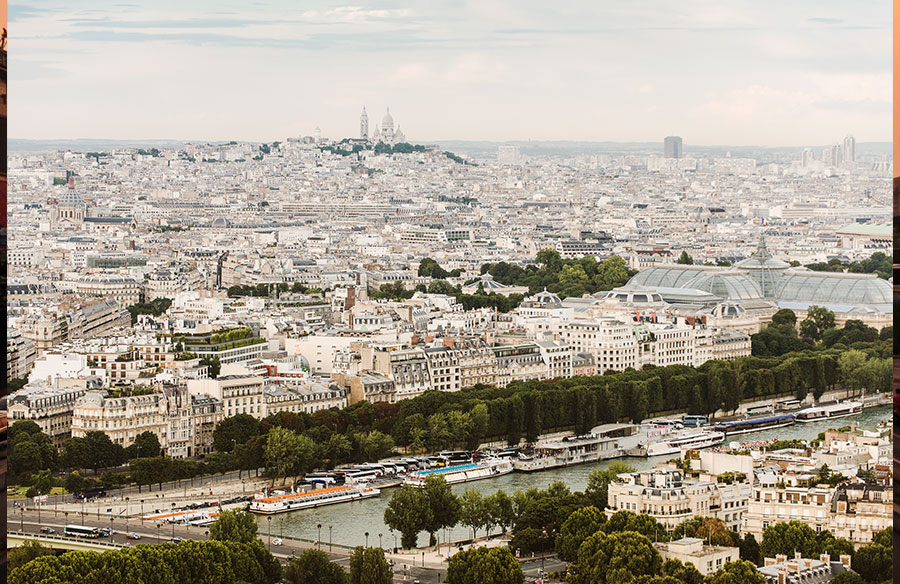
French, in particular, occupies a unique position in the global intellectual landscape. From the grand boulevards of Paris to the public squares of Montreal and the rapid urban evolution of West Africa, the language carries centuries of philosophical thought, artistic experimentation, and architectural dialogue. For a beginner, learning French is not merely an educational task—it is an entry point into a profound cultural and intellectual tradition that has shaped the modern aesthetic world.
The Cultural Logic of the French Language
Every language reflects how a culture structures reality. French is renowned for its precision, rhythm, and clarity—qualities that mirror France’s historical influence in philosophy, urban planning, and the arts. In the world of design, where clarity of intent is paramount, the French linguistic structure offers a masterclass in organization.
This linguistic structure shapes how ideas are presented:
- Logical Progression: Sentences follow a strict internal order (SVO) that minimizes ambiguity, demanding that the speaker clarifies their thought before articulating it.
- Conceptual Nuance: The vocabulary allows for subtle distinctions, especially in aesthetics, law, and social theory, providing a high-resolution toolkit for describing the world.
- Spatial Awareness: The way the language is structured encourages an analysis of the “architecture” of an idea, prioritizing the relationship between the whole and its parts.
For those in design, architecture, or cultural studies, this clarity is invaluable. Understanding French terminology offers direct access to original texts and concepts that are often diluted in translation. Consider the term flâneur—more than just a “stroller,” it represents an entire philosophy of detached, mindful observation of the urban environment. To speak the language is to understand the soul of the city itself and the deliberate intent behind its construction.
Urbanism and the “Right to the City”
The dialogue between the French language and physical space is perhaps most evident in the field of urbanism. Concepts like “le droit à la ville” (the right to the city), coined by Henri Lefebvre, have fundamentally changed how we design public spaces globally. This intellectual tradition emphasizes that a city is not just a collection of buildings, but a social product created through interaction and language.
By learning French, designers gain a deeper understanding of human-centered design. French urban theory prioritizes the place (the square) as a site of democratic expression and the terrasse as a transitional space between the private and the public. These aren’t just architectural features; they are linguistic and cultural constructs that define how people coexist in dense environments.
Language Acquisition as Cognitive Design
From a cognitive perspective, learning a new language mirrors the process of Design Thinking. It is a creative, iterative process that requires empathy, definition, ideation, and prototyping. Both involve:
- Observing Patterns: Recognizing grammatical structures and phonetic consistency.
- Testing Hypotheses: Attempting your first sentences and navigating real-world interactions.
- Refining Through Feedback: Adjusting pronunciation and syntax through iterative practice.
French, with its systematic grammar and phonetic elegance, provides a structured environment for this mental exercise. It challenges the learner to build a coherent system from the ground up, reinforcing the same neural pathways used in complex problem-solving and systems design.
Pro Tip: To prevent the learning process from feeling abstract, it is essential to use a framework that treats language as a project. Resources like these structured French lessons for beginners illustrate how a step-by-step progression transforms a complex goal into a tangible, achievable practice, much like an architectural blueprint.
French in the Digital and Visual Age
While often associated with history, French remains a vital language in contemporary creative industries. From the high-fashion houses of LVMH to the world-leading animation and gaming studios in Lyon and Bordeaux (like Ubisoft), the French approach to “Digital Design” is rooted in a specific aesthetic philosophy. This philosophy values the balance between heritage and innovation, a concept often referred to as “tradition moderne.”
Understanding the language allows designers to navigate these professional worlds with greater cultural intelligence. It facilitates a deeper connection with colleagues and clients, enabling an appreciation for the subtle cultural cues that often dictate the success of a global design project.
Consistency and the Architecture of Progress
In architecture, great structures emerge from the repetition of small, deliberate actions. Language acquisition follows the same principle. Research consistently shows that 15–20 minutes of daily engagement is far more effective than occasional intensive study. This “incremental design” of the mind allows for the gradual reorganization of memory and perception.
Typical milestones for a beginner often resemble the phases of a construction project:
- Phase 1 (The Foundation): Basic comprehension, core structural rules, and phonetic grounding.
- Phase 2 (The Frame): The ability to hold simple conversations and navigate daily needs with confidence.
- Phase 3 (The Interior): Functional communication in professional and social settings, allowing for personal expression.
To ensure these milestones are met with technical precision, many learners choose a goal-oriented path. For instance, an integrated DELF preparation course helps bridge the gap between casual study and official proficiency, providing a standardized benchmark for your progress. Much like a building inspection verifies structural integrity, preparing for the DELF ensures that your foundation in the language is solid, measurable, and recognized globally.
Beyond Utility: The Aesthetic Dimension
French carries a powerful emotional and aesthetic resonance. Its presence in cinema, literature, and the art de vivre (the art of living) transforms study into a form of cultural participation rather than a chore. This shift is vital: when learning is driven by meaning and beauty rather than mere performance, progress becomes inevitable.
Starting to learn French is an intellectual gesture. It signals a curiosity toward a different worldview and an openness to different rhythms of thought, speech, and spatial imagination. In that sense, your first lesson is more than linguistic—it is your first step into a broader world of design, history, and global connection. Like any meaningful project, it begins with a single, deliberate choice to build something new.