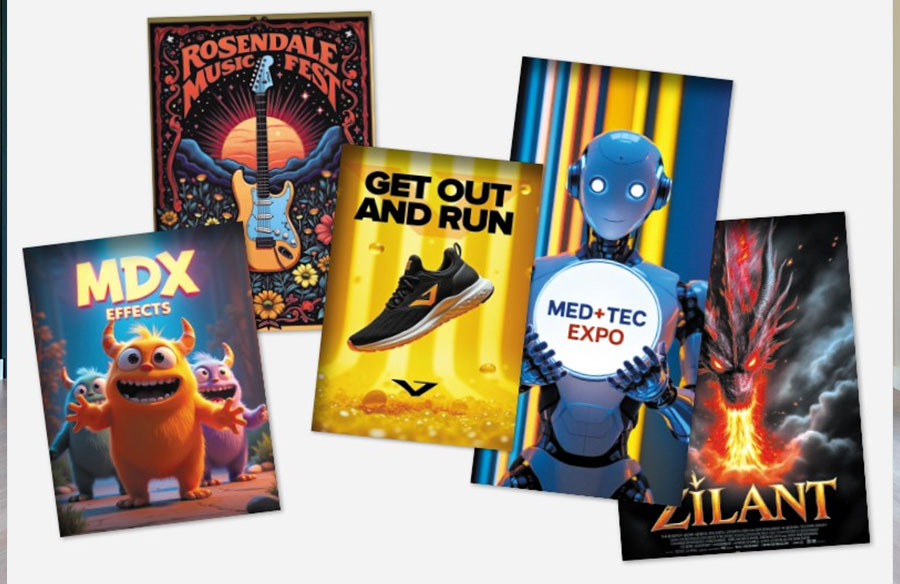
In a world where people scroll past thousands of images a day, traditional static signs get lost in the shuffle. Shoppers don’t even see them, trade show attendees walk right by them, and even more, static signage doesn’t have enough impact to break through the clutter anymore.
That said, lenticular signage has emerged as a high-impact, dynamic alternative to traditional static advertising that often falls short on many occasions.
These displays simulate movement, 3D depth, or alternate between images with no electricity or screens required. Furthermore, these displays have unique lenses (“lenticules”) that refract light. As a result, the displays change at different angles for viewers, making them perfect in high-traffic environments like trade shows or retail stores.
Below, we explore how lenticular displays blend tradition with modern creativity to engage the audience and help your brand stand out when it matters most.
1. Flip Effects Create Instant Curiosity
Flip lenticular prints display one image that flips to another as you rotate them. This instantly turns heads on a level that static pictures cannot match. When people walk past such a display, they experience a visual change that creates a moment of surprise and sticks.
If you run a skincare brand, you can use lenticular signage to show before and after use cases, flipping between the differences it makes. For trade show exhibitors, lenticular signage can be helpful if you plan to use flips to convey two crucial messages in a single space.
The best part is that the viewer gets it as they move, and they can’t help themselves. This creates an unforgettable visual memory that will help your brand stick with them longer.
Nevertheless, you should always choose a reputable printing service like enduraline.com for all your flip lenticular prints. Enduraline lenticulars have pristine transitions that ensure your flip effects look professional and purposeful. You can rely on their lenticular signage for your retail business ads, such as product comparisons and various options.
2. Motion Effects Bring Static Displays To Life
Motion lenticular is the closest thing to actual movement in a printed image. It’s not a video but a specially sequenced series of frames physically embedded in the print. In fact, it’s a level of engagement that flat graphics can’t touch, making it ideal for high-traffic areas where brands battle for notice.
At a trade show, motion draws attendees to your booth from down the aisle or even across the hall. In a retail environment, it serves as an anchor that guides customers through your store. A moving image among static competitors easily attracts attention, giving you a better chance that your message will be seen and remembered.
The use cases stretch across industries. Car manufacturers can show cars in motion, and food companies can actually show products being poured or steamed. Real estate developers can flip through a building’s profile or watch as an entire commercial center comes into view.
What’s especially useful about motion lenticular is that it works 100% of the time and costs nothing to run or maintain.
3. 3D Depth Makes Flat Surfaces Pop
With three-dimensional lenticular effects, you’ll swear that objects are actually floating in space and flying right off the print. Graphics also gain more depth as they appear to extend beyond the background, giving them a 3D look and captivating viewers instantly.
In retail point-of-purchase displays, 3D effects make products feel closer to the shopper’s grasp. The perceived depth imparts a high-quality aura that flat printing cannot match. Furthermore, trade show graphics with 3D effects are sure to catch the eye amid hundreds of booths vying for attention.
Lately, a cosmetics brand might have its product pop out toward shoppers while outfitting softer background elements with more messaging context.
However, great 3D printing, especially for lenticular signage, hinges on design. Thus, brands like Enduraline often focus on lenticular signage, where depth reinforces the message rather than the other way around.
4. Increased Engagement Drives Measurable Results
Motion gets noticed, but engagement keeps them looking.
Lenticular signage naturally draws onlookers to move a little closer or walk around the sign. That extra physical interaction forms a stronger memory imprint than static viewing, which correlates with higher brand recall.
For trade show exhibitors, that means more booth conversations. Not only do people stop in their tracks to take in the visual effect, but they also stick around longer, giving your sales team more opportunities to engage. In retail, longer dwell time near a display equates to higher purchase conversion rates.
Brands can realize much higher recall with lenticular campaigns than with static print alone, which is a key driver of brand lift. The combination of motion or depth plus interactivity creates stronger emotional and psychological connections between viewers and brand messages.
That said, custom lenticular printing services, including Enduraline, have often emphasized lenticular signage that maximizes impact without compromising message clarity. This ensures the eyeball-to-brand connection becomes more than just a distraction.
5. Durability Meets Impact in High-Traffic Environments
Signage that stands up to trade shows and retail spaces must endure a perfect storm of constant lighting, temperature changes, and the close physical presence of the crowds. To perform under these conditions, lenticular prints need protective coatings and quality substrates.
Enduraline makes lenticular signage that holds up to the real world. The lenticular lens material is scratch- and UV-resistant, so your effects stay sharp whether you’re in a bright retail setting or under hot trade-show lights. Plus, with proper mounting and finishing, your display will remain flat and true, not warp and bend as some companies’ products do.
This construction matters for the longevity of your investment. A trade show display that lasts for years is paid off over many shows. Retail displays that look new again six months later are still driving revenue all along the way.
Overall, durable construction turns lenticular signage from a one-off gimmick into a consistent-experience tool.
Conclusion
With lenticular signage, viewers do more than simply look and get involved. Flip, motion, and 3D effects are attention-getting technologies that allow a brand to cut through the clutter of visuals in any competitive setting. Plus, it’s non-powered technology, so you can count on it to work for years in everything from temporary trade show displays to permanent retail installations.
Having said that, Enduraline combines lenticular printing know-how with durable construction, resulting in signage that gets noticed and stays noticed.
In a world where every brand is vying for time with the consumer, experience how lenticular displays transform passive viewership into active participation while building lasting memories that deliver real results.